
News from Spain
Wildfire app turns neighbours into a powerful early-warning network

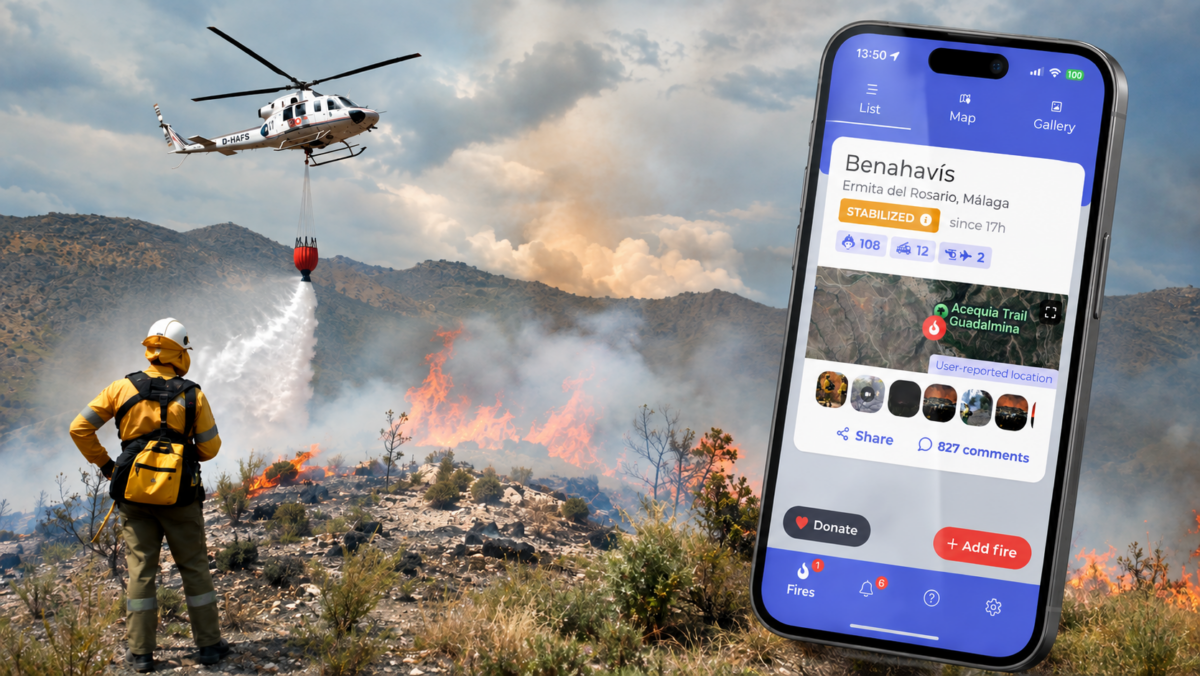
Wildfire Watch – Listening to those with feet on the ground near a fire.
Credit: INFOCA & WW
A wildfire can change in minutes. For people living in the hills and countryside around in Spain, knowing that smoke has been spotted nearby can make the difference between having time to prepare and being caught by surprise.
During the recent wildfire in Benahavis, residents turned to Wildfire Watch for photographs, updates and first-hand reports from people living close to the fire.
While many were waiting to find out whether Spain’s ES-Alert emergency warning system would be activated, the Wildfire Watch community was already sharing information about what was happening on the ground.
For residents in areas such as the Montemayor urbanisation, which was later evacuated by emergency teams, those reports provided another source of information during an anxious day.
Behind the app is software developer Bas Buur, who lived in Mijas for around a decade. His connection with the local community helped inspire a project that has since grown into a much larger wildfire information network.
From Facebook group to wildfire app
Wildfire Watch did not start life as an app. Jill founded the original Wildfire Watch Facebook group in 2012 after a devastating fire that claimed two lives in the Malaga Province. What began as a way for people to share vital information quickly grew into a community that became increasingly difficult for volunteers to manage. Jill recalls just how much work was involved in keeping track of the information being posted.
“It got to a point where it was too much for the moderators. I even had to draw up a shift for them!” she said. “Sometimes I had ten tabs open at a time to collate the information.”
That experience helped reveal the limitations of using a conventional social media group during a fast-moving emergency. Then, software developer, and member of the group, Bas Buur saw the potential to voluntarily turn what Jill and the other volunteers had created into a dedicated service.
“I was inspired by the Facebook group Wildfire Watch,” he explained. “The way Facebook is set up means it isn’t the best for immediate alerts. So I thought, ‘What about an app?’”
His idea was to build something specifically for wildfire reporting, with photographs, GPS location information and official updates brought together in one place. “I thought about an app which can alert immediately, verify photo evidence, GPS locate and use the app itself to photograph the fire, while also using immediate official updates.”
What began as a passion project has since developed into a community involving more than 150,000 people in Spain, according to Bas himself, and 7 administration volunteers help move things along, as well as advising contributors.
How Wildfire Watch works
Someone who spots smoke or a fire can report it through the app, including a photograph and location. Other users can then see what is happening and compare those reports with what they are seeing themselves. That can be particularly useful during the first stages of a fire, when residents may be trying to establish where the flames are, which direction they are moving, whether smoke is heading towards homes and whether nearby roads are affected.
Wildfire Watch is not intended to replace emergency services or official warnings. Instead, it gives residents another source of information while authorities assess the situation and issue instructions. It is also making more people conscious about the risks of wildfire.
Why people on the ground matter
Jill says one of the most useful parts of Wildfire Watch is the information provided by people who are actually close to an incident.
“What makes Wildfire Watch different is that we have people on the ground. They can inform on the state of the fire, which way it is travelling, wind direction.”
That was particularly valuable during the Benahavis wildfire, as residents tried to work out what was happening around them while the situation developed.
The network can also receive information from official organisations and emergency personnel. Another feature tackles a very different problem that can become important during an emergency: language.
“There’s a translate button, so no matter where someone is originally from, they can communicate in real time,” Jill said.
For an international communities such as on the Costa Blanca, Almeria or Costa del Sol, where residents from many different countries reside in fire-prone areas, being able to exchange information quickly can be especially useful. And best of all, everyone can work together to inform and help protect their own communities.
What comes next for Wildfire Watch?
With more than 150,000 people using the network, keeping reports reliable becomes increasingly important. Bas says the next version of the app will introduce a new way of checking reports before they are circulated more widely.
“We’re currently working on an update due out later this year that will involve some sort of verification process to avoid false alarms,” he said.
The issue is important because a wildfire report can attract attention very quickly, particularly when it includes photographs or information from someone close to the incident. The app currently covers the Valencia and Andalucia regions, but is planned to spread to other areas of Spain that could use it.
Wildfire Watch began with volunteers trying to keep track of a rapidly growing Facebook group. Today, the technology allows a photograph, location and warning to reach a much larger community almost instantly, so they can evaluate the danger for themselves.
Official emergency alerts will always be vital when authorities need residents to evacuate or take urgent action. Wildfire Watch offers something different: a way for people living in the same area to share what they can see and help one another understand what is happening.
Its development also shows how a simple local initiative can grow into a much wider network, giving residents another tool when the first signs of a wildfire appear. Wildfire Watch is a free download on Android and Apple.






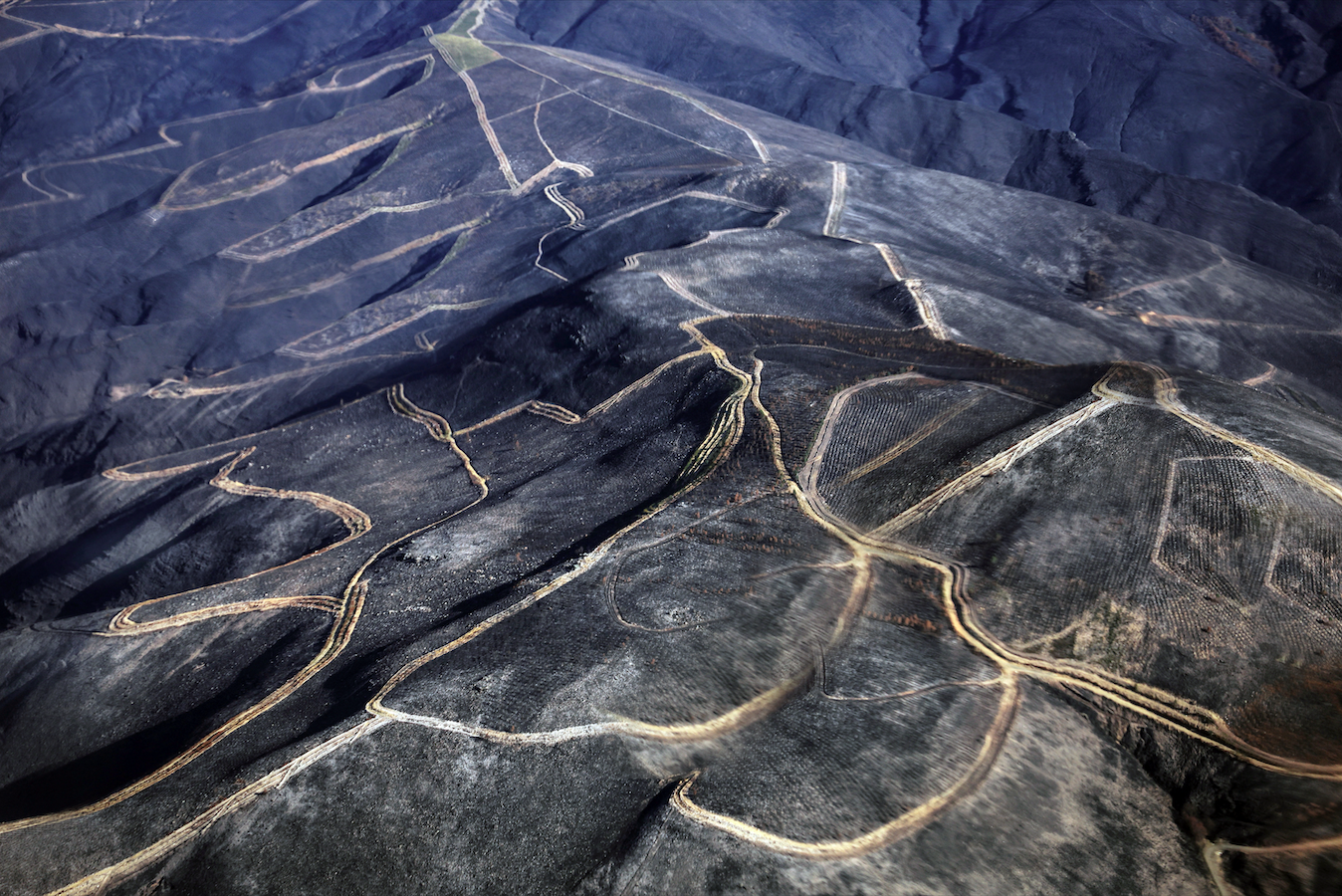
Among the tragedies was the fire at Los Gallardos in Almería. Photo credit: ataurrahmanstudio/Shutterstock
As the danger from wildfires begins to wane in Spain, I think it’s safe to say that, looking back, this has been a particularly horrid year for fires. From the devastating blazes that tore through huge areas of the country during the summer to the tragic loss of life, the scale of what has happened is only becoming clearer as the figures come in. Spain has now recorded 296,815 hectares of land burned between January 1 and September 16, according to the European Forest Fire Information System (EFFIS), part of the EU’s Copernicus programme.
That means Spain accounts for 44.4 per cent of all the land burned by wildfires across the European Union this year. For people living in Spain, the number is difficult to picture. Nearly 300,000 hectares is an area so vast that it goes well beyond individual fires or isolated rural communities. It represents forests, scrubland, farmland and countryside that have been transformed by flames in a single year.
Almost half of the EU total
Spain is not actually the country that has recorded the most individual fires. Italy has had 605, compared with Spain’s 446, while France has recorded 364. What sets Spain apart is the sheer amount of land those fires have destroyed. Across the EU, 668,035 hectares had burned by September 16. Spain’s 296,815 hectares therefore account for almost half of the European total.The figures also show just how concentrated some of this year’s destruction has been.
The worst period came during July, when huge fires swept through several parts of Spain. By July 5, the country had already recorded 50,750 hectares burned, more than twice the area recorded by the same date in 2025. Among the tragedies was the fire at Los Gallardos in Almería, which claimed 15 lives in total. Later that month, fires affecting Madrid, Ávila and Toledo burned more than 77,000 hectares between them.
A terrible year, but not worse than 2025
There is an important comparison to make when looking at this year’s numbers. Spain has actually burned less land so far in 2026 than it had at the same point last year. On September 2, Copernicus recorded 295,720 hectares burned in Spain, compared with 380,877 hectares on the same date in 2025. That difference continued to show in the latest figures. Only 973 hectares were added to Spain’s total between September 2 and September 16, with 313 of those hectares recorded since September 9.
But that does little to make this year’s figure look reassuring, the 296,815 hectares already burned are more than three times Spain’s 2006-2025 annual average of 87,212.8 hectares. And 2025 itself ended with 393,079 hectares burned, making it the worst year for burned land in Spain since 1994. So while 2026 is currently below last year’s extraordinary total, it has still been an exceptionally destructive fire season.
The damage will last far longer than the fires
For residents in areas affected by the blazes, the end of the immediate danger does not mean everything simply goes back to normal. People who were evacuated have had to return to homes surrounded by burned countryside. Rural businesses have faced disruption, while farmers have lost land, crops, grazing areas and, in some cases, livestock. Roads and access routes can also be affected by fires, while landscapes that residents and visitors know well can be changed almost overnight. There is also the longer process of dealing with the land left behind.
A blackened hillside may look empty immediately after a fire, but what happens next depends on the severity of the blaze, the vegetation that was there before and the weather that follows. Heavy rain can create another problem on burned slopes, where vegetation that would normally help hold the soil in place has disappeared. That makes the aftermath particularly important for rural parts of Spain, where residents can spend months or years living alongside the consequences of a major fire.
Spain still has fires to watch
The latest Copernicus figures show that the pace of new land being burned has slowed considerably, but the wildfire season is not something that can simply be written off as soon as the worst summer temperatures pass. There were still fires being dealt with in Spain this week. In Valencia, the Tuéjar fire was stabilised after burning around 835 hectares, while authorities were investigating its origin.
In Huelva, the Alcolea de Alosno fire was brought under control on September 16, with firefighters and other emergency personnel remaining in the area to deal with the aftermath. For now, though, the headline figure remains 296,815 hectares. Spain has suffered fewer fires than Italy this year, and less burned land than it had at the same point in 2025. Even so, almost three hundred thousand hectares have already gone up in flames, accounting for 44.4 per cent of all the land burned across the EU.
Cheap supermarkets in Spain
Spain plan for public supermarkets expands to community kitchens and food hubs

The proposed supermarkets would also have a community and educational role. Photo credit: Alfonso Soler/Shutterstock
What if your local supermarket was more than somewhere to buy the weekly shop? What if the same place could also help supply meals to schools, nurseries and care homes, support local farmers and even have a community kitchen where people could learn to cook?
That is the idea now being put forward in Spain, where more than 50 organisations are backing a campaign for a national network of public supermarkets. And this time, the proposal goes far beyond putting groceries on supermarket shelves.
The community kitchen at the heart of the proposal
The community kitchens are one of the most striking parts of the plan. According to the manifesto published by Justicia Alimentaria, proposed public supermarkets could incorporate kitchens linked to public food purchasing, preparing healthy meals for schools, nurseries, care homes and social dining facilities. That would connect the supermarket directly with public services that already need to buy and prepare large quantities of food.
The organisation says the kitchens could also create employment and help keep more food-related economic activity within local communities. So rather than simply creating another place to buy a bag of potatoes or a bottle of olive oil, the proposal envisages a system in which food is bought, prepared and distributed through connected public facilities.
It would be a whole food network
The supermarket would only be one part of the proposed system. Justicia Alimentaria says the network could also include food collection centres, purchasing centres, public-community bakeries and workshops, central kitchens and logistics hubs. These food hubs could operate at neighbourhood or district level, connecting local producers with supermarkets and public institutions such as schools, social care facilities and community dining services.
That could also change the role of municipal markets. Justicia Alimentaria has already campaigned for existing markets to be transformed into local food centres rather than remaining places focused solely on retail. Its proposals include community kitchens, cooperative workshops, shared logistics and spaces for food education. The latest supermarket proposal therefore builds on an idea the organisation has been developing for some time: using existing public food infrastructure as part of a more connected local system.
What would happen inside?
The proposed supermarkets would also have a community and educational role. The manifesto suggests using them for cooking lessons, food-label education, activities for children and opportunities to learn more about food and cooking. That makes the vision quite different from a conventional supermarket where customers arrive, fill a trolley and leave.
Justicia Alimentaria describes the proposed model as something closer to a combination of a municipal market, community centre and public food service. It also suggests a public-community management model, with rules covering issues such as local purchasing, employment conditions, fresh produce, ecological criteria and access for people who need support.
Local farmers would be part of it too
The proposal is also designed to change where the food comes from. The manifesto calls for public supermarkets to prioritise local and proximity production, while supporting farmers, livestock producers and fishers. It also proposes reducing unnecessary intermediaries and increasing transparency around how food prices are formed.
For the community kitchens, that could mean local produce being channelled directly into meals served through public facilities rather than simply being sold to individual shoppers. The organisation has previously proposed connecting municipal markets with public purchasing networks supplying schools, social and healthcare facilities, while creating local logistics hubs to support those services.
Could an old market become a new food hub?
One of the more unusual aspects of the proposal is that Spain would not necessarily need to start from scratch. Justicia Alimentaria points to the country’s existing network of municipal markets and other public infrastructure that could potentially be adapted.
Its separate campaign calls for municipal markets to become centres of local food activity, incorporating community kitchens, cooperative workshops, shared logistics and food education. The proposed network could therefore involve transforming some existing spaces rather than simply building new supermarkets from the ground up.
This is still a proposal
There is no national network of these supermarkets currently being created. Justicia Alimentaria is calling for a state law establishing the network and says more than 50 organisations have already joined its manifesto, including Greenpeace and Ecologistas en Acción. The organisation says it intends to gather further signatures and endorsements before taking the proposal to Parliament. The manifesto also says public supermarkets would not be intended to replace private shops. Instead, the proposed network would establish what Justicia Alimentaria calls a minimum guarantee of access to healthy, fresh and affordable food, particularly in places where access is limited.
That leaves some very practical questions still to be answered, including how the kitchens would be funded and managed, which existing buildings could be used and how the proposed network would operate alongside Spain’s existing food businesses and public services. But the community kitchens show that this latest proposal is about considerably more than opening a few government-run supermarkets. The ambition is to create an entire public food network, from the farmer producing the ingredients to the kitchen preparing the meal, and eventually to the child eating lunch at school or the resident sitting down to dinner in a care home.

Spain’s wildfire toll revealed as almost 300,000 hectares go up in flames
Spain plan for public supermarkets expands to community kitchens and food hubs

Lewis Hamilton releases statement after Ferrari F1 replacement claims

One Critically Injured And Nine Others Hurt After Carbon Monoxide Leak Aboard Ship Docked In Barcelona Port

Max Verstappen works with new race engineer at Italian Grand Prix

EXPLAINER: Inside The Row Over The Right-Wing Mayor Of Madrid’s €6m Penthouse – And Why It Could Offer A Lifeline To Pedro Sanchez


-
 Barcelona2 weeks ago
One Critically Injured And Nine Others Hurt After Carbon Monoxide Leak Aboard Ship Docked In Barcelona Port
-
 Uncategorized2 weeks ago
Max Verstappen works with new race engineer at Italian Grand Prix
-
 Chamberi2 weeks ago
EXPLAINER: Inside The Row Over The Right-Wing Mayor Of Madrid’s €6m Penthouse – And Why It Could Offer A Lifeline To Pedro Sanchez
-
bravery2 weeks ago
10-year-old jumps from burning French farmhouse, saves two dogs and teddy
-
Central European Time2 weeks ago
Spain’s 2026 plan to end clock changes has failed, and the next change is already locked in
-

 Uncategorized2 weeks ago
Max Verstappen hails
-

 New Developments2 weeks ago
Luxury Villas For Sale, Estepona – ProjectL1
-
Holiday rentals1 week ago
Ibiza council hits illegal tourist rental with €793,000 fine – but will the owner pay that much?