
News from Spain
Wildfire app turns neighbours into a powerful early-warning network

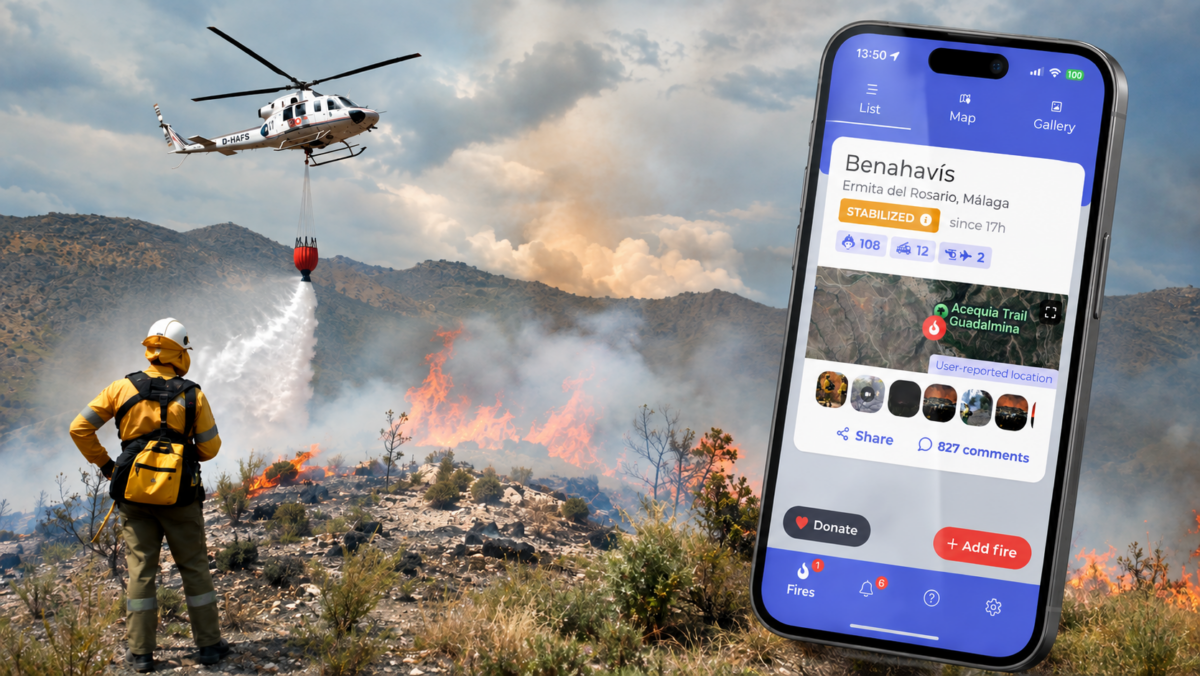
Wildfire Watch – Listening to those with feet on the ground near a fire.
Credit: INFOCA & WW
A wildfire can change in minutes. For people living in the hills and countryside around in Spain, knowing that smoke has been spotted nearby can make the difference between having time to prepare and being caught by surprise.
During the recent wildfire in Benahavis, residents turned to Wildfire Watch for photographs, updates and first-hand reports from people living close to the fire.
While many were waiting to find out whether Spain’s ES-Alert emergency warning system would be activated, the Wildfire Watch community was already sharing information about what was happening on the ground.
For residents in areas such as the Montemayor urbanisation, which was later evacuated by emergency teams, those reports provided another source of information during an anxious day.
Behind the app is software developer Bas Buur, who lived in Mijas for around a decade. His connection with the local community helped inspire a project that has since grown into a much larger wildfire information network.
From Facebook group to wildfire app
Wildfire Watch did not start life as an app. Jill founded the original Wildfire Watch Facebook group in 2012 after a devastating fire that claimed two lives in the Malaga Province. What began as a way for people to share vital information quickly grew into a community that became increasingly difficult for volunteers to manage. Jill recalls just how much work was involved in keeping track of the information being posted.
“It got to a point where it was too much for the moderators. I even had to draw up a shift for them!” she said. “Sometimes I had ten tabs open at a time to collate the information.”
That experience helped reveal the limitations of using a conventional social media group during a fast-moving emergency. Then, software developer, and member of the group, Bas Buur saw the potential to voluntarily turn what Jill and the other volunteers had created into a dedicated service.
“I was inspired by the Facebook group Wildfire Watch,” he explained. “The way Facebook is set up means it isn’t the best for immediate alerts. So I thought, ‘What about an app?’”
His idea was to build something specifically for wildfire reporting, with photographs, GPS location information and official updates brought together in one place. “I thought about an app which can alert immediately, verify photo evidence, GPS locate and use the app itself to photograph the fire, while also using immediate official updates.”
What began as a passion project has since developed into a community involving more than 150,000 people in Spain, according to Bas himself, and 7 administration volunteers help move things along, as well as advising contributors.
How Wildfire Watch works
Someone who spots smoke or a fire can report it through the app, including a photograph and location. Other users can then see what is happening and compare those reports with what they are seeing themselves. That can be particularly useful during the first stages of a fire, when residents may be trying to establish where the flames are, which direction they are moving, whether smoke is heading towards homes and whether nearby roads are affected.
Wildfire Watch is not intended to replace emergency services or official warnings. Instead, it gives residents another source of information while authorities assess the situation and issue instructions. It is also making more people conscious about the risks of wildfire.
Why people on the ground matter
Jill says one of the most useful parts of Wildfire Watch is the information provided by people who are actually close to an incident.
“What makes Wildfire Watch different is that we have people on the ground. They can inform on the state of the fire, which way it is travelling, wind direction.”
That was particularly valuable during the Benahavis wildfire, as residents tried to work out what was happening around them while the situation developed.
The network can also receive information from official organisations and emergency personnel. Another feature tackles a very different problem that can become important during an emergency: language.
“There’s a translate button, so no matter where someone is originally from, they can communicate in real time,” Jill said.
For an international communities such as on the Costa Blanca, Almeria or Costa del Sol, where residents from many different countries reside in fire-prone areas, being able to exchange information quickly can be especially useful. And best of all, everyone can work together to inform and help protect their own communities.
What comes next for Wildfire Watch?
With more than 150,000 people using the network, keeping reports reliable becomes increasingly important. Bas says the next version of the app will introduce a new way of checking reports before they are circulated more widely.
“We’re currently working on an update due out later this year that will involve some sort of verification process to avoid false alarms,” he said.
The issue is important because a wildfire report can attract attention very quickly, particularly when it includes photographs or information from someone close to the incident. The app currently covers the Valencia and Andalucia regions, but is planned to spread to other areas of Spain that could use it.
Wildfire Watch began with volunteers trying to keep track of a rapidly growing Facebook group. Today, the technology allows a photograph, location and warning to reach a much larger community almost instantly, so they can evaluate the danger for themselves.
Official emergency alerts will always be vital when authorities need residents to evacuate or take urgent action. Wildfire Watch offers something different: a way for people living in the same area to share what they can see and help one another understand what is happening.
Its development also shows how a simple local initiative can grow into a much wider network, giving residents another tool when the first signs of a wildfire appear. Wildfire Watch is a free download on Android and Apple.







aviation safety
Has your holiday ever been ruined by a stranger? Spain logs more than 1,000 unruly passenger cases

Reports of unruly airline passengers in Spain have climbed by more than a third since 2016. Credit: shulers / Shutterstock
You’ve boarded on time, stored your bags and have started picturing the blissful week ahead. Then a stranger a few rows back decides they’re going to mess about and refuse to follow the crew’s instructions and before you know it, the aircraft is turning back towards the stand. Spain now logs more than 1,000 of these cases every year.
It rarely takes more than a raised voice or a refusal to sit down. Cabin crew give a warning, the passenger ignores it, and within minutes the captain has turned the aircraft back towards the gate with everyone else on board now caught up in someone else’s bad day.
Spain recorded 1,081 reports of disruptive passengers in 2025, according to aviation figures reported by Cadena SER. That’s up from 798 in 2016, a rise of 35.5 per cent, and the annual total has stayed above 1,000 every year since 2022, with alcohol and aggressive behaviour remaining the most common triggers.
How one refusal to follow instructions grounds an entire flight
Once a passenger refuses to comply, the crew’s options quickly narrow. If the captain judges the behaviour a safety risk, the aircraft returns to its parking position rather than continuing towards the runway. Police officers are then called to meet the flight and remove the passenger, a process that takes a good amount of time even on a quiet day, as happened when a Vueling flight was diverted to Lanzarote over six disruptive passengers earlier this year.
The passenger’s checked baggage cannot simply stay on board once they are gone either. Ground staff have to identify and physically unload it before the flight can be cleared to leave, since security rules do not allow an aircraft to depart with luggage belonging to someone no longer on it. This can add another significant extra delay to an already behind schedule flight.
A new load sheet and a lost slot can delay everyone else’s evening
Removing one passenger and their bags changes the aircraft’s weight and balance, so the crew must produce an entirely new load sheet before departure can be authorised. None of this happens quickly, and every extra minute on the ground pushes the flight closer to losing its allocated departure slot.
Losing that slot means prolonging the wait even further. It can put a flight into a queue behind dozens of others waiting for the same runway or airspace, turning a delay caused by one single person’s unruly behaviour into a kerfuffle absolutely no one wants to be a part of when on their way to their holiday destination or heading back home after a long break.
The disruption can still be running the next morning
For passengers with a connecting flight, an hour or two delay can be enough to miss it entirely. Airlines then have to rebook them onto later services, which is rarely simple once flights are full at the height of the summer season.
If the delay runs late enough, the knock-on effect is an unplanned night away from home, with passengers potentially finding themselves needing an airport hotel and finishing their journey a day later than planned, because of a stranger they never even spoke to.
Ryanair wants a two-drink limit before passengers even board
Much of this behaviour starts before takeoff, at the airport bar rather than in the cabin. Ryanair’s chief executive, Michael O’Leary, has said the airline now diverts a flight almost every day because of bad behaviour onboard, compared with roughly once a week a decade ago, and has pointed to passengers drinking without any limit at the airport, particularly during delays. A recent flight from Warsaw to Alicante needed a police escort waiting on the tarmac earlier this month after a “conflictive” passenger unsettled the cabin, one of dozens of similar call-outs at Spanish airports this year.
Ryanair, with the backing of other airlines, has repeatedly asked EU airports to limit passengers to two alcoholic drinks before boarding, checked against the boarding pass in the same way liquid restrictions already are, and to stop serving alcohol outside normal licensing hours on early departures. TUI has gone a step further on some of its long-haul flights, cutting complimentary onboard drinks from three to one per meal from November, though it has described that change as a catering update rather than a direct response to disruptive behaviour.
Why the passenger who caused it all may be the only one who pays
Spain’s aviation regulator, the Agencia Estatal de Seguridad Aérea (AESA), can fine a disruptive passenger between €60 and €45,000 depending on the severity of the incident, and the agency has itself acknowledged a marked rise in reports in recent years. Little of that money reaches the other passengers whose evening was wrecked though.
Compensation for the delay itself is not guaranteed. Courts have generally treated a violent or disruptive passenger as an “extraordinary circumstance” beyond an airline’s control, which lets the airline avoid paying compensation to everyone else on board. That protection disappears only if the airline could have prevented the situation, for example by boarding someone already visibly drunk or aggressive, or continuing to serve alcohol to a passenger who was clearly intoxicated.
For most passengers caught up in someone else’s incident, the outcome is extremely frustrating, with a longer day ahead, perhaps a missed connection, and no one to send the bill to.
AEMET weather alert
Spain weather warning: Orange alerts issued as storms, hail and flooding threaten Valencia and Mallorca
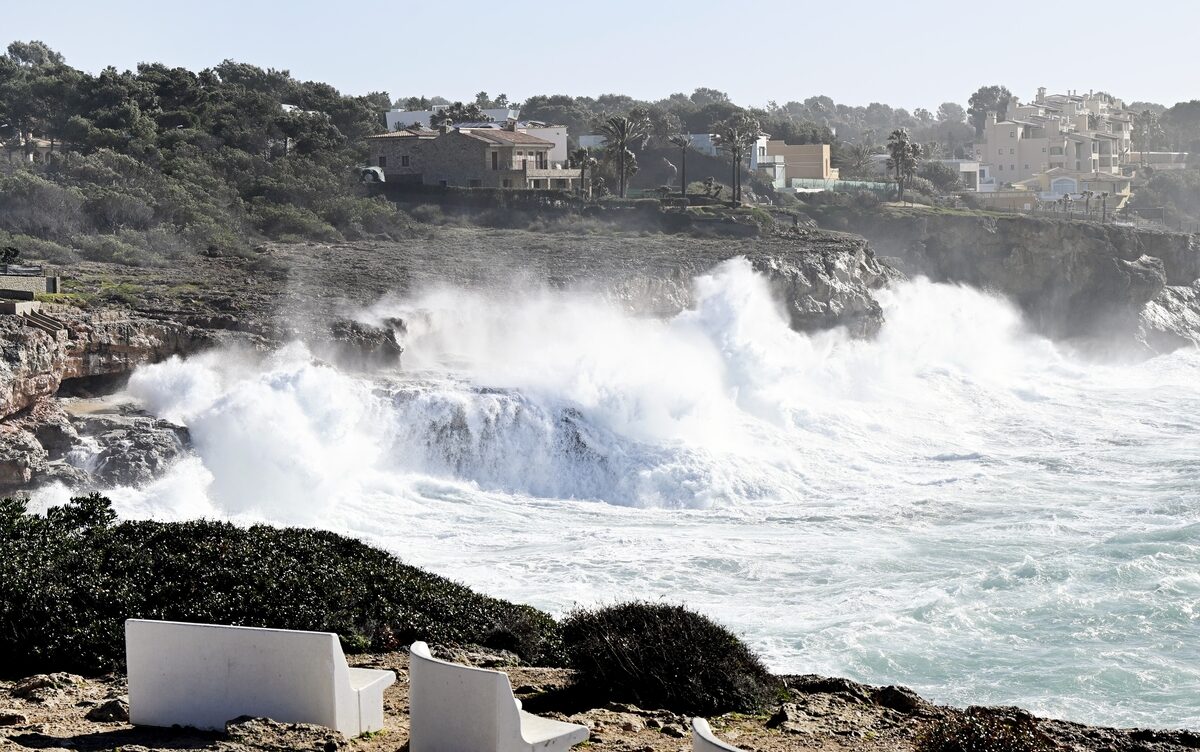
Residents and holidaymakers in parts of eastern Spain are being warned to keep an eye on the weather as heavy rain, hail, thunderstorms and strong winds affect the Valencia region and the Balearic Islands.
Mañana cambio brusco de tiempo:
➡️Tormentas fuertes o muy fuertes en el este peninsular, Ibiza, Formentera y Mallorca; podrían venir acompañadas de granizo y rachas muy fuertes de viento.
➡️Bajada notable o extraordinaria de temperaturas máximas en el norte y centro peninsular. pic.twitter.com/FJ0hT8ODF4
— AEMET (@AEMET_Esp) September 15, 2026
Orange and yellow weather alerts are in place on Tuesday, September 15, with coastal areas of the Comunidad Valenciana among those facing potentially dangerous conditions.
Orange and yellow alerts across Valencia
AEMET, Spain’s state weather agency, has issued warnings for a combination of heavy rainfall, thunderstorms, hail and strong winds. Parts of the Valencia region face the higher orange warning level, while yellow alerts cover other areas where storms could still cause difficult conditions.
Heavy downpours can cause localised flooding in a short space of time, particularly around low-lying roads, drainage channels and normally dry waterways. Hail and sudden gusts can also create problems for drivers, cyclists and anyone caught outdoors.
Conditions can change quickly during thunderstorms, meaning a quiet start to the day does not necessarily indicate what is coming later.
15/09 11:36 AVISOS MAÑANA | Comunitat Valenciana: tormentas y lluvias. Nivel máximo de aviso: naranja.
Actualizaciones en https://t.co/R3Fs2JzKgr pic.twitter.com/OIOz49xADr— AEMET Comunitat Valenciana (@AEMET_CValencia) September 15, 2026
Mallorca faces another weather threat
Mallorca is also on alert, with thunderstorms and heavy rain creating a risk of flooding in vulnerable areas. That warning will be particularly important for anyone planning to travel around the island, as roads can become hazardous quickly when intense rain falls over a short period.
Mallorca has already experienced a serious spell of stormy weather this month. On September 9, emergency services dealt with 185 incidents on the island after heavy rain, thunderstorms and strong winds, with flooding and fallen trees among the problems reported.
Thursday, September 17, is now attracting particular attention, with forecasts pointing to a potentially severe combination of storms and flooding in Mallorca.
Drivers called on to take care
Anyone travelling during periods of intense rainfall should avoid flooded roads and never attempt to drive through water when its depth is unclear.
Cars can lose grip surprisingly quickly in standing water, while fast-moving floodwater can become dangerous even when a road appears passable. People living in affected areas should also bring in loose items from balconies and terraces, check drains and gutters, and keep up with the latest local warnings.
AEMET says its Meteoalerta system provides updated information on potentially dangerous weather across Spain for up to 72 hours, so conditions and warning levels can change as forecasts are updated.
Anyone in Valencia, Alicante, Castellon or Mallorca should check the latest alerts before setting out, particularly if heavy storms are forecast for their area.

Spain Logs Its First Data Breach Allegedly Carried Out By A Rogue AI Agent
Six Spanish Pizzerias Named Among World’s 100 Best, As A Madrid Favourite Holds On To Its Top 10 Spot
Today In Spain: A Roundup Of The Latest News On Wednesday

Max Verstappen works with new race engineer at Italian Grand Prix

One Critically Injured And Nine Others Hurt After Carbon Monoxide Leak Aboard Ship Docked In Barcelona Port

EXPLAINER: Inside The Row Over The Right-Wing Mayor Of Madrid’s €6m Penthouse – And Why It Could Offer A Lifeline To Pedro Sanchez


-
 Uncategorized2 weeks ago
Max Verstappen works with new race engineer at Italian Grand Prix
-
 Barcelona2 weeks ago
One Critically Injured And Nine Others Hurt After Carbon Monoxide Leak Aboard Ship Docked In Barcelona Port
-
 Chamberi1 week ago
EXPLAINER: Inside The Row Over The Right-Wing Mayor Of Madrid’s €6m Penthouse – And Why It Could Offer A Lifeline To Pedro Sanchez
-
bravery1 week ago
10-year-old jumps from burning French farmhouse, saves two dogs and teddy
-

 ElPais2 weeks ago
A Traveling Circus For The Horror Of Gaza
-

 Uncategorized1 week ago
Max Verstappen hails
-
Central European Time2 weeks ago
Spain’s 2026 plan to end clock changes has failed, and the next change is already locked in
-

 Andalucia1 week ago
There’s One Chief Consultant Orthopaedic And Trauma Surgeon In Marbella You Can Trust Under The Knife