Connect with us

%

Gibraltar Reminds Everyone What Country They Are In With Red Phone Boxes And London-Style Bus Stops

Published

on

gibraltar-reminds-everyone-what-country-they-are-in-with-red-phone-boxes-and-london-style-bus-stops

More symbols of identity added. Credit: GibGov

As Gibraltar becomes physically and economically more connected to Spain, something rather British is appearing on its streets.

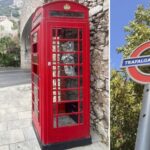
Eight new red telephone boxes are planned to be added for some of the Rock’s best-known tourist locations, including Casemates Square, Europa Point and the Alameda Gardens.

Nobody will actually be able to make a phone call from them. The traditional K6-style boxes are decorative, designed to preserve one of the most recognisable symbols of British life and give visitors another familiar photo opportunity. That might sound like little more than a tourism project, but the timing makes the idea rather more interesting.

Eight red phone boxes for Gibraltar

Gibraltar’s Tourist Office has submitted plans for eight new telephone boxes at seven locations.

Cathedral Square, the American War Memorial, Casemates Square, Europa Point, Princess Caroline’s Battery, the Alameda Gardens and the Pillars of Hercules on the Upper Rock are all included. Casemates Square will get two, joining an existing red telephone box to create a row of three.

Each new structure will follow the classic K6 design created by British architect Sir Giles Gilbert Scott. Introduced in 1935 for the Silver Jubilee of King George V, the design became one of the most recognisable pieces of British street furniture.

The new boxes will stand about 2.5 metres high and measure roughly 90 centimetres wide and deep. They will have red finishes and safety glazing, but their telephones will not work. Gibraltar has already shown that it regards these symbols as more than outdated street furniture. A 2024 public consultation looked at the future of existing telephone boxes after vandalism caused maintenance problems, with the traditional designs retaining public support.

Is Gibraltar becoming more visibly British?

A bigger question sits behind the new phone boxes. Since July, Gibraltar has been much more closely connected to Spain for everyday movement. Routine checks at the land frontier disappeared on July 15 under the new UK-EU treaty, creating much easier movement between Gibraltar and La Linea and giving businesses and workers a new framework for operating across the border.

Gibraltar’s Government has repeatedly stressed that closer practical ties with Spain do not change the territory’s constitutional position. Chief Minister Fabian Picardo described the July agreement as providing greater fluidity at the frontier while protecting what he called Gibraltar’s exclusively British sovereignty. National Day celebrations in September also put British and Gibraltarian identity firmly at the centre of the public conversation. That makes the new street furniture an interesting visual backdrop to the changes.

London-style bus stops add to the picture

Telephone boxes are not the only recent addition with an unmistakably British feel. In September, Gibraltar introduced a new bus-stop design modelled on signs used across London. Gibraltar’s Government explicitly said the initiative was intended to promote the territory’s “unique Britishness”, while describing the new signs as adding British character to the urban landscape.

Signs have been installed at locations including Market Place, Convent Place, the British War Memorial, Commonwealth Park, Kingsway, the Frontier, Europort, Europa Point, Eastern Beach, Rosia, Catalan Bay and Trafalgar Cemetery.

Taken separately, a red telephone box or a London-style bus stop is hardly a political statement. Taken together, however, they form a recognisable visual language.

A border can disappear without an identity disappearing

Gibraltar’s Deputy Chief Minister Gemma Arias-Vasquez made precisely this point during debate over the new treaty earlier this year. She argued that Gibraltar’s identity does not depend on a physical barrier and said closer cooperation with Europe would not make her feel less British or less Gibraltarian. That distinction is important.

The old frontier was one of the most obvious physical reminders that Gibraltar and Spain belonged to different political systems. With routine checks now gone, that daily visual separation has changed dramatically.

Gibraltar’s response has not been to retreat from closer links with its neighbour. Instead, official statements have repeatedly presented the new arrangements as compatible with British sovereignty and Gibraltarian identity.

Heritage is becoming part of that message too. Historic structures around the former frontier have been given formal protection so they can continue to tell the story of the boundary that once divided the Rock from Spain.

More connected to Spain, but still recognisably Gibraltar

For British visitors, the red telephone boxes will be instantly familiar. For Spanish visitors from the Campo de Gibraltar, they provide another reminder that crossing into Gibraltar still means entering a place with its own distinctive British-influenced culture. That is perhaps why these apparently old-fashioned objects have found a new role.

Gibraltar no longer needs a physical queue at the frontier to make its separate identity visible. A row of red telephone boxes in Casemates Square can do something rather different: turn a piece of British street history into a tourist attraction.

Whether that is deliberate cultural messaging or simply good tourism design is impossible to say without the Gibraltar Government making that connection itself. What is clear is that the Rock is becoming easier to reach from Spain while continuing to put its British character firmly on display.

And that leaves an intriguing question for anyone watching Gibraltar’s next chapter. So, when you next pop into the Rock, take a photo of yourself next to one of the new phone boxes, just so everyone knows exactly where you are, and what country you are in.

%

€5.50 Full English Sparks Benidorm Bar Row After Customer Leaves One-Star Review

Published

on

e5.50-full-english-sparks-benidorm-bar-row-after-customer-leaves-one-star-review

British-style breakfasts are hardly difficult to find in Benidorm. Photo credit: The Corner Bar on Facebook

A €5.50 full English breakfast might not sound like the sort of thing that would ruin anyone’s holiday, but one Benidorm customer thought it was expensive enough to leave a one-star review. His complaint has since turned into a very public row after the owner of The Corner Bar responded online, defended what was on the plate and told him, rather bluntly, to “have a day off”.

The breakfast in question costs €5.50 and includes a fairly substantial list of traditional fry-up favourites. The customer, Peter Jones, nevertheless warned others about the price, saying he believed a full English could be found elsewhere in Benidorm for €4.50 or less.

Customer takes issue with €5.50 breakfast

Jones wrote in his review that people should be careful about the OAP discounts, particularly at breakfast, pointing to the €5.50 price and claiming that a full English could be found elsewhere for €4.50 (£3.86) or less. That €4.50 figure was Jones’s own comparison rather than a price established by The Corner Bar, so it is not evidence that an identical breakfast is generally available elsewhere for that amount.

The review caught the attention of Ashley, who runs the British-owned bar with her family. Rather than quietly accepting the criticism, she shared the complaint on Facebook and questioned whether the price alone justified a one-star rating.

She said customers were perfectly entitled not to like the food, service or even the people running the business, but objected to the suggestion that customers needed to be careful about the bar’s prices. The response quickly attracted hundreds of comments, turning one unhappy breakfast review into a much bigger discussion among people familiar with the bar.

What does €5.50 actually get you?

Ashley used the opportunity to spell out exactly what customers receive for the €5.50. The Corner Bar’s No4 breakfast contains one portion of English bacon, one Irish sausage, black pudding, a fried egg, toast made with Roberts bread, Heinz beans, fresh mushrooms and tinned tomatoes. It is also cooked fresh to order, either by Ashley herself or by two British cooks who, according to her, have been working at The Corner Bar for years. Her message to Jones was unmistakable: “Have a day off, Peter!”

The argument is particularly interesting in a resort where British-style breakfasts are hardly difficult to find. Benidorm has long had a market for inexpensive British food, from everything from traditional Sunday lunches to enormous breakfast challenges.

Customers rush to defend the bar

Once Ashley’s response appeared online, customers began coming to the bar’s defence. Several people who had eaten the €5.50 breakfast defended the price, with one customer saying the No4 offered good value. Another was less diplomatic, telling Jones that if he wanted to pay €4.50 he could do so, but suggesting that the cheaper breakfast would not be as good. Someone else simply pointed out that the difference between the two prices was only €1.

Ashley later thanked customers for backing the business, admitting that reviews can be difficult to read after a long day when you are running a small family business. She explained that The Corner Bar is a family business with five working members of staff alongside the owners and said they do their best to keep everything going.

The reaction also gives some context to the single one-star review. The Corner Bar has 1,170 Google reviews with an average rating of 4.5 out of five, while its TripAdvisor rating stands at 4.2 from 585 reviews. Michelle Baker, who has lived in Benidorm for more than 40 years, shared the story on her Benidormforever Facebook page and said: “LOVE that Ashley from The Corner Bar Benidorm called this chap out… there’s just no pleasing some people!”

Benidorm’s breakfast price debate

There is clearly no shortage of competition for anyone looking for a fry-up in Benidorm. EWN has previously reported on on Uncle Ron’s €9 Belly Buster breakfast challenge, which comes with four eggs, four sausages, four rashers of bacon, hash browns, toast, fried bread, beans, mushrooms and tomatoes.

That is obviously a very different proposition from The Corner Bar’s No4, but it shows just how varied the breakfast market can be in the resort. In this case, however, the argument was never really about whether €5.50 is the cheapest breakfast in Benidorm.

It came down to whether a customer considered the price enough of a problem to give a family-run bar one star, and whether the owner was prepared to let that criticism pass without answering back. Judging by the hundreds of people who joined the conversation, Ashley was certainly not the only person with an opinion.

Continue Reading

%

EU Unemployment Shake-Up For Foreign Workers In Spain As 22-Week Rule Arrives

Published

on

eu-unemployment-shake-up-for-foreign-workers-in-spain-as-22-week-rule-arrives

People receiving unemployment benefits will be able to go to another EU country to look for work. Photo credit: Sodel Vladyslav/Shutterstock

If you have ever worked in Spain while living elsewhere in Europe, or crossed a border for work and assumed your unemployment contributions would follow you if the job disappeared, the rules around who actually pays your unemployment benefit are about to change.

A new EU agreement means that, in certain cross-border cases, the country where you worked and paid into the social security system for at least 22 uninterrupted weeks will become responsible for your unemployment benefit, rather than automatically leaving that bill with the country where you live.  That could be particularly relevant to people whose working lives do not fit neatly inside one country, including workers who live in one EU state and work in another.

Spain could become responsible for unemployment payments

The change was formally approved by the Council of the European Union on September 28, after almost a decade of negotiations over how social security should work when workers move between countries.  Under the new rules, a person who has been employed, self-employed or covered by social insurance in an EU country other than their country of residence for an uninterrupted 22 weeks will generally receive unemployment benefits from the country where they last worked.

There is an important condition, however: the worker must still satisfy the national eligibility rules of the country responsible for paying the benefit. The EU has not created a single European unemployment payment, and Spain is not being told to give every foreign worker a Spanish benefit after five months of work. 

For someone working in Spain but living in another EU country, that distinction could make a significant difference if they lose their job. The reform is based on the principle that social protection should follow a person’s real connection to the labour market. If someone has spent a substantial period working and paying contributions in Spain, the new system makes Spain responsible for the unemployment benefit in the circumstances covered by the rules.

What happens if you live in Spain?

The situation is more complicated for people who actually live in Spain, because the new 22-week rule is specifically aimed at cross-border situations where the country of work and country of residence are different. EU social security rules already require institutions to take account of previous periods of insurance or employment in other European countries when determining entitlement to benefits. The reform does not remove Spain’s own unemployment rules or turn contributions from another country into an automatic Spanish payment. 

It also does not mean nationality determines who gets paid. The EU rules cover EU citizens and, under certain conditions, legally resident nationals of non-EU countries who have moved between EU countries. They also apply across the European Economic Area and Switzerland, with separate arrangements governing some UK cases.  That means the important questions are generally where you live, where you worked, how long you were covered there and whether you meet the national requirements, rather than simply whether you are Spanish or a foreign national.

Unemployment benefit can also follow you abroad

There is another change that could affect people living in Spain who lose their jobs and want to look for work elsewhere in Europe. Under the revised rules, people receiving unemployment benefit will be able to take that benefit with them while looking for work in another EU country for six months. The current system generally allows three months, although an extension to six months can currently be granted in certain circumstances. 

The new system makes six months the minimum period for this export of unemployment benefits, with the country responsible for the payment able to extend it further, potentially until the person’s entitlement runs out.  For someone in Spain who loses their job but sees better opportunities in France, Germany or another EU country, that gives them more time to search without immediately losing their unemployment support.

The rules are changing across the EU

Unemployment is only one part of the reform. The new legislation also covers long-term care benefits, family benefits, access to certain social benefits and the rules applying to posted workers and people who work in several EU countries. It is designed to make it clearer which national system applies when someone’s employment crosses borders. 

There is also a stronger focus on preventing abuse, including better cooperation and information-sharing between national authorities. The reform is not yet something workers can simply use from today. The regulation must first be published in the Official Journal of the European Union before it enters into force. 

For workers in Spain, the headline figure to remember is therefore 22 weeks, but not as a new shortcut to Spanish unemployment benefit. It is the threshold that changes which country can become responsible for unemployment payments when someone’s job and home are in different EU countries, provided the other eligibility requirements are met.

Continue Reading

%

Eiffel Tower Chief Steps Down After Female Staff Removed During Hindu Visit

Published

on

eiffel-tower-chief-steps-down-after-female-staff-removed-during-hindu-visit

The organisation said its monks’ religious practices had been explained to the management. Photo credit: Tsyb Oleh/shutterstock

If you turned up for work, you would expect to just show up and do your job without having to think about whether you were the right person to be seen in a particular area. You certainly would not expect to be told to move out of sight because a particular group of visitors was arriving.

But that is what female employees say happened during a private visit earlier this month, after they were moved from some of their usual positions and told to avoid certain areas. The fallout has now reached the top of the organisation, with its director general announcing that he will leave his position at the end of the year.

Female staff removed from their positions

The incident took place on September 5, when around 100 people linked to the Bochasanwasi Akshar Purushottam Swaminarayan Sanstha, known as BAPS, visited the Eiffel Tower privately. According to staff representatives, female employees were told to leave their normal workstations as the delegation moved through the tower, with men taking their places in some positions. Other women were instructed not to pass through certain areas while the group was there.

SETE, the company responsible for operating the Eiffel Tower, later acknowledged that arrangements had been made to limit interactions between the delegation and female staff. It said those conditions should never have been accepted. An internal investigation subsequently found failures in the organisation of the visit and described the resulting exclusion of female employees as unacceptable. The dispute was not simply about where employees were positioned during a private event. Staff representatives objected to women being moved or prevented from entering certain areas because of the religious requirements associated with the visiting delegation.

Eiffel Tower closed after staff protest

The dispute quickly moved beyond the workplace. Employees staged a walkout on September 7, forcing the Eiffel Tower to close to visitors for the day. Staff representatives demanded assurances that female employees would not again be removed from their positions or prevented from entering areas of their workplace because of the requirements of a visiting group. The incident also prompted political criticism and further scrutiny of the arrangements made by SETE.

The tower reopened after discussions between employees and management, but the issue continued to develop. Patrick Branco Ruivo, who has served as director general of the Société d’Exploitation de la Tour Eiffel since 2018, has now announced that he will leave his position at the end of 2026. SETE said the decision followed an investigation that identified failures in the organisation of the visit.

Religious group disputes what happened

BAPS has disputed the suggestion that it asked for female employees to be removed or hidden. The organisation said its monks’ religious practices had been explained to Eiffel Tower management in advance and were personal commitments that did not require women to be excluded. It also apologised for any pain or inconvenience caused by the incident. The delegation was visiting France for celebrations connected with the opening of a BAPS Hindu temple near Paris.

Its group included monks who follow religious vows concerning physical contact with women. That distinction matters because the investigation has focused on how the Eiffel Tower’s management responded to the visit. It has not established that BAPS directly ordered female employees to leave their jobs. SETE’s findings instead identified failures in the way the visit was organised which resulted in female staff being excluded.

New rules planned for future visits

SETE chairman Ariel Weil has announced plans for a dedicated protocol department, alongside new measures and training intended to reinforce gender equality. The changes are intended to prevent similar problems during future private or official visits, particularly where visiting groups have specific religious or cultural requirements.

The Eiffel Tower welcomes millions of visitors every year, meaning private delegations and special events are part of its normal operations. The controversy has raised questions about how far an organisation should go to accommodate a visitor’s religious practices when those arrangements affect its own employees.

For the women involved, however, the issue was much more immediate. They arrived at work and found themselves being moved from positions they normally occupied or told to stay away from certain areas because of the people visiting. The incident has since resulted in a staff protest, the temporary closure of one of France’s most recognisable landmarks, an internal investigation and the forthcoming departure of the man who runs the organisation responsible for the Eiffel Tower.

Continue Reading
Advertisement
Advertisement

Spanish Real Estate Agents

Tags

Trending

Copyright © 2017 Spanish Property & News