Connect with us

%

Cat Lovers In Rincon De La Victoria

Published

on

cat-lovers-in-rincon-de-la-victoria

Stray cats come in large numbers across Rincon de la Victoria and in many parts of Spain. If you have ever wanted to help out and wondered how, Rincon de la Victoria has the answer with local lessons.

Course for cat carers

Rincon de la Victoria held the sixth edition of its course for feeders and trappers of feline colonies on Wednesday, September 30, running from 5.15pm to 7.15pm in the council chamber at the local town hall.

The town hall’s health and consumer affairs department, organised the sessions, covering feeding, handling and capturing the animals, as well as guidance for carers on managing colonies.

What is CER

CER stands for Captura, Esterilizacion y Retorno: capture, sterilisation and return. Cats are trapped, neutered by a vet and returned to their territory. Town hall rules make this the priority method for settling neighbour complaints about colonies. They also call for courses like this one, so that volunteers follow shared guidelines on capture, feeding, hygiene and veterinary care. Our earlier report on how Rincon de la Victoria is managing its feral cats ethically explains the approach in more detail here https://euroweeklynews.com/2026/03/27/rincon-de-la-victoria-boosts-feral-cat-control-with-ethical-management-to-cool-local-tensions/.

Rincon de la Victoria currently has around 90 registered colonies, according to local media. It reports that 1,109 cats have been sterilised, 549 of them with a microchip. Close to 150 volunteers have completed the course in earlier editions.

Wide spread issue across Spain

Local councils are responsible for managing community cats under Spain’s Animal Welfare Law, known as Law 7/2023. Volunteers in several regions say councils should fund that work rather than rely on unpaid carers. You can also read about how €1,950,000 of a new €4 million animal welfare fund has been reserved for councils that manage cat colonies.

If you missed the September session and would like to help out where you can, email coloniasfelinasrincon@gmail.com for more information and to ask about future upcoming courses.

%

90% Of Spaniards Say This Dish Can Help You Reconcile After A Row

Published

on

90%-of-spaniards-say-this-dish-can-help-you-reconcile-after-a-row

If you’re still refusing to speak to each other, someone just needs to make the first move. Photo credit: PeopleImages/Shutterstock

One of the last things you want to do after a heated argument is sit down and have a meal with the person you’ve just fallen out with. But Spain may have found a surprisingly tasty way around that awkwardness, and it seems the answer could be sitting right in the middle of the table.

A new study has found that 90 per cent of people in Spain believe one particular meal can help bring people back together after a disagreement. And the findings suggest it may do rather more than simply give two people something to eat while they avoid looking at each other.

Spain has found its peace offering

The study, commissioned by Arroz La Fallera, asked 1,000 people aged between 18 and 65 about the role food plays in bringing people together. Across Spain, 85 per cent said sharing a paella can help people reconcile after a conflict, while in the Valencian Community, where the dish has particularly strong cultural roots, that figure climbs to 90 per cent.

The results also suggest this isn’t just something people like the idea of. More than half of those surveyed, 54 per cent, said they had already used a paella meal to smooth over differences with someone, while another 44 per cent said they had actually made peace with someone over a paella. So while nobody is suggesting that a plate of rice can magically settle every family feud, plenty of people apparently believe there is something about sitting down together that helps.

A meal that gets people talking

The survey also looked at what happens during the meal itself, and this is where the findings become particularly interesting. A huge 93 per cent of respondents said sharing a paella makes them more willing to listen without interrupting, followed by 92 per cent who said they would be prepared to discuss their differences respectfully. Another 92 per cent said they would be more willing to look for common ground. Perhaps that makes sense when you consider how paella is normally eaten. It isn’t usually a quick meal grabbed between two appointments.

The pan goes in the middle of the table, everyone gathers around it and the meal becomes something shared, creating time to talk, listen and, perhaps, remember why you liked the person before you started arguing with them. In the Valencian Community, 90 per cent also said sharing paella was a good way to reconnect with family or friends, giving the dish an even stronger connection with social occasions there.

Paella beats tortilla

The research also asked Spaniards to name their favourite dish, and paella came out on top. Forty-five per cent chose paella as their favourite, putting it comfortably ahead of tortilla de patatas, which was selected by 24 per cent. That gives paella a fairly impressive double role: it is not only the dish most strongly associated with bringing people back together in the survey, but also the one most people chose as their favourite.

Its connection with social occasions may help explain why. Paella is often associated with family meals, weekends, celebrations and gatherings where the food is prepared for several people rather than served as an individual plate. The cooking, the waiting and the meal itself all create reasons for people to stay together.

Could food really end an argument?

There is an obvious catch. The survey shows what people believe about sharing paella; it cannot prove that eating one will actually end an argument. The research was also commissioned by Arroz La Fallera, so the findings need to be viewed in that context. But the responses do show how strongly food is tied to socialising in Spain. The fact that 54 per cent of those surveyed said they had already used a paella meal to smooth over differences suggests this is not simply a theoretical idea.

And with 44 per cent saying they had actually reconciled with someone over one, there are plenty of people who can apparently point to a paella as part of a successful peace treaty. The study was released around World Paella Day on September 20, when the dish was already taking centre stage across Spain and beyond. Perhaps there is something to be said for a solution that requires neither a mediator nor a carefully worded apology. If you’re still refusing to speak to each other, someone just needs to make the first move and bring out the paella.

Continue Reading

%

Costa Del Sol Tolls Winter Rates October 1

Published

on

costa-del-sol-tolls-winter-rates-october-1

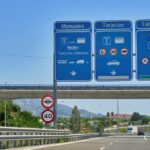
Good news is back for anyone heading across the Costa del Sol this autumn. Toll prices on the AP-7 have returned to their cheaper winter prices from October 1. Summer peak pricing ended on September 30, so the standard 2026 tariffs now apply at the Calahonda, San Pedro Alcantara and Manilva toll booths.

Standard prices for cars and light vehicles

Each booth charges in two ways. The “troncal” is the main toll on the motorway itself, while the “lateral” is a smaller charge for joining or leaving via a slip road. The light category covers motorbikes, cars, certain two-axle vans and two-axle minibuses. All prices include IVA, Spain’s version of VAT, and the summer price is in brackets:

Calahonda main toll: €5.70 (€9.25)
Calahonda slip road: €3.55 (€5.75)
San Pedro main toll: €3.85 (€6.25)
San Pedro slip road: €2.20 (€3.60)
Manilva main toll: €2.45 (€4.05)
Manilva slip road: €1.20 (€2.00)

Driving the full route between Malaga and Guadiaro now costs €12 each way, compared with €19.55 over the summer.

What about heavy vehicles?

Reductions are smaller for bigger vehicles. “Pesado 1” (Heavy 1) covers two- and three-axle lorries and some vans or minibuses towing trailers. Prices at Calahonda and San Pedro stay as they were in summer, but Manilva falls from €4.60 to €3.65 for the main toll and from €2.25 to €1.80 for the slip road.

“Pesado 2” (Heavy 2) includes lorries with four or more axles and several types of coach. These drivers pay less at every booth:

Calahonda: €11.35 main toll (was €15.25) and €7.05 slip road (was €9.50)
San Pedro: €7.70 main toll (was €10.35) and €4.45 slip road (was €5.95)
Manilva: €4.80 main toll (was €6.95) and €2.35 slip road (was €3.40)

Why are tolls cheaper from October?

Ausol, the company that runs the motorway, uses a two-season system set under national government regulations. Peak rates apply from June 1 to September 30, plus 17 days around Easter, running from the Friday before Holy Week to the Sunday after Easter Sunday. Standard rates cover everything else.

Summer prices sit roughly 63% above standard ones, which is why October feels like a relief even though this is simply the normal winter tariff rather than a new discount.

How do these prices compare with last winter?

Standard rates are a touch higher than a year ago. Calahonda’s main toll went from €5.50 to €5.70, San Pedro’s from €3.71 to €3.85, and Manilva’s rose by 9 cents to €2.45.

Continue Reading

%

Two Guardia Civil Officers Shot

Published

on

two-guardia-civil-officers-shot

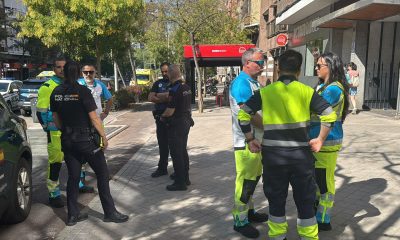
Two Guardia Civil officers have been injured in a shooting in Catalonia after a police operation targeting suspected motorway thieves ended in an armed confrontation.

The incident happened at around 10pm on Thursday, October 1, in the Can Parellada area of Terrassa, Barcelona.

One of the officers was seriously injured after being hit by four shots and was taken to Parc Taulí Hospital in nearby Sabadell for treatment.

Despite the severity of his injuries, his life is not believed to be in danger. The second Guardia Civil officer was also injured during the confrontation.

Three suspects have since been arrested in connection with the shooting, according to the latest reports from the Mossos d’Esquadra investigation.

Officers were following suspected motorway thieves

The two Guardia Civil officers were working in plain clothes and travelling in an unmarked vehicle as part of an operation targeting a group of suspected thieves.

The suspects are described by Spanish police sources as ‘teloneros’, a term used for criminals who target vehicles and lorries on motorways, often stealing goods from trucks.

The operation began around the AP-7 motorway, close to the Porta de Barcelona service area in Castellbisbal.

A pursuit subsequently developed and continued into Terrassa, eventually reaching Calle Europa in the Can Parellada neighbourhood.

According to investigators, the suspects opened fire after discovering that they were being followed by the Guardia Civil.

An exchange of gunfire then took place in the street.

The more seriously injured officer suffered four gunshot wounds, including injuries to his abdomen, leg and arm. He was taken to hospital and required surgery. Reports say he remains outside life-threatening danger despite the seriousness of his injuries.

Three arrests after overnight police operation

The Mossos d’Esquadra launched an investigation immediately after the shooting, with its Criminal Investigation Division taking charge of the case.

Police subsequently located several of the suspected attackers inside an occupied warehouse in Terrassa.

A specialist Mossos unit, the GEI, was brought in during the early hours of Friday morning before officers entered the building and arrested three people.

One of those detained is suspected of being the person who fired the shots, although the investigation is continuing and further arrests have not been ruled out.

The incident has highlighted the risks faced by officers carrying out surveillance operations against organised groups involved in motorway and lorry thefts.

The investigation remains ongoing as detectives work to establish exactly what happened during the pursuit and determine the involvement of each of those arrested.

Continue Reading
Advertisement
Advertisement

Spanish Real Estate Agents

Tags

Trending

Copyright © 2017 Spanish Property & News