
ElPais
Do Tutankhamun And Nefertiti Share A Tomb?

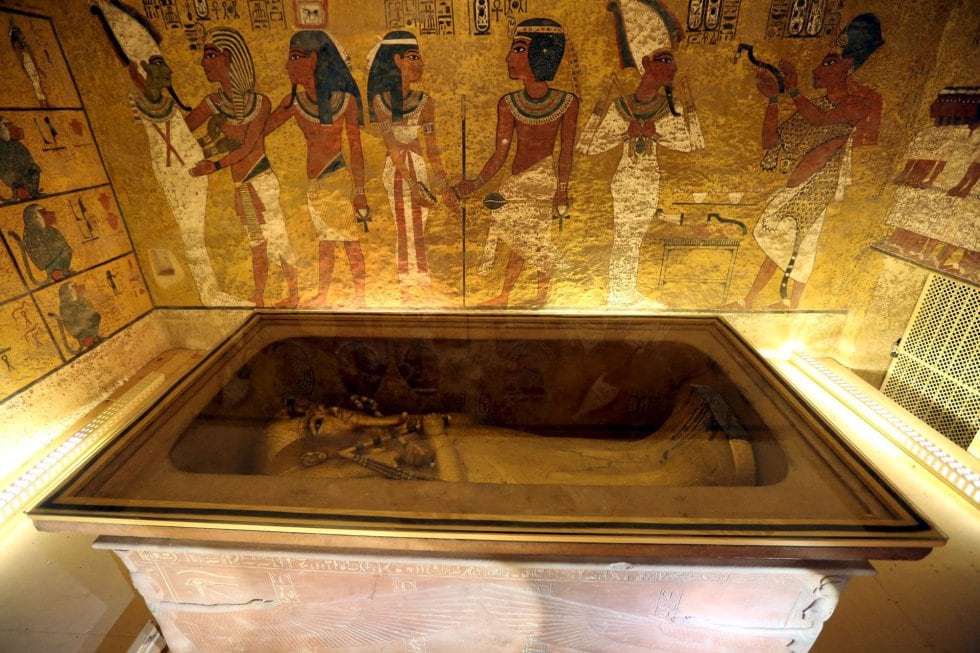
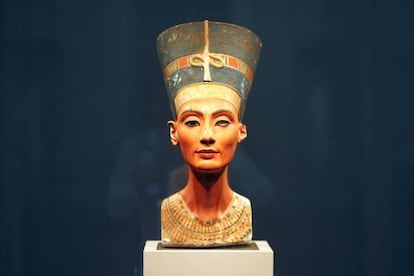
In a development that has revived one of Egyptology’s most intriguing debates, the theory that Tutankhamun and his stepmother Nefertiti, the celebrated chief queen of Akhenaten whose bust is one of the most iconic images of Ancient Egypt, may share the same eternal resting place has returned to the spotlight.
New research has once again revived the remarkable and tantalising hypothesis put forward in 2015 by the prominent British Egyptologist Nicholas Reeves, which sent shockwaves through the field of Egyptology. According to the theory, Tutankhamun’s small tomb in the Valley of the Kings (KV62) contains additional unexplored chambers and is in fact only part of a substantially larger burial complex, hidden behind what appear to be the solid walls of the known tomb.
Reeves has stuck to that view ever since, against all odds. Drawing on a meticulous iconographic analysis of the paintings in the burial chamber and on high-resolution photographs taken by the Spanish company Factum Art while scanning the tomb to produce a replica — photographs that appear to suggest the presence of sealed doorways — he argues that the tomb was originally designed for Nefertiti, with Tutankhamun effectively an interloper, and that the queen’s mummy may still lie within undiscovered chambers.
Eleven years ago, we seemed to stand on the very threshold of a potentially historic discovery. The tests carried out at the time proved inconclusive. We were told that further investigations would be needed. Eyebrows were raised across the Egyptological community. Zahi Hawass, in his characteristically categorical fashion, dismissed the whole idea as nonsense. And there matters were left, mercilessly so, as we continued to wonder, with a mixture of anticipation and scepticism, what secrets and marvels might lie, if any did, beyond Tutankhamun’s burial chamber.
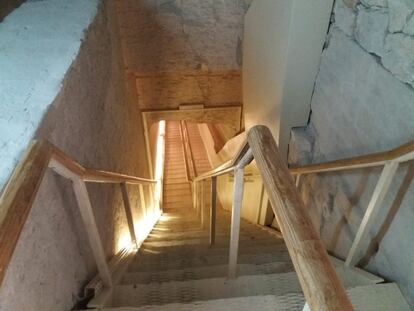
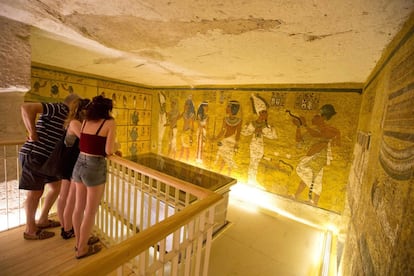
Visiting Tutankhamun’s tomb has never been the same since. A new mystery gnaws at you. Are you standing only in the outer portion of a tomb that extends much farther beyond? With Nicholas Reeves’s theory in mind, you find yourself in the antechamber, looking to the right, unable to shake the thought that something — a passageway, perhaps, or undiscovered rooms — may lie hidden behind the northern wall of the burial chamber, beyond the sarcophagus, where the famous scenes of the young king’s funeral are depicted.
Yet no matter how intently you stare, however hard you try to pierce the wall with your gaze, you see nothing. Nothing except your quickened pulse and a marked tendency to sigh. Nor does Tutankhamun himself offer any clues. Behind you, his mummy seems almost to mock your curiosity with its faint, rabbit-like grin.
Is Tutankhamun merely an intruder, a cuckoo chick in Nefertiti’s nest, as Reeves so poetically suggests? Stranger discoveries have been made in Egypt. One need look no further than neighboring KV5, the tomb of the sons of Ramses II. Excavated in 1825 and long thought to be relatively modest, it was revealed in its full extent by Kent Weeks in 1995: a vast funerary complex comprising 130 chambers linked by a network of corridors.
The obvious question is why no holes are drilled to find out whether anything lies beyond the walls of KV62. So far, the Egyptian authorities, along with most Egyptologists, have not considered the evidence strong enough to justify such invasive tests on one of the most famous monuments in Egypt, and indeed the world. As a result, researchers have had to rely on non-invasive methods, which are rarely capable of providing conclusive answers.
And now Reeves and his supporters are back on the offensive. On September 17, they published a lengthy, detailed and scholarly study, A Review and Archaeo-Geophysical Assessment of the Structure and Morphology of the Tomb of Tutankhamun (KV62), the fourth paper in a series collectively titled The Burial of Nefertiti?, a veritable soap opera by now, some might say.
The 57-page paper, published in the Occasional Papers of the Amarna Royal Tomb Project, directed by Reeves himself, and once again highlighted by Nature, is co-authored by Reeves, former antiquities minister and archaeologist Mamdouh Eldamaty, a firm believer in the extended-tomb theory; geophysicist Abbas Mohamed Abbas; and George Ballard, a specialist in the investigation of historic structures.
The article details two new research campaigns carried out inside and around the tomb under the auspices of Egypt’s Supreme Council of Antiquities (SCA). In their search for evidence of unknown spaces, the researchers deployed an array of technology worthy of the Death Star, including microgravimetry, a non-destructive geophysical technique that measures minute local variations in the Earth’s gravitational field to detect differences in subsurface density.
The authors of the study argue that it can now be said that “the structure of KV62 predates the interment of Tutankhamun and is likely to be more extensive than traditionally understood.” That alone, the possibility that Tutankhamun’s tomb is larger than previously thought, would be a bombshell.
I read the paper with all the excitement you might imagine, an excitement that gradually waned as the text ventured ever deeper into dense scientific terminology that lies well beyond my modest understanding (“this simple program used the Talwani algorithm to calculate the Bouguer anomaly over a polygon”; and they say hieroglyphs are difficult). Still, taken as a whole, it is highly stimulating.
The researchers place themselves under the patronage of Howard Carter, who, they argue, had already suspected that the tomb continued beyond its known limits, although the exploratory trenches he allegedly dug in secret to test the idea were, according to the authors, in the wrong place. He failed to take into account that queens’ tombs turn to the right.
The authors begin by revisiting earlier work and Reeves’s original hypothesis that the layout of KV62 extends beyond what is visible today. They acknowledge that the results of the initial tests carried out between 2015 and 2018 were insufficient to prove anything, but argue that the new approach, combining multiple disciplines in a “holistic” methodology and making use of new technologies such as ground-penetrating radar, electrical resistivity tomography and microgravimetry, places us in a very different position.
In the first part of the paper, Reeves, who has incorporated the theory into the new edition of his reference work The Complete Tutankhamun, revisits the argument that Tutankhamun’s tomb is highly unusual for a royal burial of the 18th Dynasty and that there are two possible explanations.
The first is that it was originally a private tomb that was hastily adapted to house Tutankhamun and his funerary equipment following the young pharaoh’s unexpected death. The second is that KV62 was in fact a queen’s tomb, whose outer sections were repurposed for Tutankhamun’s burial, while the original owner’s interment was left undisturbed in deeper, inaccessible chambers.
According to Reeves, and it is all tremendously exciting, when Tutankhamun died, alterations were made to the front part of that queen’s tomb, namely Nefertiti’s, to accommodate the dead king and his possessions, while the remainder of the funerary complex was sealed off.
The Egyptologist points to modifications in the tomb’s decoration that, he argues, reveal this repurposing. In an initial phase, the central figure in the painted scenes would have been Nefertiti herself, acting as pharaoh after the death of her husband Akhenaten and ruling under the throne name of the enigmatic Smenkhkare, while Tutankhamun was depicted officiating at her funeral rites. In a second phase, the deceased became Tutankhamun and the officiant his successor, Ay.
What is now the burial chamber, the “House of Gold” in Ancient Egyptian terms, would originally have been little more than a passageway leading to the deeper reaches of a much larger tomb where the queen rested, or perhaps still rests. Reeves also identifies a number of apparent anomalies in the walls that, he contends, may indicate the presence of blocked entrances leading to the supposed corridor and to additional storage chambers for funerary goods.
To be precise, and to complicate matters still further, Reeves identifies four phases in the tomb’s development: an initial construction phase for a queen consort; a second modification following Nefertiti’s supposed elevation to co-regent; a third when she assumed the full rank of pharaoh after Akhenaten’s death; and a final phase, a decade later, when Tutankhamun died and the golden boy was put in there.
The second, highly technical section of the paper is authored by George Ballard and focuses on the tomb’s geophysical investigation. He reviews earlier studies, including those by Watanabe and Porcelli, as well as some findings that have not previously been published. None of these, he notes, proved conclusive in determining whether the cavities and voids detected beyond the tomb’s walls were anthropogenic in origin, that is, created by human activity.
Ballard nevertheless concludes that Reeves’s hypothesis has not been definitively disproved. “Geophysical investigation of the area surrounding KV62 has led to the identification of a number of intriguing features that could be passages or chambers,” he writes.
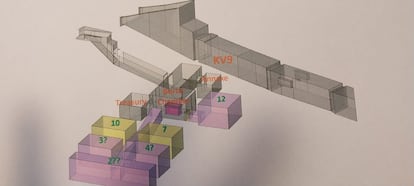
Ballard himself, together with Abbas, authors the paper’s third section, the heart of the matter. They describe the new tests carried out both inside and outside the tomb and emphasize that echoes consistent with rubble have been detected in two areas beyond the northern wall of the burial chamber. These could correspond to the fill customarily used to seal passageways in tombs.
These and other findings, they argue, are consistent with the proposition that chambers and passageways exist beyond the northern and western walls at the far end of Tutankhamun’s tomb. Particularly intriguing are a series of rectangular features on the other side of the northern wall. Equally compelling is the suggestion that readings indicating high-density material in the center of one of these spaces are exactly what one might expect to find “in a well-stocked, undisturbed funerary chamber.”
In their summary, the researchers state that they have identified, “with a high probability,” a funerary complex extending some 20 to 30 meters north of KV62. They add: “Five or six chambers are likely to exist in this space, and there is a clear expectation that the voids detected connect to themselves and to KV62 by passageways deliberately filled with rubble in antiquity.” Access to the complex, they suggest, appears to be “via a corridor whose access is concealed behind a mortared stone wall at the eastern end of the current burial chamber.”
In his conclusion, Mamdouh Eldamaty argues that the evidence strongly suggests ”the existence of at least one further storage chamber” in Tutankhamun’s tomb (which would be located behind the west wall of his burial chamber), as well as a continuation beyond the northern wall in keeping with the layout of royal burials.
“Even if this latter hidden complex does not ultimately prove to be the burial place of Nefertiti herself, the evidence increasingly points towards a connection with the Amarna royal family and the immediate circle of Akhenaten’s court,” he writes.
If the extension of the tomb were to be confirmed, he concludes, “it could potentially rank among the most transformative archaeological discoveries of the modern era, fundamentally reshaping our understanding of the political, religious, and dynastic history of the Amarna Period itself.”
The obvious next step, the researchers stress, now that non-invasive methods have been exhausted, is “direct investigation by finding a means to access directly one of the proposed new chambers and achieve a photographic inspection of its nature.”
For now, all we can do is keep wondering.
Sign up for our weekly newsletter to get more English-language news coverage from EL PAÍS USA Edition


Christa Pike, 50, has been hospitalized for almost a week after receiving two injections that allegedly contained lethal pentobarbital. On Tuesday, her lawyers said she had regained consciousness and speech, though her prognosis remains uncertain. The state of Tennessee had attempted to execute her for the 1995 murder of a fellow student, but Pike survived and was taken to hospital. If she stabilizes and is discharged, the state could send her back to death row and try to execute her again.
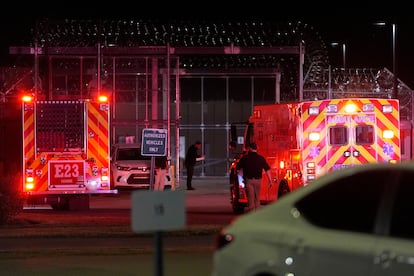
There is still no official account of what happened last Wednesday afternoon when the execution was briefly halted before the Supreme Court authorized it hours later, but experts say the pentobarbital may have leaked into the tissues around the vein, causing injuries that authorities have not yet confirmed. Because of what occurred during the failed execution, and the medical care required to save her life, Pike’s case raises ethical dilemmas about the obligations of the doctors and caregivers treating her and about the state’s responsibility for her condition.
Dr. Arthur Caplan, a bioethics expert and emeritus professor of medicine at New York University, says there is “no place for doctors, nurses, or any health worker in executions.” “That violates their oath not to cause harm. An execution is not intended to benefit the person,” he adds.
Caplan argues that even when a doctor’s presence at an execution is presented as a way to reduce suffering, there is a boundary between punishment and medicine. “Doctors have no role in executions. Even when someone says, ‘Well, if better-prepared doctors had been present, this execution wouldn’t have gone wrong’ — you don’t need doctors, you need better-trained executioners,” he says.
“Some argue that in parts of the world doctors help terminally ill people end their lives. But remember that is meant to relieve the suffering of someone who is dying. The patient is the focus. An execution is something the judicial system seeks to carry out,” Caplan explains.
Pike was sentenced to death 30 years ago for the murder of Colleen Slemmer, a 19-year-old fellow student, when Pike was 18. On September 30, after last-minute appeals that delayed the execution for several hours, she was given two injections of pentobarbital and, because she remained alive, was taken to a Nashville hospital. Over the weekend, her lawyers said she was unconscious and on a ventilator.
Caplan says the question of who legally represents a person who cannot communicate is fundamental. If there is no designated decision-maker to represent and defend her interests, a court must appoint someone. “I don’t think it should be the state of Tennessee, the prison warden, or any official involved in the execution attempt” who decides what care she should receive, he argues.
“Another question is who is in charge of her care. Doctors, absent other instructions, will try to improve her condition. But she may have a mother or other relative who wants to intervene and say, ‘I don’t want that. Let her die. She will be left with disabilities and I don’t think she would want to live like that,’” the expert adds.
Stephen Ferrell, one of Pike’s defense lawyers, said Pike signed a power of attorney naming someone else to make her medical decisions, according to The Associated Press.
The dilemma has precedents in cases of inmates with mental illnesses who do not understand they will be executed, Caplan notes. “Doctors have encountered situations where psychiatrists and psychologists treat someone on death row who has severe schizophrenia or many other mental health issues, and some have refused to restore that person’s competence to be executed so they cannot be put to death,” he explains.
Until the extent of Pike’s injuries — both physical and cognitive — after the failed execution is clear, it will not be known whether the defense will raise this kind of argument. It is also not yet known what steps the state of Tennessee will take in Pike’s case.
“Lending the prestige of medicine to execution”
The American Medical Association has declared it ethically incompatible for a physician to participate in a legally authorized execution because the profession is “dedicated to preserving life when there is hope of doing so.”
Caplan says the presence of healthcare personnel amounts to “lending the prestige of medicine to the execution,” giving the impression that “it is more humane because it is supervised by doctors.”
However, the presence of doctors does not by itself guarantee humane treatment. “We know that throughout history there have been doctors who participated in torture. The presence of doctors does not make things better,” he says.
Dr. Joel Zivot, an anesthesiologist and critical care physician who advised Pike’s lawyers, wrote in an essay in The New York Times over the weekend that authorities have “tried to make executions appear like medicine,” with stretchers, intravenous lines and cardiac monitors, but that it is a “sinister impersonation of the medical profession” without consent or therapeutic purpose.
The Tennessee Department of Correction has said that all protocol steps were followed.
“We have laws, judges and courts so society does not descend to the level of brutality of its criminals,” Caplan adds. “We try to set punishments that have a rationale and objectives, such as rehabilitation, deterrence — preventing others from doing what she did — or, in some cases, retribution, that you will pay for what you have done. But we also try to remain, so to speak, civilized and mindful of the ethical need for punishment not to reproduce the same cruelty as that of the criminals.” Pike’s case shows that this is not always achieved.
Sign up for our weekly newsletter to get more English-language news coverage from EL PAÍS USA Edition
Arnold Schwarzenegger
The Electoral Cost Of Trump’s Remarks That Iran Could ‘take Out’ LA Or San Diego

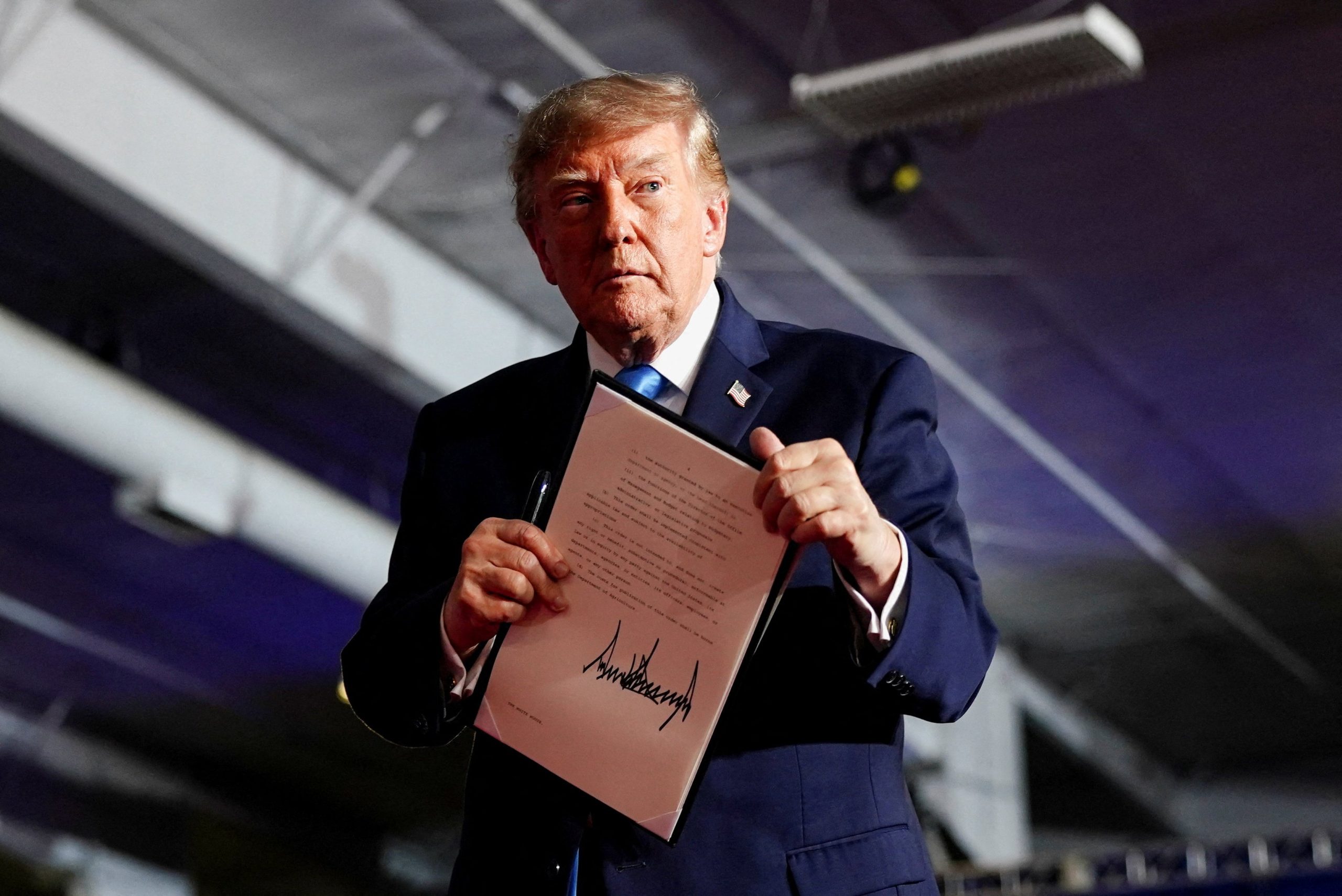
President Donald Trump said it without weighing the possible electoral consequences for Republican candidates in California, less than a month before the midterm elections. Far from generating laughter or support for his war with Iran, his comments have raised concern and could affect the vote in a state governed by Democrats since 2011. During a rally in Nebraska on Monday, the president said Iran could “take out” Los Angeles or San Diego, two of the largest cities in the United States, calling it a “small price” to pay to eliminate what he says is the threat posed by the Iranian regime.
As part of his campaign tour across the country to support Republican candidates —generally in places where a Republican victory is more likely, since in tighter races Trump could be more a liability than a boost— the president moved awkwardly from urging turnout in the midterms on November 3 to talking about war with Iran and the “small price” it represents “to keep the world safe.”
Polls show it will be difficult for Republicans to hold narrow control of both chambers of Congress, and Trump’s Nebraska speech seems unlikely to help them. “They could take out a city. Let them take — Let them take out Los Angeles. Let them take out San Diego. That’s — this is a very small price to pay, and it’s going to be over with very soon. It’s essentially almost over with,” Trump said of a war that has stretched for more than seven months without any clear signs of ending.
There is a fairly recent precedent for the threat Iran could pose to California. In March, Californians were alarmed after a report from the Federal Bureau of Investigation warned that the Iranian regime might be planning drone attacks against the state in retaliation for U.S. military actions on its territory. Both the federal government and Governor Gavin Newsom then said there was no imminent threat to California.
Trump’s recent remarks also appeared framed by rising oil prices and, consequently, higher gasoline and other fuel costs in the United States, driven by the conflict in a region crucial to crude transport. That “small price” Californians are paying, in particular, is actually very high: this week a gallon of gasoline sold for $6.37 —and in some places even $9— about 46% above the national average, according to AAA. The difficult economic situation, with the cost of living, health insurance and housing at the forefront, is voters’ top concern, according to various polls.
Ballots began arriving this week in the mailboxes of thousands of Californians.
“It complicates their campaigns”
Miguel Tinker Salas, professor emeritus of History and Chicano Studies at Pomona College east of Los Angeles, says Trump’s comments could have consequences for Republican candidates in California before the polls close. “It complicates their campaigns; it makes the political landscape harder for them,” the professor says.
In California, Republican hopefuls are running for governor, the state attorney general’s office and other key positions, as well as seats in the House of Representatives. For many of them it is an uphill race in a Democratic stronghold, and even more so after the recent redistricting pushed by Governor Gavin Newsom to favor his party’s contenders, part of a nationwide battle. In that context, Tinker Salas believes Trump’s Nebraska remarks will end up hurting his own candidates.
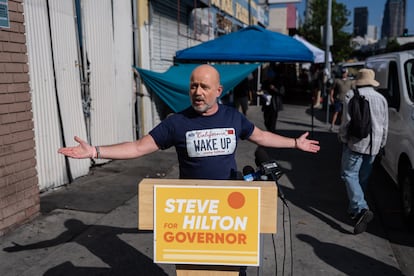
One of those most affected may be Steve Hilton, a British-born former political strategist for David Cameron’s Conservative Party before Brexit who became a conservative commentator on Fox News, and is now the Republican candidate for governor. So far, Hilton has not commented on the controversy. Since Arnold Schwarzenegger left office after two consecutive terms from 2003 to 2011, no other Republican has won that post.
“California hasn’t elected a Republican in many years. There was an opening with Hilton, in a way, because he was not only the opposition candidate but the anti-establishment opponent who had committed many failures. But as the campaign has unfolded he has lost support, and his closeness to Trump increases that loss,” Tinker Salas said.
Trump is very present in the race. He has officially endorsed Hilton, and a network of donors aligned with the president, from various parts of the country, continues to funnel resources into his campaign. The president’s strategy is not limited to the governorship: at the Republican convention ahead of the midterms he even said people should vote as if his name were on the ballot and promised a $5,000 payment to all American adults if his party retains control of the House of Representatives.
Hilton’s disadvantage
Hilton has fallen behind in the polls. One of the most recent surveys, conducted by the Institute of Governmental Studies at the University of California, Berkeley, shows the Democratic candidate, Xavier Becerra, has increased his lead: 58% of respondents said they would vote for him, compared with 33% who favored the Republican. The gap widened by seven percentage points from the previous measurement.
In that same poll, about 44% said their main concern was “reducing the cost of living,” while 37% identified “fighting the policies of the Trump administration” as their priority. Not even polls commissioned by Hilton’s campaign work in his favor. The latest, published this week, puts Becerra six points ahead: 45.7% to Hilton’s 40.1%.
Becerra has joined Democratic leaders —including Los Angeles Mayor Karen Bass and San Diego Mayor Todd Gloria— in criticizing Trump’s remarks. “Thirteen million Californians call LA and San Diego counties home. Their lives are not a ‘small price to pay’ or a punchline for Donald Trump,” he wrote Monday night on his X account. Responses to the post were divided.
Thirteen million Californians call LA and San Diego counties home. Their lives are not a “small price to pay” or a punchline for Donald Trump. https://t.co/TG23f6b5XF
— Xavier Becerra (@XavierBecerra) October 6, 2026
Some users commented under the post that California Republicans who once voted for Trump may now be “disappointed.” Others downplayed the president’s words, calling them a “joke,” and argued that a doctored video of the Nebraska rally was being spread. The latter reflects voters’ sometimes selective distrust of what they see on social media.
The president’s remarks also drew no laughter from Governor Gavin Newsom, one of the Democrats who most often confronts him and who is about to leave office after two consecutive terms, and is being discussed as a possible presidential candidate in 2028. Newsom called the president “deranged and dangerous” and said he had even ordered the State Threat Assessment Center to actively monitor the situation “in case foreign actors interpret the president’s remarks as an invitation to attack California.”
Professor Tinker Salas was also troubled by the crowd’s reaction during Trump’s rally. After the president said Iran “could take out a city,” some attendees responded with a “yesss.” Others applauded when he added that the targets could be Los Angeles or San Diego.
“It reflects a cynical attitude, it reflects information manipulation. But what is most worrying is how the message was received by the people behind Trump,” the professor says. “You can expect any foolishness from Trump, but people applauded. We are in a critical situation regarding the social fabric of this country.”
Reported by Patricia Vélez Santiago.
Sign up for our weekly newsletter to get more English-language news coverage from EL PAÍS USA Edition

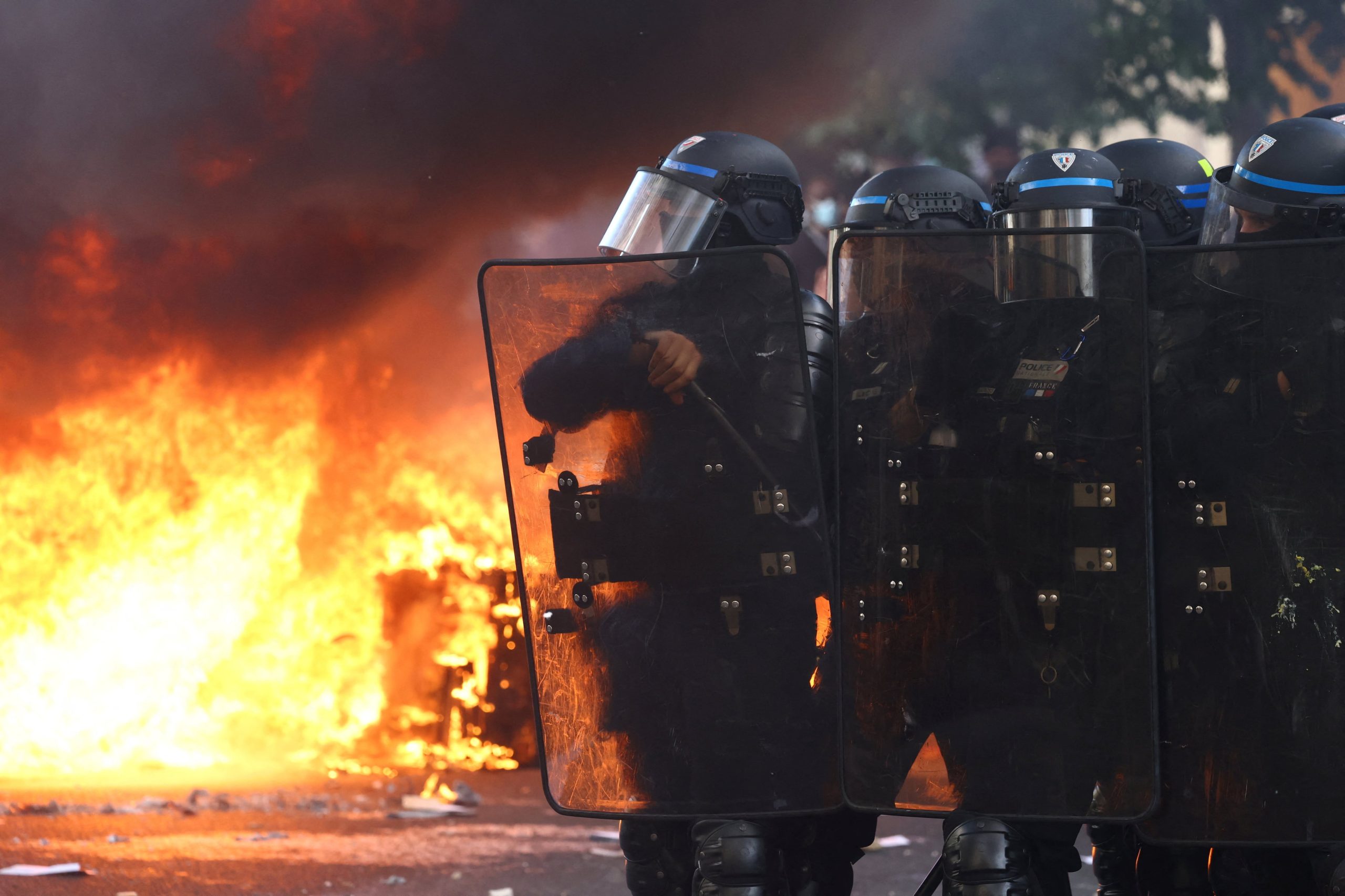
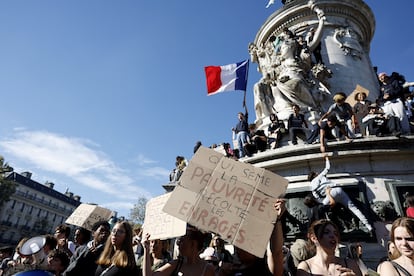
16 fotos
Youths across the country have been called out for a day of demonstrations to protest the decline of the education system, the lack of opportunities, and teachers’ pay

Maricarmen Abascal, eviction symbol, dies at 87 days after being promised a return home
Russia plague fears grow as WHO demands answers over second worker with pneumonia

Última Hora De Las Elecciones Generales, En Directo | La Acampada De Sol Guarda Un Minuto De Silencio Por Maricarmen


-

 Uncategorized2 weeks ago
F1 Qualifying Today: Azerbaijan Grand Prix schedule, times and TV channel
-

 %2 weeks ago
Is Your Supermarket Kefir Really Kefir? Spanish Study Raises A Surprising Question
-

 Uncategorized1 week ago
F1 Bahrain Grand Prix will be live and FREE on TV this weekend
-
Latest2 weeks ago
‘It’s The Law Of The Jungle’: Pensioner’s Eviction Exposes Spain’s Housing Crisis
-
Barter system2 weeks ago
British drug dealer swaps cocaine for Pokémon cards in bizarre barter deal
-

 Cody Gakpo2 weeks ago
Xavi Y Klopp Se Reparten Puntos En Su Debut Como Seleccionadores
-

 ElPais2 weeks ago
Gael García Bernal: ‘The Common Good Is No Longer A Political Slogan. Democracy And The Use Of Power Are Almost Like A Reality Show’
-

 Acapulco2 weeks ago
Acapulco Shuts Down Amid Fear Of Hurricane Polo: ‘Three Days Not Knowing What’s Going To Happen’