
Evictions in Spain
Maricarmen Abascal, eviction symbol, dies at 87 days after being promised a return home

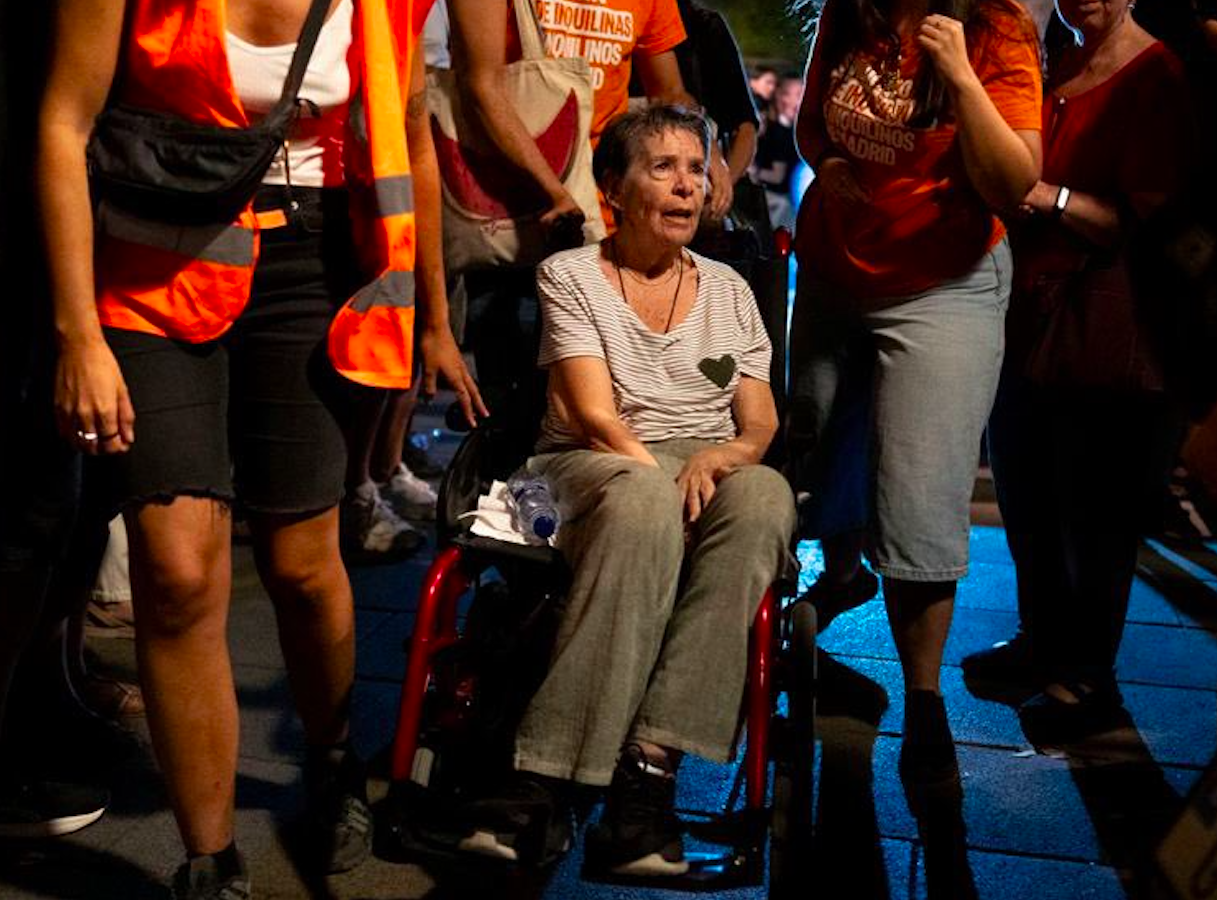
Maricarmen remained in hospital and never made it back to the flat. Photo credit:@InquilinatoMad/X
Imagine being 87 years old, being forced from your home on a stretcher, spending the next two weeks in hospital and then dying before you ever get the chance to walk back through your own front door. For Maricarmen Abascal, that is how the story has ended.
The 87-year-old Madrid pensioner has passed away today, Wednesday, October 7, after spending almost two weeks in hospital following her eviction from the home where she had lived for around 70 years. Her death has now sent shockwaves through Spain, with the woman at the centre of one of the country’s biggest housing protests becoming, in death, an even more powerful symbol of the crisis.
Maricarmen had already made headlines
Maricarmen had already become familiar to many readers following the dramatic scenes surrounding her eviction. Euro Weekly News previously reported on her removal from her Madrid home, after years of legal arguments over the property and her tenancy.
A few days later came the extraordinary news that an agreement had been reached which would have allowed her to return home under a new eight-year rental contract. At the time, it looked as though the story might finally have a happy ending, but it never happened.
From eviction victim to symbol of Spain’s housing crisis
Maricarmen remained in hospital and never made it back to the flat she had called home for most of her life. The Madrid Tenants’ Union confirmed her death on Wednesday, saying the agreement allowing her to return had simply come too late.
Her case had already grown far beyond one elderly woman and one apartment. Following the eviction, supporters established a protest camp in Madrid’s Puerta del Sol, while demonstrations spread to other Spanish cities. Her name became closely associated with anger over rents, evictions and the difficulties faced by people who simply cannot afford somewhere else to live.
Now the anger has intensified
Now, following news of her death, the anger has intensified. Thousands of protesters gathered in Madrid on Wednesday evening, with some chanting “This is not a death. It’s a murder!” The cause of Maricarmen’s death, however, has not been publicly established.
That has not stopped the blame. Prime Minister Pedro Sánchez has himself been drawn into the row. Maricarmen had previously named Sánchez when asked who she held responsible for what was happening to her, although she also went on to criticise Madrid regional president Isabel Díaz Ayuso, Madrid mayor José Luis Martínez-Almeida and the investment company involved in her eviction.
Pedro Sánchez comes under fire
Following her death, Sánchez offered his condolences to her family, describing the loss as one felt by many. For some of those protesting, however, condolences are not enough.
Her lawyer Beatriz Duro has said there are people responsible for what happened and that, had the eviction been suspended, she believes Maricarmen might still be alive. Duro has described the deterioration in her client’s condition following the eviction and said Maricarmen died still hoping to return home.
Her death has become part of a bigger fight
That accusation is now sitting alongside a much bigger political argument. The protests over Maricarmen’s eviction have become part of the wider housing crisis engulfing Spain, with pressure on the government to do more to protect vulnerable tenants.
Parliament’s recent rejection of housing measures has also become part of the political fallout, with Sánchez now having called an early general election for November 29. Maricarmen’s story has therefore gone from one woman’s fight to remain in her home to something much larger, but ultimately, all she wanted was to go home.







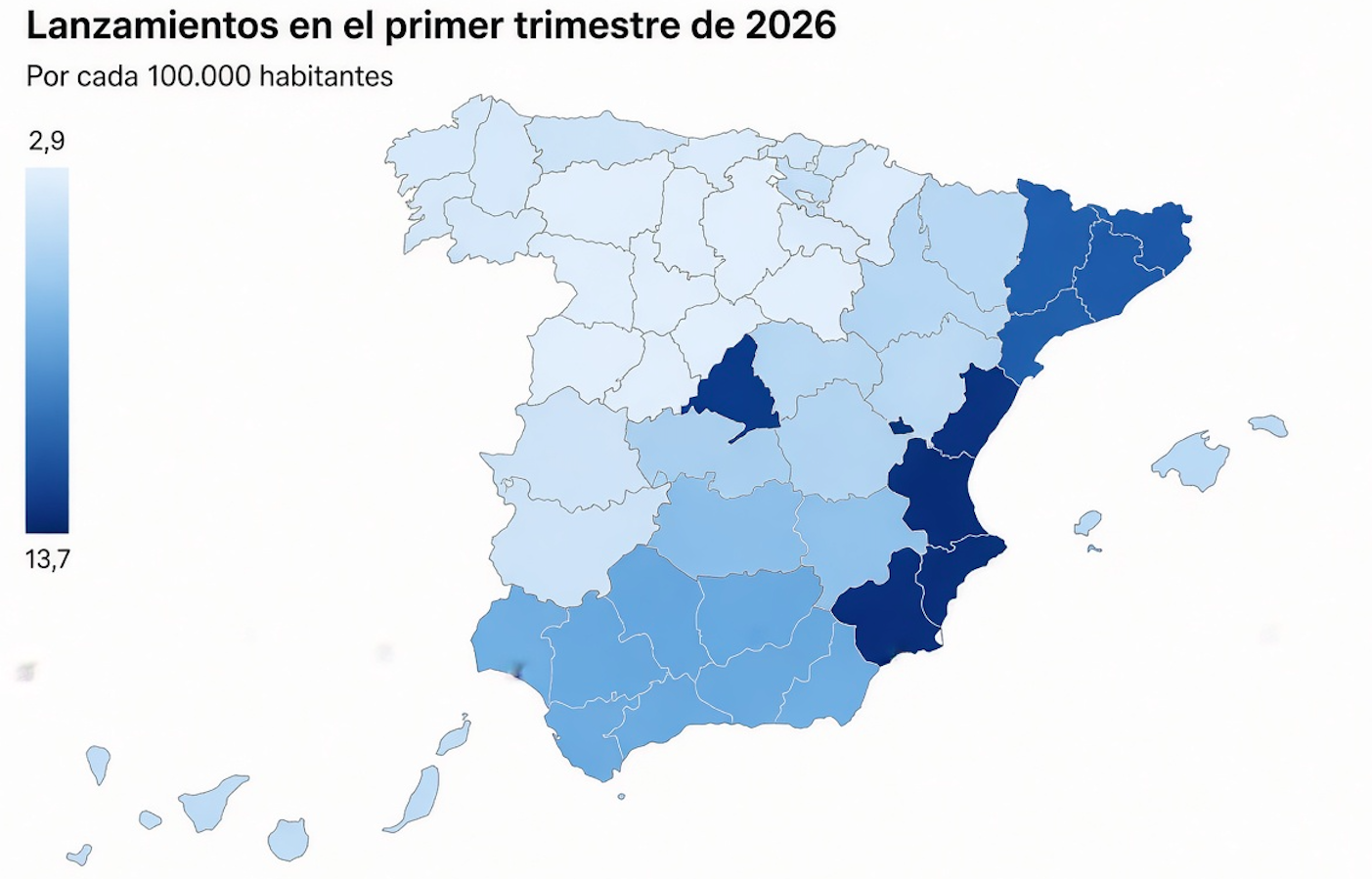
ndalucía continues to see a substantial number of mortgage cases entering the courts. Photo credit: AI Graphic
For anyone renting a home in Spain, there is one number in the latest housing figures that is hard to ignore: 4,005 people were forced out of properties during the first three months of 2026, that works out at a shocking 44.5 evictions every single day.
The figure is much lower than last year, but the reason behind most of these cases remains the same. Unpaid rent accounted for almost two-thirds of all the evictions carried out between January and March, according to new figures from Spain’s General Council of the Judiciary (CGPJ).
Thousands of renters forced out
The CGPJ recorded 4,005 judicial property launches during the first quarter of 2026, a 45.4 per cent fall compared with the same period in 2025. Of these, 2,600 were linked to unpaid rent, representing 64.9 per cent of the total. That was a 53.9 per cent drop compared with the first quarter of last year. A further 971 evictions followed mortgage enforcement proceedings, accounting for 24.24 per cent of the total and falling by 18.3 per cent year-on-year.
The remaining 434 cases were attributed to other causes. The figures refer to completed judicial launches, the point at which an order results in the forced removal of people from a property, rather than every eviction case that has been started in the courts. That distinction is important because the headline fall does not mean fewer housing disputes are entering the legal system.
Andalucía among Spain’s highest totals
Andalucía recorded 616 evictions during the first three months of 2026, a 45.2 per cent fall compared with the same period in 2025. The region had the third-highest total in Spain, behind Cataluña with 921 and the Comunidad Valenciana with 741. Madrid followed with 582. In Andalucía, 355 of the 616 evictions were linked to unpaid rent, representing 57.6 per cent of the regional total.
Mortgage enforcement accounted for another 33.7 per cent. The latest figures also show that Andalucía continues to see a substantial number of mortgage cases entering the courts. There were 1,293 mortgage enforcement proceedings filed in the region during the first quarter, second only to Cataluña’s 2,616. Across Spain, 7,194 such proceedings were filed, an increase of 17.5 per cent on the same period last year.
Why the big fall needs some caution
The 45.4 per cent reduction in completed evictions is certainly striking, but it does not necessarily mean the pressure on households has fallen by the same amount. The CGPJ recorded 16,167 launches received by judicial notification and enforcement services during the first quarter. That figure was actually 19.2 per cent higher than a year earlier, although the CGPJ warns that these services do not operate in every judicial district and that a launch being received does not mean it was ultimately carried out.
There was also a 17.5 per cent increase in mortgage enforcement proceedings during the quarter. So while considerably fewer people were actually removed from properties during the first three months of 2026, other figures suggest that housing-related legal pressure has not simply disappeared.
Rent remains the biggest reason
The longer-term figures tell an even clearer story about where evictions are coming from. Spain recorded 24,540 judicial launches during 2025, with 18,317 – 74.6 per cent, linked to breaches of rental agreements, principally unpaid rent. Mortgage arrears accounted for 4,346 cases, or 17.7 per cent, while 1,877 were attributed to other causes.
For renters, that means the ability to keep up with monthly payments remains at the heart of most completed eviction proceedings. And although the latest figures show a sharp reduction in the number of people actually being removed from their homes, 4,005 evictions in just three months still means that dozens of households a day reached the final stage of a court process. The numbers may be moving in the right direction, but for the people receiving an eviction order, the difference between 45 a day and 80 a day is unlikely to make the immediate problem feel any smaller.


Maricarmen Abascal, eviction symbol, dies at 87 days after being promised a return home
Russia plague fears grow as WHO demands answers over second worker with pneumonia

Última Hora De Las Elecciones Generales, En Directo | La Acampada De Sol Guarda Un Minuto De Silencio Por Maricarmen


-

 Uncategorized2 weeks ago
F1 Qualifying Today: Azerbaijan Grand Prix schedule, times and TV channel
-

 %2 weeks ago
Is Your Supermarket Kefir Really Kefir? Spanish Study Raises A Surprising Question
-

 Uncategorized1 week ago
F1 Bahrain Grand Prix will be live and FREE on TV this weekend
-
Latest2 weeks ago
‘It’s The Law Of The Jungle’: Pensioner’s Eviction Exposes Spain’s Housing Crisis
-
Barter system2 weeks ago
British drug dealer swaps cocaine for Pokémon cards in bizarre barter deal
-

 Cody Gakpo2 weeks ago
Xavi Y Klopp Se Reparten Puntos En Su Debut Como Seleccionadores
-

 ElPais2 weeks ago
Gael García Bernal: ‘The Common Good Is No Longer A Political Slogan. Democracy And The Use Of Power Are Almost Like A Reality Show’
-
Aberdeen airport2 weeks ago
easyJet announces six new UK-Spain flights for 2027, with fares from £35