
Electricity bills
Spain faces a tougher winter as EU warns street lights could be switched off to save energy

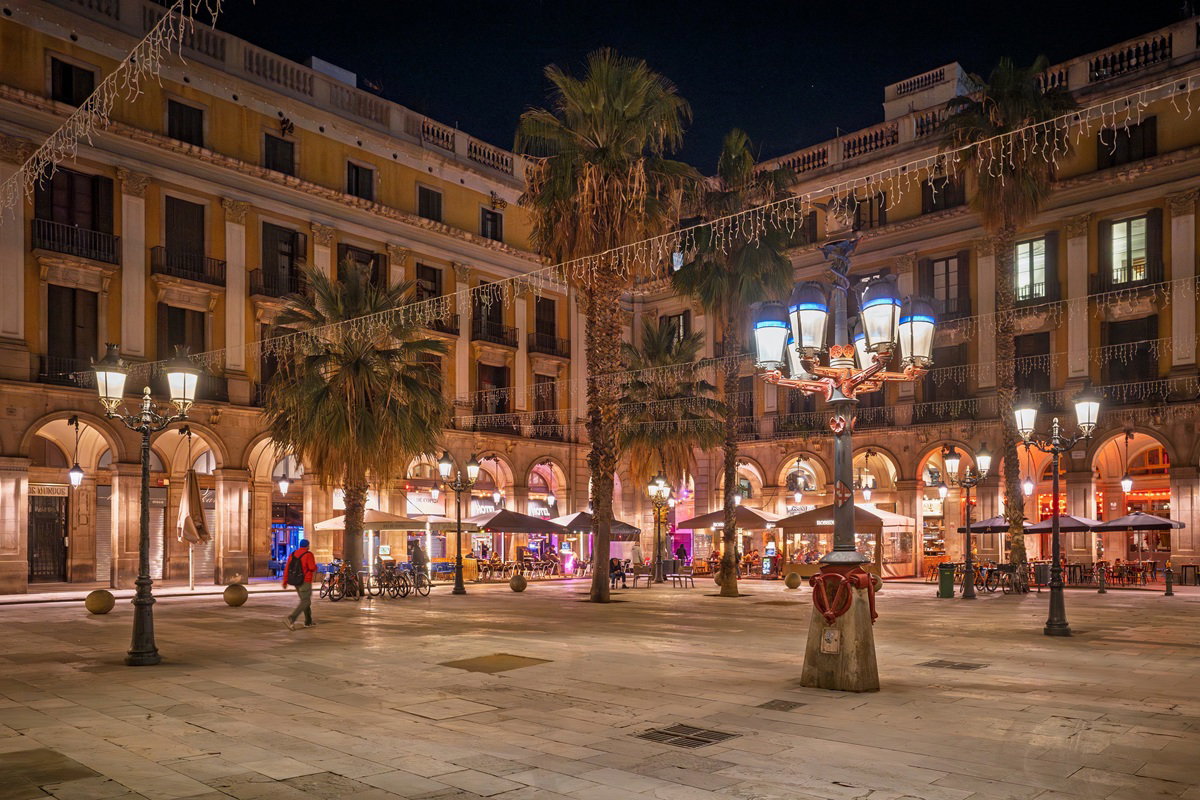
Spain could consider energy-saving measures for non-essential public lighting this winter.
Credit : Nejdet Duzen, Shutterstock
As Spain faces the coming cold months, European officials are urging governments to reduce their energy consumption, with measures ranging from a reduction in the consumption of electricity at peak times to turning off street lighting that is not absolutely necessary.
The warning comes amid growing concern about Europe’s energy supply, following months of disruption linked to the conflict in the Middle East and the closure of the Strait of Hormuz.
The Brussels authorities meanwhile claim there is no immediate threat to the supply of gas to Europe. However, as the stocks of gas run low and international energy prices remain volatile, there are serious concerns about the possibility of a difficult winter.
For households in Spain, the question is: could rising energy prices mean higher electricity bills, heating restrictions or changes to public lighting?
The European Commission is therefore urging the governments of the Member States to think about taking measures that would lower the demand before colder weather increases the need for heating.
But in Spain no countrywide switching-off of streetlights or compelled consumption reduction has been announced. The measures under discussion are voluntary, not compulsory.
EU winter energy warning: why Spain could face higher electricity costs
Europe is approaching winter with fewer reserves of gas than it had at the same time last year.By the end of September 2026, according to figures attributed to Gas Infrastructure Europe (GIE), the capacity of European gas storage reservoirs was approximately 70.35 per cent full, which was approximately 11.65 percentage points below the corresponding figure for 2025.
The figures also underline the challenge governments face in preparing for a greater need for heating.
Spain’s position is somewhat more reassuring. On September 23, Spanish gas storage was reported at 73.49 per cent full. This was above the European average. Germany and the Netherlands were significantly below, at approximately 57.02 per cent and 56.53 per cent, respectively.
France was in a position of 81.43 per cent, Italy had reached 86.16 per cent.
These differences matter because the Europeans are interconnected in their energy markets. Pressure on gas supplies elsewhere in Europe can push prices up in Spain, even when its reserves are relatively comfortable.
The situation has been complicated by disruptions to international energy supplies.The Strait of Hormuz, one of the great shipping routes for world oil and liquefied natural gas, has been at the center of the trouble.
Europe has also become increasingly dependent on alternative LNG suppliers.
Numbers quoted by the European Commission from Eurostat indicate that in the second quarter of 2026 the United States was responsible for approximately 61.08 per cent of all the EU’s imports of LNG from outside the bloc. Compared to the last quarter of 2025, it was 55.43 per cent.
In the same period, it is reported, the share of imports from Qatar has been sharply reduced and the share from Algeria and Russia has risen. These events point to an uncomfortable fact for consumers: events thousands of kilometres away can influence energy prices in Spain.
Nevertheless, the European Commission has sought to reassure the public.
In its statement of 3 September, the Commission said that there was no immediate risk to the EU’s security of gas supply, despite the fact that gas stocks are lower than in previous years.
The Commission emphasised that Europe is better prepared for a possible shortage than it was during the 2022 crisis, thanks to more diversified supply, larger capacity to import LNG and reduced consumption.
Could Spain switch off street lights or restrict heating this winter?
One of the most interesting possibilities under discussion is the lowering of public lighting. European Energy Commissioner Dan Jørgensen has urged European nations to help increase gas and electricity reserves.
According to the report of a letter sent to the member countries, the Commission made a recommendation on energy-saving practices during the crisis in 2022.
This includes reducing consumption of electricity during the day of maximum use, adjusting temperatures in public buildings, restricting outdoor heating, and shutting down unnecessary public street lights during the night.
For us in Spain, it may change the way public places are lit up.
However, there is an important distinction : The EU has not ordered Spanish municipalities to turn off street lights.
According to the measures taken by the authorities, if the lighting was to be reduced, it would depend on the local circumstances, and the requirements for public safety would be taken into account.
Lighting, and more particularly the lighting necessary for the safety of the roads, must be carefully considered.
The same applies to heating restrictions.
As governments are encouraging energy conservation in public buildings, there is as yet no general European Union directive requiring Spaniards to turn down their heating to a set temperature this winter.
In the main, the question is how to encourage a voluntary and carefully planned reduction of energy consumption before the pressure of supply becomes more serious.
Households are likely to be worried not so much by compulsion as by the financial constraints of rising energy bills.
Electricity, particularly when used for heating in the winter, may have an effect on the monthly bill.
In the case of a time-of-use tariff, consumers can profit from the fact that flexible activities such as washing and dishwashing can be shifted to cheaper times.
The actual savings, however, depend on the electricity contract – not all households have the same power costs.
Spain electricity bills: what the EU plans to help households save money
Brussels is warning of the winter consumption of energy, while it is advocating measures that will bring the price of electricity down.
The centrepiece of this policy is the Citizens’ Energy Package, presented by the European Commission in March 2026.
The aim of this is to reduce energy costs for families, to strengthen consumers’ rights, and to make it easier for consumers to make use of renewable sources of energy.
One of its most significant findings concerned taxes and charges included in electricity bills.
Taxes and levies, according to the Commission, account for approximately 25 per cent of domestic electricity prices across the EU on average.
The Spanish householder can look forward to lower electricity bills if the national authorities put in place the appropriate measures.
However, this plan does not in itself imply any guaranteed reduction in electricity prices and, if there is any change, it will depend on how governments implement it.
The Commission also wants consumers to be able to find out more easily about the terms of their electricity supply contracts.
Another priority is expanding access to renewable energy.If a family is able to generate electricity from solar panels and use it, it could expect to save between €260 and €550 a year, according to a calculation by the European Commission.
In general, the amount of this saving will depend on the costs of the installation, electricity consumption and the amount and percentage of energy produced and used at home.
The promotion of energy communities, whereby residents share the production of their electricity from renewable sources, is another encouraged option.
For the households who are not able to install solar panels individually, such projects might provide an opportunity to participate in the renewable energy transition.
The Commission also proposes strengthening the protection of consumers and, in particular, of consumers who are unable to pay their energy bills or properly heat their homes.
These measures are in the context of European efforts to reduce dependence on imported fossil fuels and to shield consumers from the fluctuations of world markets.
So, should people in Spain prepare for a difficult winter?
The message from Brussels is one of caution rather than alarm.Europe’s energy supplies remain exposed to disruptions outside the European Union, and fewer gas reserves make preparations necessary. But there is no confirmed energy shortage in Spain, no nationwide switch-off of streetlights, and no new compulsory restrictions on household heating.
For the moment, a sensible measure to which inhabitants can resort is to verify their electricity bills, their heating costs and follow official pronouncements.
In the coming months, it will be seen whether the measures taken in Europe to reduce energy consumption will be sufficient to prevent yet another winter of high bills and for millions of families in Spain, the question is not if the lights will go out, but how much it will cost them to stay on.



Spain motorway speed limit could drop to just 40km/h under new traffic system
$30 hidden house clearance painting breaks auction record with $1.35 million sale
Spain faces a tougher winter as EU warns street lights could be switched off to save energy

F1 Qualifying Today: Azerbaijan Grand Prix schedule, times and TV channel

F1 Bahrain Grand Prix will be live and FREE on TV this weekend

Living Alone Becomes A Real Luxury In Spain With Rents Triple Cost Of Flat-Share In Major Cities


-
 Uncategorized2 weeks ago
F1 Qualifying Today: Azerbaijan Grand Prix schedule, times and TV channel
-
 Uncategorized1 week ago
F1 Bahrain Grand Prix will be live and FREE on TV this weekend
-
 Latest2 weeks ago
Living Alone Becomes A Real Luxury In Spain With Rents Triple Cost Of Flat-Share In Major Cities
-
 Canada2 weeks ago
East Coast Braces For Early-Season Nor’easter
-
 Ayuntamiento Barcelona2 weeks ago
Barcelona Dispara La Tasa Turística A Los Cruceristas De Paso: Pagarán 30 Euros Al Día En 2030
-
 Foreign demand2 weeks ago
Market Snapshot: German Market In Q2 2026
-
 Uncategorized1 week ago
Lewis Hamilton F1 wish could come true as stunning plans for new track revealed
-

 Uncategorized2 weeks ago
Red Bull F1 chief shares important Isack Hadjar injury update after Baku return