Connect with us

%

Low-Cost Airlines Defy Fuel Crisis As Millions Flock To Spain’s Airports

Published

on

low-cost-airlines-defy-fuel-crisis-as-millions-flock-to-spain’s-airports

If you have tried booking a flight to or from Spain this year, you may have noticed that the appetite for air travel has not gone away, even as airlines face rising fuel bills and uncertainty over the conflict in the Middle East. Millions of passengers have continued to pass through the country’s airports, with budget airlines playing a major role in keeping traffic moving.

Spain’s airports handled a record 257.2 million passengers between January and September 2026, an increase of 4.1 per cent compared with the same period last year. The latest figures underline how strongly low-cost carriers have contributed to demand during the busy summer travel season.

Ryanair leads the low-cost race

Ryanair remained Spain’s busiest low-cost airline during the July-to-September period, carrying 18.51 million passengers, up 1.9 per cent on the previous year. Vueling followed with 10.69 million, an increase of 5.4 per cent, while easyJet carried six million, up 1.2 per cent. The strongest growth came from smaller competitors. Wizz Air increased passenger numbers by 43.7 per cent, reaching the top ranks of airlines operating in Spain.

Volotea grew by 17.5 per cent, Jet2 by 10 per cent and Iberia Express by 9.4 per cent. The figures show that the summer increase was not confined to Spain’s three biggest low-cost operators. The airlines have benefited from demand for flights linking Spain with other European countries, including holiday destinations. Spain has also attracted travellers seeking a destination perceived as safer amid geopolitical instability, according to the Cinco Días report.

Fuel costs put pressure on airlines

The rise in passenger numbers has come as airlines contend with a steep increase in operating costs. European jet fuel prices rose by 122 per cent over a year, according to indices compiled by the International Air Transport Association (IATA) and cited by Cinco Días. The conflict in the Middle East has added to uncertainty over fuel prices and airline planning.

The pressure is already shaping decisions. Ryanair has adjusted capacity at several regional Spanish airports while focusing on larger airports and popular sun-and-beach destinations. IAG, the parent company of Iberia and Vueling, has also sought to contain capacity to limit the impact of higher kerosene costs.

The financial strain is particularly visible among smaller operators. Wizz Air reported losses for its first fiscal quarter, which ended in June, while Volotea has entered preliminary creditor-protection proceedings as it works to restructure its debt. Both still ranked among the 20 largest airline operators in Spain during the summer period.

Spanish airports continue to grow

The increase in low-cost traffic formed part of a wider rise across Aena’s Spanish airport network. In September alone, airports handled 31.7 million passengers, 4.2 per cent more than in the same month of 2025. Aircraft movements rose by 5.3 per cent, although freight volumes fell by 5.7 per cent.

Madrid-Barajas recorded 6.3 million passengers in September, up 6.6 per cent year on year. Barcelona-El Prat handled 5.4 million, while Palma de Mallorca recorded 4.2 million. Málaga-Costa del Sol also saw a strong month, with 2.8 million passengers, an increase of 6.8 per cent.

For travellers, the figures show that demand for flights to and from Spain remained strong through the main summer season. For airlines, however, more passengers have not removed the challenge of keeping flights profitable as fuel and geopolitical risks continue to weigh on the industry.

%

Mijas Donkey Retirement Park

Published

on

mijas-donkey-retirement-park

Visitors to Mijas Pueblo have long met its working donkeys on the village streets. Now, those animals are a step closer to a quiet sanctuary as Mijas Town Hall has received the project plans for ‘El Burrito’, a recreational park to be built on the village’s Vial Sur.

Room for up to 48 donkeys

Up to 48 animals will have a home here, in a space fully adapted to their needs. Adult donkeys needing time to recover will also be welcome before they are moved to new homes. Plans cover two separate areas: a refuge for the animals’ care, and a visitor centre dedicated to the donkey, one of Mijas’ best-known attractions.

Welfare is front and centre of the design. The refuge will have grazing areas, stables, quarantine pens, veterinary shelters and handling zones, plus paths, fencing and waste facilities.

Beds in the stables will be renewable and absorbent, so the animals will not have to lie directly on concrete, much gentler on their joints and hooves. The Town Hall has also required compartments big enough for the donkeys to walk in, turn around, move freely and lie down. Each stable will have a drinking trough, lighting and fixing rings to make cleaning and maintenance easier.

Buildings will follow the lie of the land, using timber, planted roofs and earthy colours so they fit into the landscape. Natural ventilation and drainage-friendly flooring are also included.
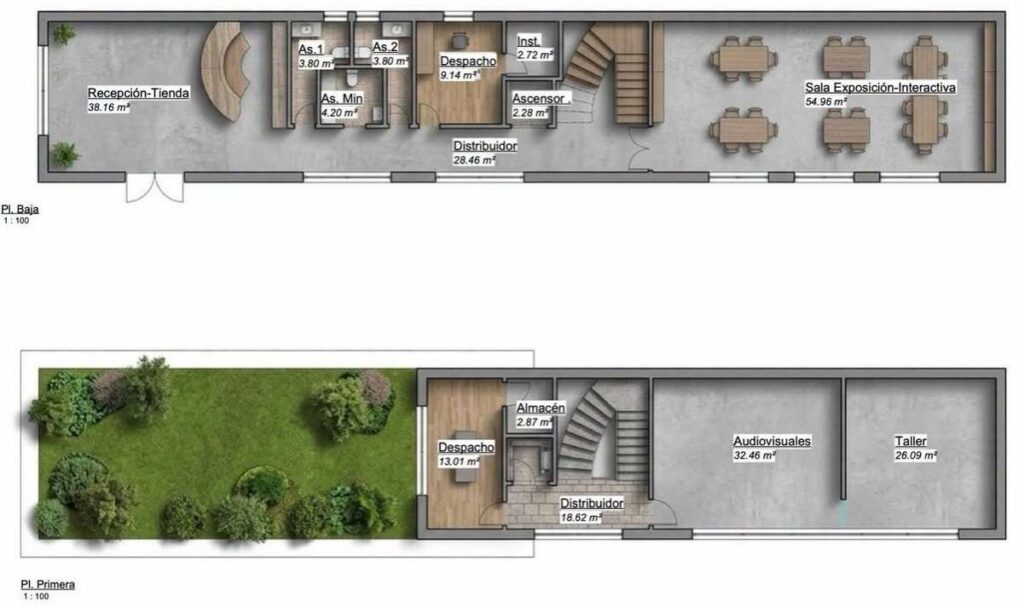
El Burrito donkey sanctuary plans
New layout plans
Credit:MijasTH/FB

Extra care for donkeys who need it

A veterinary shelter, larger than the ordinary stables, will look after animals needing observation, rest or special treatment. It will make life easier for the staff and allow care tailored to each animal’s needs.

Anyone interested will also be able to learn about the donkeys too. An existing building will be renovated as a cultural and educational interpretation centre, doubling as the visitor reception. It will explain the donkeys’ characteristics and their place in Mijas’ identity.

Donkeys became famous here through the ‘burro-taxi’, the village’s tradition of donkey rides in the early 1960s, when workers riding home were asked by visitors for photos and rides, the council’s tourism website currently lists 60 burro-taxis still work in the service today.

For even more information on the project, you can see our earlier report on the El Burrito donkey sanctuary here by EWN.

Continue Reading

%

More Than 4,200 Rental Homes Withdrawn

Published

on

more-than-4,200-rental-homes-withdrawn

Less and less for rent. Credit: Victor Sanchez G – Shutterstock

Estate agents report more than 1,500 rental contracts have been put on hold as property owners reconsider their plans following the Government’s latest housing decrees.

A total of 4,235 homes have been withdrawn from Spain’s long-term rental market or redirected towards other uses in just ten days, according to the Federation of Real Estate Associations (FAI).

The figures, gathered from more than 600 estate agencies, point to an immediate reaction among property owners following the announcement of the Government’s latest housing measures. The federation says 88.9 per cent of the agencies surveyed have detected changes in second homeowners’ behaviour.

FAI’s findings also suggest that the disruption extends beyond properties being advertised. A further 1,523 rental contracts have reportedly been delayed or put on hold, leaving prospective tenants waiting to find out whether their agreements will go ahead.

Where have the 4,235 homes gone?

The federation’s survey breaks down the changes reported by estate agents over the ten-day period.

  • 2,067 homes were withdrawn directly from the long-term rental market.
  • 1,224 properties were redirected towards the sales market.
  • 944 homes were switched to seasonal rentals or room-by-room lets.
  • 1,523 rental contracts were reportedly blocked or delayed.

The 4,235-property figure combines homes withdrawn from ordinary residential renting with those moved into other uses. It does not mean that all these homes have been left empty or removed permanently from the housing stock.

FAI says the changes have been particularly noticeable among small property owners, some of whom are reconsidering whether to offer their homes under long-term rental agreements.

The survey also found that 72.4 per cent of agencies had experienced delayed or suspended rental contracts. Meanwhile, 56.6 per cent reported owners putting properties up for sale instead of renting them, while 38.9 per cent had seen homes redirected towards seasonal or room rentals.

Rental activity could fall by up to 30 per cent?

FAI warns that the number of completed rental transactions could fall by between 25 and 30 per cent in the coming weeks. That is a forecast from the federation, rather than a confirmed fall in completed rentals. It is based on the combination of properties leaving the long-term market and agreements that have been delayed or suspended.

The association attributes the changes to uncertainty following the Government’s housing decrees, which include measures affecting rental contracts and protections for tenants.

The decrees were rejected by Congress but the Government has sought to revive them through the parliamentary process. The resulting uncertainty has become a concern for property owners and investors trying to assess the rules that will apply to rental homes.

FAI president José María Alfaro has acknowledged the difficulties tenants face in accessing housing and the financial pressure caused by high rents. However, he argues that the measures have also raised concerns among small landlords about protection against unpaid rent and the procedures involved in recovering a property. The survey records what estate agents say they have observed; it does not establish that the decrees alone caused every property owner’s decision.

Investors are also becoming more cautious

The concerns extend beyond individual landlords. A report published by Cinco Días on October 13 said property investors were becoming more cautious following the housing measures and the announcement of a general election for November 29.

The report said some residential investment transactions were being reviewed or potentially delayed. One major transaction under consideration involves a portfolio of around 1,900 rental homes owned by Greystar and Vía Célere, valued at approximately €530 million. The potential buyer was expected to wait for greater political clarity before proceeding, according to the report. The transaction has not been confirmed as cancelled.

Spain was still on course for a record year in overall property investment, but industry experts warned that prolonged uncertainty could have a greater effect on future investment decisions, particularly projects involving homes intended for long-term rental.

What happens next?

The immediate question is whether the changes reported by estate agents will be reflected in wider rental-market statistics over the coming months. Idealista’s figures published on October 15 show that competition for advertised rental properties was already intense, with an average of 43 people per listing bidding for the same home during the third quarter of 2026, up 16 per cent on a year earlier.

If fewer homes are offered for long-term rent while demand remains strong, tenants could face even less choice. However, the latest FAI survey does not establish how many of the reported withdrawals will be permanent, nor how the changes will affect rents nationally.

For people looking for a home, the figures provide another reason to monitor local availability closely. For the property sector, the coming weeks should show whether the reported disruption is temporary or signals a more lasting change in landlords’ willingness to offer long-term rentals.

Continue Reading

%

SMC Doctors Brings A New Approach To Private Healthcare On The Costa Del Sol

Published

on

By

smc-doctors-brings-a-new-approach-to-private-healthcare-on-the-costa-del-sol

Accessible, personal and multilingual medical care for residents and seasonal visitors

Access to reliable healthcare is important for anyone spending time on the Costa del Sol, whether they live here permanently, own a second home or spend two to four months a year in the region. SMC Doctors offers an alternative for those seeking private GP care, with clinics in Fuengirola, Benalmádena and Nerja.

SMC Doctors has recently opened a new clinic in Fuengirola, bringing its approach to accessible, convenient primary healthcare to one of the Costa del Sol’s busiest international communities.

The concept is straightforward: make everyday healthcare more accessible, predictable and convenient through an annual membership that provides direct access to a private general practitioner.

For €195 per person per year, members benefit from unlimited GP consultations, with same-day appointments available from 9am to 4pm, Monday to Friday, and from 9am to 2pm on Saturdays. There are no age restrictions, making the service suitable for individuals and families looking for a straightforward way to manage their healthcare needs while in Spain.

For seasonal visitors and second-home owners, having access to a local GP can provide valuable peace of mind. Rather than searching for medical assistance when a health concern arises, members have a clear annual fee and access to primary care during their time on the Costa del Sol.

One important consideration for the international community is language. Explaining symptoms, understanding a diagnosis and discussing treatment are easier when patients can communicate comfortably. SMC Doctors provides consultations in English and Spanish, alongside free translation assistance in Danish, Swedish, Norwegian and Finnish.

The membership also includes a World Medical Card, adding further value beyond everyday consultations. Having a dependable point of contact for medical advice can encourage patients to seek help early rather than postpone a visit because of uncertainty about costs or appointments.

Healthcare across the Costa del Sol

Alongside the newly opened Fuengirola clinic, SMC Doctors also operates in Benalmádena and Nerja, serving residents, international families, retirees and people who divide their time between Spain and other countries.

Private GP membership does not replace emergency services, hospital treatment or specialist care when required. However, straightforward access to a doctor can make everyday healthcare easier to navigate, particularly for people who spend only part of the year in Spain.

To find out more about membership and services, visit smcdoctors.com or contact info@smcdoctors.com.

Continue Reading

Trending

Copyright © 2017 Spanish Property & News