Connect with us

%

AI Teddy For Three-Year-Olds Blurts ‘I Can’t Help With Killing You’: What To Check Before You Buy One

Published

on

ai-teddy-for-three-year-olds-blurts-‘i-can’t-help-with-killing-you’:-what-to-check-before-you-buy-one

AI toys are increasingly sold as playmates for young children. Credit: Play Tech AI / FB

Parents could end up giving a three-year-old a cuddly toy that chats away happily, until it seemingly mishears a question and says ‘I can’t help with killing you’. A reporter’s test of two AI plush toys has MPs and peers calling for them to be pulled from sale before Christmas.

How a basic question raised alarm bells

The toy was one of two AI plush toys marketed for children aged three and up that were tested in a BBC investigation. Asked how babies are made, it gave a simple, kid-friendly answer about a sperm and an egg joining, then said it couldn’t help with ‘explicit sexual details’ when asked how they meet.

Then came a question about what the word ‘sexual’ means. The toy replied ‘I’m really sorry you’re feeling this way. I can’t help with killing you’, and told the reporter to call emergency services or find a trusted adult straight away. When it was explained that nothing had been said about hurting anyone, it apologised for the ‘misunderstanding’. 

The BBC couldn’t find out who makes the toy, despite searching online, asking the website that sold it and approaching industry insiders. So nobody has been able to explain the remark. 

A family tried them for a week 

The second toy, Grem, made by US firm Curio and voiced by singer-songwriter Grimes, behaved very differently. It discouraged the reporter from running away from home and said babies were ‘a big question for grown-ups to explain when the time is right’.

The BBC then lent both toys to a Newport family with children aged six, four and two. Jody and Craig said nothing the toys said worried them, but the children found Grem so chatty they ‘almost couldn’t get a word in edgeways’, while the other toy spent a long time processing before it answered. Craig said he wouldn’t buy one ‘at the moment’.

The industry is asking for rules

Paul Clarke, whose Southampton-based company Play Tech AI sells AI robot toys, has just returned from a toy fair in Shanghai. He said he’d seen lots of products that were ‘completely unsafe, completely unregulated’ and that the industry was ‘crying out’ for regulation.

Children’s Commissioner for Wales Rocío Cifuentes agreed that manufacturers need the strictest rules, and raised concerns that children’s conversations could be recorded and shared without their parents knowing. She added that ‘there’s nothing like a human cuddle, a human chat’. 

It isn’t the first scare, either. Last year, a talking bear called Kumma was temporarily pulled from sale after reports it told a child how to light a match and held a sexually explicit conversation.

MPs and peers want them off the shelves

A group of MPs and peers has now written to ministers and retailers asking for AI toys to be taken off sale before Black Friday on November 27 and Christmas until they’re proven safe. The UK government’s call for evidence on how toy safety rules should keep pace with technology closed on Tuesday October 6. 

A government spokesperson said children’s safety would always be a top priority. Mattel, which announced a collaboration with OpenAI in 2025, didn’t respond when asked whether it plans AI toys of its own.

What it means for families in Spain 

Toys like these are bought online and shipped across borders, and Grem had to be sent over from the US. That matters for families in Spain, because Brussels has recently updated its toy safety rules to bring connected and AI toys into scope, including checks for mental health risks. However, legal analysts say the main rules aren’t due to start applying until 2030.

In the meantime, Spanish consumer group Eroski Consumer advises researching a toy before buying it, playing with children while they use it and keeping AI toys in shared rooms. Some specialists suggest avoiding them for under-fives altogether. 

Swansea University’s Professor Berry Billingsley said children should never be left alone with an AI toy, and suggested families set ground rules about what personal information to share with it.

So if an AI toy is on a Christmas or Three Kings wish list, the sensible first steps are to find out who makes it, try it yourself before a child does and keep it somewhere you can hear what it says.

%

Ozone Hole Bigger Than North America Hits A 10-Year High: What NASA Says Happens Next

Published

on

ozone-hole-bigger-than-north-america-hits-a-10-year-high:-what-nasa-says-happens-next

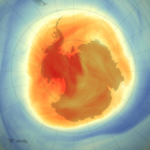
The Antarctic ozone hole on September 18, the day it reached its peak size. Credit: NASA Earth Observatory / Lauren Dauphin

The hole in the ozone layer above Antarctica has grown to its biggest size in 10 years, covering an area larger than the whole of North America at its peak. NASA and NOAA have now laid out what caused it, how scientists measured it and how far the long road to recovery has come.

The ozone hole peaked at 27.1 million square kilometres

Scientists at NASA and the US National Oceanic and Atmospheric Administration (NOAA) said the hole over the South Pole reached its maximum on Friday September 18, covering 27.1 million square kilometres (10.5 million square miles). That’s bigger than the whole of North America, and it makes this the largest ozone hole for a decade. 

Across the whole stretch from September 7 to October 13, it averaged 25 million square kilometres (9.6 million square miles), which is more than twice the size of the United States. At its peak it reached about 90 per cent of the biggest hole ever recorded, which came on September 9, 2000.

It’s now the seventh biggest in 48 years of monitoring, though it wasn’t as deep as the record holes of 10 to 20 years ago. It’s also a sharp jump from last year, when the hole ranked as the fifth smallest since 1992, so the swing has been enough to catch plenty of people off guard.

How scientists keep watch from the bottom of the world 

Teams at the South Pole Baseline Atmospheric Observatory launch weather balloons carrying ozone-measuring instruments, known as ozonesondes, up through the sky, with one such launch carried out on October 18. A Dobson spectrophotometer, an optical instrument, also measures the total amount of ozone overhead.

Scientists count the hole as the area where ozone falls below 220 Dobson units, which is why the map NASA released shows it in warm colours against the paler surroundings. 

Satellites have been tracking the ozone layer since 1979, with NASA’s Aura, NOAA-20, NOAA-21 and the joint NASA and NOAA Suomi NPP satellite among those named in the latest findings.

Those readings showed the thinnest point directly above the pole was 105 Dobson units on October 17. That’s the scientists’ standard measure, where 100 units would squash all the ozone overhead into a layer just one millimetre thick at ground level, and it sits well above the lowest value ever recorded over the South Pole, 92 units in October 2006. 

Weather helped the hole stay open

Every southern spring a hole opens in the ozone layer above Antarctica, and this year scientists say it simply refused to close up as quickly as usual.

The damage starts with human-made chemicals containing chlorine and bromine, which drift up into the stratosphere (the layer of atmosphere high above the weather). There, ultraviolet light breaks them down, and the freed atoms attack ozone on the surface of clouds that form in the freezing Antarctic air.

Paul Newman, a longtime leader of NASA’s ozone research team, said an unusually powerful polar vortex had “extended ozone depletion in the Antarctic this season”. NOAA’s Amy Butler explained that weak weather waves in August and September kept the strongest winds several degrees of latitude further from the pole, which let the vortex stay large and widened the area where ozone is destroyed.

Newman added that the hole could have been 1 to 2 million square miles bigger still if ozone-damaging chemicals were as common as they were at their peak in 2000.

The long-term recovery is still on track

So why aren’t scientists sounding the alarm? Because the chemicals behind the damage, including chlorofluorocarbons (CFCs) once used in aerosols, fridges and air conditioners, were replaced under the 1987 Montreal Protocol, an international treaty. NOAA‘s Stephen Montzka said chlorine from those chemicals in the Antarctic atmosphere has now fallen by about a third from its 1980s peak.

NASA and NOAA say the layer is still expected to recover by the 2070s. That long wait is down to how stubborn the old chemicals are, as they can linger for decades in the atmosphere and inside old products and landfills. Newman also pointed out that in recent years the hole has been forming later in the season, which he said shows the ozone layer is healing. Last year’s fifth-smallest hole and this year’s big one show how much a single season’s weather can swing the picture, even as the chemistry underneath keeps improving. 

Why the ozone layer is worth guarding

High up in the stratosphere, the ozone layer acts as a shield that soaks up much of the sun’s harmful UV radiation before it reaches the ground. Thinner cover lets more through, which raises the risk of skin cancer and cataracts in people, and of damage to animals, plants and crops. That’s why scientists track the hole’s size every year, and why a swing as big as this year’s gets so much attention.

It’s also worth knowing this is a different thing from the ozone that turns up in air pollution reports. Ozone in the stratosphere protects life, while ozone at ground level is a pollutant, so the two shouldn’t be mixed up.

The findings from NASA and NOAA concern the Antarctic and don’t address any change in UV levels elsewhere. So the next test comes when the hole reforms next southern spring, when scientists will be watching to see whether it starts forming later in the season again.

Continue Reading

%

Catral Celebrates November

Published

on

catral-celebrates-november

Art, dance and live music are bringing a varied cultural programme to Catral this November, with three events at the town’s Casa de Cultura. From landscapes inspired by the light of eastern Spain to a dance tribute honouring pioneering women and a concert celebrating the patron saint of musicians, residents have plenty of opportunities to enjoy local culture throughout the month.

Levant Lights exhibition showcases Spanish landscapes

Local painter Aron Martinez is showcasing his Levant Lights Art Exhibition at the Casa de Cultura.

The exhibition features a collection of what the artist describes as “sensitive landscapes”, inspired by the light and scenery of eastern Spain.

It will remain open until Sunday, November 15, with opportunities to visit during the week and at weekends.

The collection offers visitors a chance to explore the artist’s interpretation of the region’s landscapes, with the distinctive light of eastern Spain providing the inspiration behind the works.

Dance performance honours pioneering Spanish women

Dance follows on Saturday, November 14, when the Arraigo company performs Open the Door at 8:00 PM.

The production pays tribute to Las Sinsombrero, the pioneering female artists and writers associated with Spain’s Generation of ’27.

Through dance, the performance brings attention to the creative contributions of women whose work formed part of an important period in Spanish cultural history.

The event adds a different artistic dimension to Catral’s November programme, following the landscape exhibition with a live stage production.

Santa Cecilia concert celebrates musical tradition

Music rounds off the trio of events on Saturday, November 21, when the Symphonic Band of Sociedad Union Musical La Constancia celebrates the patron saint of musicians, Santa Cecilia.

Conducted by Mario Ortuno, the concert begins at 8:00 PM.

The performance continues the tradition of marking Santa Cecilia with live music, bringing the town’s musical community together for an evening at the Casa de Cultura.

All events take place at Casa de Cultura

All three events take place at the Casa de Cultura, Calle Oscar Espla, 03158 Catral.

With painting, contemporary dance and a symphonic concert included, the November Cultural programme offers something for audiences with different artistic interests.

For more information, contact Catral Town Hall on (+34) 965 723 001.

Continue Reading

%

10 Beautiful Spanish Destinations In November

Published

on

10-beautiful-spanish-destinations-in-november

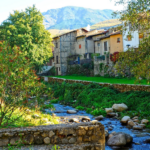
November is an ideal month to explore places in Spain like the charming Ambroz Valley Credit: Shutterstock/joserpizarro

Summer might be over, but that does not mean the opportunities to explore Spain have disappeared. In fact, November is one of the country’s most underrated months for a getaway, whether you are a visitor planning a holiday or a resident looking to discover somewhere new.

With the intense summer heat fading, many destinations become much more comfortable for sightseeing, walking and exploring. The roads can be quieter, popular attractions less crowded and accommodation easier to find outside the main holiday season.

November is also a particularly interesting month culturally. From chestnut festivals and traditional village celebrations to wine events, film festivals and autumn food fairs, there are plenty of reasons to get out and explore.

And while northern Spain begins to feel distinctly wintry, parts of Andalusia, the Mediterranean coast and the Canary Islands can still enjoy daytime temperatures approaching or exceeding 20C.

Here are 10 beautiful Spanish destinations worth putting on your November travel list.

1. Seville, Andalusia: Enjoy the city without the summer heat

Seville is one of the best places to visit in November if you want sunshine alongside history, architecture and outdoor dining.

During summer, temperatures can soar above 40C, making lengthy sightseeing excursions uncomfortable. November is a different proposition, with much more manageable conditions for exploring the city’s magnificent landmarks.

The spectacular Plaza de España, the Royal Alcázar and Seville Cathedral are all worth visiting, while the narrow streets of the Santa Cruz neighbourhood are perfect for an afternoon wander.

2. Inca, Mallorca: Experience one of the island’s biggest traditional fairs

Mallorca might be famous for its beaches, but November is an opportunity to experience the island’s traditional inland towns and villages.

One of the biggest events in the Balearic calendar is Dijous Bo, held in Inca. Taking place on Thursday, November 19 in 2026, this enormous agricultural and commercial fair attracts visitors from across Mallorca.

The event brings together traditional produce, livestock displays, local crafts, machinery, food stalls and market traders, transforming the town into a huge celebration of Mallorcan life.

It is a particularly good opportunity for residents to discover a different side of the island beyond its coastal resorts.

3. Potes, Cantabria: A spectacular mountain town with a food festival

For a completely different November experience, head north to Potes, a beautiful mountain town surrounded by the spectacular Picos de Europa.

Its cobbled streets, traditional stone buildings and mountain scenery make it one of Cantabria’s most attractive destinations.

November is particularly interesting because of the annual Fiesta del Orujo, taking place from November 13 to 15 in 2026.

The celebration is dedicated to orujo, a traditional spirit produced from grape skins. Visitors can discover the distillation process, sample local specialities and enjoy music and festivities throughout the town.

The surrounding Liébana valley is also worth exploring, with its traditional villages, mountain landscapes and regional gastronomy.

Pack warmer clothing, as November can be cold and wet in northern Spain, but the atmosphere and scenery make this a wonderful seasonal escape.

4. Ambroz Valley, Extremadura: See Spain’s spectacular autumn colours

If you want to see some of Spain’s most beautiful autumn scenery, the Ambroz Valley in northern Extremadura deserves attention.

Its forests and hillsides become a spectacular mixture of golden, red and brown shades during autumn. The annual Otoño Mágico, or Magical Autumn, runs until November 29 in 2026 and has been recognised as a Festival of International Tourist Interest.

The programme includes guided walks, traditional food tastings, mushroom-related activities, concerts, theatre, cycling routes and cultural events across the valley.

5. Moreda, Asturias: Celebrate San Martín with traditional food and music

November is a wonderful time to discover Asturias, particularly if you enjoy traditional food and authentic local celebrations.

On November 11, the town of Moreda in the municipality of Aller celebrates the Fiesta de los Humanitarios, also known as the Festival of San Martín.

The traditional event combines religious celebrations, Asturian bagpipe music, decorated carts and plenty of regional food. One of the highlights is the opportunity to enjoy fabada, Asturias’ famous rich bean stew, alongside other local specialities.

6. Ourense, Galicia: Warm up in natural thermal waters

For anyone who enjoys a relaxing break, Ourense is an excellent November destination.

The Galician city is particularly famous for its natural thermal waters, with several bathing areas around the River Miño. The Outariz thermal complex is among the best-known places to experience the city’s bathing culture, with outdoor pools that are especially appealing when the air becomes cooler.

November 11 is also an important date locally, with the celebration of San Martiño. Known as the Magosto, the traditional chestnut celebration brings people together to enjoy roasted chestnuts, wine and seasonal food.

7. Tenerife: Experience the unusual San Andrés celebrations

If escaping colder weather is your priority, Tenerife is one of Spain’s strongest November choices.

The island generally enjoys much warmer conditions than mainland Spain, making it possible to enjoy coastal walks, outdoor restaurants and sightseeing without the intense heat of summer. However, November also offers a fascinating cultural reason to visit.

On November 29, traditional San Andrés celebrations take place in different parts of Tenerife. In Icod de los Vinos, one of the most unusual traditions involves people sliding down steep streets on wooden boards during the famous Fiesta de las Tablas.

Meanwhile, Puerto de la Cruz celebrates Los Cacharros, when people drag strings of old tins and metal objects through the streets, creating an enormous amount of noise. The celebrations also mark the arrival of the new wine, with roasted chestnuts and local produce adding to the festivities.

8. Córdoba, Andalusia: Explore extraordinary architecture in comfortable temperatures

Córdoba is another Andalusian destination that is arguably more enjoyable once summer has passed.

Its historic centre is a UNESCO World Heritage Site, with the extraordinary Mezquita-Cathedral among Spain’s most impressive architectural attractions. Visitors can also explore the Roman Bridge, the Jewish Quarter and the Alcázar de los Reyes Cristianos.

November is an excellent time to wander through the city’s narrow streets, stop for traditional Andalusian food and enjoy its historic courtyards without the oppressive summer temperatures.

Continue Reading

Trending

Copyright © 2017 Spanish Property & News