Connect with us

%

Concrete Falls From Los Boliches Railway Bridge

Published

on

concrete-falls-from-los-boliches-railway-bridge

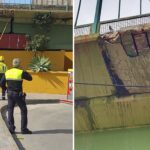
Falling to rack and ruin in Fuengirola. Credit: EWN

Fuengirola residents demand action as railway bridge deteriorates despite repeated warnings.

Residents in Fuengirola are increasingly concerned about the condition of railway infrastructure after another incident involving falling concrete from the elevated railway structure near Los Boliches station on Tuesday, November 10.

An elderly local woman was walking close to the station when pieces of concrete reportedly began falling from the structure above her. Concerned that somebody could be seriously injured, she immediately contacted the emergency services.

Police vehicles and two fire engines arrived within minutes. Firefighters subsequently removed fallen concrete and other loose material from the structure in an attempt to reduce the danger to pedestrians and passing traffic.

Photographs taken at the scene show a substantial area of damaged concrete, with sections of reinforcing metal exposed and visible deterioration around the affected area. A hole approximately one metre long was also reported in the concrete structure supporting the railway.

The incident has once again raised questions about the maintenance of the coastal railway, particularly as the central government, who is legally responsible in this case, have reportedly been warned about the problem previously. Today, nothing but a strip of police tape warns of the danger of falling concrete.

Adif warned but concerns continue

According to information provided by another concerned resident, both Fuengirola Local Police and the town hall have notified Adif, the state-owned company responsible for Spain’s railway infrastructure, about the deterioration. However, the local Malaga government says that despite these notifications, the situation has not been properly addressed.

The latest emergency response involved firefighters removing loose material, but residents want to know whether a comprehensive structural inspection has been carried out and when permanent repairs will take place.

There were also initial concerns about whether trains should continue running while firefighters dealt with the situation. Services were reportedly allowed to continue, with Renfe ordering trains to reduce their speed when passing the affected section.

In a previous incident, a pedestrian narrowly avoided being struck when a piece of concrete fell from the elevated railway structure at Los Boliches station. Firefighters attended and Local Police recorded a formal statement.

Read the earlier report: Crumbling railway: Fuengirola pedestrian narrowly avoids falling concrete at Los Boliches Station.

The recurrence of falling concrete in the same station area, following the earlier incident, raises fresh questions about what action was taken after the first warning.

Costa del Sol infrastructure under scrutiny

Concerns about deteriorating infrastructure are not limited to Fuengirola. Several Costa del Sol mayors have been publicly demanding improvements to transport links and greater investment in infrastructure.

Mijas mayor Ana Mata recently criticised the lack of progress, saying that the area had effectively been left with infrastructure dating back to the 1980s.

Speaking at a mobility forum in Malaga on November 12, she said: “En materia de infraestructuras, nos hemos quedado en los años 80.” (In terms of infrastructure, we’re stuck in the 80s). Her comments reflected growing frustration about the pressure on roads and public transport as the population of the Costa del Sol has increased.

Estepona mayor José María García Urbano has also repeatedly called for improvements to the A-7, including better access arrangements and investment in the busy coastal road.

For residents, the concern is increasingly about whether essential infrastructure is being maintained sufficiently, rather than simply whether new projects are being delivered. Many locals now complain how it looks like it is all going to “rack and ruin.”

Railway disasters increase public concern

The latest Fuengirola incident comes at a particularly sensitive time for Spain’s railway network. The January Adamuz disaster, which claimed 46 lives, and the October 28 collision near Urda, which killed 69 people, have shaken public confidence in railway safety.

The consequences have extended to the highest levels of the Transport Ministry. Óscar Puente resigned as Transport Minister on November 3, accepting political responsibility for the Urda disaster. Adif president Luis Pedro Marco de la Peña subsequently resigned. The tragedies have also prompted renewed demands from railway workers for greater investment in maintenance and improved safety procedures.

Although there is no suggestion that the damage at Los Boliches is connected to either railway disaster, the latest incident has added to public anxiety about the condition of the country’s transport infrastructure.

For the resident who raised the alarm in Fuengirola, the concern is straightforward: people should not have to walk beneath a railway structure fearing that pieces of concrete could fall on them.

With previous warnings reportedly already passed to Adif, residents now want answers about inspections, repairs and who is ultimately responsible for ensuring that the structure is safe.

How many more warnings will it take before something is done?

%

100kg Wild Boar Smashes Into French Funeral Parlour

Published

on

100kg-wild-boar-smashes-into-french-funeral-parlour

Wild boar runs amok in village funeral parlour. Credit: archive image

A giant wild boar weighing around 100kg caused chaos in a small French village after charging through the streets, smashing its way into a funeral parlour and leaving two people terrified after a face-to-face encounter.

The extraordinary incident happened in Salviac, in the Lot department of south-west France, on Sunday, November 1, when the animal was apparently startled during a hunting expedition and headed towards the village instead of escaping into the surrounding countryside.

According to French newspaper La Depeche du Midi, people sitting outside the village’s La Poste bar had to rush indoors as the enormous animal came charging down the street.

Boar crashes into funeral business

The animal then crossed the road and repeatedly charged at the entrance to a funeral business, eventually smashing through its glass doors. Owner Catherine Figeac was inside meeting a client when the boar burst into the reception area. The pair suddenly found themselves face to face with the animal, which was so large that its back repeatedly struck the top of her 90cm-high desk.

Terrified, Catherine climbed onto her chair and shouted warnings to people outside as the boar charged through the premises. Although it damaged the entrance and some equipment, neither she nor her client was injured.

The animal subsequently headed towards a nearby restaurant, where it also attempted to force its way through the entrance before eventually fleeing towards the Dégagnac road. Members of the local hunting association later visited the funeral business and arranged for its insurance to cover the damage.

Wild boar increasingly close to homes

The incident has also drawn attention to the growing presence of wild boar around residential communities. A follow-up report by La Depeche on November 12 quoted the president of the Lot Departmental Hunters’ Federation, Michel Bouscary, who said encounters between the animals and residents were becoming increasingly common.

The problem is not confined to France. Wild boar have become a familiar sight in parts of Spain, particularly around the Costa del Sol, where easy access to food and water has encouraged them into built-up areas. Euro Weekly News has previously reported on wild boar running along the A-7 motorway in Mijas, as well as growing concerns over their presence in Fuengirola.

The Spanish government’s national hunting management strategy advises people who encounter wild boar not to run, approach the animals or feed them. Instead, they should leave an escape route and alert the authorities if necessary. Its guidance is particularly relevant to anyone walking dogs or living close to woodland and open countryside.

The Salviac incident ended without injuries, but it was a frightening reminder of what can happen when large wild animals suddenly find themselves in the middle of a residential community.

Continue Reading

%

Glasses Under Scrutiny: Congress Backs Tougher Checks On Cheap Spectacles For Driving

Published

on

glasses-under-scrutiny:-congress-backs-tougher-checks-on-cheap-spectacles-for-driving

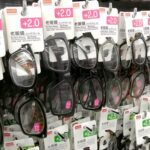
Cheap pre-mounted glasses. Credit: COOOA

Thousands of people in Spain buy inexpensive ready-made glasses from pharmacies, supermarkets and other shops, but a new parliamentary decision could bring greater scrutiny to how these products are sold.

Spain’s Congress of Deputies has backed calls for stronger road-side inspections and monitoring of spectacles, including ready-made glasses, prescription glasses and contact lenses sold online or outside specialist healthcare establishments.

The plan was approved by the Committee on Social Rights and Consumer Affairs on May 26, receiving 33 votes in favour and four against. It was subsequently published in the Congressional Bulletin on June 10.

The proposal, put forward by the Socialist parliamentary group, calls on the Government to work with regional authorities and European institutions to strengthen controls over the sale of optical products.

However, the decision does not introduce an outright ban on ready-made glasses or make them illegal to buy outside opticians.

Why cheap glasses are under scrutiny

Ready-made glasses, known in Spain as gafas premontadas, are sold in standard magnifications rather than being individually prescribed. Unlike prescription spectacles, they do not require individual adaptation by an optician and can legally be sold outside specialist healthcare establishments, provided they meet the applicable safety and quality requirements.

The parliamentary initiative argues that stronger checks are needed to ensure these products are stored, handled and sold in suitable conditions. It also raises concerns about prescription glasses and contact lenses purchased online, particularly where customers have not received the necessary professional assessment.

DGT warning puts drivers in the spotlight

The issue also has implications for drivers, particularly older ones who may rely on inexpensive glasses purchased without an eye examination. Spain’s Directorate-General for Traffic (DGT) has previously warned that ready-made glasses are not a substitute for properly prescribed driving glasses. They are designed for close-up vision and may not correct problems affecting distance vision, astigmatism or differences between the two eyes.

Drivers who need corrective lenses to meet the eyesight requirements for driving must comply with the conditions recorded on their licence. As explained in EWN’s guide to the €200 penalty for driving without required glasses or contact lenses, failing to follow a visual-correction restriction can result in a fine.

Drivers can check their requirements using the codes recorded on the reverse of their Spanish driving licence, as explained in EWN’s previous DGT warning about glasses and contact lenses.

The latest parliamentary decision does not create a new driving offence or introduce an automatic fine for wearing ready-made spectacles. Instead, it puts pressure on the Government to strengthen consumer protection and oversight of the optical products being sold to the public.

Continue Reading

%

Torrox Migrant Hotel Row Over Illegals

Published

on

torrox-migrant-hotel-row-over-illegals

El Morche hotel at centre of debate. Credit: Jesús López FB

Four-star Costa del Sol accommodation sparks debate as Spain records almost 33,000 irregular arrivals in 2026.

A viral Facebook post about the Urban Beach Hotel in El Morche has reignited debate over migrant accommodation in the Axarquia, as figures reveal almost 33,000 irregular arrivals in Spain during the first ten months of 2026.

Shared by Jesús López on Friday, November 13, the post claimed around 200 migrants had arrived at the former four-star hotel and questioned the impact on local businesses. It also suggested asylum applicants cannot work while their cases are processed.

Spain’s migrant arrivals increase

According to the Spanish Interior Ministry’s latest irregular migration figures, 32,942 people entered Spain illegally between January and October, an increase of 8.9 per cent compared with the same period last year. Of these, 28,155 arrived by sea and 4,787 by land. Arrivals by sea on mainland Spain reached 7,615, up 15.5 per cent year-on-year.

Recent transfers from the Canary Islands have brought additional pressure on mainland reception services. According to regional reports on migrant accommodation in Malaga, around 300 people had been transferred to the province by November 14.

Where are migrants being housed?

The Red Cross was assisting around 275 people in Malaga city and Torrox, including approximately 200 at the Urban Beach facility. CEAR was accommodating another 17, with a further 15 expected. Its accommodation network has a capacity of 835 places across Malaga city and Antequera.

The Torrox centre has operated since October 2023. In 2025. Red Cross figures showed that more than 160 of its 362 residents had found employment, mainly with local fruit and vegetable businesses.

What about the impact on Torrox?

Facebook contributors have challenged the suggestion that the town depends almost entirely on tourism, pointing to its agricultural sector and demand for migrant labour.

Spanish regulations also allow asylum applicants to work six months after their applications are admitted for processing, subject to legal requirements.  Questions have also been raised about reported accommodation costs of around €60 per person daily, although no contract or breakdown of services has been provided. Rumours of another reception centre opening in Cartama have circulated, but no official confirmation has been located.

The debate is not new. Torrox councillors previously questioned the use of tourist accommodation for migrant reception, as reported in Euro Weekly News’ coverage of the local migration debate.

Meanwhile, Granada province has organisations including Cruz Roja, CEAR and Granada Acoge providing migrant assistance, although their presence does not establish that they operate comparable emergency reception centres.

The debate raises questions about how Spain distributes responsibility for migrant accommodation, supports local communities and helps newcomers move into employment.

Continue Reading

Trending

Copyright © 2017 Spanish Property & News