Falling to rack and ruin in Fuengirola. Credit: EWN
Fuengirola residents demand action as railway bridge deteriorates despite repeated warnings.
Residents in Fuengirola are increasingly concerned about the condition of railway infrastructure after another incident involving falling concrete from the elevated railway structure near Los Boliches station on Tuesday, November 10.
An elderly local woman was walking close to the station when pieces of concrete reportedly began falling from the structure above her. Concerned that somebody could be seriously injured, she immediately contacted the emergency services.
Police vehicles and two fire engines arrived within minutes. Firefighters subsequently removed fallen concrete and other loose material from the structure in an attempt to reduce the danger to pedestrians and passing traffic.
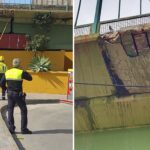
Photographs taken at the scene show a substantial area of damaged concrete, with sections of reinforcing metal exposed and visible deterioration around the affected area. A hole approximately one metre long was also reported in the concrete structure supporting the railway.
The incident has once again raised questions about the maintenance of the coastal railway, particularly as the central government, who is legally responsible in this case, have reportedly been warned about the problem previously. Today, nothing but a strip of police tape warns of the danger of falling concrete.
Adif warned but concerns continue
According to information provided by another concerned resident, both Fuengirola Local Police and the town hall have notified Adif, the state-owned company responsible for Spain’s railway infrastructure, about the deterioration. However, the local Malaga government says that despite these notifications, the situation has not been properly addressed.
The latest emergency response involved firefighters removing loose material, but residents want to know whether a comprehensive structural inspection has been carried out and when permanent repairs will take place.
There were also initial concerns about whether trains should continue running while firefighters dealt with the situation. Services were reportedly allowed to continue, with Renfe ordering trains to reduce their speed when passing the affected section.
In a previous incident, a pedestrian narrowly avoided being struck when a piece of concrete fell from the elevated railway structure at Los Boliches station. Firefighters attended and Local Police recorded a formal statement.
Read the earlier report: Crumbling railway: Fuengirola pedestrian narrowly avoids falling concrete at Los Boliches Station.
The recurrence of falling concrete in the same station area, following the earlier incident, raises fresh questions about what action was taken after the first warning.
Costa del Sol infrastructure under scrutiny
Concerns about deteriorating infrastructure are not limited to Fuengirola. Several Costa del Sol mayors have been publicly demanding improvements to transport links and greater investment in infrastructure.
Mijas mayor Ana Mata recently criticised the lack of progress, saying that the area had effectively been left with infrastructure dating back to the 1980s.
Speaking at a mobility forum in Malaga on November 12, she said: “En materia de infraestructuras, nos hemos quedado en los años 80.” (In terms of infrastructure, we’re stuck in the 80s). Her comments reflected growing frustration about the pressure on roads and public transport as the population of the Costa del Sol has increased.
Estepona mayor José María García Urbano has also repeatedly called for improvements to the A-7, including better access arrangements and investment in the busy coastal road.
For residents, the concern is increasingly about whether essential infrastructure is being maintained sufficiently, rather than simply whether new projects are being delivered. Many locals now complain how it looks like it is all going to “rack and ruin.”
Railway disasters increase public concern
The latest Fuengirola incident comes at a particularly sensitive time for Spain’s railway network. The January Adamuz disaster, which claimed 46 lives, and the October 28 collision near Urda, which killed 69 people, have shaken public confidence in railway safety.
The consequences have extended to the highest levels of the Transport Ministry. Óscar Puente resigned as Transport Minister on November 3, accepting political responsibility for the Urda disaster. Adif president Luis Pedro Marco de la Peña subsequently resigned. The tragedies have also prompted renewed demands from railway workers for greater investment in maintenance and improved safety procedures.
Although there is no suggestion that the damage at Los Boliches is connected to either railway disaster, the latest incident has added to public anxiety about the condition of the country’s transport infrastructure.
For the resident who raised the alarm in Fuengirola, the concern is straightforward: people should not have to walk beneath a railway structure fearing that pieces of concrete could fall on them.
With previous warnings reportedly already passed to Adif, residents now want answers about inspections, repairs and who is ultimately responsible for ensuring that the structure is safe.
How many more warnings will it take before something is done?
















 New Developments2 weeks ago

 %4 weeks ago