
Alvin Toffler
Panic, Conspiracy Theories And Distrust Of Government: Americans Worry About The Accumulation Of Digital Failures

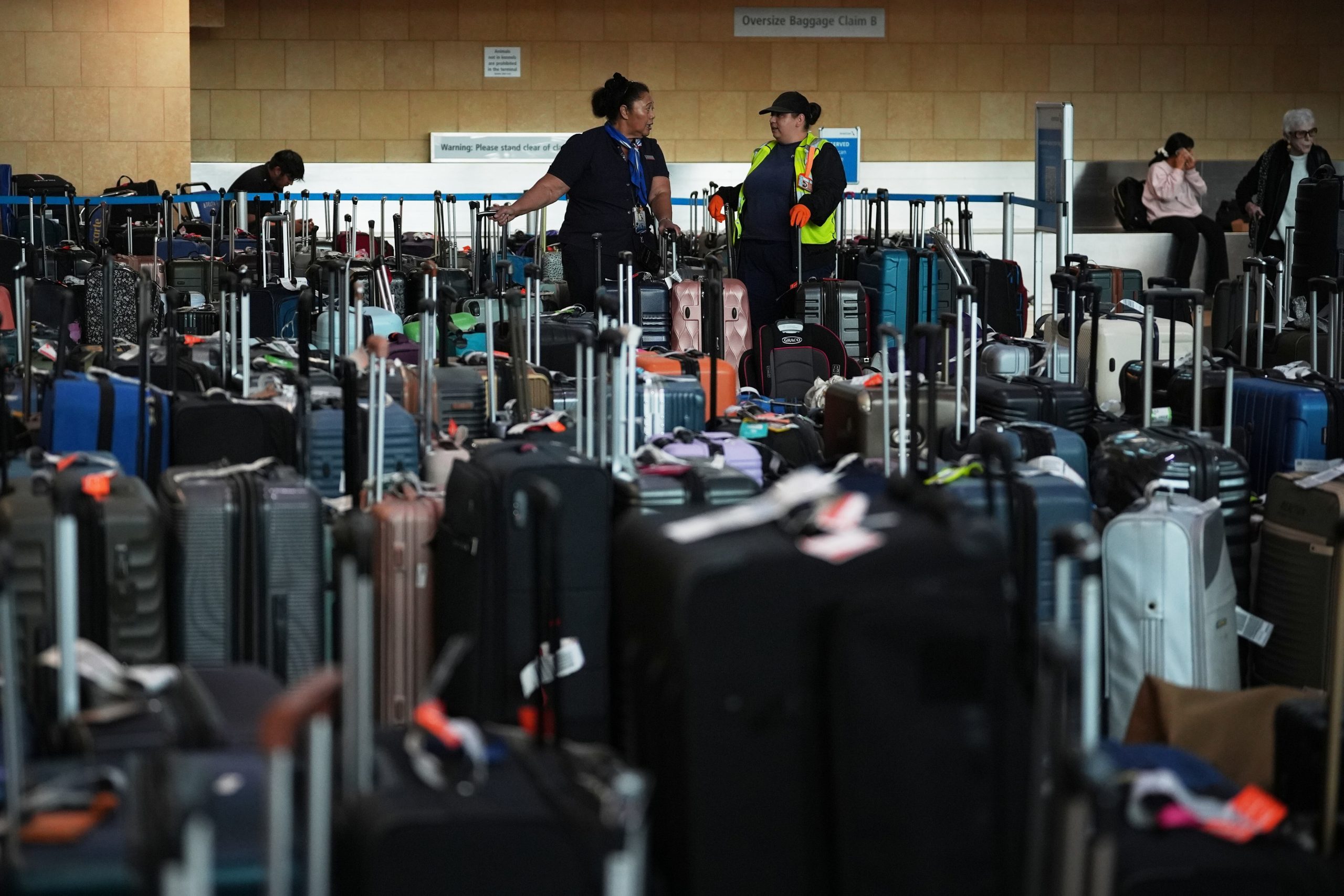
It felt like the last straw on Tuesday, when television screens across the United States went dark for one minute at 2.20 pm Eastern Time to display a message in the white typeface typical of an 1980s sci‑fi movie. It began: “This is a nationwide test of the Emergency Alert System, issued by the Federal Emergency Management Agency. This is only a test. No action is required by the public.”
It was in fact a test that is conducted every three years, but the timing could not have been more unfortunate this time around: in the middle of a series of technological and infrastructure failures that have created insecurity and paranoia among Americans, who suddenly face a string of concerns. Among them: whether, for example, they will be able to fly with confidence or whether they should withdraw their money from banks and hide it under their mattresses.
The blame lies with a truly extraordinary succession of events. First came an outage of Microsoft’s email and Teams services on Thursday. The next day, U.S. airspace was closed for four and a half hours because of a failure that Transportation Secretary Sean Duffy — who has not “ruled anything out” — blamed on a fiber‑optic installation company, on previous administrations and on Congress for refusing to allocate $50 billion to modernize the navigation systems of the world’s leading aviation power.
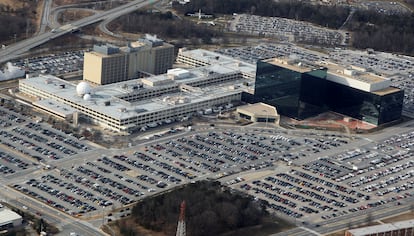
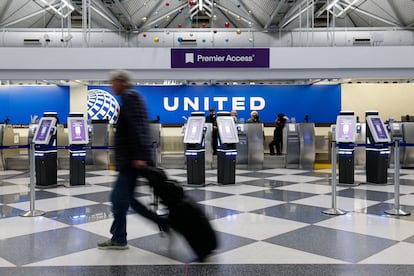
On Monday it was five banks — most notably the largest, Chase, whose customers were unable to access online financial services for a prolonged period of time — and United Airlines: the carrier experienced a “widespread outage” that affected its flights for an hour and a half. And on Tuesday it was the financial firm Charles Schwab, Apple’s payment service, which was hit by a faulty update. To top it all off, CNN on Wednesday revealed that a highly classified network used by the National Security Agency (NSA) for internal communications was down.
And with each of those small erosions of public confidence in a system assumed to work until it does not, the impression grows that something is massively failing in a country often seen as outdated and now facing threats from hostile states’ cyber capabilities and the rise of artificial intelligence (AI). “We live in a cybernetic loop of paranoia that has ended up becoming reality. People are afraid, and understandably so; Alvin Toffler’s notion of future shock — when technological and cultural change accelerates beyond our ability to adapt — is already here. These are some of its effects,” says Isaac Marcet, a tech writer and entrepreneur.
They also reinforce the idea that the world has become highly interconnected, its scaffolding resting on an ever smaller number of private tech providers, and they fuel a sense of vulnerability among citizens. The outages have also prompted criticism of the Donald Trump administration for its handling of the situation.
Critics see these events as the consequence of the U.S. president’s contempt for expert governance and his penchant for unorthodox government appointments. A case in point is Sean Duffy, a former reality‑TV star who has failed in recent days to inspire confidence with his explanations for an airspace closure that is second only in seriousness to the shutdown that followed 9/11.
For Miles Taylor, who served at the Department of Homeland Security during Trump’s first administration, all of this is nothing more than an expression of “incompetence and corruption,” he said Tuesday on MS NOW, while Jay Clayton, the Director of National Intelligence, appeared on Fox News to say he sees no evidence of a coordinated cyberattack by a foreign state. As for the NSA problems, Clayton attributed them to a patch for a system “vulnerability” that went wrong.
The outages have also fed suspicions among adherents of the phrase that hangs over the Washington office of Trump ideologue Steve Bannon: “There are no conspiracies, but there’s also no coincidences.” The wildest conspiracy spread on TikTok: it predicted a “90‑day blackout” starting Tuesday and urged people to stockpile food and water.
“The day is ending and I don’t see any blackout,” joked Joseph Uscinski, a political scientist who studies conspiracy theories, late in the afternoon in a conversation with EL PAÍS.
Asked how much algorithms on social networks like TikTok and X — companies whose business is the attention economy — contribute to their spread, Uscinski replied: “Theories don’t propagate by themselves; people believe them because they already have a predisposition to do so, meaning they have a worldview rooted in conspiracy,” he warned. “We only pay attention to them when they concern events we are already focused on.”
Smoke screens
It does not help that Washington lately seems shrouded (from aliens to the Epstein papers) in thick smoke screens, or that the president has built much of his political career on spreading conspiracy theories. Although this time Trump, who is on a tour of Asia, is opting to play down the matter. “That’s life,” he told reporters accompanying him on the trip on Tuesday.
Vice President J. D. Vance, another occasional conspiracy enthusiast, told Fox News there is no crisis looming after saying something many of his fellow citizens might relate to these days: “A lot of my friends have reached out asking if they should prepare to build a bunker or stock up on food and water.”
Jesse Walker, author of the book The United States of Paranoia: A Conspiracy Theory, describes what has happened since last Thursday as “walking in the dark with a very dim flashlight, trying to make sense of what it reveals.”
“Do these signals form a pattern? Maybe we will never know. Do we believe the official explanations? We are not sure. Do we trust the experts? Everyone admits they are, in a way, speculating,” Walker says in a phone interview, adding that it is “plausible” that so many things are happening in succession because public attention is heightened — much as UFO sightings multiply the more one looks at the sky. “But if you told me the NSA system actually fails every month and we usually just don’t hear about it, I’m not sure I would believe you,” Walker warns.
Another worrying aspect of this crisis, according to experts cited by U.S. media in recent days, is how each failure can act as a beacon for foreign cyber‑enemies. As if this ailing power were pointing out its main vulnerabilities so they know where to strike, while its citizens see one aspect of everyday life after another wobble: from access to savings to basic communication or the possibility of returning home next week, when the whole country will pause to celebrate Thanksgiving.
Sign up for our weekly newsletter to get more English-language news coverage from EL PAÍS USA Edition








Spain Unveils Unusual Shipping Container Gyms To Help Save Rural Villages
More Than Half Of All Foreigners In Spain Arrived After 2020

A Week After The Brooklyn Building Collapse, One Question Unites Victims And Investigators: ‘What Exactly Happened There?’


-

 New Developments3 weeks ago
Luxury Villas For Sale, Estepona – ProjectL1
-
Age Concern Marbella - San Pedro3 weeks ago
Halloween lunch sells out as 51 join Marbella get-together
-

 New Developments3 weeks ago
How To Get A Tourist Rental Licence In Andalusia (Spain) – Step-By-Step Guide 2025
-

 New Developments2 weeks ago
The San Roque Club – Townhouses For Sale
-

 %3 weeks ago
Spain Orders Replacement Of Eight Million Gas Meters: New Rules, Costs And Deadlines
-
Barcelona riots4 weeks ago
Looting and street violence hit Barcelona as El Corte Inglés customers are trapped
-

 New Developments4 weeks ago
Inside The Most LUXURIOUS Apartment Building In Spain!
-
countryside3 weeks ago
Rural revival: Five Almeria villages make moving inland easier and more enticing