
christies
Mexico Halts Christie’s Auction Of Frida Kahlo Work













Alfred Stieglitz
Georgia O’Keeffe Painting Hidden In A Closet For Decades Goes Up For Auction In New York

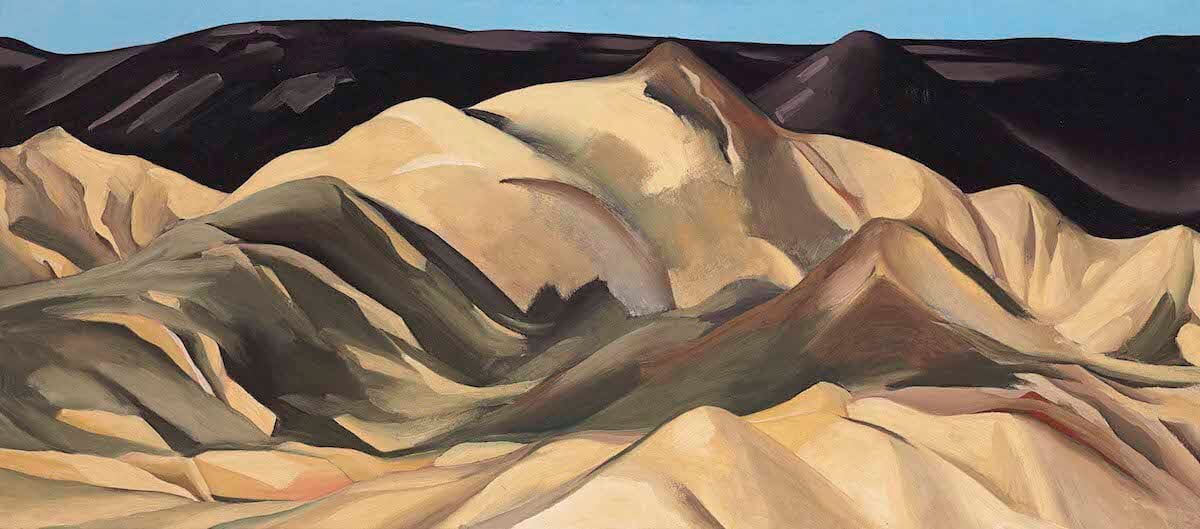
For four decades, a Georgia O’Keeffe painting worth millions of dollars was hidden inside a closet in an East Village apartment, tucked among fur coats and other items. Only its owner, a former diplomatic service worker, knew it was there. This jewel of contemporary art, which experts had lost track of and which was known only from a 1930s photograph, goes up for auction on November 17 at the prestigious Christie’s auction house.
It all began with a game of bridge, the owner’s niece tells EL PAÍS by phone. She identifies herself in the media as Betsy because she prefers to remain anonymous to protect her aunt, “a very private person.”
According to her aunt, the painting had been hanging on the wall of her apartment for years. But the woman — a skilled bridge player who hosted games at her home — began to suspect one of her card-playing partners, who, in her opinion, showed an excessive interest in the painting and gazed at it with greed. So, she decided to hide it for fear that he might steal it, and sometime in the early 1980s, the painting was returned to its original box and buried among coats.
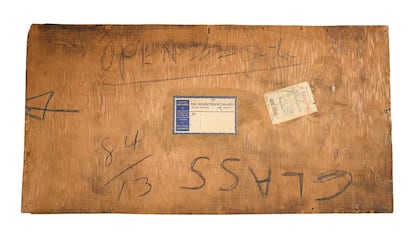
The first time Betsy heard about the painting was when she was helping her aunt prepare the apartment for the arrival of nursing aides who would care for her as her health had declined. “By the way, there’s a Georgia O’Keeffe painting in the closet,” she remembers her aunt saying. “Oh, wow, OK,” she replied.
This year, when her aunt was already in palliative care and shortly before she died, they decided to take it out. “I expected it to be rougher and drier, but to me it seems exuberant, accessible. It’s a painting that is very comfortable to be with; it invites you in rather than challenging you,” Betsy says.
Because of the date it was purchased (April 15, 1963), she believes the painting was a gift from her grandparents to her aunt on the occasion of her graduation. It originally cost $3,800 — about $42,000 today adjusted for inflation; Christie’s estimates its current value at between $3 million and $5 million.
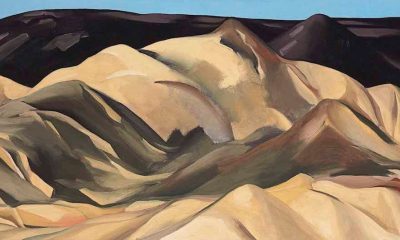
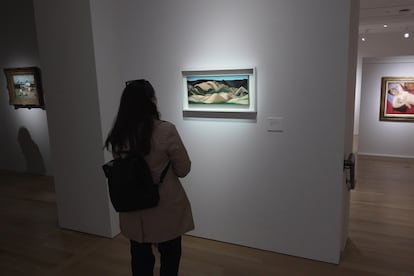
The painting is titled Near Abiquiu, New Mexico I, dates from 1930 and is part of a series of three studies of the Lobo Mountain landscape in New Mexico. The second is in the Metropolitan Museum of Art in New York and the third was auctioned (also by Christie’s) in 2018 and acquired by the Rockefeller family. Until its recent rediscovery, experts had lost track of this work, whose only visual record was a photograph taken by O’Keeffe’s husband, the photographer Alfred Stieglitz.
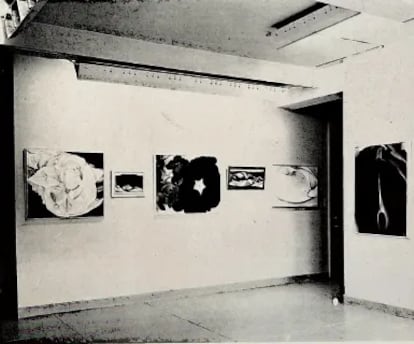
Georgia O’Keeffe is one of the most influential contemporary painters in the United States. Although she was born in Wisconsin and lived in New York, during a 1929 visit to Taos, New Mexico, she was captivated by the desert landscapes, the wide horizons and the clear, light-filled skies of this part of the American West. The following year she painted Near Abiquiu, New Mexico I. In a letter to Stieglitz she expressed her fascination with the rocks: “This is Lobo Mountain… I want to paint this mountain — I have wanted to do it every year — but it is completely impossible,” she wrote about the succession of brownish hills rendered on the canvas.
In 1949, after her husband’s death, O’Keeffe moved permanently to New Mexico. There she owned two properties, both now pilgrimage sites for admirers of the artist. There is her famous studio home in Abiquiú, an adobe structure carefully restored and known for its earth tones, large windows, midcentury furniture and the minimalism of the objects with which the artist decorated the space: stones, bones and animal skulls. And there is Ghost Ranch, an estate surrounded by reddish canyons where she spent summers. The arid, erosion-sculpted landscapes of these places, which O’Keeffe portrayed in her characteristic abstract style, have become synonymous with her work.
“This painting is a fabulous example of her New Mexico landscapes,” Paige Kestenman, co-head of 20th-century art at Christie’s, says about the work. “The blues and greens are fantastic, the mountain ridgelines are extraordinary, the whole atmosphere the work emits.” Kestenman, who will lead the auction, is still astonished by the story behind the painting’s discovery. “This is the first time anything like this has happened to me,” she says.
Betsy says she and her siblings considered keeping the painting but dismissed the idea once they understood its financial value. “It wasn’t an option,” she says.
She now knows that the painting, shown to the public for the first time in about 40 years after being hidden in a closet, could disappear again behind four walls, this time into a private collection. “It would be wonderful if a museum bought it so the public could enjoy it,” she says. “I know there’s a possibility we’ll never see it again.”

Unas Imágenes Excepcionales De Un Contacto Con Indígenas Aislados Subrayan Las Amenazas A La Amazonia En Brasil

Spain Unveils Unusual Shipping Container Gyms To Help Save Rural Villages

New Nissan Micra EV Review: Modern Style On Renault 5 Tech


-

 New Developments3 weeks ago
Luxury Villas For Sale, Estepona – ProjectL1
-
Age Concern Marbella - San Pedro3 weeks ago
Halloween lunch sells out as 51 join Marbella get-together
-

 New Developments3 weeks ago
How To Get A Tourist Rental Licence In Andalusia (Spain) – Step-By-Step Guide 2025
-

 New Developments2 weeks ago
The San Roque Club – Townhouses For Sale
-

 %3 weeks ago
Spain Orders Replacement Of Eight Million Gas Meters: New Rules, Costs And Deadlines
-
Barcelona riots4 weeks ago
Looting and street violence hit Barcelona as El Corte Inglés customers are trapped
-

 New Developments4 weeks ago
Inside The Most LUXURIOUS Apartment Building In Spain!
-
countryside3 weeks ago
Rural revival: Five Almeria villages make moving inland easier and more enticing