Connect with us

%

Chaos Erupts As PlayStation Goes Down Hours Before GTA 6 Launch

Published

on

chaos-erupts-as-playstation-goes-down-hours-before-gta-6-launch

Players reported being unable to sign in. Photo credit: Vardanyan Karen/Shutterstock

After waiting years for Grand Theft Auto VI, the last thing fans wanted was to find themselves locked out of their PlayStation accounts just hours before they could finally play. But that is exactly what happened on Wednesday, November 18, when problems hit the PlayStation Network, leaving gamers struggling to sign in, access online services and get their consoles ready for the eagerly awaited release.

The disruption came on the eve of one of the biggest video game launches in years, with players around the world preparing to enter Rockstar Games’ latest open-world adventure. For those relying on digital downloads and online access, the timing could hardly have been worse.

PlayStation acknowledges network problems

Sony confirmed that PlayStation Network was experiencing a major outage on Wednesday afternoon. The company warned that some users could have difficulty launching games and applications or using network features, and said it was working to resolve the problems. Players reported being unable to sign in, connect to servers and access online multiplayer services. Others experienced difficulties with downloads and updates, while some received error messages saying that PlayStation services were busy.

Downdetector recorded a sharp rise in complaints, with hundreds of users reporting problems within a relatively short period. The reports came from different countries, suggesting the disruption was not confined to one local area. The problems affected more than just people waiting for GTA VI. PlayStation Network is used for account access, online gaming, digital purchases and services such as PlayStation Plus, meaning other games and applications could also be affected.

Why the timing is so frustrating

Grand Theft Auto VI is scheduled to launch on Thursday, November 19, with players in different regions gaining access according to their local release times. The game, developed by Rockstar Games, returns players to Vice City and the fictional state of Leonida. Its story follows Jason and Lucia, two protagonists caught up in a criminal world. Anticipation has been building for years, making the launch a major event for the gaming industry.

Sony had also released a PlayStation system software update earlier in the week, ahead of the launch. Players were being encouraged to install the latest update to prepare their consoles. However, there is no confirmed evidence linking that update to Wednesday’s network problems. Sony has not publicly established what caused the disruption. Nor is there confirmation that GTA VI itself was responsible. The timing has prompted speculation that increased demand from players preparing for the release may have contributed, but that remains unproven.

Gamers left waiting

The disruption appeared to ease after Sony began working on a fix, with the company’s status information later indicating that services had been restored. However, reports of individual connection problems continued to appear as players tried to access their accounts. For fans who have already pre-ordered the game, downloaded updates and cleared their schedules for launch night, even a short interruption is unwelcome.

The outage comes after a turbulent week for major technology services, with Microsoft 365 suffering disruption on November 13 and Apple services experiencing problems on November 17. Separate incidents also affected US government communications and major websites, including the BBC and IKEA. There is no evidence linking any of these incidents to the PlayStation outage.

The outage also raises an awkward question for Sony as millions of players prepare to log in: will its network cope when the game finally becomes available? For now, gamers can only hope that the problems do not return just as they are ready to start playing.

%

Spain’s Traffic Authority Buys New Drones

Published

on

spain’s-traffic-authority-buys-new-drones

New drones taking over from helicopters. Credit: DGT

Drivers across Spain could soon face a new set of eyes in the sky after the Dirección General de Tráfico (DGT) signed an emergency €1.3 million contract for more capable drones. Officials hope the purchase will plug gaps left by the grounding of the entire Pegasus (blue and yellow) helicopter fleet.

All 11 helicopters belonging to the Aerial Means Unit now sit in storage at the Cuatro Vientos base in Madrid. Eliance, the firm contracted to operate and maintain the aircraft used for road surveillance and issuing fines, has entered insolvency proceedings (concurso de acreedores). It can no longer guarantee the safety of the helicopters, so the DGT ordered them moved to the capital and placed in preservation.

Euro Weekly News previously reported how the crisis began to bite when helicopters stopped flying from bases including Malaga, Seville and Santiago de Compostela. Spain’s €51m Pegasus helicopters grounded: Questions raised over traffic fines

Why drones are the stop-gap solution

Earlier this month the DGT began relying more heavily on its existing drones to keep some form of aerial monitoring going. Those units have drawn heavy criticism from unions, which described them as little more than “toys”. In eight years they recorded barely 500 flying hours. Some Thyra models had to be withdrawn after becoming uncontrollable and causing accidents near roads.

Fernando García Castro at the Ministry of the Interior, said the new drones will still have serious limits. They can only reach 120 metres altitude, top out at 80 km/h and stay aloft for about 40 minutes. That means they can spot illegal turns or drivers jumping stop signs, but they cannot measure or fine speeding offences. He added that the new machines are unlikely to be ready before next year at the earliest.

Union wants the helicopters flying again

The union representing the helicopter pilots, CCOO, has called for an emergency contract covering fuel, spare parts and engineering work so the helicopters parked at Cuatro Vientos can return to service. Pilots warn that leaving the aircraft stored for long periods risks mechanical problems that could make them harder to bring back into operation.

Workers from the Aerial Means Unit and traffic control centres staged a protest this week, arguing that staff shortages combined with the Eliance collapse are putting road safety at risk.

What drivers should expect on the roads

Fixed and mobile speed cameras, average-speed sections and unmarked patrol vehicles continue operating as normal. Aerial enforcement of pure speeding offences is currently limited, though drones can still catch other dangerous manoeuvres. Recent reports have also covered hooded saboteurs destroying Seville speed cameras and tighter pedestrian crossing rules enforced by the DGT. Drivers can check official guidance on the DGT website.

Continue Reading

%

Spain’s ‘it’ll Go Away’ Attitude Sends Five Million People To A&E

Published

on

spain’s-‘it’ll-go-away’-attitude-sends-five-million-people-to-a&e

People aged 18 to 24 were the most likely to put off medical attention. Photo credit: Iri.madrid.art/Shutterstock

If you have ever decided to give a symptom a few more days rather than spend time trying to get a doctor’s appointment, you are far from alone. But waiting for a problem to disappear can leave you needing more than the consultation you put off. A national survey estimates that more than five million people in Spain who delayed medical care eventually went to an emergency department.

The study, La salud aplazada, commissioned by Línea Directa Aseguradora with Dr Justo Menéndez, an emergency medicine specialist, found in 1,583 interviews across Spain that 42 per cent of respondents had postponed a medical consultation or check-up they considered necessary at some point in their lives. Projected across Spain, that represents more than 17 million people. Among those who delayed seeking help, one in three said they later attended A&E. The figure is an estimate from survey responses, not hospital records. 

Why people put off an appointment

The most common reason was the belief that the problem would clear up on its own. Some 37 per cent said their symptoms did not seem serious or they expected them to disappear.

For another 21 per cent, work or personal commitments got in the way. A further 19 per cent said they had difficulty getting an appointment with their family doctor or a specialist. Almost half of those who delayed care waited at least a month or never made the appointment. 

The consequences of waiting

Among respondents who delayed a consultation, 53 per cent said their symptoms lasted longer, while 45 per cent said they became worse. In 21 per cent of cases, the problem became recurrent or chronic.

The survey also found that 17.5 per cent received a diagnosis their doctor considered late. More than one in four, or 26 per cent, needed more complex treatment, while almost 12 per cent were admitted to hospital. The figures do not mean every delay leads to serious illness, but some patients later needed more extensive treatment. 

Young adults are most likely to delay care

People aged 18 to 24 were the most likely to put off medical attention: 67 per cent said they had done so. The figure fell to 21 per cent among people aged over 75.

There were also regional differences. The Community of Madrid recorded the highest proportion of people who had delayed a consultation, at 51 per cent, followed by the Valencian Community at 49 per cent and the Canary Islands at 48 per cent. Andalucía had the lowest rate, at 31 per cent, followed by Navarra at 32 per cent and the Basque Country at 33 per cent. 

Self-medicating instead of seeing a doctor

Many respondents tried to deal with symptoms themselves rather than book an appointment. Seven in ten said they had self-medicated to avoid or delay seeing a doctor, and around a third did so without a prescription. One in ten said they had consulted artificial intelligence about their symptoms. 

The survey also asked what would encourage people to seek help sooner. Almost half said access to a family doctor within 24 to 48 hours would make a difference. Another 43 per cent wanted consultations and tests available on the same day, while 61 per cent said a quick initial assessment by phone, video call or chat would encourage them to ask for medical advice. 

Continue Reading

%

Spanish Food Company Uncovers Explosive Surprise Hidden In French Potato Shipment

Published

on

spanish-food-company-uncovers-explosive-surprise-hidden-in-french-potato-shipment

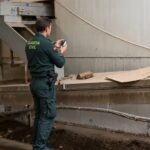
The projectile measured 75mm and was identified as ammunition from the Second World War. Photo credit: Guardia Civil/Ministerio de Interior

A company in León got considerably more than it bargained for when a shipment of potatoes from France arrived with an unexploded Second World War artillery shell hidden among the produce.

The 75mm projectile was discovered by workers on a conveyor belt at the company’s premises in Santovenia de la Valdoncina. It still contained explosive material, prompting staff to stop the machinery and call the Guardia Civil. Fortunately no one was injured, but the discovery required the intervention of the Guardia Civil’s explosives disposal specialists.

Bomb found among imported potatoes

The incident happened at a company in Santovenia de la Valdoncina, in the province of León, while workers were handling a shipment of potatoes imported from France. The shell was spotted on the processing line by, where potatoes are moved along a conveyor belt for handling. Once its appearance raised suspicions, staff stopped the machinery and alerted the authorities rather than risk moving it.

The projectile measured 75mm and was identified as ammunition from the Second World War. Despite the decades that had passed, it had not been rendered harmless and still contained explosive material. The discovery meant the shipment had brought a piece of wartime weaponry into a food-processing workplace, where employees could have been seriously injured had it been mishandled or gone unnoticed.

Guardia Civil explosives experts called in

The Guardia Civil sent its explosives disposal specialists, known as EDEX, to deal with the device. Their work involved assessing the condition of the shell and making it safe to remove. The operation was carried out without injuries, and there were no reports of damage at the company. The shell was subsequently taken to a quarry in La Pola de Gordón, where specialists destroyed it in a controlled explosion.

The operation removed the explosive device, but the discovery raised an obvious question: how had a wartime projectile ended up among potatoes being transported commercially from France? The obvious explanation would be that it had been uncovered in a field where the potatoes were being grown, but how it managed to not detonate through the entire collection, transport and delivery process is a miracle in itself.

Old explosives can remain dangerous

Unexploded ammunition from past conflicts can remain hazardous long after the fighting has ended. Rust, damage and deterioration do not necessarily remove the explosive risk, and moving or handling an old projectile can trigger a detonation. The Guardia Civil regularly deals with discoveries of old military explosives across Spain, including devices found during building work, agricultural activity and land clearance.

Anyone who comes across a suspected grenade, shell or other piece of ammunition is advised not to touch it, move it or attempt to inspect it. The safest response is to keep away and contact the emergency services so trained specialists can assess it. The French connection sets this find apart from many old shells recovered in León, where unexploded ammunition is more commonly associated with battles fought during the Spanish Civil War.

Old military ammunition can turn up in unexpected places, particularly during agricultural and construction work, the Guardia Civil advises anyone finding suspected ammunition to leave it untouched, move away, keep others clear and call 062 right away.

Continue Reading

Trending

Copyright © 2017 Spanish Property & News