
Bangladesh
The International Court Of Justice Finds Myanmar Committed Genocide Against The Rohingya

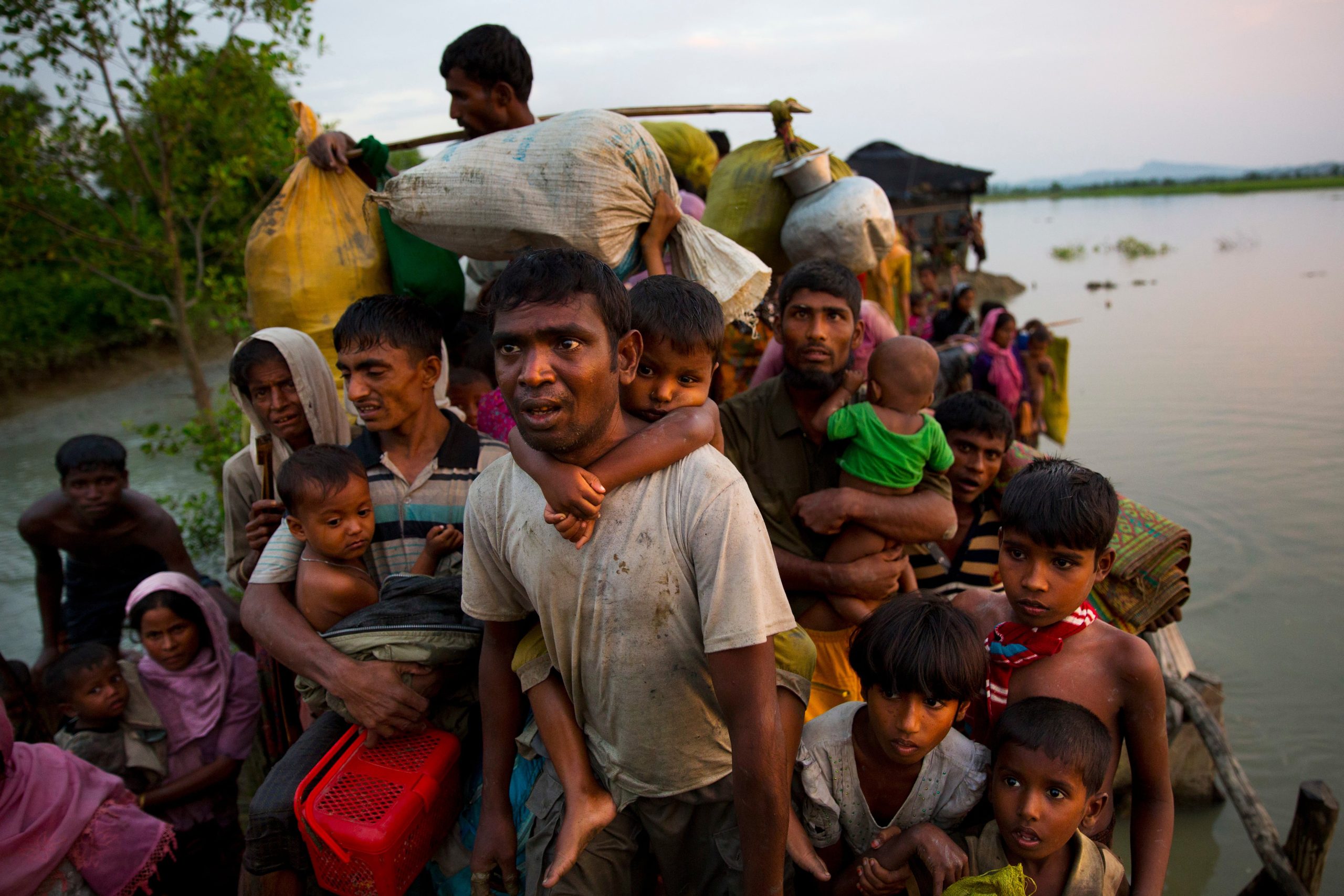
The International Court of Justice (ICJ), the United Nations’ top court, ruled on Thursday that Myanmar, formerly known as Burma, committed genocide against the Rohingya Muslim minority. By a vote of nine to six, the court found that the country violated the Convention on the Prevention and Punishment of the Crime of Genocide (1948) by failing to prevent its armed forces from carrying out massacres, rape, acts of “extreme violence,” including sexual violence, against Rohingya adults and children, and other atrocities against the community, which has lived in the country for generations.
It is the first time in its history that the United Nations’ top court has held a state responsible for genocide.
During the reading of the judgment in the case brought by The Gambia against Myanmar, the court’s president and presiding judge, Yuji Iwasawa, said the ICJ was “fully convinced” that Myanmar’s security forces killed thousands of Rohingya, systematically burned their homes, destroyed their villages and committed acts of “extreme violence,” including sexual violence, against adults and children.
Those military operations, launched in October 2016, forced nearly one million Rohingya to flee to neighboring Bangladesh.
Iwasawa also emphasized that Myanmar’s authorities acted with the intent to “destroy in whole or in part” the Rohingya Muslim minority in northern Rakhine state, in the west of the country. Under international law, genocidal intent is a key element in determining whether genocide has occurred.
The court president further noted that Myanmar’s authorities not only incited the commission of genocide but also failed to prevent it.
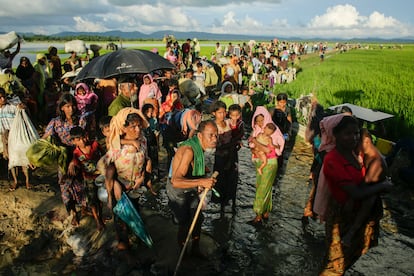
“The court finds that Myanmar’s security forces killed thousands of Rohingya civilians, perpetrated widespread acts of sexual violence, as well as acts of extreme violence against children, and attacked fleeing Rohingya,” Iwasawa said in a packed Great Hall of Justice. He went on to note that the villages where members of the minority had lived were destroyed in 2017, before those localities were subsequently “colonized” by people from outside the group.
In addition to the physical harm caused by the violence, these acts had a serious impact on the physical and mental health of a very significant number of Rohingya, said Iwasawa. Myanmar also adopted measures aimed at “preventing” births within the community and “slowing the birth rate” of the Muslim minority, another of the acts listed in the Convention on the Prevention and Punishment of the Crime of Genocide (1948) that may constitute genocide, the gravest crime under international law.
Case against Israel
The ruling may have implications for the interpretation and application of the Genocide Convention and for efforts to combat impunity, at a time when the International Court of Justice is also hearing the case brought in 2023 by South Africa against Israel under the same treaty, alleging “genocidal acts” against Palestinians in Gaza.
The Myanmar case was brought before the International Court of Justice in 2019 by The Gambia, a West African country located thousands of miles away and with no direct involvement in the events in question. A Muslim-majority nation, The Gambia filed the case in fulfillment of the obligations set out in the Genocide Convention, which requires signatory states to prevent, prosecute and punish violations of the treaty in both times of peace and war.
Sign up for our weekly newsletter to get more English-language news coverage from EL PAÍS USA Edition



Colombia To Put Down 10 Of Pablo Escobar’s Hippos Under New Control Plan

Spanish Cheese Finally Recognised Alongside Swiss And French At World Cheese Awards With Three Winning Varieties

The International Court Of Justice Finds Myanmar Committed Genocide Against The Rohingya


-

 New Developments3 weeks ago
Luxury Villas For Sale, Estepona – ProjectL1
-

 New Developments2 weeks ago
The San Roque Club – Townhouses For Sale
-
Age Concern Marbella - San Pedro3 weeks ago
Halloween lunch sells out as 51 join Marbella get-together
-

 New Developments3 weeks ago
How To Get A Tourist Rental Licence In Andalusia (Spain) – Step-By-Step Guide 2025
-

 %3 weeks ago
Spain Orders Replacement Of Eight Million Gas Meters: New Rules, Costs And Deadlines
-
Barcelona riots4 weeks ago
Looting and street violence hit Barcelona as El Corte Inglés customers are trapped
-

 New Developments4 weeks ago
Inside The Most LUXURIOUS Apartment Building In Spain!
-
countryside3 weeks ago
Rural revival: Five Almeria villages make moving inland easier and more enticing