
Ecuador
The Collapse Of Building 1321, The Tragedy That Exposed New York’s Cracks

Mr. Michael has rolled up in his wheelchair to the intersection of Flatbush and Bedford, two hectic, bustling avenues lined with restaurants and beauty salons, a place far removed from New York’s glamour. There is trash on the corners, potholes in the streets, cracks in the houses.
Mr. Michael switches on a speaker and searches on his phone for The Jets so that the sweet, velvety voice of Elizabeth Wolfgramm would fill the air. “I don’t know what I can do,” he says, “I can only play music.”
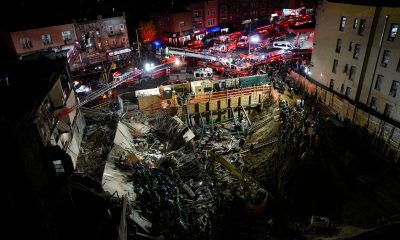
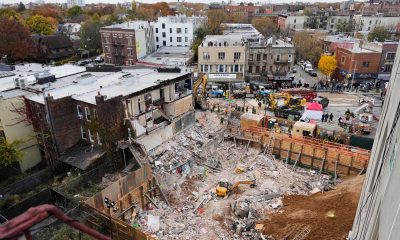
Then he points to an empty, fenced-off space, a blind spot in the middle of Flatbush. A stranger would never imagine what once stood there, but a local resident understands the absence: the neighborhood is missing building number 1321. It took eight lives with it when it collapsed, laying bare the cracks in a city.
After a week of fire trucks coming and going, of workers in blue hard hats clearing away debris, of politicians stopping by to tick the visit off their schedules, and of curious or disbelieving neighbors gathering at the scene, Flatbush has reverted to its usual rhythm: congested traffic, people smoking halfway down the sidewalk, and music drifting out from clothing stores and takeout joints.
At first glance, there is a sense of normality. Beneath the surface, however, lies a simmering frustration that nothing seems able to ease. Residents say they have spent years complaining about cracked walls in their buildings, missing smoke detectors, leaks and dampness. But it took the deaths of eight people for the city to begin paying attention to their grievances.
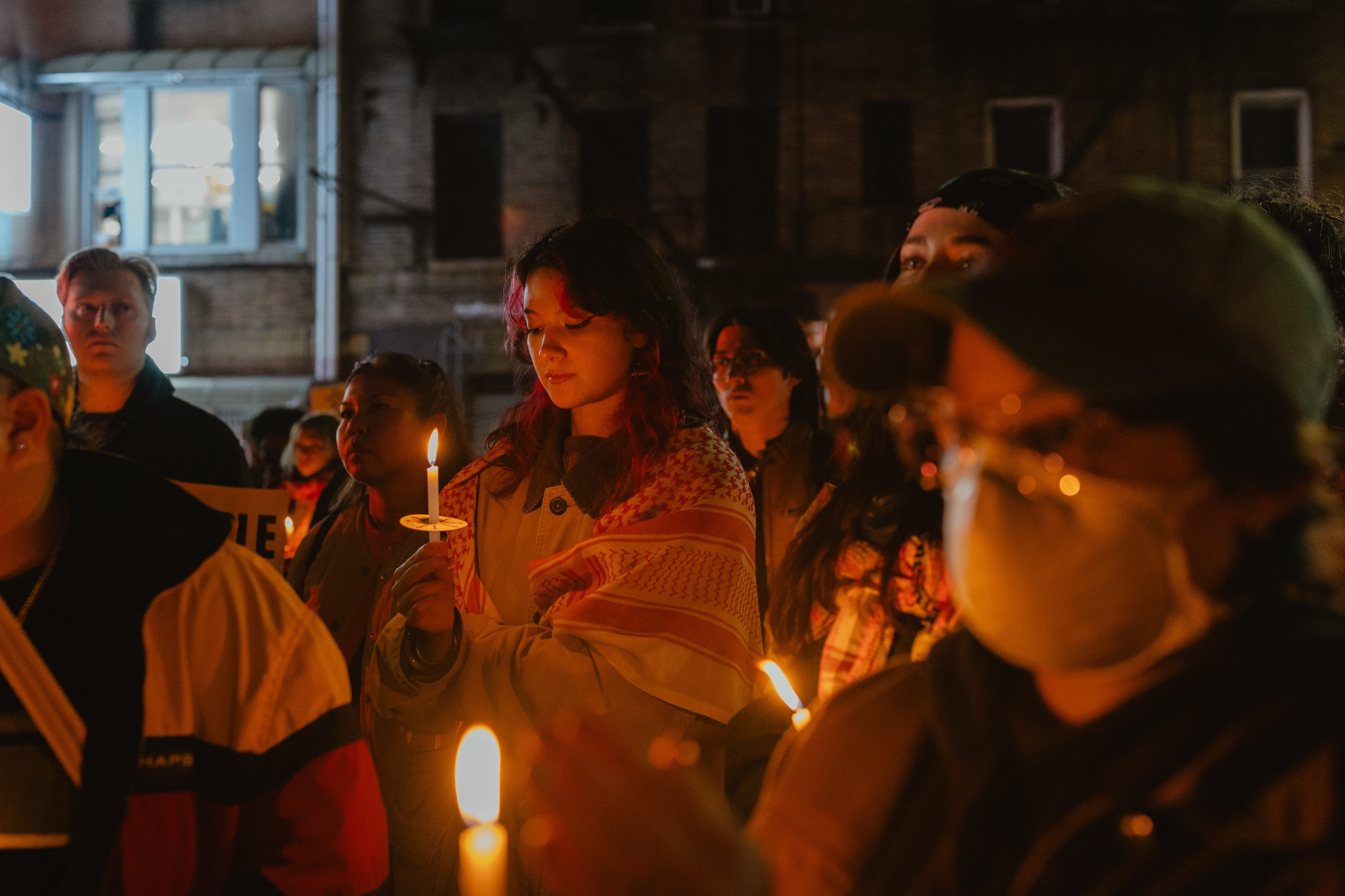
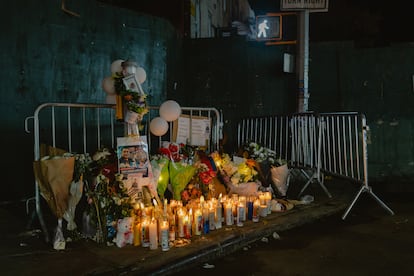
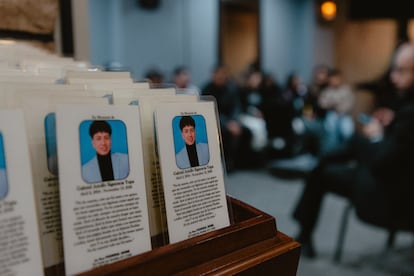
Now the neighborhood has assembled a makeshift memorial with candles, photographs and a card bearing the names of the victims of the collapse of building 1321, which came crashing down on the afternoon of November 11 onto an adjacent lot where several construction workers were on the job.
In handwritten lettering, the kind that is rarely seen anymore, someone sought to preserve the names of the victims. There was Nicole Daniela Salvada Rodríguez, the nine-year-old Colombian girl whom her teachers described as “brilliant”; her cousin, Kevin Santiago Reyes González, 10, who was being raised by his father alone on the building’s second floor; and Juan Daniel Salvada Guzmán, 31, Nicole’s father.
The memorial also bears the name of José Luis Caguana, a 26-year-old Ecuadorian and father of a four-year-old boy, who had been expecting the birth of his second child this week. Then there is Gabriel Siguencia, a 22-year-old Ecuadorian carpenter who had a four-year-old son and plans to marry soon. Also on the list are Barry Mamadou, 21, who had arrived from Guinea about five years ago, and his cousin Ndiaye Mamadou, 31, with whom he shared an apartment on the building’s second floor.
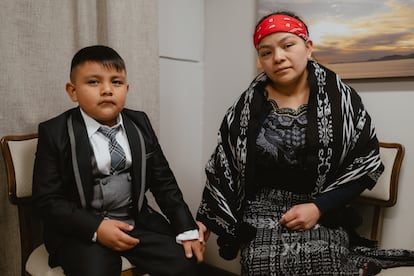
The name of Edgar Sapón, a 26-year-old Guatemalan described as a “quiet” man, appears as well. A few days ago, his wife, Brenda Vázquez, had to tell their six-year-old son, Eduardo: “Your dad isn’t coming back. Your dad died.”
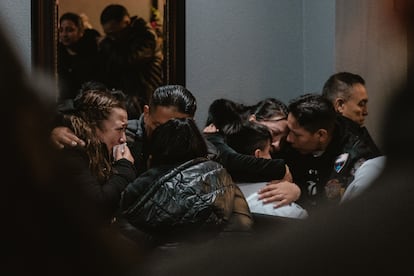
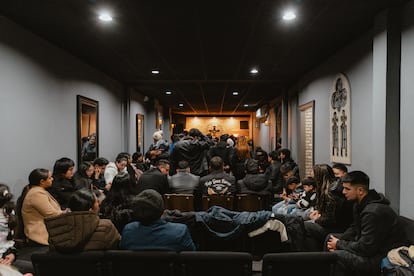
On Wednesday, young Eduardo arrived dressed in a black suit and white shirt at Las Rosas Funeral Home, a modest funeral parlor, one of the most affordable in the city and a place frequently used by immigrants.
The funeral home’s manager, a young Ecuadorian man, said business had been especially busy lately: “People are out of control. There are a lot of accidents, a lot of people with drug problems.”
But his most recent clients were different. He had been watching news reports about a building collapse in Brooklyn when his boss called to say they would be holding wakes for some of the victims there. One of them was Edgar Sapón, Eduardo’s father. The boy wandered from room to room and ran around with other children, not fully understanding what was unfolding around him.
A few days earlier, when he noticed his father was not coming home and that his mother seemed different, he wanted to know what was going on. “What happened to my dad?” the boy asked. “Nothing, my love, your dad is working, you know he works late,” Vázquez told him.
On Wednesday, November 11, Sapón had left home early to work at a construction site on a vacant lot at 2625 Bedford Avenue. Around midday, as she often did, Vázquez sent him a message: “My love, I’m heading out. What about you?”
Sapón did not reply. That afternoon, when she finished work, she called him, but no one answered. When she got home, the news was already reporting on the tragedy that had gripped New York: a building collapse. At that stage, no one yet knew how many lives it had claimed or who the victims were. In the footage, Vázquez spotted a survivor wearing a shirt emblazoned with Elite Concrete, the name of the contracting company her husband worked for.
“I said, ‘This can’t be,’” Vázquez recalls through tears, a few steps from Sapón’s coffin. “I said, ‘Let my husband be OK, God, take care of my husband.’”
She rushed to the emergency room at Kings County Hospital Center, where victims were being taken, but she did not recognize Sapón among the injured. “I looked and looked and couldn’t find him.” She showed a photo to firefighters and paramedics, but no one had seen him. She returned at night to the disaster site. Workers kept digging through the rubble as the hours dragged on. “Around 5 a.m. they started pulling out bodies. One body came out, then another 20 minutes later, and another.” At 7 a.m., they told her her husband was one of the fatalities, but she did not believe it. “They made a mistake,” she said.
Later, at the morgue, the photograph of Sapón matched one of the victims of a collapse that exposed not only shattered concrete but also a long history of residents’ complaints, building-code violations, fines and neglect by property owners.
When building 1321 came down, it killed migrant construction workers. It killed other migrants who could afford to live only in a cracked building with nearly 100 maintenance complaints. It displaced residents who are now living in temporary hotel accommodation. And it left an entire neighborhood demanding that New York authorities pay attention to the places that almost no one pays attention to.
A collapse turned into a symbol
Amid an angry crowd gathering on Wednesday evening, holding signs condemning the property owners and demanding justice for the victims of the collapse, a young woman took hold of a megaphone and asked to be heard. “In New York there are two kinds of people,” she said. “Those who have the life they dreamed of, and those who end up dying under the rubble.”
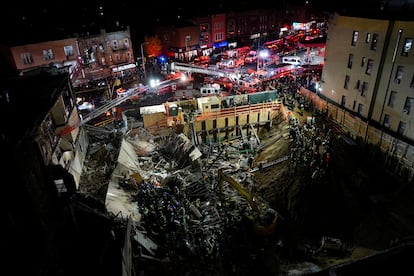
People shouted. They looked angry. These are the residents of a neighborhood of low-rise buildings, the brick structures with narrow windows that are so characteristic of the city. According to Anil K. Agrawal, professor and chair of the Department of Civil Engineering at The City College of New York, many of these buildings are nearly a century old. “New York is an old city. It has many very old buildings that are not always in good condition, many built of masonry that do not have great structural strength,” he says.
These are the buildings that began to rise across the city in the late 19th and early 20th centuries, as successive waves of immigrants, particularly from Ireland, Italy and Germany, arrived in New York. Today, the real estate industry has set its sights on many of these properties, replacing them with developments that can command higher rents.
“Some of these new buildings offer 100% market-rate housing, while others take advantage of tax incentives and reserve 20% of units for lower-income people, with affordable, regulated rents,” explains George M. Janes, an urban planner and consultant in New York. He says very few buildings dedicate 100% of their units to affordable housing.
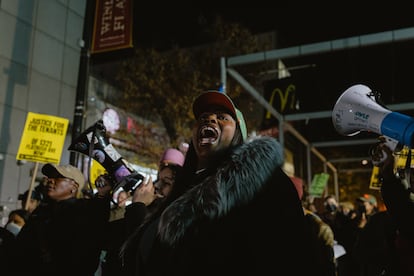
That is another of the major housing issues that the Brooklyn collapse has brought back into focus. Robert Fischman, the owner of the construction site, who had already been fined twice for violating restrictions imposed by the New York City Department of Buildings (DOB), planned to build a nine-story structure with 64 residential units, which would then be rented at prices that many Flatbush residents could scarcely afford.
Attention has also turned to Olufemi Falade, the owner of the collapsed building. He once spent 12 days in jail for refusing to remedy more than a thousand violations across several of his properties.
On Monday, Dengane Omari Jack, a musician who lived in the building, filed a complaint in Brooklyn Supreme Court saying he had photographed cracks in the structure and that in October he informed the owner about the building’s condition. Falade, however, responded that “it wasn’t his fault” and that “it couldn’t be fixed.” A few days ago, Jack stood looking at his vinyl records scattered across the rubble, after a warning that no one had heeded.
The tragedy of building 1321 has ultimately become a symbol of an entire neighborhood’s grievances. “I think it’s a sign of what’s happening,” says Angelina, a local resident who has helped lead efforts to collect supplies for displaced families and who, together with other neighbors, is raising a $130,000 fund to support the affected families. “It’s a sign of what happens when people try to defend their rights and their lives but are not listened to and are ignored. It’s a symbol of our future if we don’t make a change right now.”
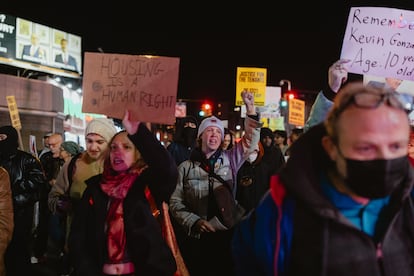
After making their way along Flatbush Avenue, past Jamaican takeout joints, a Mexican taco stand, hair salons advertising Afro hairstyles and all the bustle of Little Caribbean, the assembled residents arrived at the makeshift memorial and shouted at the top of their lungs: “Housing is a human right!”
They demanded justice for the residents of building 1321 and held up signs asking: “How many lives must be lost before tenant protection is prioritized over profits?” Then they fell silent.
A call for justice
Just over three miles away, mourners were arriving at Las Rosas Funeral Home. That Wednesday, several women in traditional huipiles were handing out hot coffee and chicken tamales, while a group of men stood nearby, heads bowed, stunned by what had happened. They were construction workers. They had worked alongside the deceased and had only escaped their fate because they had been assigned to different job sites that day.
“When they returned to work on Monday, the atmosphere was tense, sad,” says Ecuadorian worker Víctor López. “I only ask God to watch over us, because construction is very hard, very risky work.”
Construction is also one of the industries that employs the largest number of Latino workers and one of the best-paying, with wages of around $35 an hour.
Walter Sinche, who instructed José Luis Caguana in an OSHA training course — the federal agency that oversees worker safety and health standards in the United States — teaches his students a fundamental lesson. “When you work, put life and work on a scale and see which way you want it to tip,” he tells them. “Some choose life, but other bosses force them to work or fire them if they complain.” As he speaks, Sinche slowly shakes his head, visibly affected by what happened to one of his own.
What everyone wants now is an answer: what actually happened in the Flatbush collapse? Was it caused by the excavation work underway next door, or was it related to the condition of the building itself? The Department of Buildings and city authorities say the investigation is ongoing.
Vázquez knows nothing will bring her husband back, but she wants justice. “The city should have supervised better, the engineer should have made proper plans and ensured they were followed, the contractors know the risks the work entails,” Sapón’s wife says angrily. “I want justice for my husband’s life. My son was left without his father because someone didn’t do their job.”
Luis Siguencia also arrived at the funeral home. Dressed all in black, he approached Vázquez to offer his condolences. Two days earlier, he had held a wake in the same place for his son Gabriel, whose body had been repatriated to Quito and would be buried in the parish of Ingapirca, in Cantón Cañar. The body of fellow Ecuadorian José Luis Caguana had also been flown back home.
Little by little, they were making the journey back, in a way they had never planned. They wanted to save money, to buy land in their hometowns. Now, in their hometowns, they were being welcomed with flowers, prayers and funeral rites, the farewell that New York would never have given them.
Sign up for our weekly newsletter to get more English-language news coverage from EL PAÍS USA Edition








Colombia
A Week After The Brooklyn Building Collapse, One Question Unites Victims And Investigators: ‘What Exactly Happened There?’
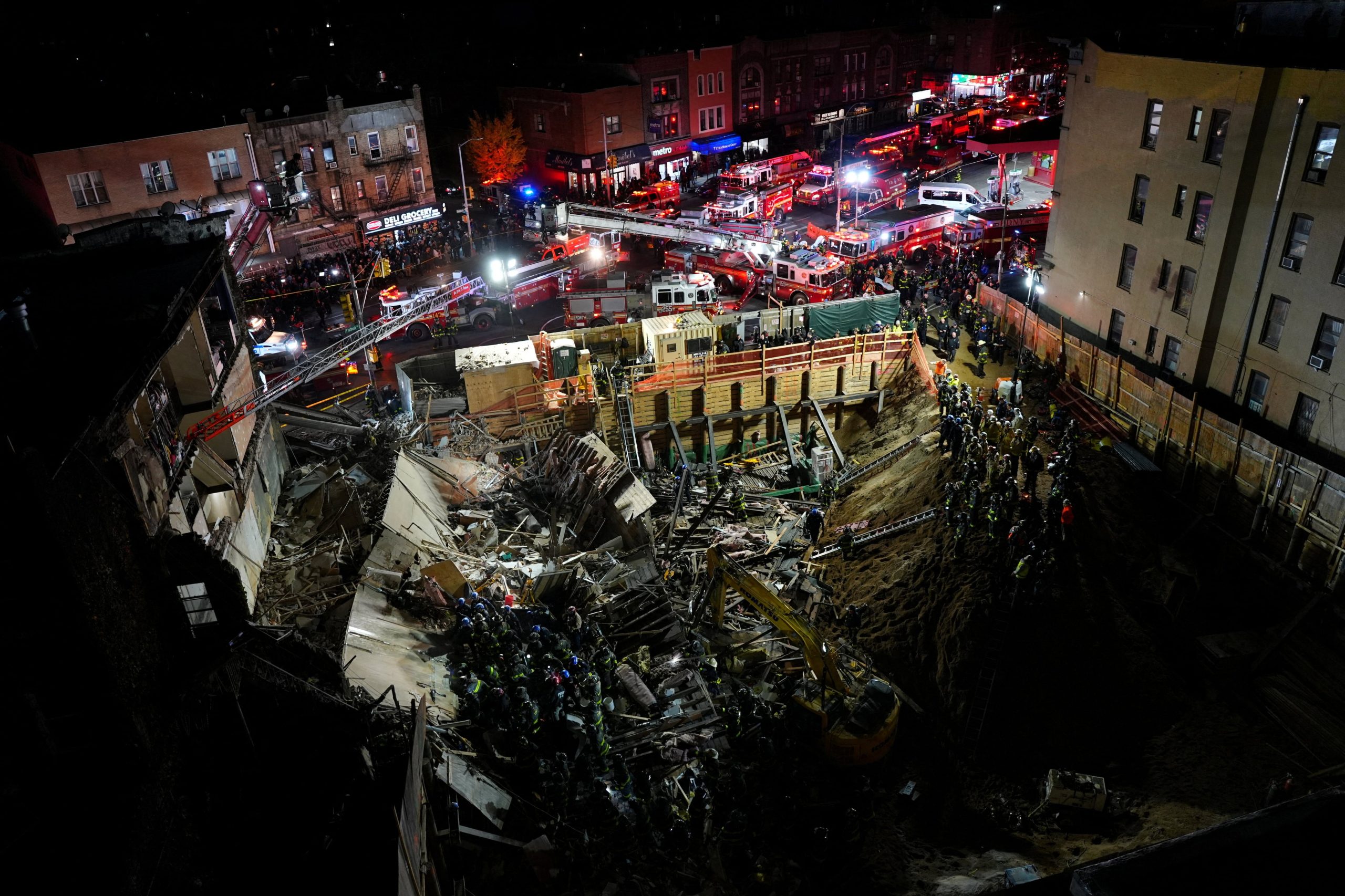
A Wednesday that changed everything; a collapsed building; eight families mourning their dead and a week in which Luis Siguencia has kept asking the same questions about the Brooklyn collapse that killed his son Gabriel: “What exactly happened there?” he says. “I see many comments saying that the construction had been halted and yet they were still working. Why? What caused that collapse?”
No authority, as of today, has approached Siguencia to brief him on the investigation led by the New York City Department of Buildings (DOB) into the collapse of the property at 1321 Flatbush Avenue. Two days earlier, Gabriel, a 22-year-old Ecuadorian, had begun working on the excavation of the adjacent lot, 2625 Bedford Avenue, before a wave of concrete fell on him, killing him and seven other migrant workers from Guatemala, Colombia, Ecuador and Guinea.
The tragedy has exposed several clashes in the city that is both the world’s most multicultural and one of its major financial centers: gentrification and rampant construction in neighborhoods such as Little Caribbean; residents’ complaints about rising rents; the vulnerability of construction workers, most of them immigrants; and the alleged tricks used by construction companies and building owners despite numerous complaints lodged with New York authorities.
What those affected want in the short term is clarity on several questions surrounding the disaster: What was the direct cause of the collapse? And when will an investigation shed light on the incident?
Ryan J. Degan, senior press officer at the DOB, told EL PAÍS that the investigation “is ongoing.” “We are working in close coordination with our law enforcement partners on their parallel investigations,” he told this newspaper. To assist the forensic probe, the city has hired an outside engineering firm to produce an independent investigative report, and inspections have begun on about 160 projects linked to six entities from the crew working on the excavations. For safety reasons, he said, the names of the six entities would not be disclosed.
“It’s too early in the investigation to determine the cause of the collapse,” Degan says, “but these inspections are an important part of our ongoing inquiry and are being carried out in the interest of public safety.”
The day after the tragedy, under torrential rain that interrupted search-and-rescue efforts, Mayor Zohran Mamdani arrived at the spot on Flatbush Avenue and vowed to carry out “a thorough investigation.” “That includes both the site work and the building that collapsed,” he said.
Experts consulted by this newspaper say the results of an investigation could come as soon as two weeks or take up to two months. Meanwhile, several details that have emerged focus attention on one man and a history of violations, neglect and lawbreaking: Robert Fischman, the owner of the lot where the construction workers were excavating that led to one of the deadliest incidents in New York’s construction sector.
A long list of complaints, fines and tenant displacements
In the days after the collapse, many neighbors gathered in disbelief outside a building that could have been any one of theirs. It was the typical building in this Brooklyn neighborhood: three stories, brick facade and tall glass windows, with a business on the ground floor.
More than once, according to Dominican resident Eneroliza Pérez, they felt the neighborhood’s streets shake because of the construction work that was underway. Fischman intended to erect on the adjacent lot a structure that would initially be three stories tall, though the owner later sought to expand it to nine stories with 64 residential units, according to information provided by the DOB.
At first, the project team filed an application and obtained approvals and permits to carry out underground work associated with the three-story project. In other words, they were authorized to perform earthmoving, excavation shoring and foundation work. What the DOB never approved was a permit to build nine stories.
“At the time of the collapse, the application had been returned by the DOB with objections,” Degan says, adding that as part of the ongoing investigation they are reviewing whether the work was being performed in accordance with the approved plans.
This was not the only construction going on in the neighborhood. In this area of Brooklyn, many new buildings have been erected recently, some unaffordable to longtime residents. “Small buildings are being torn down and replaced by larger ones,” says George M. Janes, an urban planner and planning consultant in New York. He says access to housing began to tighten about 20 years ago. “In many of these neighborhoods, rising housing costs and the lack of affordable housing are making these areas increasingly unaffordable for many lifelong residents.”
Last June, Fischman sent a letter to the residents of 1321 Flatbush to inform them that the noisy excavation would become part of the neighborhood’s soundtrack. What Flatbush residents did not know was that construction would go ahead despite the owner having violated the law on two occasions.
On March 20, 2026, the DOB issued a stop-work order at the excavation site. After its inspectors found that the demolition of the existing building was being carried out without protective structures or nets to shield neighboring properties, the DOB fined the owner $2,500. The fine, Degan says, was paid.
In April, a second fine followed. When inspectors visited the site on April 23, 2026, they found demolition work had resumed, violating the city order. The owner was fined $10,000 for another violation.
In May, the DOB says the stop-work order was fully lifted “after the project team corrected all conditions that had led to the violations.”
The following month, in June, neighbors received another notice from Fischman announcing the resumption of work. Among them were residents of the adjoining building owned by Olufemi Falade, a man who in 2006 told The Village Voice: “How can an owner repair, if the tenant does not pay the rent?”
At the time he faced 12 days in jail for refusing to fix about 1,800 violations in other buildings he owned — he then had about 16 properties scattered across the city. The news outlet reported that several of his properties lacked hardware or windows, and some walls were crumbling. Records from the New York City Department of Housing Preservation and Development show complaints about the building that collapsed a week ago, a nearly 100-year-old structure, including “unsafe electrical wiring” and missing smoke detectors.
Awaiting an official response
Last Wednesday, José Luis Caguana, a 22-year-old Ecuadorian and soccer fan, and Gabriel Siguencia arrived early at the site where they were earning $35 an hour, one of their co-workers who escaped the tragedy told this newspaper. The rest of the fatalities were residents of 1321 Flatbush, including two Colombian children who had not attended school that Wednesday as it was a holiday, Veterans Day.
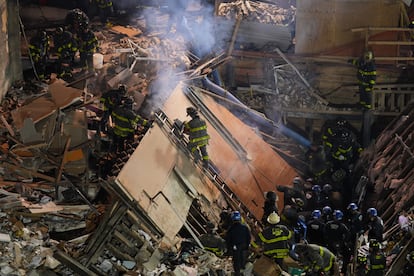
At 4.01 pm, the New York City Fire Department received the first emergency call. The building had collapsed. Neighbors say they only heard a roar, then a blinding cloud of dust and later the mountain of rubble on which firefighters worked for more than 24 continuous hours trying to save lives.
The day after the disaster, November 12, the DOB received an anonymous complaint asking it to investigate the excavation next to the collapsed building. “I am concerned that the subcontractor excavated too much soil along the adjacent foundation all at once,” the complaint said. It asked authorities to compare the city-approved plans with the work carried out on site. The plans contemplated excavating the soil at a 45-degree angle to a depth of approximately 4.5 meters.
“When you dig a deep hole, nearby buildings’ foundations can shift or become unstable. If the foundations become unstable, the whole building can collapse,” explains Anil K. Agrawal, professor and chair of the Department of Civil Engineering at The City College of New York.
Professor Agrawal says the impact of the excavation on the neighboring building should have been assessed, a common issue often overlooked because of insufficient attention to adjacent structures. When this type of excavation is carried out, he says, the soil around the foundations and the excavated area must be reinforced. “What we call shoring consists of creating an artificial wall to hold the ground in place. That way you ensure the soil does not shift and the foundations do not move. And that is something they did not do in this case.”
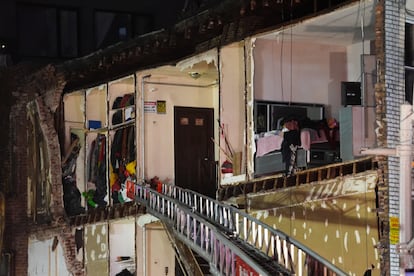
The engineer insists that any investigation must focus on the foundations. “They may show signs that the soil moved,” he says. He also believes that when soil samples are taken, they will be able to determine how sturdy it was and whether there was any risk of collapse, and even whether the project’s engineer or contractor had previously performed such borings and soil tests.
Meanwhile, all parties are waiting: families await answers though nothing will console them; displaced neighbors need a place to live. And many other residents have been left fearful about the condition of the buildings they live in. Since the day of the collapse, the DOB has received 149 complaints that, officials say, reported concerns about buildings shaking or vibrating, and some were related to new construction. Unless everything is made safe, New Yorkers will not sleep peacefully again amid the rumble of excavators or the sight of a cracked ceiling overhead.
Sign up for our weekly newsletter to get more English-language news coverage from EL PAÍS USA Edition

Power went out suddenly at Natalia Peñaherrera’s home in Quito on the morning of October 14. She had spent weeks hearing experts on the news talk about an electricity crisis, even though the government said there would be no outages for the public. When the lights went out, she thought of her grandmother, who has pulmonary fibrosis, and of the battery for the oxygen machine they both rely on to breathe.
The blackout hit her neighborhood and much of the capital. The first thing Peñaherrera did was check that her grandmother’s emergency equipment had charge, because she needs oxygen around the clock. “It lasted just long enough until the power returned, which was a little more than two hours,” she says. “I thought of people who don’t have a backup system. What would have happened if my tank or battery had been out of charge? They leave us in total anguish; it’s outrageous.”
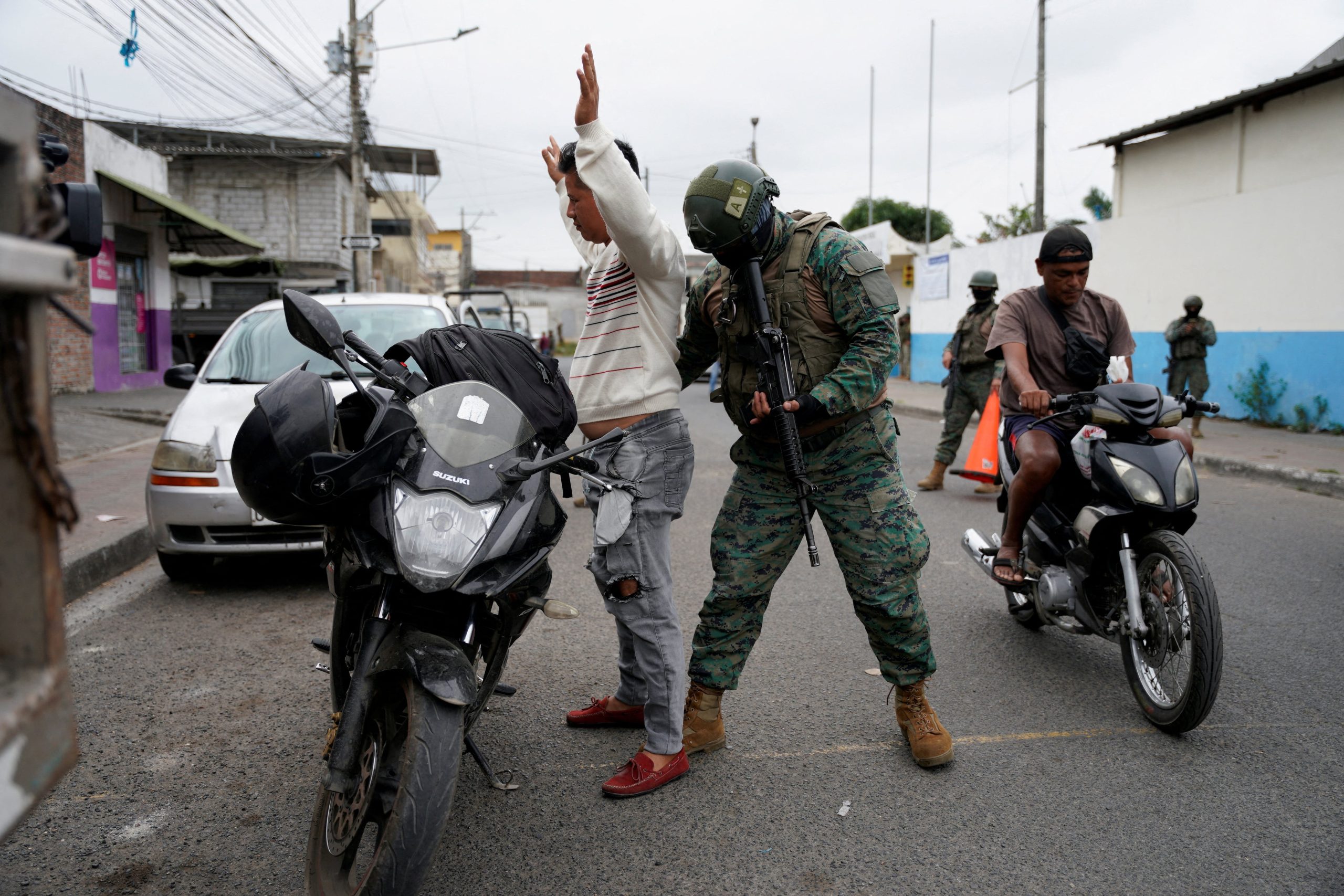
Uncertainty has become embedded in the daily life of a country battered by violence, homicides, and extortion. Since Daniel Noboa took office in November 2023, Ecuador has lived under successive states of emergency and curfews, the president’s main strategy to fight organized crime. Added to the insecurity is an energy crisis. The government has ordered industries to be disconnected for up to three consecutive days a week to ration reservoir levels that feed hydroelectric plants, and blackouts have been recorded in different provinces without authorities explaining the causes. On top of all that, the system is failing its citizens.
An obstacle course
Just try getting a driver’s license, registering a vehicle, or trying to sell one. Or securing a spot at a school, making a medical appointment, or claiming a relative’s body at the morgue. These are procedures that should be resolved quickly, but in Ecuador they can turn into an obstacle course, with endless lines beginning at dawn.
This is the case for Xavier Macías, who has been trapped for two years in a procedure that forces him to go from one institution to another — the National Transit Agency, the Prosecutor’s Office, and the Internal Revenue Service — to get his vehicle registered again in his name. In 2024 someone “cloned” his license plate. Macías still has no answer.
The figures from the Latinobarómetro report published in October 2026 put numbers to that experience. In Ecuador, only 16% of respondents are satisfied or very satisfied with public hospitals, compared with a 28% average in Latin America. Satisfaction with the justice system falls to 11%, versus 22% across the region.
When citizens are asked whether the state has done much or even something at all for them or their families over the past three years, only 19% answer affirmatively. In 2011 that proportion was 50%.
“It feels like abandonment, like being unprotected,” Peñaherrera tries to explain. “As if two siblings were fighting and we didn’t have a father to defend us. That is what the state should be, but it is absent. You cry and cry to see if someone will help you.”
For Peñaherrera, 43, each everyday problem requires fighting a battle. Fifteen years ago she was diagnosed with systemic scleroderma, an autoimmune disease that over time has caused another 17 illnesses. “If we’re not bothering people every day, asking for appointments, begging for care, nothing happens,” she says.
The shadow of corruption
The efficiency of the state does not fare well either. Ecuadorians give it a score of 4.4 out of 10, below the Latin American average of 4.7, while 82% distrust that their tax money will be well spent. “Corruption helps explain that rupture,” says Germán Rodas Chaves, a member of the National Anti-Corruption Commission, a citizen initiative that monitors possible corruption cases. “What other result can you expect when state bodies have shown themselves to be on the side of impunity?” he asks.
Rodas focuses attention on corruption cases that have tainted the government. One concerns Progen: the state paid $104 million to the U.S. company for generators that turned out to be used equipment, repainted and presented as new. None of these cases has led to political accountability for the ministers in charge. The assembly, which has a pro-government majority, blocked attempts to attribute responsibility to them, and the Prosecutor’s Office also excluded them from investigations.
The executive branch, for its part, maintains it is taking a hard line on corruption. In a recent interview, Noboa said that even his friends would go to jail if they committed corrupt acts. “They ceased being my friends the second they committed the act of corruption,” he said.
Only 31% of Ecuadorians consider that much or some progress has been made in the fight against corruption in the last two years. “There is a sense of hopelessness about the future, because institutions are not fulfilling the purposes for which they exist,” Rodas adds. And when institutions stop responding, solutions begin to be sought by other means.
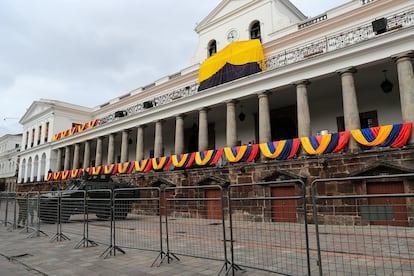
Without connections there is nothing
Alexandra Carreño, a 43-year-old makeup artist from Guayaquil, knows that logic well. In Ecuador, she says, many things do not get done without connections — that is, contacts that help secure an appointment for a driver’s license or passport, a medical visit, a job, or a spot in an educational center. Sometimes money isn’t involved. A favor is enough, one that sooner or later will have to be repaid. Carreño’s daughter wanted to study veterinary medicine but did not get a spot at the university. Unable to pay for a private school, she decided to start a small artisanal pastry business. “She can’t dream of someday having her own shop, because we are afraid of extortion, of her being kidnapped or robbed,” Carreño says.
This mother’s perception aligns with that of 60% of respondents, who believe Ecuador is losing the battle against organized crime and drug trafficking. Eighty-seven percent perceive that organized crime has a lot of power.
Carreño’s family has begun to consider migrating to Spain, where her mother lives. But just talking about it tightens her throat. “Leaving your country shouldn’t be the only option. Ecuador is a beautiful country, but right now we’re just trying to survive.”
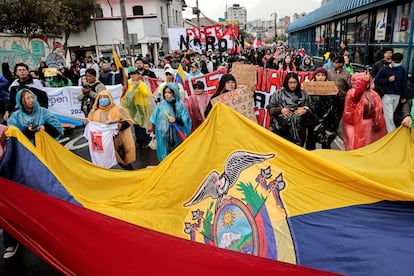
Distrust reaches even the rules of democracy. According to Latinobarómetro, 88% of Ecuadorians do not feel represented by Congress. Forty-seven percent consider that an authoritarian government might be preferable to a democratic one or else they don’t care, while a significant portion believes that democracy could work without political parties, without a parliament, without opposition, even without elections.
Rodas attributes that erosion to violence and the state’s lack of responses: “If democracy and freedoms lead them to an asphyxiating, desperate way of life, they assume it is a model that has failed and consider any other possibility.”
During the blackout, Peñaherrera’s grandmother’s oxygen battery held out just until the lights came back on. Constant medical expenses do not allow them to prepare better in case the electricity crisis worsens. This time, the two were safe. But in Ecuador, even breathing can depend on nothing failing.
Sign up for our weekly newsletter to get more English-language news coverage from EL PAÍS USA Edition
Colombia
‘We Work Like Slaves In This Country And They Don’t Give Us Safety’: Anger And Grief After Brooklyn Building Collapse

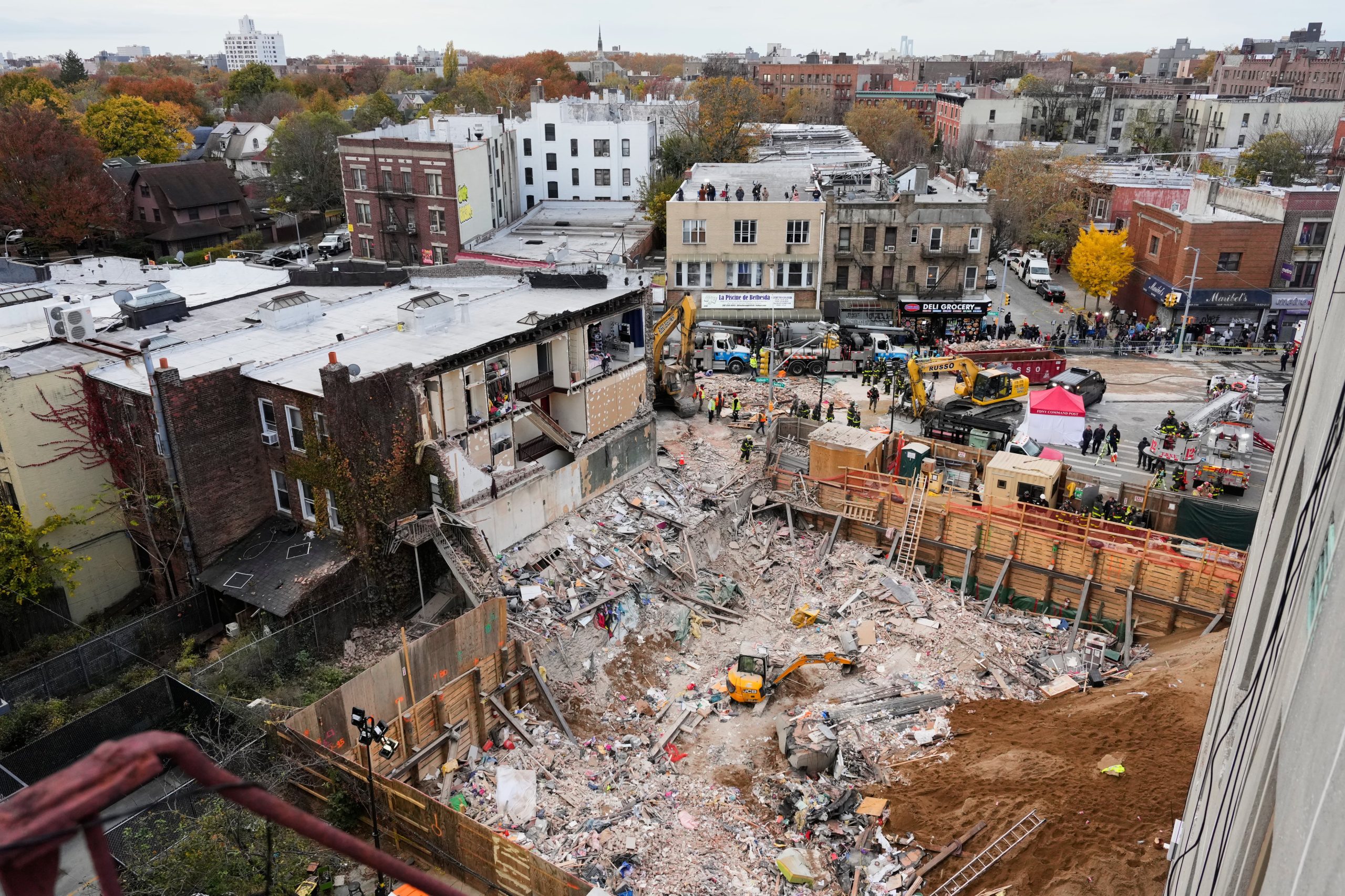
Walter Sinche looks a little agitated as he arrives at the intersection of Bedford and Flatbush avenues. He is wearing a plaid shirt and a red poncho that shields him from the heavy downpour hitting Brooklyn on Thursday at noon. José Luis Caguana, 26, an Ecuadorian man like him, was one of his students in training courses at OSHA—the federal agency that oversees occupational safety and health standards—and is now one of the identified victims after the collapse on Wednesday of a residential building in the heart of Brooklyn.
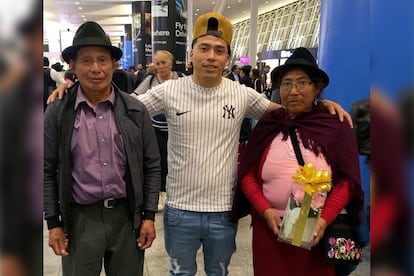
The incident has placed the spotlight on construction practices in the city, and triggered both fear and anger among local residents of this largely immigrant community. Eight people, including two children ages nine and 10, died as a result of the sudden collapse, which took place as excavation work was going on at a construction site next door. Two of the victims were workers at the site, including Sinche’s former student, the 26-year-old José Luis Caguana Cosquillo.
Another 18 people sustained injuries, and one is in critical condition. Affected individuals include immigrants from Mexico, Colombia, Ecuador and Trinidad, said Mayor Zohran Mamdani, speaking at the site of the accident. The Colombian consulate in New York on Thursday confirmed that the two minors were Colombian nationals, as was one of the deceased adults. Another Colombian woman is on the list of injured victims, officials added.
By the time Sinche reached the scene, the mayor had already arrived and begun his briefing to a group of reporters. Sinche wanted to confront the mayor about his responsibility in the death of one of their own. “I wanted to tell him to do his job better,” he says, visibly upset. “We are the ones who put our bodies on the line. We work day after day like slaves in this country and they don’t give us safety.” But Sinche could not reach Mamdani. A police officer blocked his path and would not let him advance to where the mayor stood surrounded by reporters from the city’s major outlets.
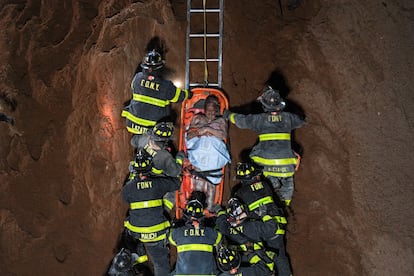
Caguana had arrived in the United States from Ambato, in Tungurahua province, Ecuador, about six years earlier. His wife, with whom he had a four-year-old son, is about to give birth. The child’s teachers at the Bushwick United Headstart center described Caguana as a “loving and devoted” father. “His love for his children was evident,” they said in a GoFundMe campaign to raise funds for the family.
Two years earlier, Caguana took a class with Sinche to start working in construction. Among everything Sinche teaches his students, there is one thing he insists on: “Demand safety,” he tells them. “And if they don’t give you safety, don’t work.”
But Wednesday’s accident goes beyond an individual worker’s responsibility, says the OSHA inspector. Building 1321 on Flatbush Avenue collapsed into a hole created by nearby construction and caused a side wall of the adjacent property to fall. That, Sinche says, is a responsibility that exceeds construction workers. “It’s not just that they didn’t give you a hard hat or gloves,” he says. “Whether a building collapses no longer depends on the worker, but on the authorities that oversee this kind of work. Therefore it is the responsibility of the Department of Buildings, the company owners and the supervisors. They are responsible; they should be jailed.”
On Thursday the entire area was filled with dozens of local residents stunned by an incident whose causes are still under investigation. The questions are piling up as time passes and new lines of inquiry open for the city: did the excavation weaken the building’s foundations or walls? Which company was responsible for the work? Had any warnings been issued that something like this could happen?
“Our lives are not cheap”
Flatbush residents’ anger was evident. Kamela Payne lives in the area and, if she had to sum up what has happened, she would put it this way: “I think our city has been sold, honestly,” she says. She believes the Department of Buildings, which is supposed to oversee this kind of construction, is not doing an appropriate job.
“I think some of these developers are putting economic pressure on some of these people and organizations,” Payne says. “Our lives are not cheap, and I consider this an act of criminality. These people didn’t stand a chance. They didn’t know they would wake up in the morning and have their entire building come down on them. That says a lot about New York City. A family can wake up and end up underground. This is not a developing country.”
“We have to investigate the Department of Buildings and make sure the people who must assume responsibility are held accountable,” adds Payne, who has lived in the neighborhood for more than three decades. “These people excavated under the foundations and caused other people’s deaths. That is a crime. This is not simply a mistake.”
A friend accompanying Payne is convinced that what is happening in this area and in much of New York is related to the displacement of Black residents. Two brand-new buildings stand near the collapsed structure. “They’re building apartments that we can’t afford, what they call affordable housing. It’s not affordable if a two-bedroom apartment costs $3,000 a month,” the woman says.
“It’s very sad, doubly so now that the Christmas holidays are approaching,” says Eneroliza Pérez, a Dominican woman who says the tragedy has dealt a blow to a community also known as Little Caribbean, where many Dominicans and Haitians live. Her family runs the deli directly across from the collapsed building, opposite where a crowd of people remains gathered, still stunned by such a tragedy in the heart of Brooklyn.
Sign up for our weekly newsletter to get more English-language news coverage from EL PAÍS USA Edition

🌅 Stunning Penthouse With Panoramic Sea & Mountain Views Benalmádena

Inside The Most LUXURIOUS Apartment Building In Spain!

New Figures Confirm Spanish Property Market Slowdown


-

 New Developments3 weeks ago
Luxury Villas For Sale, Estepona – ProjectL1
-

 New Developments2 weeks ago
The San Roque Club – Townhouses For Sale
-
Age Concern Marbella - San Pedro3 weeks ago
Halloween lunch sells out as 51 join Marbella get-together
-

 New Developments3 weeks ago
How To Get A Tourist Rental Licence In Andalusia (Spain) – Step-By-Step Guide 2025
-

 %3 weeks ago
Spain Orders Replacement Of Eight Million Gas Meters: New Rules, Costs And Deadlines
-
Barcelona riots4 weeks ago
Looting and street violence hit Barcelona as El Corte Inglés customers are trapped
-
Costa del Sol3 weeks ago
Where are they? Expat questions local police presence
-
countryside3 weeks ago
Rural revival: Five Almeria villages make moving inland easier and more enticing