
Barack Obama
Judge Rejects Trump’s Latest Attempt To Restrict Birthright Citizenship












America
What’s Next For Cuba’s Political Future: An Attack By Trump Before Year’s End Or A Democratic Shift?


It’s been nearly 10 months since U.S. President Donald Trump first announced that Cuba would be next. It was shortly after his administration had taken out Nicolás Maduro in Venezuela, and before walking into an unpredictable war with Iran. Since then, the president has decreed an oil blockade, slapped sanctions on dozens of businesses and Cuban leaders, and practically every month he issues new reminders that Cuba is a “failed state” that’s about to fall.
Yet the Castro regime is still standing, and the questions being asked in Washington D.C. and Miami, as well as on the island itself, are: will Trump accelerate an attack on Cuba before the end of the year? Or will his rhetoric against Havana lose even more steam when the Democrats take control of Congress in January?
Analysts interviewed by this newspaper agree that neither scenario is likely.
“I never believed that a military intervention was an option. Much less now that Trump is tired [of the issue],” says Francisco O. Mora, a professor of politics and international relations at Florida International University (FIU). William M. LeoGrande, a professor and dean emeritus of the School of Public Affairs at American University, adds that “Congress does not have a lot of control over sanctions by Trump on Cuba.”
For a long time, quite a few Cubans believed in the possibility that the United States would handle Cuba the way it did Venezuela. The fear of a military intervention was mixed with people’s desire to end a life marked by blackouts, food shortages and an economic outlook made worse by growing pressure from the U.S. administration. “If you get on a bus, the first thing you hear is: ‘If only Trump would come, it doesn’t matter what happens,” said Juan Luis Bravo, a resident of Guantánamo, in the east of the island, in a conversation with EL PAÍS in May of this year.
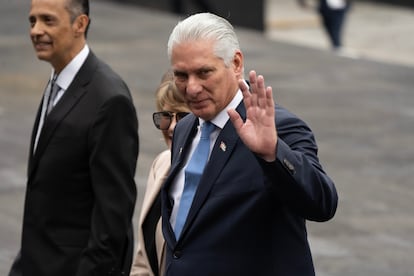
Since then, however, Cubans — who have not seen any improvements in their country through action by their own government — have lost faith in changes coming from the United States. The Trump administration has not secured concessions from the government of Miguel Díaz-Canel during negotiations, and Havana appears to be playing with time.
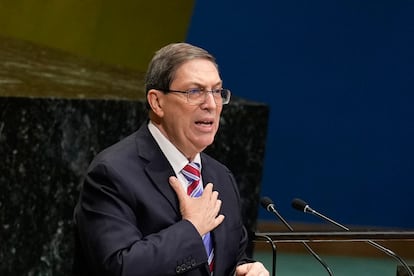
In an interview with The New York Times in late October, Foreign Minister Bruno Rodríguez Parrilla admitted that his government’s strategy was to simply endure. “For as long as it takes. U.S. policy toward Cuba will change. It has to. It’s inevitable,” he said.
Trump and State Secretary Marco Rubio have been pressuring the Cuban government like perhaps no other U.S. administration before. They have closed off all outside aid, made Cuba much more dependent on imports from the U.S., sent military ships to take up positions near the Cuban coast, sat down with members of the Castro family, and even made a public call for collaboration with the CIA to recruit spies that might help accelerate a change in the system. “Seize this opportunity to create the change you desire,” said Rubio.
But so far there has not been a “friendly takeover” of the island, the way Trump put it, and it looks like nothing is going to change before the end of the year. At a rally in Florida ahead of the midterms, this is what he said to his loyal Cuban-American voters: “Don’t worry, we’ll take care of Cuba on our way back from Iran.”
But the midterms, which changed the electoral map in the U.S., left several signs: according to surveys, Cubans in Miami are a lot more concerned about the cost of life and about immigration issues than about securing a regime change in Cuba; all three Cuban-American congressmembers from South Florida (Mario Díaz-Balart, María Elvira Salazar and Carlos Giménez) won by very small margins in territories where they had always enjoyed wide latitude; the war in Iran was without a doubt one of the reasons for voter discontent. And so the White House should think twice about walking into another conflict, this time with a small island just 90 miles from Miami.
Although the most recent survey on Cuba by Florida International University shows that 73 % of Cuban-Americans support military action to remove the government of Díaz-Canel, analysts do not believe that this is going to happen. LeoGrande doubts this is a viable option, much less after the “disaster in Iran.”
“This has proven that you cannot trigger a regime change with an aerial war,” he says. “Besides, with U.S. forces occupied with Iran and no end in sight, and a general political rejection of war, any military action would have a high political cost.”
This expert in U.S. foreign policy insists that Cuba is a very different case from Venezuela: there is no person on the island “whose kidnapping, as happened with Maduro, could provoke a 180-degree turn in the political orientation of the Cuban regime.” That is to say, there is no Cuban equivalent of Delcy Rodríguez, the interim president of Venezuela.
What is being asked now is whether Cuba, and particularly its people, will have to endure two more years of tough policies, or whether the new Democrat-led U.S. Congress might be able to relieve the agenda of sanctions and strangulation implemented by Rubio and Trump.
An uncertain political future
For now, the hangover from the midterms has not ended the battery of sanctions against Havana. Two days after the vote, the State Department sanctioned businesses and individuals with ties to the Cuban elite who, according to a statement by Rubio, were part of a maritime transportation network bringing in crude oil from China. “The Trump administration will not stand idly by while the Cuban regime channels the island’s resources to its military elite,” he said.
Historically, Democratic administrations have applied less pressure on the Cuban regime. Under Barack Obama, both countries announced a thaw in diplomatic relations in 2014. In recent months, several Democratic congressmembers have also spoken up against the White House’s policies.
Pramila Jayapal, the representative for DC’s 7th Congressional District, met in May with Díaz-Canel in Cuba and said that the oil blockade is causing incalculable suffering to the Cuban people. And Illinois congresswoman Delia Ramírez has led an initiative with 31 other members of Congress to demand that the Trump administration rule out any military action against Cuba.
Will these Democratic voices carry enough weight to scale back the sanctions and end the tough policies?
The scholar Mora thinks that Congress could hold several hearings “to try to better understand what the goals of the administration in Cuba are.” However, he does not think that Congress has a lot of influence in terms of changing policies. “The Constitution gives the president a lot of leeway to act on national security-related foreign affairs,” he notes.

Meanwhile, Professor LeoGrande insists that the International Emergency Economic Powers Act (IEEPA) grants the president a lot of authority to impose the secondary sanctions that Trump has used against Cuba.”
“Any legislation aimed at limiting sanctions that the new Congress might approve would be vetoed by Trump,” he says. “Besides, Cuba will not occupy a very prominent spot on the Democrats’ legislative agenda in the coming two years. They will focus on domestic economic issues and on corruption probes.”
There is, however, another scenario that for now remains speculative but not entirely dismissible to these analysts: the possibility that Marco Rubio, himself a Cuban-American, might run for president in 2028. In that case, says Mora, he would have to quit his role as secretary of state “more or less in the summer of next year, in order to start the campaign, which is a long and complicated process.”
Without Rubio for the remainder of the term, says this analyst, things could be different with another state secretary who might not show the same level of interest and attention that Rubio has been showing for Cuba, says Mora. “That could be a calculation by the [Cuban] regime to gain more time. They want to see how to outlive this administration. If they are waiting for January, with the change of Congress, they could be making a mistake. If they are waiting for the summer and Rubio’s potential departure, they might be onto something. Nobody is going to prioritize Cuba the way he is doing.”
Sign up for our weekly newsletter to get more English-language news coverage from EL PAÍS USA Edition

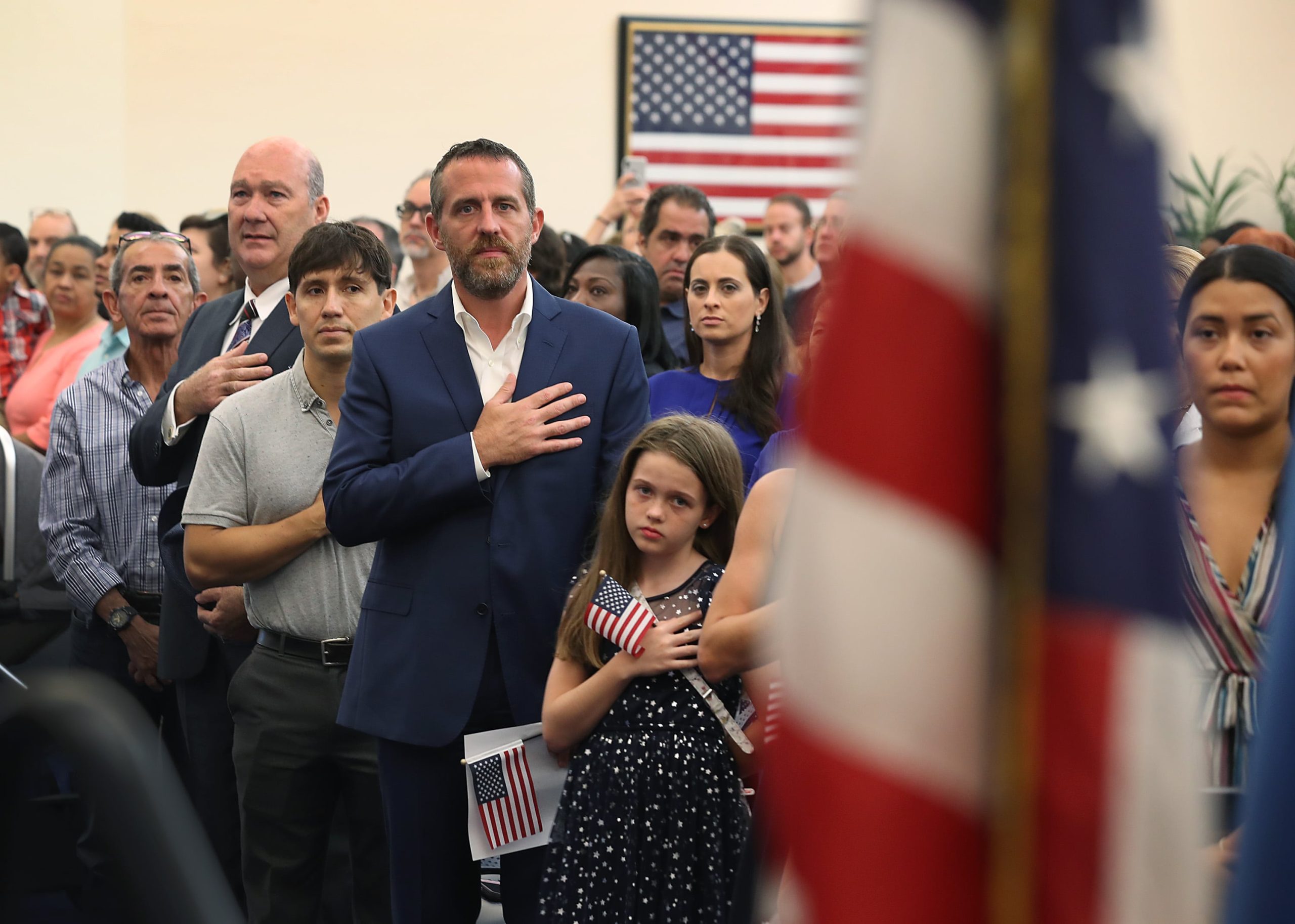
After the economy, the aggressive immigration policy implemented by the administration of Donald Trump was the main reason U.S. voters punished the Republican Party and gave the Democrats a historic victory in the midterms.
The Democratic Party will hold a majority in the United States Congress starting January 3. In the House of Representatives it will occupy at least 256 of the 435 seats after taking 42 seats from the Republicans. In the Senate it will hold 55 seats, eight more than before. The victors face the arduous task of changing an immigration system widely regarded as broken and that Congress has been unable to reform for decades. Amid Democratic euphoria over the win, ending Trump’s anti-immigrant crusade has emerged as one of their legislative priorities. Whether they succeed will not depend solely on them.
A Democrat-controlled Congress will coincide with the last two years of Trump’s term. The president, as is typical for him, has sent mixed signals about how he wants to address immigration. Just a week ago he admitted in an interview on CBS’s 60 Minutes that his immigration policy had been too harsh and that people who were taxpaying workers had been deported.
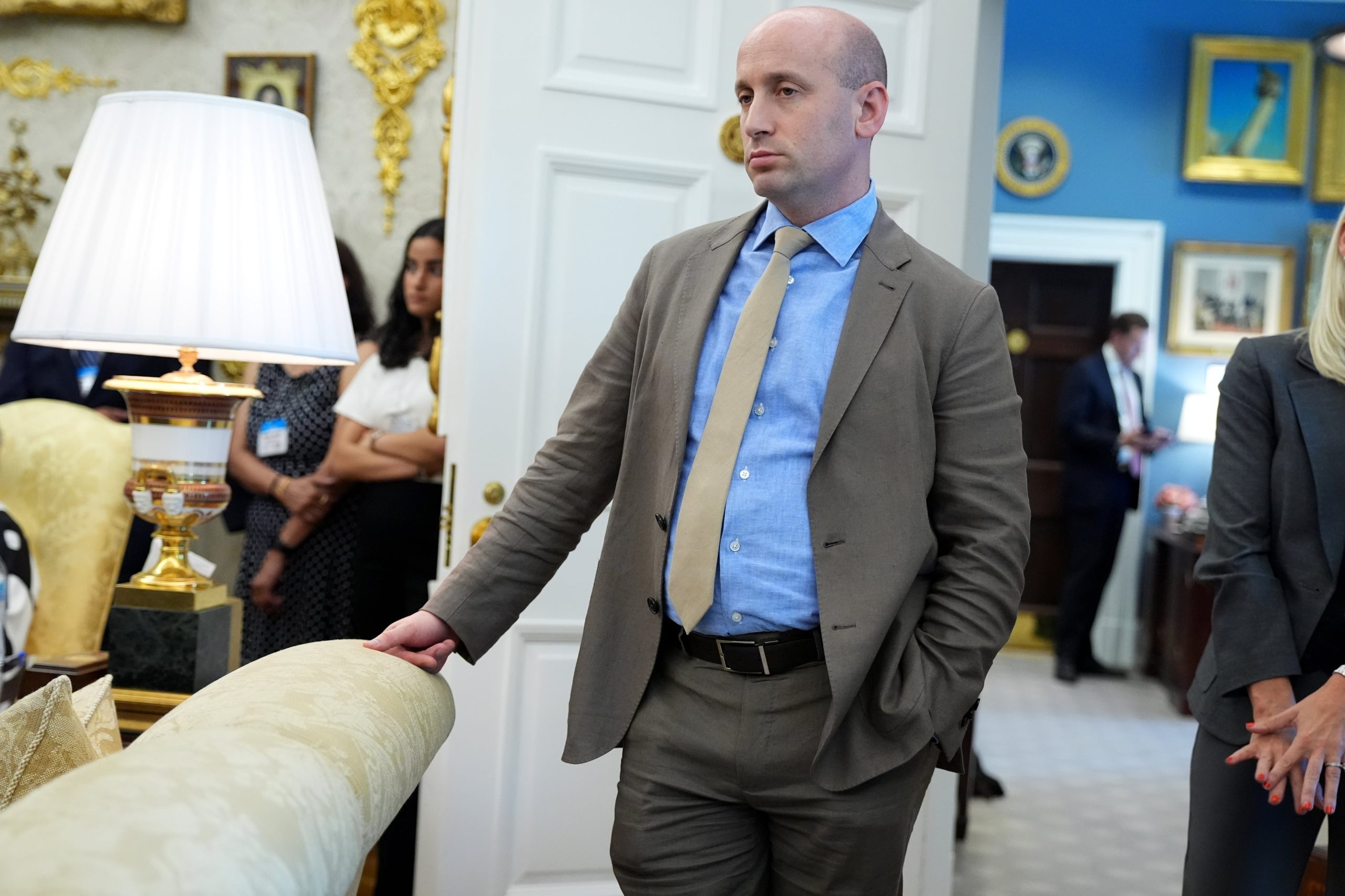
Hours after the interview was recorded, however, he promoted the architect of the administration’s most hardline immigration stance, Stephen Miller, to White House chief of staff. In later remarks, Trump clarified that there would be no amnesty and that his policy had not changed.
“We’ve seen this time and again. Trump says something moderately reasonable on immigration and then Stephen Miller gives him a dressing-down, after which he comes out with a new commitment to maximalist positions,” says Aaron Reichlin-Melnick, senior researcher at the American Immigration Council and one of the immigration experts who has testified in Congress about the administration’s abuses in this area.
But the reality is that the landscape has changed with the Democrats taking control of Congress. Markwayne Mullin, secretary of the Department of Homeland Security (DHS), said Trump encouraged him to work with the Democrats on immigration reform after telling him he had received many calls about the issue.
Democratic lawmakers have confirmed the same. “We’ve had some conversations and, without going into details, I think there are common ground points that will allow us to reach an agreement,” said Representative Henry Cuéllar of Texas at a pro-immigration reform event held last week in front of the Capitol.
‘Dreamers’ top the list
Among the immigration bills that have so far failed in the House of Representatives, one stands a better chance of succeeding: the Dream Act, a bill that grants legal residency and opens a path to citizenship for foreigners who arrived undocumented as children. Many are beneficiaries of the DACA program (Deferred Action for Childhood Arrivals) and have grown up, studied, worked and formed families in the only country they consider home. Trump has tried to end the program, created under the Barack Obama administration, during his two terms, but courts have blocked him. The so-called “dreamers” are the migrants with the broadest support across the political spectrum.
The bill needs only one more Republican representative’s signature to be brought to the floor of the House. “My American Dream and Promise discharge petition has 217 signatures. 214 Democrats and three Republicans. We just need one more Republican signature to get it to the finish line and force a vote. We cannot wait any longer,” Representative Sylvia García, co-author of the Dream Act, wrote on social media after attending the same event in front of Congress on November 11.
The administration has shown some willingness to engage. “If we want to have an immigration reform where we can look at DACA and figure out a way that these individuals can become maybe legal permanent citizens or something like this, that’ll be up to Congress to do that. I’ll be open to talk to anything,” Mullin told reporters at an event in Maryland last Monday.
Arizona Senator Ruben Gallego, who was also present at the Capitol event last Wednesday, stressed the intent to push for immigration reform but expressed little hope it would happen quickly. “We want to get it done before the end of the year and, if that’s not possible, we will keep trying throughout the next year. Protecting families is our priority. We are fully committed to making this happen,” he said.

A bipartisan bill
In addition to the Dream Act, there is another legislative proposal with broad bipartisan support: the Dignity Act, which provides for the legalization of undocumented migrants who have lived in the country for years, while also strengthening border security and reforming visa programs.
The initiative emerged from collaboration between Democratic Representative Veronica Escobar of Texas and Republican María Elvira Salazar of Florida. Salazar was narrowly reelected on November 3 after distancing herself from Trump and his immigration policy in a video that went viral on social media.
“I am a progressive Democrat. I have very aspirational dreams and hopes for immigration reform. But I am also a pragmatist. And as we continue to have Donald Trump in the White House and without a super majority in the Senate, we need Republican support. So any comprehensive immigration reform must be bipartisan. I am deeply committed to ensuring that the Dignity Act is reintroduced in 2027,” Escobar said last Wednesday. The representative addressed lawmakers who do not support the bill and asked them to communicate their reservations because it will be modified in the coming weeks. “If you want to be a part of bipartisan, comprehensive immigration reform compromise so that we can get a bill to the president’s desk in 2027, we welcome you with open arms.”
Even if the bills pass both chambers, uncertainty remains over whether Trump — who has the power to veto them — will sign them.
Speaking to Fox News about how he would work with a Democratic Congress, Trump said: “They are in control, but they’re really not in control. They can send over 50 different, great bills that they’re all excited about, and I send them back with a nice stamp veto.” On election night, upon learning of the Republican defeat, he posted on his social network, Truth, an image of a red cap with one word printed on it: “VETO.”
ICE yes, ICE no
Another issue Democrats have announced for the next legislative session concerns the Immigration and Customs Enforcement agency (ICE). Views differ within the party. Those on the left, such as socialists, advocate for abolishing the agency responsible for detaining and deporting migrants. Others, more moderate, are content to cut the exorbitant budget allocated to the immigration agenda, which stands at about $240 billion.
Representative Cuéllar, who is likely to chair the House Appropriations subcommittee that funds the DHS, said last Wednesday: “I’m not going to abolish ICE, but I will put serious railguards on ICE. We’ve got to put ICE the way it was before January of 2025, and we will get that done.”
Investigations into abuses by ICE and DHS after two years without accountability are another priority announced by Democratic lawmakers.
The brutality of detentions, deportations without due process, family separations, and falsehoods coming from the government have carried scarcely any consequences. Investigations into deaths caused by fire from immigration agents — of U.S. citizens Renee Good and Alex Pretti, of Mexican national Lorenzo Salgado Araujo and of Colombian Johan Sebastián Durán Guerrero — remain unresolved. With the majority they will hold, Democrats can subpoena key officials and compel them to testify under oath before Congress.
Possible subjects of investigation include border czar Tom Homan; former Homeland Security secretary Kristi Noem; former Border Patrol chief Gregory Bovino; and White House chief of staff Stephen Miller, among others.
Democratic Representative from Maryland Jamie Raskin — who is poised to chair the House Judiciary Committee — told public radio network NPR four days after the elections that Congress will use “every tool” at its disposal to investigate ICE and that the time has come for the agency to “start answering to the American people.”
“Do not let us down”
Victory at the ballot box is not free, and voters will demand action from the Democrats. “Do not let us down,” Mario Guerrero, president of the South Texas Builders Association, warned Democrats last week while campaigning for legalization of migrant workers.
The aggressive immigration policy has also affected the economy because deportations and detentions have left many sectors — such as hospitality, agriculture, caregiving, and healthcare — short on labor. Business owners who identified as Republicans voted for Democrats in the midterms. Guerrero is one such example: after voting for Trump in three elections, he withdrew his support in the midterms. He now expects results.
Pressure for Democrats to act quickly to reverse the damage caused by the immigration agenda is coming from several fronts. One week after the elections, the country’s leading Latino organizations sent a joint letter to Democratic leaders demanding accountability for abuses committed during the anti-immigrant campaign that targeted this community for arrest quotas. The support of Latino voters who distanced themselves from Trump after backing him in 2024 determined the Democratic victory.
“At this critical moment, you have the power to deliver accountability and change, and we stand ready to help,” the letter — signed by Voto Latino, UnidosUS, America’s Voice and We Are CASA, among others — states. They ask that those responsible for the immigration agenda be investigated and that ICE funding be frozen. “The American people have given you the power to hold the architects of mass deportation accountable. Use it on day one, and we will be with you until the job is done,” the letter concludes.
Sign up for our weekly newsletter to get more English-language news coverage from EL PAÍS USA Edition
Barack Obama
Mallorca Mansion Loved By The Obamas With 11 Bedrooms And Stunning Sea Views Goes On Sale For €46 Million


 The main house, built in the 1940s, is spread across five floors linked by a private lift and has seven bedrooms and eight bathrooms, as well as a living room with a fireplace.

EasyJet Flight Emergency Return To Edinburgh

España – Austria, En Directo, Los Cuartos De Final De La Copa Davis En Vivo | Rodionov Se Lleva El Primer Set Ante Jódar

Moreno Carga Contra Adelante Andalucía: “Imitan A Bildu Y A ERC”


-

 New Developments4 weeks ago
Luxury Villas For Sale, Estepona – ProjectL1
-

 New Developments3 weeks ago
The San Roque Club – Townhouses For Sale
-
countryside4 weeks ago
Rural revival: Five Almeria villages make moving inland easier and more enticing
-
costa blanca live music4 weeks ago
Beatles tribute: The Liverpool Band returns to Orihuela Costa
-

 New Developments4 weeks ago
Stylish 3-Bedroom Apartment With Panoramic Sea Views – Benalmádena
-

 America3 weeks ago
Así Ha Sido La Primera Jornada Del World In Progress 2026: Del Anuncio De Sánchez De Ayudas Para Las Víctimas De Urda A La Reivindicación De Rebeca Grynspan Del Papel De La ONU
-
Eating out in Gibraltar4 weeks ago
Young woman left horrified after Gibraltar restaurant receipt carries shocking racist slur
-

 %2 days ago
Black Friday Shock As Just 6% Of Deals Pass OCU’s Genuine Bargain Test