Connect with us

%

A Real-Life Love Island

Published

on

a-real-life-love-island

When you think of Love Island, chances are your mind jumps straight to ITV’s hit reality show, where singletons couple up in a luxury villa in the hope of finding romance.

But what if, instead of sharing a swimming pool with a group of contestants, you could have an entire island to yourself?

A heart-shaped paradise nestled between Spain and Portugal has gone on sale for a staggering €6 million, offering a rather different take on the famous television show’s romantic escape.

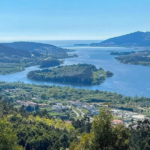
Known as A Boega, or Ilha dos Amores (Island of Love), the picturesque island sits in the River Miño, which separates Portugal from Spain’s Galicia region.

And while there may be no dramatic recouplings or surprise bombshell arrivals, this real-life Love Island certainly has plenty of intrigue of its own, with a colourful past involving smugglers, ambitious luxury developments and even medicinal cannabis.

A heart-shaped island with a colourful past

Located in the Portuguese municipality of Vila Nova de Cerveira, directly opposite Goián in the Spanish municipality of Tomiño, A Boega is an unusual property in a particularly picturesque location.

The island covers approximately 41 to 50 hectares, depending on the source, and stretches for around 1,400 metres along the river.

Its distinctive heart-shaped outline has earned it the nickname Ilha dos Amores, making it an eye-catching prospect for anyone dreaming of escaping everyday life.

However, its history is far less glamorous than its romantic appearance might suggest.

For much of the last century, the island was used for agricultural purposes, with crops including maize and livestock farming. It was also associated with smuggling, which was once commonplace along this stretch of the Spanish-Portuguese border.

From luxury golf courses to a theme park

Over the decades, A Boega has attracted plenty of ambitious investors, but none of their grand plans has come to fruition.

In 1978, hotel businessman Flávio Amorim purchased the island with plans for a golf course designed by renowned American architect Robert Trent Jones.

Another proposal followed in 2007, when Spanish group Artagón wanted to transform the land into a luxury tourism complex featuring a hotel, exclusive homes, a marina and golf facilities.

More recently, a theme park called Porto Boega was presented in 2023, with American studio Storyland Studios involved in the proposal. The plans included attractions, accommodation, shops and restaurants inspired by Portuguese culture.

However, the project never progressed to a formal planning application with the local council.

The surprising cannabis connection

Perhaps the most unexpected chapter in A Boega’s story is its connection to medicinal cannabis.

According to Portugal’s official government gazette, Diário da República, the island has authorisation from Infarmed, Portugal’s medicines regulator, to cultivate cannabis for medicinal purposes.

Its owner, Portuguese investment company Blue Crow Capital, also holds a minority stake in AceCann, a Portuguese medicinal cannabis producer.

The company acquired the island in November 2021 for €1.2 million. Its current asking price of €6 million represents five times that original purchase price.

Could you really build your dream island home?

While the property listing promotes the island’s potential for an exclusive residence or eco-friendly accommodation, prospective buyers should not assume they can build whatever they like.

The local council has highlighted significant environmental and urban planning restrictions, with permitted uses essentially limited to agricultural activities and the restoration of existing buildings, subject to the necessary approvals.

Environmental groups on both sides of the river have also opposed previous large-scale tourism proposals, arguing that the island’s biodiversity needs protecting.

For now, this unusual property remains on the market for €6 million.

Whether its next owner dreams of a secluded private retreat or has another ambitious vision, one thing is certain: this is a real life love island!

%

Struggling With Spain’s Food Prices? This Supermarket Chain Was Built To Help Families Save

Published

on

struggling-with-spain’s-food-prices?-this-supermarket-chain-was-built-to-help-families-save

Its stores include specialist counters for butchery, fish and delicatessen products. Photo credits: Marco Gallo/Shutterstock

With food bills continuing to put pressure on household budgets, finding a supermarket where the weekly shop costs a little less can make a real difference. One Spanish chain has built its business around that very idea, and its origins go back to the financial crisis that left thousands of families struggling after the collapse of the property boom. Cash Fresh was launched in Sevilla in 2013, when Spain was still dealing with the fallout from the property crash.

Rather than trying to compete with upmarket supermarkets, the chain focused on keeping prices down and giving families a more affordable way to fill their shopping baskets. More than a decade later, it has grown into a recognised name in Andalucía and Extremadura, with more than 100 stores and a place among the cheapest supermarket chains in Spain.

A supermarket shaped by the crisis

The timing of its launch reflected the pressure on household budgets. Spain was still dealing with the consequences of the property bubble bursting and the financial crisis that followed. Unemployment had soared, many families had less money to spend and shoppers were paying closer attention to the cost of everyday essentials. Cash Fresh was developed by Grupo MAS, an Andalucian food retailer, with a model built around affordable everyday shopping.

It combines a conventional supermarket with elements of the cash-and-carry format, offering groceries alongside fresh food departments. Its stores include specialist counters for butchery, fish, delicatessen products, fruit and vegetables, and bakery goods. The idea is to offer customers fresh produce and help from staff while keeping prices competitive, rather than relying on a discount-warehouse format alone. 

How cheap is it?

The latest supermarket comparison from the consumer organisation OCU, published in September 2026, gives Cash Fresh a price index of 107. The cheapest chain in the study, Supermercados Dani, is the benchmark at 100. Cash Fresh’s basket therefore costs around 7 per cent more than the cheapest chain’s. That still places it among the lower-priced supermarket chains in the country, although it is not Spain’s cheapest.

OCU’s study compared 101,520 prices from 690 supermarkets and online stores, using a basket of 244 food, household and personal-care products. The organisation estimates that choosing the cheapest rather than the most expensive supermarket can save shoppers an average of €1,310 a year. The potential saving varies depending on where people live and which stores are available locally. 

A business built around the weekly shop

Cash Fresh’s expansion shows that the demand for value has lasted well beyond the crisis years in which it began. Its appeal is straightforward: shoppers can buy everyday groceries and fresh food in one place while keeping an eye on the bill.

More than a decade after opening its first store in Sevilla, the chain remains built around the same promise that helped it find its place in the market: making the weekly shop more affordable. That focus has helped it establish itself across two regions of southern Spain.

Continue Reading

%

Spain Hit By Yet Another Train Derailment As Madrid Railway Line Is Shut

Published

on

spain-hit-by-yet-another-train-derailment-as-madrid-railway-line-is-shut

Renfe arranged replacement buses between El Escorial and Robledo de Chavela. Photo credit: @revol_es on X

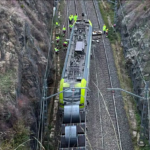
It seems Spain still hasn’t had its fair share of train accidents, with another derailment adding to an already alarming year for the country’s railway network. Just when passengers might have hoped the worst was behind them, a freight locomotive has come off the tracks in Madrid, leaving its driver injured and forcing travellers between Madrid and Ávila to abandon their normal train journeys.

The latest incident happened in the early hours of Sunday, November 15, near Zarzalejo, between Robledo de Chavela and Zarzalejo.  Although no passengers were aboard the freight train, the derailment has caused disruption to regional rail services, with replacement buses being put in place. It comes just weeks after the deadly accident in Urda, Toledo, and January’s disaster in Adamuz, Córdoba, which together claimed 115 lives. The latest derailment was not a passenger train accident, and there is currently no evidence linking its cause to either of those tragedies. 

Landslide suspected after heavy rain

The train belonged to freight operator Captrain and was travelling along the conventional Madrid-Hendaya railway line when the locomotive left the tracks at around 3:39am. Initial information points to a movement of earth following heavy rainfall in recent days.

A section of the embankment may have collapsed as the train passed, although investigators are still assessing the condition of the railway and the circumstances surrounding the derailment. The train consisted of 17 wagons carrying electrical coils. According to reports, only the locomotive was affected. The driver, a 33-year-old man and the only person aboard, suffered back pain and was taken by emergency services to Puerta de Hierro Hospital in Majadahonda. His injuries were described as minor and his condition was not considered serious. 

Passengers forced onto replacement buses

The derailment led to the suspension of rail traffic between Robledo de Chavela and Zarzalejo, affecting Media Distancia services connecting Madrid and Ávila, as well as services using the affected section of the line. Renfe arranged replacement buses between El Escorial and Robledo de Chavela, with an intermediate stop in Zarzalejo, to help passengers complete their journeys.

By 03:00pm, the derailed locomotive had been put back on the tracks, but trains were still unable to pass through the affected section. Adif technicians continued inspecting the infrastructure to establish whether the track had suffered damage. No confirmed time for the resumption of normal services had been announced, leaving passengers advised to check for updates before travelling. 

Another blow for Spain’s railway network

The derailment comes at a particularly difficult time for Spain’s railways, with the fatal accidents at Adamuz and Urda prompting renewed demands from railway workers for improved safety measures. A nationwide Renfe workers’ strike is scheduled for 17 November, with unions calling for greater guarantees over railway safety following the recent tragedies.

The Madrid incident had far less serious consequences, but the interruption has added another problem for passengers already facing uncertainty across parts of the country’s rail network. For those travelling between Madrid and Ávila, their main concern now is getting to their destination while the affected stretch remains closed

Continue Reading

%

Leonid Meteor Shower Returns To Spain With Its Best Display Of Shooting Stars

Published

on

leonid-meteor-shower-returns-to-spain-with-its-best-display-of-shooting-stars

November 17 into 18 is expected to offer the strongest activity. Photo credit: AstroStar/Shutterstock

If you are hoping to catch a few shooting stars without travelling far or buying equipment, the Leonids offer a chance next week. Spain’s November meteor shower reaches its peak overnight on Tuesday, November 17, into Wednesday, November 18, with the best chance of seeing it after midnight.

This will not be a spectacular meteor storm, and anyone expecting hundreds of shooting stars is likely to be disappointed. The forecast is around 15 meteors an hour under ideal conditions, although the number visible will depend on how dark and clear the sky is.

When to see the Leonids in Spain

The National Geographic Institute (IGN) says the Leonids will reach maximum activity at approximately 00:45 on Wednesday, November 18, in mainland Spain and the Balearic Islands. In the Canary Islands, that is 23:45 on Tuesday, November 17.  The meteor shower is active from November 6 to 30, so shooting stars may be visible on other nights.

However, November 17 into 18 is expected to offer the strongest activity. The Leonids are usually a modest shower, producing between 10 and 20 meteors an hour. The 2026 forecast is around 15 an hour in ideal viewing conditions, rather than the thousands sometimes associated with Leonid storms. 

Where and how to watch the meteor shower

You do not need a telescope or binoculars to watch the Leonids. The IGN recommends leaving optical equipment aside because it narrows the amount of sky you can see. The best option is to get away from streetlights and other sources of light pollution, choosing an open spot with few obstructions. Buildings, trees and hills can block parts of the night sky, while urban lighting makes fainter meteors harder to pick out.

Although the meteors appear to come from the constellation Leo, they can streak across any part of the sky. There is no need to stare in one direction: settle somewhere comfortable, look towards the darkest area you can see and give your eyes time to adjust. The Moon should be less of a problem around the peak. It will be in its first quarter and is expected to set around midnight, leaving the later hours darker. The IGN says that, from latitudes around 40 degrees north, the Leonids’ radiant rises above the horizon from midnight and remains visible until dawn. A warm blanket can make the wait more comfortable, particularly if you plan to stay outside until dawn. 

What causes the Leonids?

The shooting stars are tiny fragments left behind by comet 55P/Tempel-Tuttle. Earth passes through its trail of debris every November, and particles entering the atmosphere burn up, producing the streaks of light seen from the ground. The comet takes around 33 years to orbit the Sun.

Particularly dense trails can produce dramatic meteor storms. The Leonids are known for spectacular displays in the past, but no storm is forecast for 2026.  Clear skies will decide how much of the shower people can see, so check local weather conditions before heading out. If clouds intervene on the peak night, the Leonids remain active until November 30, although activity will be lower.

Continue Reading

Trending

Copyright © 2017 Spanish Property & News