Connect with us

%

Are You Crossing Correctly In Spain?

Published

on

are-you-crossing-correctly-in-spain?

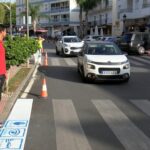
Breaking crossing rules can land you in trouble with law. Credit: Ayto AeG

From zebra crossings and traffic lights to fines, here are the pedestrian rules residents and holidaymakers should understand before stepping into the road safely.

Pedestrians in Spain have clear rights when crossing the road, but they also have strict responsibilities, and ignoring the rules can lead to fines of up to €200.

The rules are particularly relevant to expats and holidaymakers who may be unfamiliar with Spanish traffic regulations and street customs. The important distinction is that having priority does not mean pedestrians can step into the road when they like without checking whether it is safe. The DGT’s latest road-safety figures make a strong case for considering the changes.

  • 222 pedestrians were killed in urban road accidents during 2025
  • 45% of urban road deaths were pedestrians

Where should pedestrians cross?

Under Article 124 of Spain’s General Traffic Regulations, pedestrians must use a designated crossing where one is provided. They cannot simply cross a few metres away because it is more convenient.

Where there is no pedestrian crossing, people may cross elsewhere, but must first make sure they can do so without putting themselves or traffic at risk or unnecessarily obstructing vehicles.

At an ordinary zebra crossing without traffic lights, pedestrians have priority. However, they should only step onto it when the distance and speed of approaching vehicles allow them to cross safely.

Drivers must give way to pedestrians who have priority, but walkers should never assume that an approaching vehicle will stop or slow down. A recent accident in Torrox Costa left two women seriously injured at a traffic-light-controlled pedestrian crossing, underlining the importance of both drivers and pedestrians paying attention.

The Spanish traffic authority, the DGT, also has official advice for people travelling on foot, including how to cross safely where there are no traffic lights.

What do pedestrian traffic lights mean?

A red pedestrian signal means do not start crossing, as it does in most countries. Wait until the green walking figure appears and all traffic has stopped. When the green figure starts flashing, the time available to finish crossing is running out and the signal is about to turn red. Anyone already crossing should continue to the other side without stopping unnecessarily. Anyone still waiting should wait for the next green signal.

Pedestrians must also obey a police officer’s instructions and must not enter a crossing where a traffic signal or officer is allowing vehicles to proceed.

Can pedestrians cross a roundabout?

No, not across the roundabout’s carriageway. The rules require pedestrians to walk around the outside, unless a designated pedestrian crossing has been provided.

When crossing an ordinary road, pedestrians should walk directly across rather than taking a diagonal route. They should not stop or linger in the carriageway without good reason.

What fines can pedestrians face in Spain?

The Dirección General de Tráfico (DGT) lists a number of offences which can result in big fines, and local police will enforce them. These include crossing away from an existing pedestrian crossing and ignoring a red pedestrian traffic light.

The following table sets out the fines listed in the DGT’s published infringement guide. EWN has also previously explained the pedestrian habits that can lead to fines of up to €500.

Pedestrian offence Standard fine Reduced fine*
Crossing outside an existing pedestrian crossing €80 €40
Crossing against a red pedestrian traffic light €200 €100

*Reduced amounts apply when the penalty is paid within the legal early-payment period, subject to the applicable conditions.

The penalties show that pedestrians can face financial consequences for ignoring traffic rules, even when they are not behind the wheel.

What about the October road-law changes?

The October 1, 2026 changes updated several provisions concerning vulnerable road users, including pedestrians. However, the basic rules on using crossings, obeying pedestrian signals and crossing safely are not all new. Older pedestrians may also benefit from reading EWN’s road safety advice for older residents and visitors in Spain.

For anyone on foot, the message is straightforward: use a crossing where one is available, obey the signals and never assume that having priority makes it safe to step into traffic.

%

Leonid Meteor Shower Returns To Spain With Its Best Display Of Shooting Stars

Published

on

leonid-meteor-shower-returns-to-spain-with-its-best-display-of-shooting-stars

November 17 into 18 is expected to offer the strongest activity. Photo credit: AstroStar/Shutterstock

If you are hoping to catch a few shooting stars without travelling far or buying equipment, the Leonids offer a chance next week. Spain’s November meteor shower reaches its peak overnight on Tuesday, November 17, into Wednesday, November 18, with the best chance of seeing it after midnight.

This will not be a spectacular meteor storm, and anyone expecting hundreds of shooting stars is likely to be disappointed. The forecast is around 15 meteors an hour under ideal conditions, although the number visible will depend on how dark and clear the sky is.

When to see the Leonids in Spain

The National Geographic Institute (IGN) says the Leonids will reach maximum activity at approximately 00:45 on Wednesday, November 18, in mainland Spain and the Balearic Islands. In the Canary Islands, that is 23:45 on Tuesday, November 17.  The meteor shower is active from November 6 to 30, so shooting stars may be visible on other nights.

However, November 17 into 18 is expected to offer the strongest activity. The Leonids are usually a modest shower, producing between 10 and 20 meteors an hour. The 2026 forecast is around 15 an hour in ideal viewing conditions, rather than the thousands sometimes associated with Leonid storms. 

Where and how to watch the meteor shower

You do not need a telescope or binoculars to watch the Leonids. The IGN recommends leaving optical equipment aside because it narrows the amount of sky you can see. The best option is to get away from streetlights and other sources of light pollution, choosing an open spot with few obstructions. Buildings, trees and hills can block parts of the night sky, while urban lighting makes fainter meteors harder to pick out.

Although the meteors appear to come from the constellation Leo, they can streak across any part of the sky. There is no need to stare in one direction: settle somewhere comfortable, look towards the darkest area you can see and give your eyes time to adjust. The Moon should be less of a problem around the peak. It will be in its first quarter and is expected to set around midnight, leaving the later hours darker. The IGN says that, from latitudes around 40 degrees north, the Leonids’ radiant rises above the horizon from midnight and remains visible until dawn. A warm blanket can make the wait more comfortable, particularly if you plan to stay outside until dawn. 

What causes the Leonids?

The shooting stars are tiny fragments left behind by comet 55P/Tempel-Tuttle. Earth passes through its trail of debris every November, and particles entering the atmosphere burn up, producing the streaks of light seen from the ground. The comet takes around 33 years to orbit the Sun.

Particularly dense trails can produce dramatic meteor storms. The Leonids are known for spectacular displays in the past, but no storm is forecast for 2026.  Clear skies will decide how much of the shower people can see, so check local weather conditions before heading out. If clouds intervene on the peak night, the Leonids remain active until November 30, although activity will be lower.

Continue Reading

%

Gibraltar Plans Lifetime Cigarette Ban For Anyone Born After 2008

Published

on

gibraltar-plans-lifetime-cigarette-ban-for-anyone-born-after-2008

The Bill goes further than cigarettes and other tobacco products. Photo credit: lightman_pic/SHutterstock

A teenager turning 18 next year could legally buy cigarettes in many places, but not in Gibraltar if new legislation gets the go-ahead. Even at 40, they would still be barred from buying tobacco. The restriction would follow a generation for life, rather than simply raising the legal smoking age.

Anyone resident in Gibraltar and born on or after January 1, 2009, would never be legally sold tobacco, regardless of how old they become. The rule is tied to date of birth, not the age at which someone tries to buy tobacco. It is a restriction on sales, not a blanket ban on smoking under this Bill.

A ban that follows one generation for life

The proposal has moved a step closer after the Government published its Smoke-free Generation, Nicotine Products and Single-use Vapes (Ban) Bill 2026 on November 12. It remains a Bill, rather than a law already in force. 

Someone born in 2009 would turn 18 in 2027, 30 in 2039 and 40 in 2049 without gaining the legal right to buy tobacco in Gibraltar. The restriction would not take away the rights of adults who can already legally purchase tobacco. They would retain that right, while retailers would be given time to prepare for the changes.

Disposable vapes and nicotine pouches also targeted

The Bill goes further than cigarettes and other tobacco products. It would end the sale of single-use vapes in Gibraltar, regardless of the buyer’s age, and ban nicotine pouches outright. The Government is concerned about disposable vapes’ bright packaging and sweet flavours appealing to younger people.

Their plastic casings and batteries also create waste, adding an environmental reason for removing them from sale. Nicotine pouches, placed between the lip and gum, would also be prohibited. The Government says the products will be banned outright, rather than simply restricted to adults.

From public consultation to published Bill

The proposal is not entirely new. A Command Paper setting out plans for a smoke-free generation was published in March 2025, followed by a public consultation. The original proposals included preventing tobacco sales to people born from January 1, 2009, banning single-use vapes and restricting sales of nicotine products to under-18s. 

The latest Bill formalises the measures after that consultation and fulfils a commitment made by Chief Minister Fabian Picardo at the Ceremonial Opening of Parliament.

What happens next?

Minister for Health, Care and Business Gemma Arias-Vasquez said almost every smoker started when they were young and many wished they had never taken it up. The Government points to links between smoking and cancer, heart disease, strokes and lung disease. It says preventing people from starting could mean longer, healthier lives and free resources for other healthcare needs. It also expects lower smoking rates over time to reduce pressure on Gibraltar’s health service in coming decades.

She called prevention the most effective health policy and said the reform was right for Gibraltar. The Bill now needs to progress through the legislative process before the proposed restrictions can become law. Until then, the generational tobacco ban and the restrictions on disposable vapes and nicotine pouches remain proposals, rather than rules currently in force.

Continue Reading

%

Viral Video Shows Drunk Tourist Steal Statue Of Jesus From A Church Before Smashing It

Published

on

viral-video-shows-drunk-tourist-steal-statue-of-jesus-from-a-church-before-smashing-it

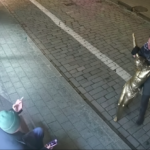
The footage shows two men outside the Shrine of Divine Mercy. Photo credit: @Twee_Papillon on X

A video showing a man messing around and posing with a stolen statue of Jesus Christ before smashing it on the pavement has gone viral, prompting outrage after footage from a church’s security cameras was shared widely online.

The incident happened in Vilnius, Lithuania and what might have seemed like a drunken prank for the culprits, the incident has left a local community and congregation saddened, angered and without a statue to gathered around for prayer.

CCTV captures moment statue shatters on pavement

The footage shows two men outside the Shrine of Divine Mercy on Dominikonų Street in Vilnius Old Town. One is sitting on a bench while the other approaches holding the statue, which had been removed from a wooden cross in the church’s courtyard. The man appears to be showing off the figure while his companion takes photographs. As he handles it, the statue’s arms break off and the rest crashes onto the pavement, shattering into pieces.

The man reacts with an exclamation of ‘Oh my God!’ before both men leave the scene. The CCTV footage was subsequently shared by the church’s vice-rector, Elijas Anatolijus Markauskas, and spread rapidly across social media. The images prompted widespread criticism, particularly from people who regarded the destruction of the religious figure as an insult to the local Christian community.

A suspected intoxicated person tore a statue of Jesus off a church cross and tried to take a photo with it- moments later, it shattered on the pavement. That’s Vilnius nightlife just days ago. Police launched a pre-trial investigation and are searching for the suspect. https://t.co/KmVGY1TaPN

— Auraja ‡ (@Twee_Papillon) November 14, 2026

Church priest offers to forgive the man

The incident was particularly upsetting for the church community because the sculpture was displayed on a cross in the sanctuary’s courtyard, a place used by worshippers for prayer. Markauskas said he had spent hours reviewing security camera recordings to understand what had happened. He also made clear that he did not believe the incident was necessarily motivated by hostility towards Christianity.

He suggested the men may have been drinking before arriving at the church and believed the statue had been broken accidentally rather than as part of a planned religious attack. The vice-rector also expressed a willingness to meet the man responsible, saying he wanted to see him in person rather than simply condemn him from a distance.

Police identify suspect after viral footage

Lithuanian police initially appealed for information to identify the men after the footage began circulating online. Investigators examined security recordings and appealed to residents and businesses in the Old Town for help. On Saturday, November 14, police announced that they had identified a suspect, the man was questioned and formally notified that he was suspected of involvement in the offence. Police also confiscated his identity document as a precautionary measure while the investigation continues.

The case is being investigated under Lithuania’s Criminal Code, concerning the desecration of a grave or another place of public respect. Despite reports describing the men as drunk British tourists, Some observers online with a good sense of humour we’re quick to point out that the man was wearing gloves therefore was unlikely to have been a British tourist. police have not confirmed their nationality.

Continue Reading
Advertisement
Advertisement

Spanish Real Estate Agents

Tags

Trending

Copyright © 2017 Spanish Property & News