Connect with us

%

Leonid Meteor Shower Returns To Spain With Its Best Display Of Shooting Stars

Published

on

leonid-meteor-shower-returns-to-spain-with-its-best-display-of-shooting-stars

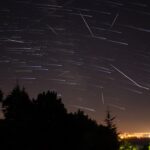
November 17 into 18 is expected to offer the strongest activity. Photo credit: AstroStar/Shutterstock

If you are hoping to catch a few shooting stars without travelling far or buying equipment, the Leonids offer a chance next week. Spain’s November meteor shower reaches its peak overnight on Tuesday, November 17, into Wednesday, November 18, with the best chance of seeing it after midnight.

This will not be a spectacular meteor storm, and anyone expecting hundreds of shooting stars is likely to be disappointed. The forecast is around 15 meteors an hour under ideal conditions, although the number visible will depend on how dark and clear the sky is.

When to see the Leonids in Spain

The National Geographic Institute (IGN) says the Leonids will reach maximum activity at approximately 00:45 on Wednesday, November 18, in mainland Spain and the Balearic Islands. In the Canary Islands, that is 23:45 on Tuesday, November 17.  The meteor shower is active from November 6 to 30, so shooting stars may be visible on other nights.

However, November 17 into 18 is expected to offer the strongest activity. The Leonids are usually a modest shower, producing between 10 and 20 meteors an hour. The 2026 forecast is around 15 an hour in ideal viewing conditions, rather than the thousands sometimes associated with Leonid storms. 

Where and how to watch the meteor shower

You do not need a telescope or binoculars to watch the Leonids. The IGN recommends leaving optical equipment aside because it narrows the amount of sky you can see. The best option is to get away from streetlights and other sources of light pollution, choosing an open spot with few obstructions. Buildings, trees and hills can block parts of the night sky, while urban lighting makes fainter meteors harder to pick out.

Although the meteors appear to come from the constellation Leo, they can streak across any part of the sky. There is no need to stare in one direction: settle somewhere comfortable, look towards the darkest area you can see and give your eyes time to adjust. The Moon should be less of a problem around the peak. It will be in its first quarter and is expected to set around midnight, leaving the later hours darker. The IGN says that, from latitudes around 40 degrees north, the Leonids’ radiant rises above the horizon from midnight and remains visible until dawn. A warm blanket can make the wait more comfortable, particularly if you plan to stay outside until dawn. 

What causes the Leonids?

The shooting stars are tiny fragments left behind by comet 55P/Tempel-Tuttle. Earth passes through its trail of debris every November, and particles entering the atmosphere burn up, producing the streaks of light seen from the ground. The comet takes around 33 years to orbit the Sun.

Particularly dense trails can produce dramatic meteor storms. The Leonids are known for spectacular displays in the past, but no storm is forecast for 2026.  Clear skies will decide how much of the shower people can see, so check local weather conditions before heading out. If clouds intervene on the peak night, the Leonids remain active until November 30, although activity will be lower.

%

100kg Wild Boar Smashes Into French Funeral Parlour

Published

on

100kg-wild-boar-smashes-into-french-funeral-parlour

Wild boar runs amok in village funeral parlour. Credit: archive image

A giant wild boar weighing around 100kg caused chaos in a small French village after charging through the streets, smashing its way into a funeral parlour and leaving two people terrified after a face-to-face encounter.

The extraordinary incident happened in Salviac, in the Lot department of south-west France, on Sunday, November 1, when the animal was apparently startled during a hunting expedition and headed towards the village instead of escaping into the surrounding countryside.

According to French newspaper La Depeche du Midi, people sitting outside the village’s La Poste bar had to rush indoors as the enormous animal came charging down the street.

Boar crashes into funeral business

The animal then crossed the road and repeatedly charged at the entrance to a funeral business, eventually smashing through its glass doors. Owner Catherine Figeac was inside meeting a client when the boar burst into the reception area. The pair suddenly found themselves face to face with the animal, which was so large that its back repeatedly struck the top of her 90cm-high desk.

Terrified, Catherine climbed onto her chair and shouted warnings to people outside as the boar charged through the premises. Although it damaged the entrance and some equipment, neither she nor her client was injured.

The animal subsequently headed towards a nearby restaurant, where it also attempted to force its way through the entrance before eventually fleeing towards the Dégagnac road. Members of the local hunting association later visited the funeral business and arranged for its insurance to cover the damage.

Wild boar increasingly close to homes

The incident has also drawn attention to the growing presence of wild boar around residential communities. A follow-up report by La Depeche on November 12 quoted the president of the Lot Departmental Hunters’ Federation, Michel Bouscary, who said encounters between the animals and residents were becoming increasingly common.

The problem is not confined to France. Wild boar have become a familiar sight in parts of Spain, particularly around the Costa del Sol, where easy access to food and water has encouraged them into built-up areas. Euro Weekly News has previously reported on wild boar running along the A-7 motorway in Mijas, as well as growing concerns over their presence in Fuengirola.

The Spanish government’s national hunting management strategy advises people who encounter wild boar not to run, approach the animals or feed them. Instead, they should leave an escape route and alert the authorities if necessary. Its guidance is particularly relevant to anyone walking dogs or living close to woodland and open countryside.

The Salviac incident ended without injuries, but it was a frightening reminder of what can happen when large wild animals suddenly find themselves in the middle of a residential community.

Continue Reading

%

Glasses Under Scrutiny: Congress Backs Tougher Checks On Cheap Spectacles For Driving

Published

on

glasses-under-scrutiny:-congress-backs-tougher-checks-on-cheap-spectacles-for-driving

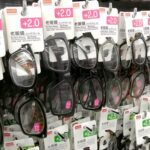
Cheap pre-mounted glasses. Credit: COOOA

Thousands of people in Spain buy inexpensive ready-made glasses from pharmacies, supermarkets and other shops, but a new parliamentary decision could bring greater scrutiny to how these products are sold.

Spain’s Congress of Deputies has backed calls for stronger road-side inspections and monitoring of spectacles, including ready-made glasses, prescription glasses and contact lenses sold online or outside specialist healthcare establishments.

The plan was approved by the Committee on Social Rights and Consumer Affairs on May 26, receiving 33 votes in favour and four against. It was subsequently published in the Congressional Bulletin on June 10.

The proposal, put forward by the Socialist parliamentary group, calls on the Government to work with regional authorities and European institutions to strengthen controls over the sale of optical products.

However, the decision does not introduce an outright ban on ready-made glasses or make them illegal to buy outside opticians.

Why cheap glasses are under scrutiny

Ready-made glasses, known in Spain as gafas premontadas, are sold in standard magnifications rather than being individually prescribed. Unlike prescription spectacles, they do not require individual adaptation by an optician and can legally be sold outside specialist healthcare establishments, provided they meet the applicable safety and quality requirements.

The parliamentary initiative argues that stronger checks are needed to ensure these products are stored, handled and sold in suitable conditions. It also raises concerns about prescription glasses and contact lenses purchased online, particularly where customers have not received the necessary professional assessment.

DGT warning puts drivers in the spotlight

The issue also has implications for drivers, particularly older ones who may rely on inexpensive glasses purchased without an eye examination. Spain’s Directorate-General for Traffic (DGT) has previously warned that ready-made glasses are not a substitute for properly prescribed driving glasses. They are designed for close-up vision and may not correct problems affecting distance vision, astigmatism or differences between the two eyes.

Drivers who need corrective lenses to meet the eyesight requirements for driving must comply with the conditions recorded on their licence. As explained in EWN’s guide to the €200 penalty for driving without required glasses or contact lenses, failing to follow a visual-correction restriction can result in a fine.

Drivers can check their requirements using the codes recorded on the reverse of their Spanish driving licence, as explained in EWN’s previous DGT warning about glasses and contact lenses.

The latest parliamentary decision does not create a new driving offence or introduce an automatic fine for wearing ready-made spectacles. Instead, it puts pressure on the Government to strengthen consumer protection and oversight of the optical products being sold to the public.

Continue Reading

%

Torrox Migrant Hotel Row Over Illegals

Published

on

torrox-migrant-hotel-row-over-illegals

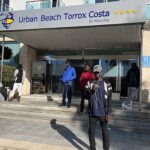
El Morche hotel at centre of debate. Credit: Jesús López FB

Four-star Costa del Sol accommodation sparks debate as Spain records almost 33,000 irregular arrivals in 2026.

A viral Facebook post about the Urban Beach Hotel in El Morche has reignited debate over migrant accommodation in the Axarquia, as figures reveal almost 33,000 irregular arrivals in Spain during the first ten months of 2026.

Shared by Jesús López on Friday, November 13, the post claimed around 200 migrants had arrived at the former four-star hotel and questioned the impact on local businesses. It also suggested asylum applicants cannot work while their cases are processed.

Spain’s migrant arrivals increase

According to the Spanish Interior Ministry’s latest irregular migration figures, 32,942 people entered Spain illegally between January and October, an increase of 8.9 per cent compared with the same period last year. Of these, 28,155 arrived by sea and 4,787 by land. Arrivals by sea on mainland Spain reached 7,615, up 15.5 per cent year-on-year.

Recent transfers from the Canary Islands have brought additional pressure on mainland reception services. According to regional reports on migrant accommodation in Malaga, around 300 people had been transferred to the province by November 14.

Where are migrants being housed?

The Red Cross was assisting around 275 people in Malaga city and Torrox, including approximately 200 at the Urban Beach facility. CEAR was accommodating another 17, with a further 15 expected. Its accommodation network has a capacity of 835 places across Malaga city and Antequera.

The Torrox centre has operated since October 2023. In 2025. Red Cross figures showed that more than 160 of its 362 residents had found employment, mainly with local fruit and vegetable businesses.

What about the impact on Torrox?

Facebook contributors have challenged the suggestion that the town depends almost entirely on tourism, pointing to its agricultural sector and demand for migrant labour.

Spanish regulations also allow asylum applicants to work six months after their applications are admitted for processing, subject to legal requirements.  Questions have also been raised about reported accommodation costs of around €60 per person daily, although no contract or breakdown of services has been provided. Rumours of another reception centre opening in Cartama have circulated, but no official confirmation has been located.

The debate is not new. Torrox councillors previously questioned the use of tourist accommodation for migrant reception, as reported in Euro Weekly News’ coverage of the local migration debate.

Meanwhile, Granada province has organisations including Cruz Roja, CEAR and Granada Acoge providing migrant assistance, although their presence does not establish that they operate comparable emergency reception centres.

The debate raises questions about how Spain distributes responsibility for migrant accommodation, supports local communities and helps newcomers move into employment.

Continue Reading

Trending

Copyright © 2017 Spanish Property & News