
ElPais
A World Cup Of Opulence And Records: Soaring Ticket Prices And Officials Denied Entry

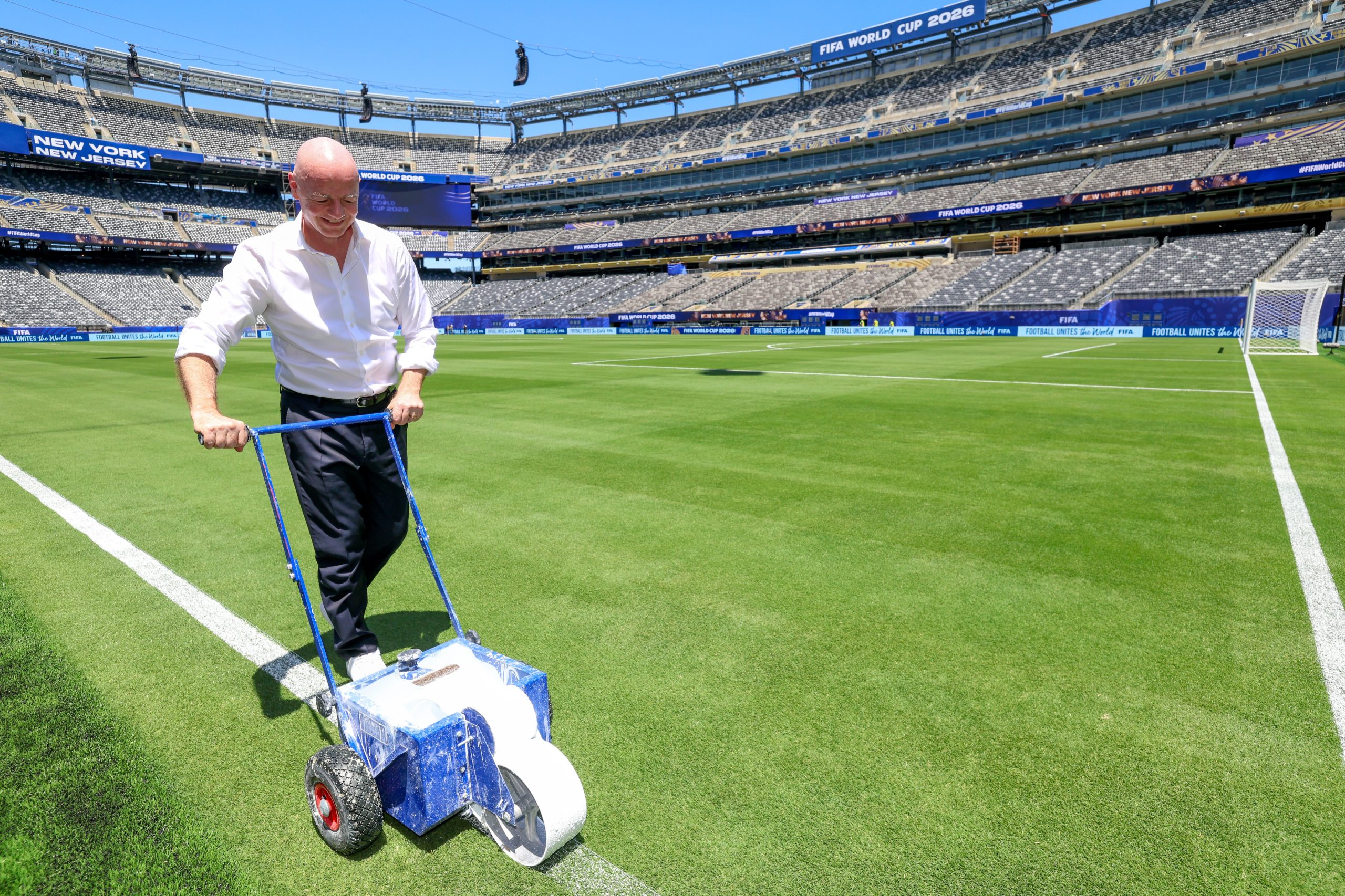
The largest FIFA World Cup in history kicks off on Thursday, June 11, at the Estadio Azteca. The opening match between Mexico and South Africa will be the starting gun for a tournament also hosted by Canada and largely staged in the United States, where 78 of the 104 matches will be played, including the final on July 19. FIFA president Gianni Infantino said last May at the United Nations headquarters in New York, an organization founded in 1945 to prevent armed conflict, that “the eyes of the world will be focused on North America.” “We spend so much time in discussing what divides us, but actually we realize that when we put people together, what happens is that there are many more things that unite us than the things that divide us,” he added. The World Cup, however, will be co-hosted in a country that just over 100 days ago launched a war against Iran, alongside Israel, without any United Nations endorsement, that has an open diplomatic dispute with another co-host, Mexico, and whose anti-immigration policies — policies that frighten many fans — on Monday denied entry to Somali referee Omar Artan, one of the 52 match officials assigned to the tournament.
The most commercialized World Cup in history, with 104 matches instead of 64 and 48 teams instead of the previous 32, is also marked by excessive ticket prices. Consultancy AceOdds estimates that for two fans to attend all of Spain’s matches, for example, they would need to spend at least $61,000, of which tickets for games would represent 50%. FIFA’s dynamic pricing system, similar to those used by apps like Uber or Cabify to raise fares during periods of high demand, has driven costs to unprecedented levels, with tickets topping $30,000. Only 10% of tickets are reserved for the basic stands, which have a fixed price of around $70. The rest fall under the so‑called — and criticized by many fans and supporters’ associations —dynamic pricing system across the tournament’s 16 venues, none of which is a newly built stadium.
These excesses have not affected only match tickets. FIFA, which keeps a large share of revenues from food and drink concessions at stadiums, did not even want to allow fans to bring in an empty bottle to fill at water fountains despite the high temperatures expected during the World Cup. Criticism was so fierce — from Toronto mayor Olivia Chow to New York mayor Zohran Mamdani and even UK prime minister Keir Starmer — that the organization led by Infantino had to backtrack last week and allow fans to bring sealed, disposable soft plastic water bottles with a capacity of up to 590 milliliters.
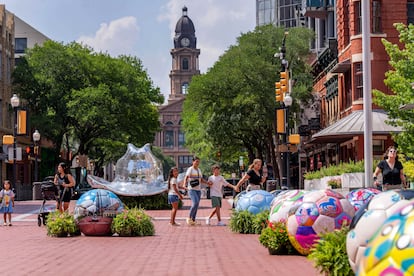
Hotel, flight and transport prices have also sparked protests. For example, fares to MetLife Stadium in New Jersey — which will host eight matches, including the final — on NJ Transit, the state’s public transport network, will cost $105 when the usual fare is $12.90. FIFA did not provide funding and local authorities chose to raise fares to offset the expense to the public coffers of moving tens of thousands of fans.
Complaints about prices have been joined by the consequences of Donald Trump’s anti-immigration policies, with controversial action by U.S. Immigration and Customs Enforcement (ICE) at the forefront. It was not only that authorities threatened to carry out raids around stadiums to detain those without proper documentation — prompting over 100 civil organizations to demonstrate in recent weeks to denounce the “serious human rights violations” occurring in the country — but customs restrictions struck at the heart of the World Cup on Monday. Artan, who would have become Somalia’s first World Cup official after being named CAF’s best referee for 2025, was “declared inadmissible due to issues in the background check process” when he landed in Miami and was denied entry.
Somalia is on the list of countries whose citizens are barred from traveling to the United States, a list that also includes Iran. The Iranian national team, which plays two group matches in Los Angeles and another in Seattle, has chosen to base itself in the Mexican city of Tijuana to spend the minimum possible time on U.S. soil. The Trump government, which on February 28 launched the Epic Fury offensive against the Islamic Republic together with Israel, has also banned the entry of 15 of the 70 members of the Asian country’s delegation.
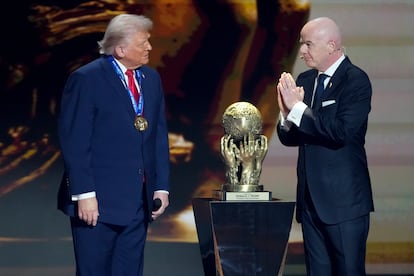
Against that backdrop, FIFA — whose president maintains an exceptional relationship with Trump — intends on the back of this World Cup to make significant inroads into the United States, a market of 350 million people. If — in exchange for hosting the 1994 World Cup — the world governing body finally persuaded the U.S. to create a national league, MLS, it now hopes soccer will at last approach the popularity of basketball, baseball, ice hockey, or the NFL, which have larger fan bases and are much more embedded in U.S. culture. To that end, it has nearly six weeks ahead of it with a tournament that is expected to be the most-watched in history, the one that generates the most revenue from television rights, and the one that will allocate the most money to the clubs that have released their international players — FIFA announced that it will distribute $355 million, 70% more than in 2022, among the teams with players in the tournament — to national teams. On Thursday, the World Cup of records, opulence, and excess kicks off.
Sign up for our weekly newsletter to get more English-language news coverage from EL PAÍS USA Edition





America
A UFC Fight At The White House: Trump’s Controversial Sporting Event Sparks A Wave Of Criticism

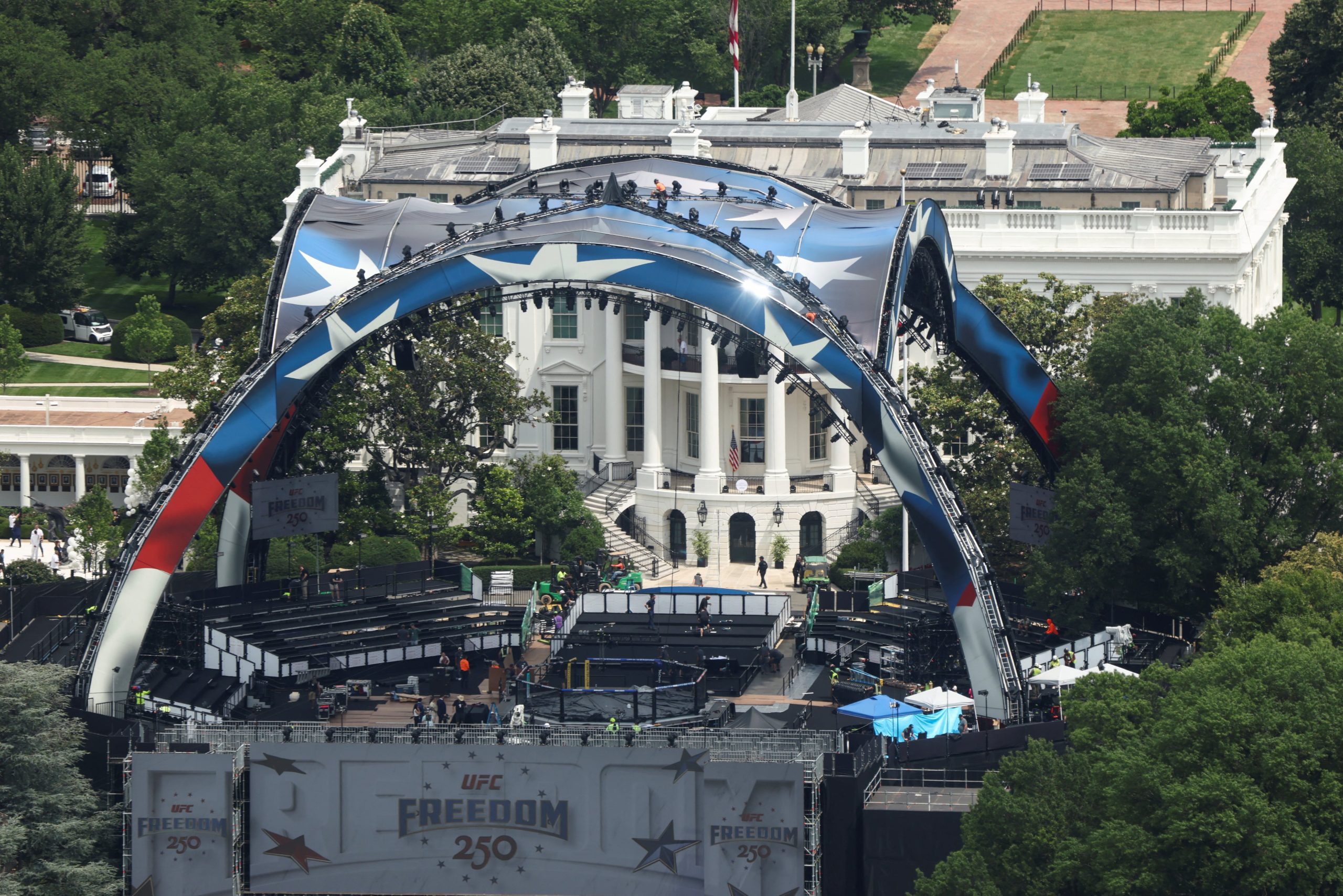
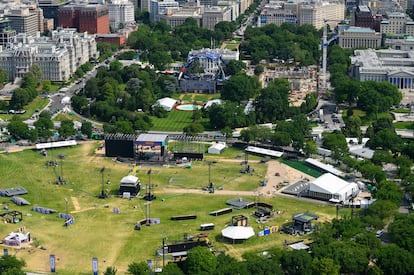
The image is unprecedented even by Washington standards. A massive four-pronged steel structure known as “The Claw” rises above the White House South Lawn as workers put the finishing touches on the venue that will host UFC Freedom 250. The mixed martial arts event, promoted by President Donald Trump and UFC CEO Dana White, is intended to commemorate the 250th anniversary of American independence.
Yet what its organizers describe as an unprecedented patriotic celebration is viewed by critics as an example of the growing overlap between private business interests, political power, and national symbols. Lawsuits, conflict-of-interest allegations, and restrictions on press access have turned the fight into a controversy that extends far beyond sports.
An octagon at the presidential residence
The June 14 card will be the first professional sporting event ever held at the White House. The fights will take place on the South Lawn, the stretch of grass behind the presidential residence that is typically used for official ceremonies, diplomatic receptions, and public events.
The most striking feature of the setup is “The Claw,” a 600-ton, 154-foot-wide structure imported from Europe. Originally designed for music festivals, it was modified to house the UFC Octagon without obstructing views of the White House or the Washington Monument. At 92 feet tall, the structure is even higher than the presidential mansion itself.
Organizers expect approximately 4,300 spectators inside the venue. The UFC also plans to install giant screens nearby, allowing tens of thousands more fans to watch the event.
Trump’s close ties to the UFC
The controversy is not limited to the event itself. It is also fueled by the long-standing relationship between Trump and White, one of the president’s most visible allies in the sports and business worlds.
Trump has publicly promoted the event for months and has closely monitored preparations. The card will also take place on his 80th birthday, a detail that has intensified criticism from those who believe the event carries a personal and political dimension beyond the national commemoration.
Questions intensified this week when the Trump family began promoting commemorative coins tied to the event. The medallions, marketed under a licensing agreement with the Trump Organization, range in price from about $250 to nearly $12,000 for a gold version.
Critics argue that using the White House for a spectacle connected to business ventures benefiting the president’s inner circle raises ethical concerns. The White House has rejected any suggestion of wrongdoing, insisting that Trump acts solely in the public interest.
Lawsuit
Just days before the fight, two Washington-area residents filed a lawsuit seeking to block the event, arguing that federal authorities unlawfully approved the use of public property for a private activity.
The plaintiffs contend that the massive structure erected on White House grounds required congressional approval and that iconic sites such as the South Lawn and the Lincoln Memorial, where the ceremonial weigh-ins will take place, should not be used for commercial purposes.
The Trump administration has responded that the lawsuit was filed too late and that halting the event would disrupt months of planning while affecting thousands of attendees, military personnel, and athletes preparing to compete.
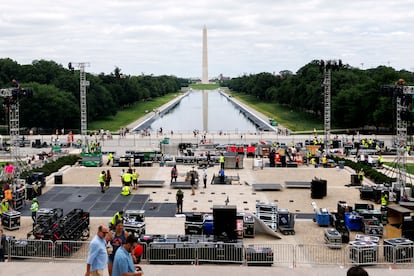
Administration lawyers have also denied any illegality, arguing in court filings that the structures are temporary and that the White House has a history of hosting a variety of public events.
Press access under scrutiny
Another source of controversy involves media access. According to multiple reports, the UFC has taken control of a significant portion of the credentialing process for journalists seeking to cover the event from within the White House complex.
The White House Correspondents’ Association objected to the arrangement, arguing that it is unusual for a private company to oversee media access to an event held at the seat of the executive branch.
According to reports, only the official White House press pool and a limited number of UFC-approved journalists will have full access to the venue. Other news organizations will be unable to use their normal press workspaces during the event.
While major sports leagues routinely manage credentials for their own events, critics argue that the situation is fundamentally different when the event takes place at one of the most symbolic government buildings in the United States.
Sign up for our weekly newsletter to get more English-language news coverage from EL PAÍS USA Edition
Claudia Sheinbaum
Final Countdown To Defuse Protests Against Mexican Government Ahead Of World Cup Opening Game

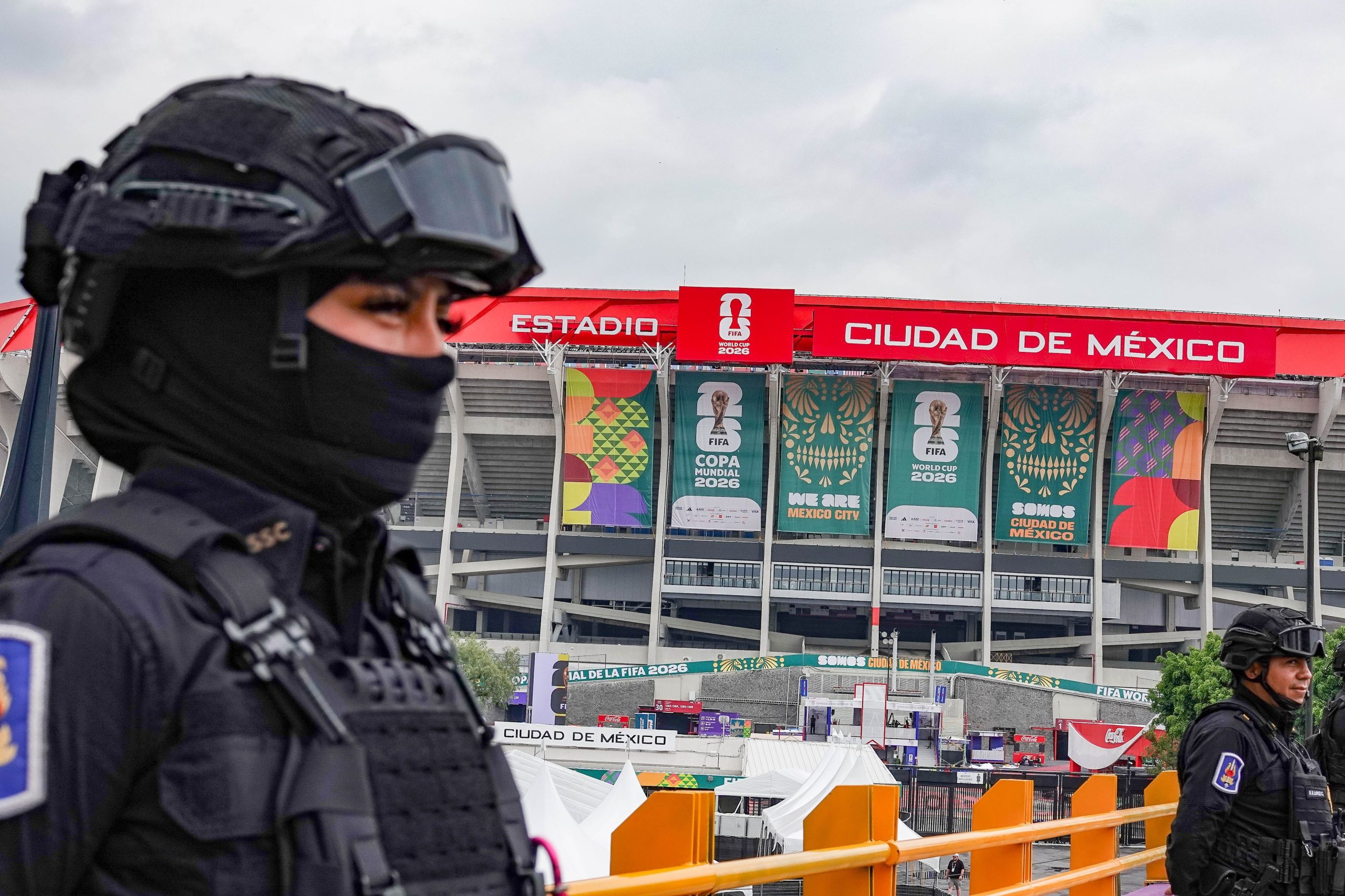
Only 24 hours remain before the World Cup kicks off in Mexico and the country is going though its final dress rehearsals. Preventing demonstrations on opening day is already a pipe dream: negotiations with teachers have stalled and search groups will march to make their missing relatives visible. With everyone in position and the cards on the table, attention is focused on avoiding the worst-case scenario for the government of Claudia Sheinbaum — an image of a police officer striking a teacher circling the globe on the day the country is playing for its international image. The concern is not unfounded: on the first day of protests a teacher lost an eye in clashes with police. The past two weeks have tested containment measures, and Wednesday will be the last chance to fine-tune the public staging. To ease the pressure, authorities have canceled classes for Thursday and ordered remote work for public servants.
The opening match will be the first of five games played in Mexico City. There are 13 matches in total across the country, which is expected to receive more than five million fans, according to official forecasts. The government is banking on World Cup fever to dilute the complaints. The tournament — the third to be hosted at Estadio Azteca — has acted as a catalyst in a country riven by social crises. Thousands of teachers — 10,000 according to the union, 3,000 according to the government — have camped in the historic downtown for two weeks with the same demand they made 18 months ago: a return to public pensions, a request the government considers unworkable. After 50 working tables, neither Rosa Icela Rodríguez nor Mario Delgado, the Interior and Education secretaries leading negotiations, have managed to stop the National Coordination of Education Workers (CNTE) from returning to the streets, despite warnings given a year ago. So far, the massive police deployment has prevented them from reaching Estadio Azteca and the Zócalo, where the president had planned to attend the opening match — now uncertain and pending the protest’s evolution.
Collectives that search for the disappeared have also announced marches for this Wednesday and for Thursday morning. It was the last recourse they had left. Mothers have already put their children’s faces on national team shirts, in a sticker album, on banners along avenues — they have done everything to force people to look into the eyes of the roughly 133,000 people who remain unaccounted for in the country. The opening date is their last spotlight. At the last minute, a protest for judicial independence in the city’s south and a contingent of Ayotzinapa students — who arrived on Monday with explosives that were confiscated — also joined them. The government has managed, however, to halt the powerful farmers’ front, which told EL PAÍS that it has given the executive this week’s breathing room because talks with the new head of the Agriculture Secretariat are on track.
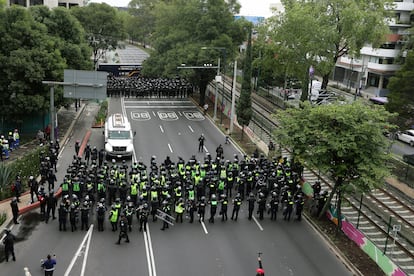
With the Colossus of Santa Úrsula sealed off for a one-kilometer radius, Sheinbaum’s government will focus on keeping all elevated roads leading directly to the stadium open. Authorities will allow entry to this last protected stretch from 6.00 a.m., that is, seven hours before kick-off. “Fans’ access is guaranteed. We only ask that they arrive early. If someone wants to arrive at the last minute, they may face more complications. Be more prepared — that’s what we ask,” Mexico City’s secretary of government, César Craviotto, said on Tuesday. With the planned marches and tourists in the capital, authorities are now relying only on peaceful coexistence. The aim is to contain, not confront. The president has repeatedly said during her morning briefings that the right to protest is guaranteed and that her government will never punish public demonstrations. Sheinbaum is less concerned about Tlalpan Avenue being closed than about Mexico projecting an image of repression before Shakira takes the stage.
Teachers explode, countryside concedes
Over the past year Sheinbaum has faced two major domestic challenges: the organizing power of the CNTE and the farmers’ pressure on the highways. The government has chaired one negotiation table after another for months to prevent unrest from getting out of control, but the results have been mixed. While teachers press in the streets to unblock their main demand — the return to public pensions — the countryside says it is tentatively satisfied with the course of talks. “We don’t feel completely attended to, but we do feel we will make progress,” says Eraclio Rodríguez, one of the leaders of the National Front for the Defense of the Countryside, which has granted the government the enjoyment of the opening match, though it does not rule out mobilizations afterward.
Interlocutors play a different role in each case. While teachers point to dissatisfaction with the proposed measures — the latest being to strengthen the only public pension fund and create a public insurer — the farmers’ representative speaks of a change “like night and day” at the Agriculture Secretariat, previously headed by Julio Berdegué and now by his former undersecretary, Columba López. “We are doing better, things are going well,” Rodríguez says, contrasting that with the difficulties they face with the economy minister, Marcelo Ebrard. The picture changes on the teachers’ side. “This is not a personality issue. She [Rosa Icela Rodríguez] has the disposition. They are decent people, they have treated us well; the problem is substantive: they are not proposing to repeal the ISSSTE law (which governs public-sector retirement),” summarizes Pedro Hernández, CNTE’s general secretary in Mexico City.
The head of the public body, Martí Batres, and Sheinbaum herself once mobilized in the streets in the same way they are now. They know each other, they are the same people on both sides, and, broadly speaking, they respect one another. That adds a layer of complexity to negotiations, but it does not resolve them. “They have a history of fighting for rights. Sometimes power makes you forget that. We would think that sympathy should favor negotiation frameworks,” the union leader laments.
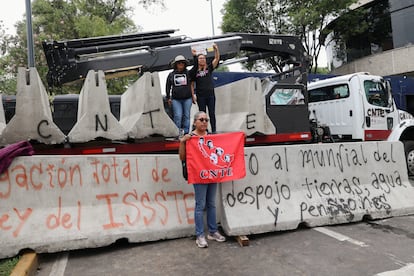
Disappointment has spread through the most radical sector of the teaching ranks while the government bets on fatigue and a deterrent police presence in mobilizations that always manage to secure some additional measure, but never the one they want. According to the government, a return to public pensions would require a disbursement equal to 20% of national GDP — an interpretation teachers reject and one that has driven them to escalate tensions on the eve of the tournament’s opening. It is unclear which side time will favor once the collective euphoria takes hold of the national mood.
The disappeared, a perpetual crisis
Among all of Mexico’s crises there is an old lament: a country where, government after government, thousands go missing and no authority halts the tragedy. International bodies have described it as a humanitarian emergency, but inside the country it is so common that it sometimes goes unnoticed. Every World Cup venue has its square, its memorial to the disappeared, a space where families insist on leaving that reminder: many are still missing. So far Sheinbaum’s government has presented a package of laws and a reinterpretation of the missing persons registry, both heavily criticized by collectives. With the World Cup’s imminent arrival, the president stepped up the pace. “In recent months we have had meetings to build some improvements to the investigation protocol and the law,” says Jacky Palmeros, who founded the collective Una luz en el camino after the disappearance of her daughter, Monserrat Uribe, in 2020 in Iztapalapa, east of the capital: “But there is a lack of willingness and commitment.”
These meetings, however, have been accompanied by what the collectives define as “a new way of repressing and violating families”: removing the photos and banners of the disappeared as soon as families put them up. Faced with that scenario, they decided to march. “Our intent is never to sabotage the World Cup; it is not to prevent people from going, watching and enjoying themselves, only to make visible what you have so strenuously tried to hide. In that context, we ask that upcoming actions be respected,” Palmeros told Secretary of Government César Craviotto this week. “They told us we will not be able to approach, to make ourselves visible and to protest freely because they will close access to free movement,” the activist adds, saying there “is a feeling of hostility in the air”: “There is fear, I think, on both sides. No one knows what will happen. All that remains is to wait. Neither they nor we will change our minds.”
Sign up for our weekly newsletter to get more English-language news coverage from EL PAÍS USA Edition
Belfast
Violence Erupts Against Immigrants In Belfast Following Attempted Beheading: ‘Burning Families Out Of Their Homes Is Nothing Less Than Disgusting Cowardice’

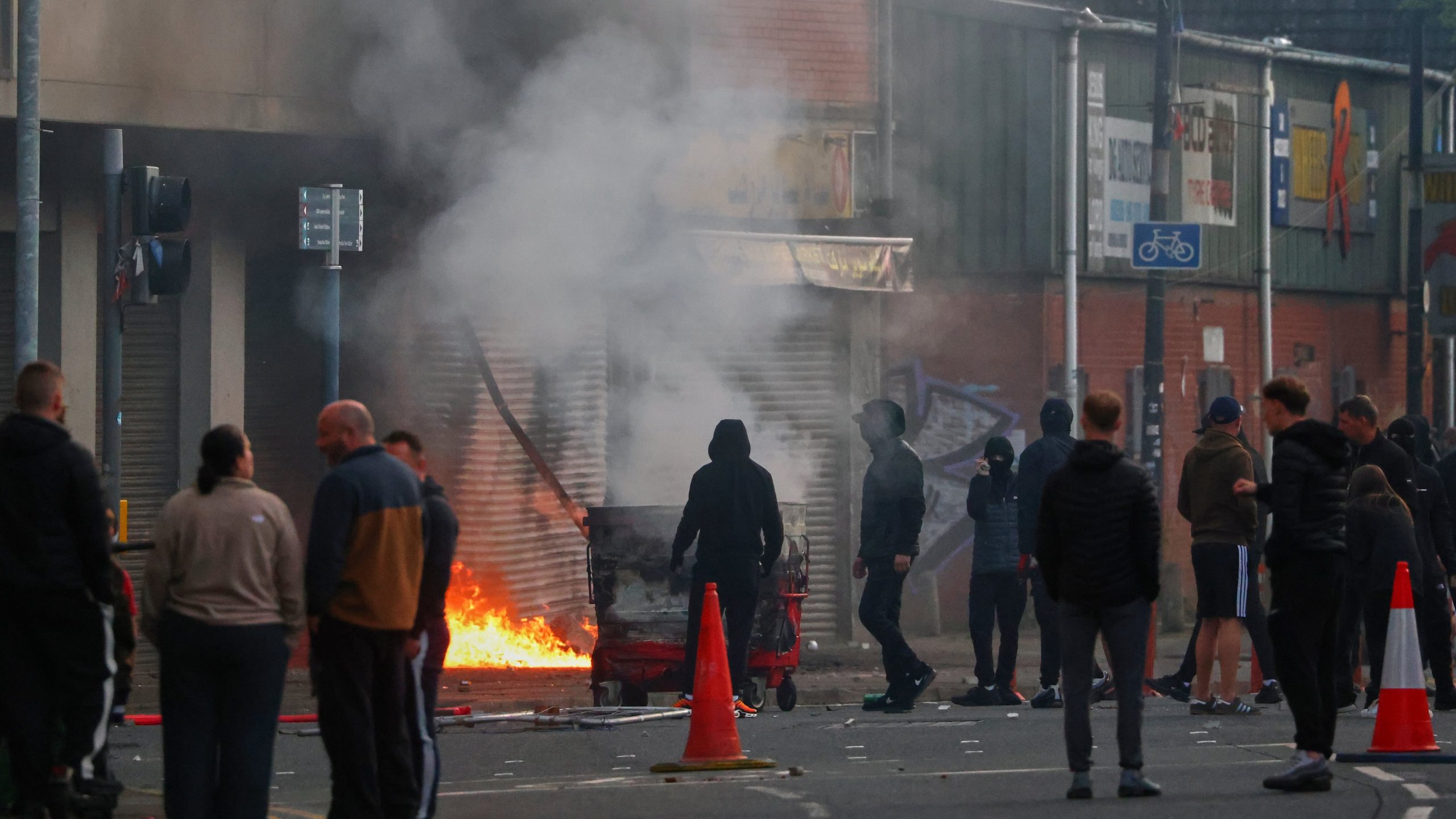
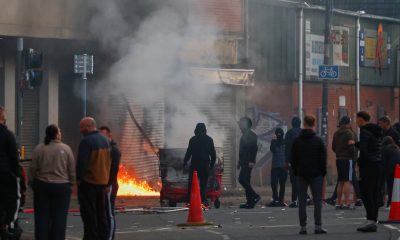
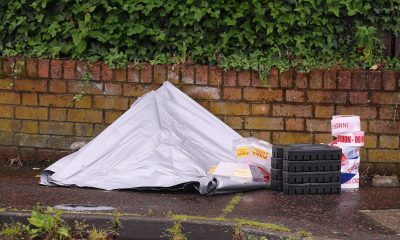
Political and religious leaders in Northern Ireland saw early Wednesday morning — with the embers of a long night of violence in Belfast and other parts of the region still smoldering — that their calls for calm had fallen on deaf ears. Cars, buses, phone booths, and trash cans set ablaze. Homes where immigrants — or simply people from ethnic minorities — were believed to live, completely engulfed in flames after violent groups targeted them as places that needed to be “liberated.”
The spark had been ignited by an attack on Monday night: a 30-year-old man of Sudanese origin attempted to decapitate a neighbor in north Belfast with a kitchen knife. The victim, in his 40s, has lost an eye and remains in the hospital in serious condition, with injuries to his face, neck, and back.
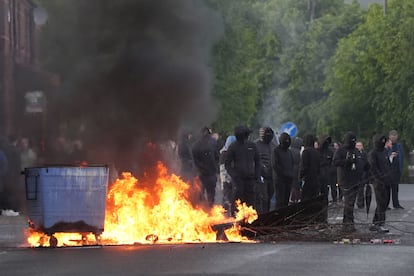
The attacker, who had flown from Sudan to Paris, then to Dublin, and from there traveled by bus to Belfast, where he arrived in February 2023, held a five-year temporary visa as an asylum seeker, granted by the British Home Office.
Formally charged with attempted murder, he appeared Wednesday morning before a Belfast court, where he was indicted and his identity, Hadi Alodid, was finally revealed. Stephen Ogilvy, the victim, is a radiology technician with the National Health Service. The judge ordered Alodid to be remanded in custody until he next appears in court on July 8.
The outbreak of violence against immigrants that followed the attack has so far left five people injured: three civilians and two police officers. About 100 people are also under investigation for their involvement in the riots, according to Chief Constable of the Police Service of Northern Ireland Jon Boutcher, who spoke at a press conference.
At the same press conference, Secretary of State for Northern Ireland Hilary Benn attributed the incidents to “masked thugs.” “Nothing can justify the violence we saw last night on the streets of Northern Ireland,” he said. The organizers of the protests, far from “protecting” local communities as they claim, are “doing exactly the opposite,” he emphasized.
The family of the victim called for calm in a statement, highlighting the valuable contribution of immigrants to British society. In the statement, released through MP Phillip Brett, they thanked the passersby who helped their relative at the time of the attack: “Your quick actions absolutely saved his life, and we will never forget what you did for him in that moment,” it states. They then urged those who are outraged by what happened not to resort to violence, and defended the role of immigrants in society.
“We want to make it absolutely clear that overnight unrest is not welcome, and peaceful protest is the only way forward,” reads the statement. “We have many migrants who make a deeply valuable contribution to our country, including in our healthcare system and hospitality sector and we depend on them to make our country work. We do not want this terrible tragedy to be used to divide people or fuel hostility.”
“Groups of masked men burning families out of their homes is nothing less than disgusting cowardice,” Northern Ireland’s First Minister Michelle O’Neill of the republican party Sinn Féin denounced in frustration on Tuesday night. “This has nothing to do with community. This is outright thuggery.”
O’Neill had appeared earlier that day on the central steps of Stormont Palace, the seat of the Northern Ireland Assembly, accompanied by Deputy First Minister Emma Little-Pengelly of the unionist and Protestant DUP party, and Chief Constable Boutcher.
All of them urged citizens to remain calm. And, above all, not to be swept up by the call to violence from “people who know nothing about Northern Ireland, and who use social media and its toxic nature to incite people to do things they don’t want to do,” Boutcher noted. “Any concerns regarding immigration must be discussed through political channels,” he insisted.
By then, social media had already been flooded with the video, recorded by witnesses on Monday, showing the attempted beheading and the reaction of a group of passersby who rushed to stop the attacker before the police arrived. Politicians and institutions in Northern Ireland and the rest of the United Kingdom have praised the heroism of these individuals, and have sought to contrast it with the vandalism they feared would soon erupt — as indeed it did.
“There is no justification for the violence and disorder that we saw threatening our communities, nor for those who encouraged it, online or elsewhere,” British Prime Minister Keir Starmer wrote on X. “It is clear that people were targeted last night because of their background and I will not tolerate it,” he added.
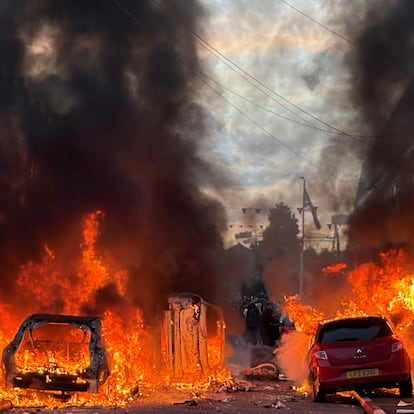
American tech mogul Elon Musk used his account on the social media platform X, which he owns and on which he has over 240 million followers, to incite the protest, reporting on the locations the far-right had chosen across Northern Ireland and the United Kingdom to gather.
Tommy Robinson, the most prominent leader of these extremist groups, called for a nationwide mobilization. Nigel Farage of Reform UK and Rupert Lowe of Restore Britain (the two rival factions of the same populist, anti-immigration movement) agreed in blaming the immigration laws of previous governments for the chaos they themselves were inciting.
Northern Ireland is no stranger to sporadic outbreaks of violence that often coincide with the arrival of summer — days with longer daylight hours and groups of young men ready to set the streets ablaze. Moreover, for three decades the country suffered the violence of the Troubles, the sectarian conflict that pitted Catholics, Protestants, and paramilitary forces against one another. And in 2016 came the Brexit referendum and its consequence, the Northern Ireland Protocol, which the unionist community viewed as a betrayal by London that left them even more isolated.
In recent years, it has been irregular immigration and the arrival of asylum seekers — whom the most vulnerable and impoverished citizens view as scapegoats for their own hardships — that have stirred up unrest in the streets. And this despite the fact that refugee numbers are negligible: there are currently 2,379 in Northern Ireland, representing 0.1% of the population, according to the Law Centre Northern Ireland.
In June 2025, the alleged rape of a minor in Ballymena by two teenagers of Romanian origin — who were later found not guilty and acquitted — triggered an outbreak of violence that resulted in dozens of arrests and injured police officers. Now it is the savage attack by the man arrested in Belfast that has reignited the fuse.
“There is no place on our streets for this violence, with families and businesses attacked, cars and buses set on fire, and parts of our community in flames,” denounced John Finucane, the Sinn Féin MP representing the Belfast North constituency, where the attempted beheading had taken place.
“No one has the right to spread fear, terrorize innocent families, or bring savage and illegal disorder to our streets,” he added.
Several neighborhoods in Belfast woke up on Wednesday to a scene of war, as politicians and authorities try to explain the reasons behind the city’s latest outbreak of violence.
Sign up for our weekly newsletter to get more English-language news coverage from EL PAÍS USA Edition

Dog Owners Risk €50,000 Fines In Spain For Exposing Pets To Scorching Summer Temperatures

How To Avoid Being Caught Off Guard By Jellyfish On Spain’s Beaches This Summer

A UFC Fight At The White House: Trump’s Controversial Sporting Event Sparks A Wave Of Criticism


-

 Uncategorized2 weeks ago
Montoya vs Brundle BEEF, Newey
-

 Anthropic2 weeks ago
The IPOs Of SpaceX, OpenAI And Anthropic Threaten To Drive Wall Street To Bubble-Like Levels
-
 %2 weeks ago
Tourist Begs Police Not To Fine Her After Swimming In The Trevi Fountain During Heatwave
-

 Africa1 week ago
Europe Enters The ‘era Of Deportations’
-

 New Developments2 weeks ago
Luxury Villas For Sale, Estepona – ProjectL1
-

 Foreign demand2 weeks ago
German Demand For Spanish Property Cools After A Strong Run
-

 %2 weeks ago
The Rising Cost Of Finding Love
-
 %2 weeks ago
Portugal Notifies Of Temporary Suspension Of EU Border Biometric Checks