
Alberto Núñez Feijóo
Alberto Núñez Feijóo, Spain’s Opposition Leader: ‘Whether A Coalition Government With Vox Is Formed Does Not Depend On Me’


Alberto Núñez Feijóo, 65, leader of Spain’s mainstream conservative People’s Party (PP), is leading opinion polls ahead of the general election on November 29. But those same surveys suggest he would only be able to govern with the support of the far-right party Vox. The prospect of a governing agreement with Vox, how such a deal would be structured and how power would be shared, has become one of the defining issues of the campaign.
Feijóo, a veteran politician who served as premier of the regional government of Galicia, in northwestern Spain, from 2009 to 2022, is aware of the dilemma. He has even spelled out the red lines he would seek to impose on Vox, but his priority remains winning enough seats to secure a majority and avoid having to depend on coalition partners in the Cabinet. One thing he says is out of the question: seeking the abstention of the Spanish Socialist Workers’ Party (PSOE), led by Prime Minister Pedro Sánchez, to govern without Vox.
When asked about the possibility, he replies: “The PSOE under Sánchez? Come on. At my age and with my experience, I’m not that naive.”
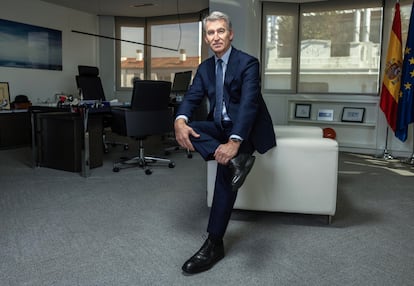
It is Friday morning and the interview is taking place at the PP’s headquarters on Génova Street in Madrid. The bright room once housed the office of Manuel Fraga, who was a former minister under dictator Francisco Franco, as well as one of the architects of Spain’s 1978 Constitution and the founder of the PP.
“No one has occupied it since,” Feijóo says.
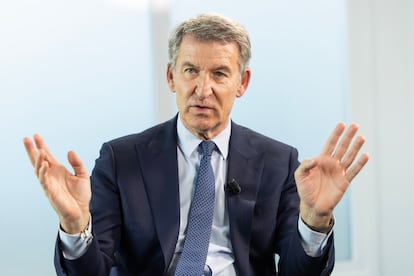
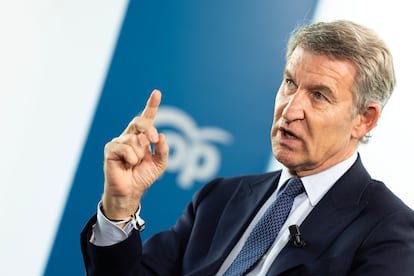
Dressed in a blue suit, matching tie and a finely striped shirt, the candidate is clearly in campaign mode. He has lost weight and does not shy away from any question. After the interview, he heads outside for photographs, where passersby stop to greet him and take selfies.
“There are a lot of PP voters around here. But you have to go to other places,” he says with a smile.
Question. You are leading in the polls, but all indications are that you will need Vox to govern. Are you prepared to form Spain’s first coalition government with the far right?
Answer. Look, this term was dead on arrival. It began with a government that lost the election and was built on concessions in the Criminal Code [related to Catalan separatist leaders], the amnesty law [for those involved in Catalonia’s independence push], and a concealed pact with [the Basque radical nationalist party] Bildu.
It has been three years of inaction, of governing without a budget [a reference to Sánchez’s failure to secure parliamentary approval for a new national budget, forcing the government to roll over previous spending plans]… All of this has dragged on for a long time, and in this campaign the PP has been gaining momentum; it is true that Pedro Sánchez has been managing to neutralize the entire left and absorb it. But we’ll see what the final results look like on November 29.
I am very clear that the best outcome for Spain would be a PP administration governing alone, with the PP holding a comfortable majority in both the Congress of Deputies and the Senate. Because to do what needs to be done, and to do it well and quickly, Spain needs a prime minister with a sufficient majority in Parliament to govern alone.
Q. But you are not ruling out a coalition government.
A. I am a democrat, and I will accept the outcome of the election, as of course I must. We are in power in four regions alongside Vox after winning those elections decisively, because that party demanded a place in government. Had it not done so, we would have had to call fresh elections. I am not going to disown what my party has done. That said, there must be a clear negotiating framework, clear agreements and clear red lines.
Q. Which red lines do you mean?
A. During the negotiations in [the regions of] Extremadura, Aragón, Castilla y León and Andalusia, we established a set of ground rules. I know that saying there can be no agreements outside the Constitution sounds obvious. The point is that, in my view, agreements outside the Constitution were struck in order to sustain this three-year term in office.
Another important issue is that we are a party that supports Spain’s system of regional self-government; Vox does not. We will not accept recentralization; instead, we will strengthen our political and governmental presence wherever it has been scaled back: in Catalonia, the Basque Country, Navarre… And we will establish a well-established policy on equality and rights within our party.
Q. So would you rather keep Vox out of government than bring it into government?
A. The goal is very clear: to have a sufficient majority in the Congress and the Senate and to secure parliamentary support agreements with the third-largest political party, which is Vox. But that will depend on the Spanish people. Is it impossible for that to happen? In my opinion, no.
Q. All right, but if you had to form a coalition government, would you be willing to give Vox control of any of the key ministries, such as the Interior, Foreign Affairs or Defense ministries? Or are those non-negotiable?
A. Whether or not a coalition government is formed does not depend on me. I am very clear about what I want, about my political offer I am putting forward. Look, in all the conversations I have had with the leader of Vox [Santiago Abascal], he has never brought up state ministries or non-state ministries, top-tier ministries or second-tier ministries. We have never spoken about that.
Q. But if negotiations were to take place, you would have to discuss it.
A. When we get to that point, I’ll answer your question. Mr. Abascal has never, and when I say never, I mean never, spoken about deputy prime ministerships or ministries.

03:57
Interview with Alberto Núñez Feijóo (Spanish)
Q. The PP has reached agreements with Vox in the Senate and in several autonomous regions. Aren’t you concerned that this could become a one-way transfer of votes, with Vox ultimately swallowing up the PP, as has happened to mainstream conservative parties elsewhere in Europe?
A. We decided to do so in the Senate because Sánchez changed the rules of the game. He reached an agreement to dilute the PSOE brand in order to exploit the division between the PP and Vox and secure an absolute majority for the [left-wing] Frente Amplio. So we responded. That said, we have not formed a coalition. Had we done so with Vox in the Senate, we would be guaranteed a three-fifths majority.
Q. But that’s different. Frente Amplio is not a threat to the PSOE, whereas Vox is a rising force. Aren’t you legitimizing your rival, the far right?
A. Political parties are granted legitimacy by citizens. Vox is the country’s third-largest political force. Even in voter-transfer data, there are people who previously voted for the PSOE and now say they intend to vote for Vox. I don’t know whether it’s 3%, 4% or 5%…
Q. So are you willing to accept Vox’s policy of “national preference” (giving citizens priority over non-citizens in access to certain public services and benefits)?
A. We have already agreed on what national preference means. And it is not the version proposed by Vox. The criteria we have established in the four regions where we govern alongside Vox cannot be different for the rest of the population. National preference is based on rootedness in Spain, not nationality, and on respect for the Constitution and European treaties; nothing can be agreed that falls outside the Constitution or those treaties. Moreover, in public services, whenever demand exceeds supply, priorities and criteria are established. Certain requirements would apply, such as a minimum number of years on the municipal register and legal residency status…
Q. And isn’t that still drawing a distinction based on nationality?
A. Not based on nationality. This is all set out in writing and has been made public.
Q. But isn’t the very concept of national preference xenophobic, if it means giving nationals priority over foreigners? The concept originated on the French far right.
A. I don’t see why I should have to defend myself against something we are not and have never been. We govern [the exclave cities of] Ceuta and Melilla. Fifty percent of Ceuta’s population is Muslim, but they are Spanish citizens, aren’t they? We live alongside Jews, Hindus, Muslims, Catholics, Christians… And the PP governs there; people vote for the PP election after election.
Q. And when it comes to immigrants, would you maintain universal healthcare for them?
A. Everyone who legally resides in Spain must have access to public healthcare. Those who are in the country irregularly should receive basic healthcare services, including urgent and life-saving care. Beyond that, that’s all I can say. As for what we may do in the future, we’ll have to see. What I’ve described is how the system currently operates. This is how it currently works.
Q. At the moment, healthcare is also universal for people who are in the country irregularly. In other words, they have access to a family doctor, not just emergency care.
A. Right now, the way the healthcare system is operating in the regions is exactly as I described it.
Q. Are you referring to more limited access?
A. The waiting lists are already so long… Right now, it can take 15 or 20 days to see a family doctor. If it takes you 20 days to get an appointment with a primary care doctor, can you really say that there is universal healthcare? Yes, but you’re not actually being seen…
Q. But there is no distinction based on a person’s origin.
A. No, not by origin.
Q. Let’s talk about pensions. Is there a problem with their long-term sustainability?
A. I don’t know why this has become part of the campaign.
Q. Your spokesperson brought it into the campaign by saying the system was going to collapse.
A. That is what the AIReF [Independent Authority for Fiscal Responsibility] says. And so does [Economy Minister Carlos] Cuerpo, who pointed out that the pension agreement calls for increasing contributions and raising the retirement age. I know that when the government draws attention to this, it’s because it has more information than I do. And what I’m saying in this context is that I’m going to adjust pensions in line with the CPI. I’m going to convene the Toledo Pact [the cross-party parliamentary framework for pension reform], the unions, the employers’ association, and the political parties to discuss how to ensure the viability and sustainability of the public pension system.
Q. And do you agree with raising the retirement age?
A. There is a transitional period up to 67 years, isn’t there? That seems a fairly reasonable age to me. And it also seems reasonable that we should allow those who want to keep working to combine employment with receiving part of their pension.
Q. Will you repeal the government’s housing decrees, which include stronger protections against evictions and measures aimed at boosting housing supply?
A. Yes. I have not changed my mind; I voted against them. The decrees harm tenants and owners. And the facts speak for themselves. There is not a single media outlet that has not reported that the number of rental homes is falling, to greater or lesser extent.
Q. You have announced that you want to revise Spain’s abortion law so that parents must be informed when a 16- or 17-year-old seeks an abortion. But if a 16- or 17-year-old wants to terminate a pregnancy and her parents do not, whose wishes would prevail?
A. I believe that debate exists. Why should a 16-year-old not have to give any information to her parents? I spoke with feminist associations that have studied this issue, and they told me that in cases of incest or family abuse, in no case can the parents be informed. But in other cases, it is a debate that can be had.
Q. Will you require parental consent?
A. I have spoken of informing parents, not of getting their consent.
Q. Aside from that, would you leave the rest of the abortion law unchanged?
A. I have already expressed my views on this matter in writing, so that there would be no doubt. We must ensure quality healthcare for women who wish to terminate their pregnancies and also support women who are uncertain because they believe they cannot afford to raise a child. However, if a woman decides to voluntarily terminate her pregnancy within the time limits established by law, she must have access to medical care to undergo a procedure that carries risks if not performed correctly.
Q. Will you continue to use the term gender-based violence and not the euphemism intra-family violence, which Vox uses to dilute the concept?
A. I prefer to speak of male violence against women. There are many people in cemeteries who were killed by their husbands, partners or former partners. There are thousands of orphans. And this government has a very poor record when it comes to women: electronic monitoring bracelets for abusers have not worked; the “Only Yes Means Yes” law has been a fiasco… That whole idea of “I’m a feminist because I’m a socialist” is now behind us.
Q. In the region of Castilla y León, Vox has succeeded in ensuring that no public funding is granted to film productions deemed to involve “ideological indoctrination.” Isn’t it too slippery a concept to decide what is ideological and what is not? Doesn’t that amount to ideological censorship?
A. Culture must be assertive, free. Now, if someone wants to make a film about [the defunct Basque terrorist group] ETA’s “Years of Lead,” certain public administrations will never help them. That is censorship. And if the same thing happens on the other side, it would also be censorship. But using public funds to finance sectarian, partisan, and exclusionary ideological agendas… I don’t think [the measure in Castilla y León] is a bad thing. That said, I understand that it’s not an easy issue — it’s not a matter of simple math. I haven’t seen a specific case in Castilla y León that we can comment on.
Q. Do you welcome the shift in the U.S. midterms, which saw Trump’s Republicans lose ground?
A. The response of U.S. citizens has been so overwhelming that I don’t think the majority are wrong.
Q. Yet the impression is that the PP finds it difficult to criticize Trump despite his disregard for international law.
A. What we find difficult is showing disrespect to Trump, because showing disrespect to the president of the United States is a mistake. And if you’re prime minister, it’s a mistake you cannot afford to make, even if it may serve you politically or nationally. That said, I disagree with Trump and certainly won’t bow down to him. I don’t agree with his tariff policies, nor with certain geopolitical decisions he’s made. But I’m not going to say that the United States is good when one person is in office and evil when another is. It’s the American people who vote.
Q. Will you meet the 5% defense-spending target demanded by Trump: 3.5% on military spending and 1.5% on security?
A. When I have audited the public accounts, I will be able to answer you. If I cannot spend 3.5%, I will have to postpone those decisions, because I will not spend what I do not have, nor will I cut essential public services. Something very strange has happened in my country: for three years, the national accounts have not been submitted. We don’t know what the situation is. Just this Thursday, I spoke with the president of Ukraine, Volodymyr Zelenskiy, and he was surprised to hear this. He told me that they have to approve the budget every year, even while at war.
Q. One leader you did not meet at the Ibero-American Summit was Argentina’s president, Javier Milei. You have distanced yourself from Milei’s rhetoric, but are you comfortable with the fact that the premier of the Madrid regional government, Isabel Díaz Ayuso, has defended him and even awarded him a regional honor?
A. Look, I draw a distinction between a country and its elected leader.
Q. Ayuso awarded the Madrid regional government’s International Medal to Milei, not to Argentina.
A. Do you think suspending relations with Argentina is an appropriate and proportionate response? Why? Because they criticized the prime minister? I’m not excusing Milei’s language, nor do I share it, but if a president criticized me at a political event organized by another party, I would not sever diplomatic relations with that country. [Spain withdrew its ambassador to Buenos Aires in May 2024 after Milei’s remarks about Prime Minister Pedro Sánchez’s wife.] And that doesn’t mean I’m defending that kind of language; in Europe, such rhetoric is incompatible with the diplomatic standards that are essential.
Q. Returning to Ayuso: if you were prime minister and a ministry purchased a €6 million ($6.7 million) residential penthouse to serve as a minister’s office, would you allow it?
A. I learned that the Madrid regional government was looking for a site because it was going to do renovation works. They told me months earlier in an informal chat over coffee, and subsequently a property was purchased. I’ve said that I believe the regional government’s heritage department needs to explain how it came to buy a property when it is not clear whether it could legally be used as administrative office space.
Q. And have those explanations convinced you?
A. What I understand is that they say it is not clear that it cannot be used as an administrative office. I don’t know.
Q. The penthouse is for residential use.
A. If such things happen in a ministry, I will answer you.
Q. You have talked about “repealing Sanchismo.” What do you mean?
A. A profound change in policies, not only of content but also of form. A return to decency as a basic principle. To open a period of ambition and self-esteem. To restore the rule of law. To guarantee the independence of institutions, to have annual budgets again. To respect the Congress and the Senate, not to use royal decree-laws continuously, and to be accountable. And not to lie.
Q. Would you be willing to pursue criminal action against Sánchez?
A. That is up to the judges. But if the Attorney General’s Office makes a proposal, I will not stand in its way. If the Attorney General says: “Listen, we have found rational indications of criminal acts by the prime minister,” then the matter should proceed.
Q. The PP has been involved in major corruption cases. Why should voters believe that there will be no corruption under your government?
A. I have been in government for 14 years and presided over the entity with the largest budget [the health agency Insalud, between 1996 and 2000] for four years, and I have not had a single corruption case. And I also assure you that if I catch someone, I will sack them; I will sack them that very morning.
Q. You say the resignation of Spanish Transportation Minister Óscar Puente is not enough to address political responsibility for the deadly train accident that took place in Toledo in October, following an earlier accident in Adamuz in January. Yet after the catastrophic floods in Valencia, caused by an isolated high-altitude depression (DANA), in which 234 people died, you did not call on PP premier Carlos Mazón to resign, and he took a year to do so. Shouldn’t he have stepped down sooner?
A. The Miño-Sil River Basin Authority [the body responsible for managing the Miño and Sil rivers in Galicia] falls entirely under the authority of the central government. If a dam were to burst tomorrow and I had received no information about it, what is my responsibility?
Q. But in the case of the deadly floods in Valencia, there was information.
A. If you want to talk about responsibilities: in the 10 or 12 days after the DANA, two members of Mr. Mazón’s government resigned. The environment chief and the industry chief [referring to Salomé Pradas, in charge of the Valencia region’s department of Justice and the Interior, and Nuria Montes, regional chief of Industry and Tourism, who were dismissed 17 and 20 days after the floods as part of cabinet reshuffles]. Mr. Puente took 10 months to resign [from the first train accident in Adamuz]. If the government says Mr. Mazón had to go, then why is Mr. Sánchez still there?
Q. You said the handling of the crisis by the Valencian regional government had not been up to the task.
A. Yes.
Q. Do you apply a different standard to your own party?
A. In Valencia, the DANA cost two members of the regional government their jobs. Mr. Puente had a rail accident in January that left 46 people dead, and now it turns out he resigned out of consideration for the victims. Searches are currently being carried out over maintenance contracts and works on that rail corridor. And we’re still being lectured about how we are all the same. Indeed, Mr. Sánchez, not all of us are the same.
Q. Will Mazón remain on the PP’s candidate lists in the next election? Victims have asked him to give up his seat.
A. Mr. Mazón has stepped down as premier of the Valencian government; he has been left to shoulder responsibility for the emergency on his own. He has paid a significant political price. And as for the candidate lists in the Valencia region, we’ll discuss that.
Q. That is what the victims of the DANA are asking for.
A. Yes, well, I won’t recount the requests from the victims of Adamuz or those in Toledo, who are still organizing. Nor those affected by the blackout [in 2025], nor those involved in the 17 corruption investigations… I repeat: in Valencia, two members of the government were dismissed immediately and, once the situation was considered stable, after the initial emergency measures and works had been carried out, Mazón tendered his resignation.
Q. Would you have authorized the use of force against the thousands of migrants who entered the Spanish exclave city of Ceuta in July?
A. Look, the army and the police have protocols, and those protocols are followed. In 2021, 15,000 people entered Ceuta, and we’ve had time since then, haven’t we? Five years have passed! Five years to strengthen the borders, reinforce the Tarajal breakwater [the sea border crossing between Ceuta and Morocco], and restore trust, loyalty and firmness in relations with Morocco. Five years for the police, the immigration authorities and the CNI [Spain’s National Intelligence Center] to warn us about what was happening. It has been a failure in immigration policy and in the protection of our borders.
Q. And do you think Morocco is a reliable neighbor?
A. Reports identifying high-ranking Moroccan police officers facilitating or ordering the crossing… What I don’t know is when Sánchez is going to declassify all the CNI information; he is withholding it even from the judge.
Q. If you come to power, will you declassify it?
A. I don’t like to say things without knowing the effect. But I will hand it over to the judge in full.
Q. Do you fear reprisals from Morocco if you come to power, given the PP’s hard line on the issue?
A. Why? For being frank? Should Spain really fear reprisals from a neighboring country? Spain, which was invaded, whether through action or inaction, perhaps both… should Spain fear retaliation for having been invaded? More retaliation? What I hope for is to restore confidence with Morocco and clarify who was behind this. To know why the interior minister, the defense minister and the prime minister hid information from us. And to tell Morocco that we will never invade them and that we ask for reciprocity. The two states must be allies and collaborators, because that benefits both sides. I am not an enemy of Morocco. Now, I won’t compromise on Spain’s territorial integrity.
Q. What keeps Feijóo, the citizen, awake at night?
A. Not living up to my country’s expectations. Having enough strength, enough information, and the wisdom not to let my country down.
Sign up for our weekly newsletter to get more English-language news coverage from EL PAÍS USA Edition





Alberto Núñez Feijóo
Feijóo, Desde Valladolid: “El PSOE Está A Punto De Canonizar Al Señor Puente, Qué Falta De Respeto”

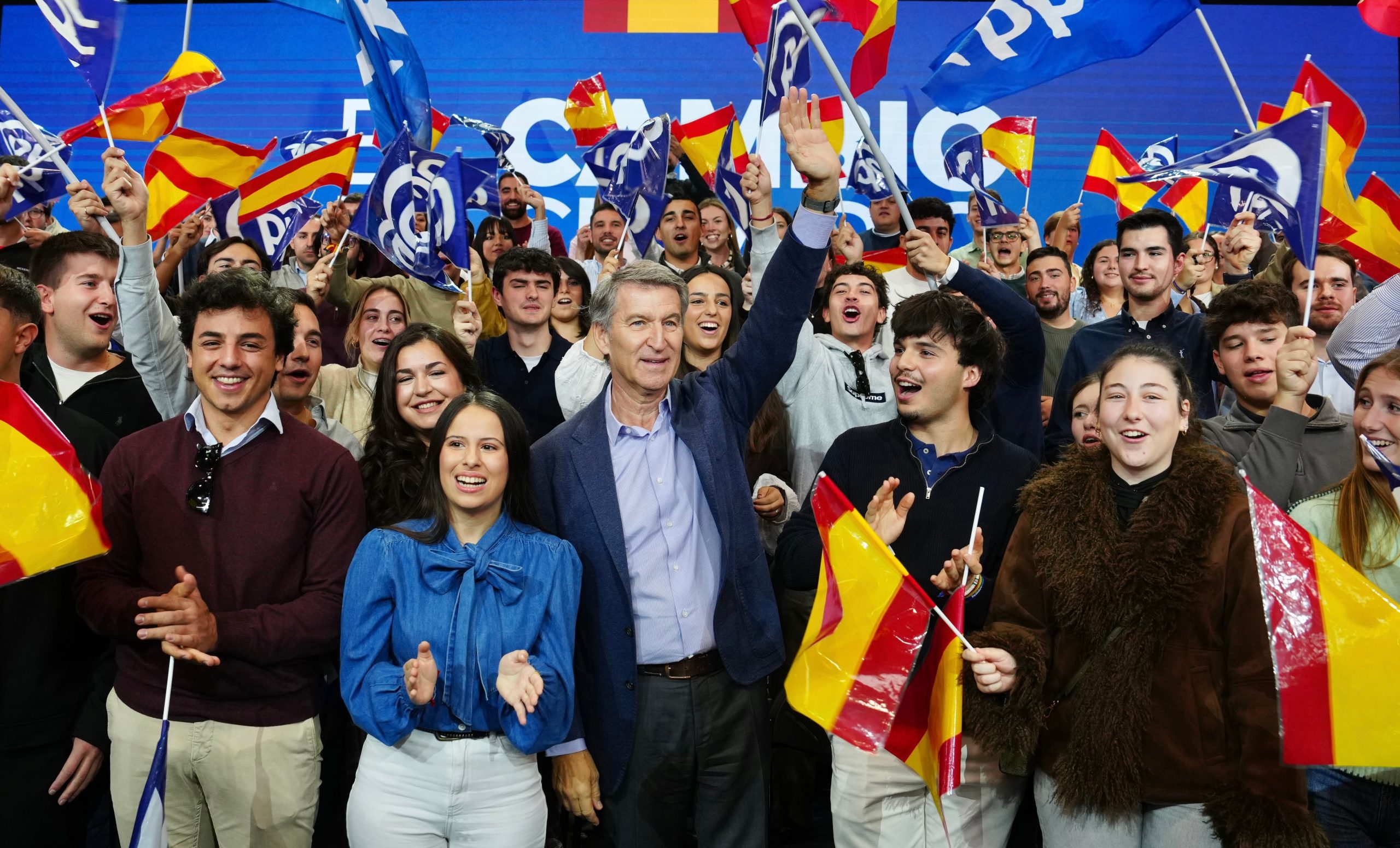
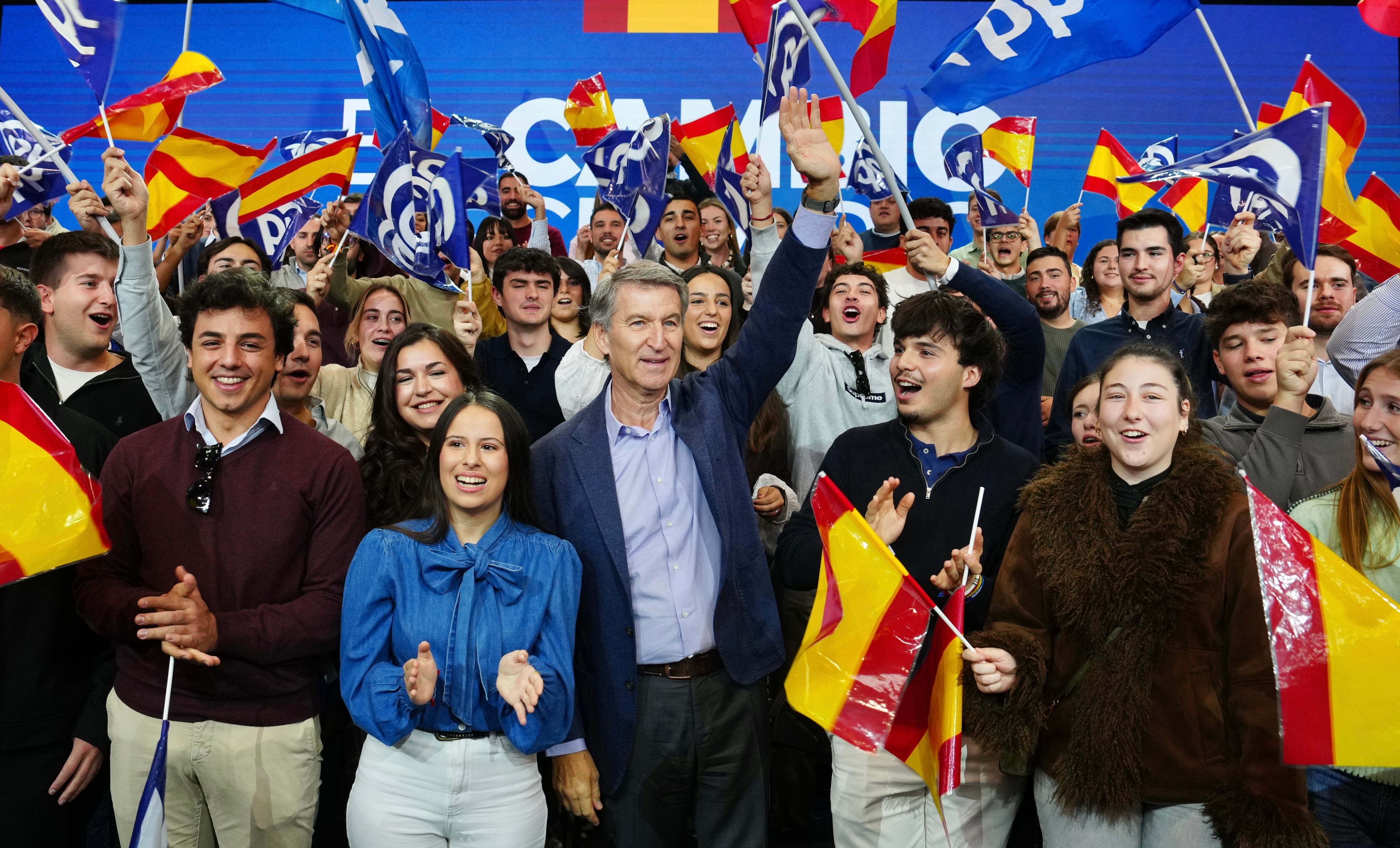
El PP ha elegido Valladolid para retomar los actos de precampaña tras el parón por el accidente de trenes de Urda. Valladolid, ciudad de la que el exministro Óscar Puente fue alcalde durante ocho años. Por eso, Alberto Núñez Feijóo ha querido dejar claro desde el primer momento que la ubicación del mitin de este sábado estaba escogida desde hace tiempo y que, en todo caso, si se tratara de protestar por el accidente de Urda, se habrían plantado delante de La Moncloa, porque para el líder del Partido Popular el culpable máximo del siniestro ferroviario es el presidente Pedro Sánchez y la “corrupción” larvada en el seno del Ministerio de Transportes. Eso sí, Feijóo ha centrado buena parte de su discurso en el siniestro, que dejó 69 fallecidos, y ha censurado que los dirigentes del PSOE y el propio Sánchez defiendan como “dignidad” política el gesto hecho por Puente al dimitir.
Accidente trenes Urda
Última Hora De La Actualidad Política Y El Accidente De Trenes De Urda, En Directo | El Presidente De Adif, Luis Pedro Marco De La Peña, Dimite Tras La Salida De Puente

Alberto Núñez Feijóo
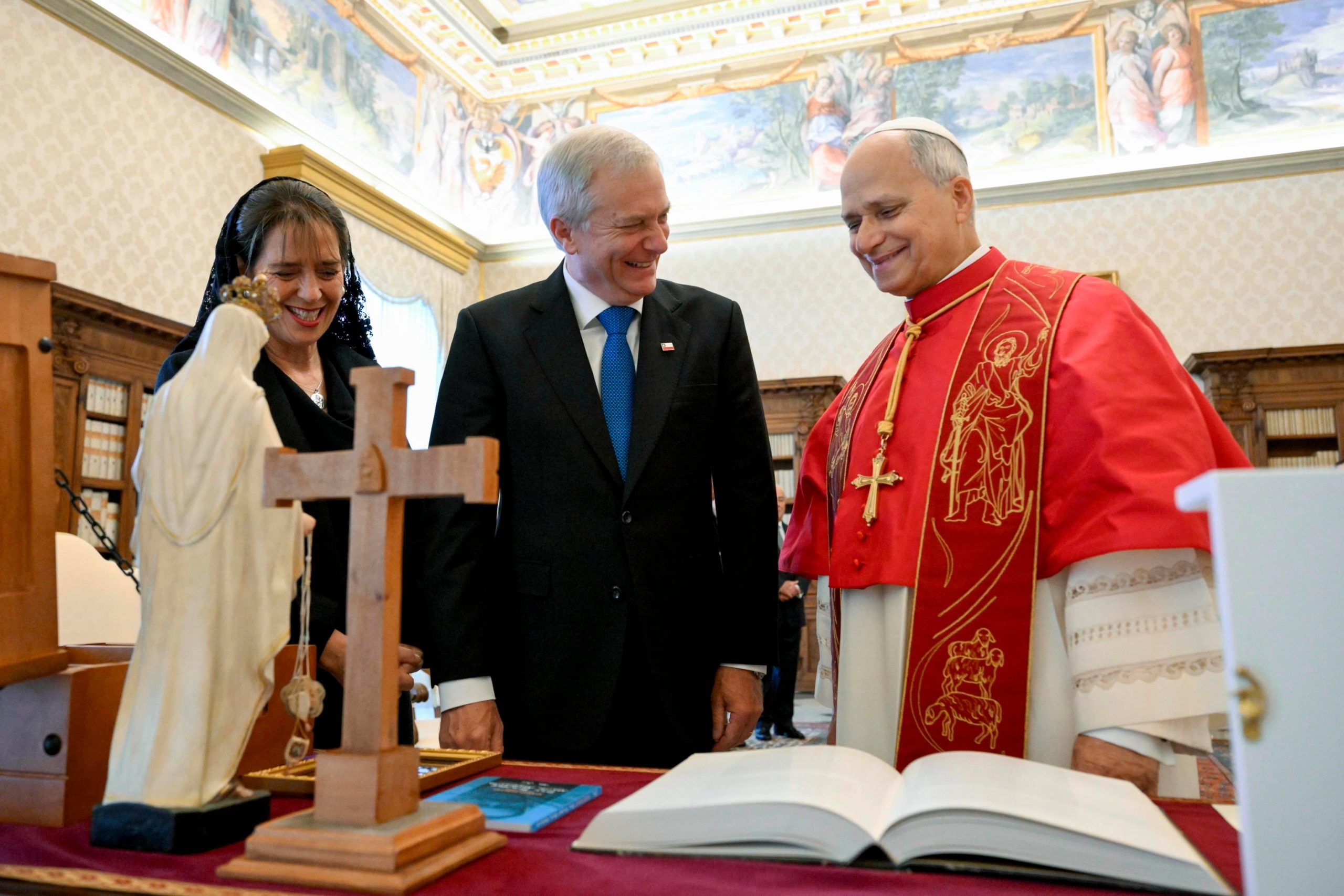
Kast Visita Al Papa Y Defiende Sus Reuniones Con El Líder De Vox Y Meloni: “Nadie Podría Decir Que Es Una Gira De Carácter Ideológico”

What Are The Steps To Follow In Spain If Someone Is Having A Stroke?

Alberto Núñez Feijóo, Spain’s Opposition Leader: ‘Whether A Coalition Government With Vox Is Formed Does Not Depend On Me’

Torremolinos At Major Annual Dog Event
Viral video in Spain sparks fury over drivers who ‘have no idea how to drive’
Spain’s 24-hour shop with no tills expands to Barcelona Airport
Spain’s pet owners face fines of up to €200,000 for animal welfare offences


-
DGT3 weeks ago
Viral video in Spain sparks fury over drivers who ‘have no idea how to drive’
-
Automated supermarket4 weeks ago
Spain’s 24-hour shop with no tills expands to Barcelona Airport
-
Keeping cats and dogs outside4 weeks ago
Spain’s pet owners face fines of up to €200,000 for animal welfare offences
-
Council tax (IBI)3 weeks ago
Barcelona plans 150% property tax increase on tourist flats ahead of 2028 ban
-
Age Concern Marbella - San Pedro2 weeks ago
Halloween lunch sells out as 51 join Marbella get-together
-
airports4 weeks ago
Travelling between Spain and Italy? The extra border checks could soon end
-
Consumer Rights Spain3 weeks ago
EU offers extra year of warranty on phones, but Spain faces delays
-
Bedbug infestation on Quantas flight4 weeks ago
Bedbug infestation grounds Qantas plane in Rome after passengers report bites