Connect with us

%

Alex Batty On Escaping Mum’s Off-Grid Life In Spain And France

Published

on

alex-batty-on-escaping-mum’s-off-grid-life-in-spain-and-france

Alex Batty – Then and now. Credit: Archive & screenshot from BBC

Alex Batty, the child who disappeared kidnapped by his own mother and grandfather, has shared the raw details of his disappearance in the new BBC programme Kidnapped By My Mum. The documentary outlines his path across Spain and France after he vanished at age 11 from Oldham in Greater Manchester and escaped the clutches of his mother.

Planned holiday to Marbella turned into a vanishing act

Alex travelled to Spain in October 2017 at age 11 with mother Melanie Batty and grandfather David Batty. Family members had said the outing was a short holiday to Marbella. At the time, his grandmother Susan Caruana was serving as the legal guardian back home in Greater Manchester and expected the trio home within a week after their holiday. Neither Melanie nor David held legal guardianship rights over the boy. Alex was seen for the last time at Malaga port on the scheduled departure day before the group failed to return. This absence quickly turned into a global missing persons alert and abduction suspicions that lasted years.

Isolation defined daily existence for young Alex

Nomadic routines kept Alex away from mainstream society during those years. Hippy communes and caravans in remote areas of Spain, Morocco and south-west France formed his world. Melanie Batty and grandfather David Batty enforced a lifestyle cut off from basic amenities and any formal schooling.

Alex heard school bells ring nearby and felt deep longing for normal childhood routines. At one moment in the filming of the documentary he breaks down in tears and admitted he could no longer continue that lifestyle. Spiritual demands and anti-establishment views dominated conversations with his mother rather than normal childhood mother and child topics. Disagreements often escalated into loud rows that ended with Alex being forced to sleep in a tent while Melanie stayed in a warm campervan.

Frustration built until daring break for freedom

Alex reached breaking point after years of fights with his mum. Constant pressure to pursue spiritual and inner work collided with his own independent thinking as he began to grow into an adult at around 15. He became tired of the off-grid existence and just wanted to be a normal kid.

Alex knew the family planned another move soon, so he timed his departure to leave no trace for police. He ended up walking four days across the Pyrenees, travelling at night and resting during daylight hours to stay hidden.

Escape across the Pyrenees led to dramatic discovery

Four days of walking through the French countryside brought Alex to safety in December 2023. A delivery driver spotted the then 17-year-old near Toulouse at 3am carrying only a backpack, torch and skateboard. Alex survived on food scavenged from fields and gardens during his nighttime trek. Police in Greater Manchester launched a criminal investigation into the alleged abduction shortly after his return.

Family chooses closure over prosecution

Greater Manchester Police dropped the child abduction probe in January 2025. Officers cited no realistic chance of successful court action and confirmed the family opposed charges. Alex had long feared imprisonment for his mother and grandfather. His grandmother Susan Caruana, who served as legal guardian, supported that outcome. Melanie Batty and David Batty declined requests for comment in the BBC documentary. French social services also stayed silent on the specific case due to confidentiality rules.

Alex Batty rebuilds life back in Britain

Alex passed maths and English GCSE exams after settling back in the UK. He welcomed a baby daughter in January this year. Speaking directly to the BBC crew, Alex described his bond with Melanie, his mother, as complicated. A feeling of annoyance is still there over missed education opportunities and experiences, yet conversations during filming helped him understand her motivations.

He expressed hope of one day rebuilding ties with his mother and sharing enjoyable moments without past conflicts. Campsite owners in France had contacted social services about the family, but officials said they lacked authority because Alex held foreign status and carried no clear identity details. Alex voiced frustration that authorities took no further steps despite those alerts.

How to stream kidnapped by my mum

The programme aired on BBC Three at 9pm and BBC One at 10.40pm on May 13. Viewing it for those in Spain is difficult, as BBC iPlayer is technically blocked. But, for those who do manage to see it, Alex’s account offers fresh insight into a case that once gripped national attention and provoked global searches.

%

SIPS First Foray Onto The Costa Del Sol

Published

on

sips-first-foray-onto-the-costa-del-sol

Barcelona’s SIPS has been named the World’s Best Bar by The World’s 50 Best Bars. Also ranked in the global top three every year since 2022 and impressively crowned Best Bar in Europe for three consecutive years. Now it is coming to Marbella. SIPS has announced a residency at the Bar La Plaza in the luxurious Puente Romano resort. 

A bar built by two of the industry’s most decorated names

SIPS opened in Barcelona in 2021 as the brainchild of Marc Alvarez and Simone Caporale. Caporale previously led the team at Artesian in London, where the bar claimed the World’s Best Bar title four consecutive times, a record that still stands. Alvarez, who is known throughout the industry as one of the world’s leading mixologists, has built his reputation on technical precision and an uncompromising approach to quality.

In 2023, SIPS claimed the No.1 spot at The World’s 50 Best Bars, earning both the World’s Best Bar and Best Bar in Europe titles simultaneously. It has retained the Best Bar in Europe title in 2024 and 2025, ranking No.3 globally in both years. At the 2025 ceremony held in Hong Kong, Caporale was additionally honoured with the Industry Icon Award, one of the most prestigious individual accolades in the drinks world.

La Plaza at Puente Romano is the perfect fit and just makes sense

Now Marbella gets to enjoy some of SIPS creations. Bar La Plaza sits at the centre of Puente Romano Marbella, a luxury resort that is also home to Nobu, GAIA, Leña  and Cipriani. It oozes sophistication, so this residency with its creative mixology programme sits perfectly as a collaboration. 

What will I be sipping this summer at SIPS

Bar La Plaza by SIPS will carry a menu representing the bar’s creative range. Confirmed cocktails include the Bubble Pornstar Martini, vodka, coffee reduction, passion fruit and vanilla, the Paloma Santoni Spritz, made with white tequila and Amaro Santoni and the Maple Wood Old Fashioned, maple syrup, fragrant sherry and tonka bean. All a true reflection of  SIPS approach of working with clean, identifiable flavours and avoiding unnecessary complexity.

How to book your table

Bar La Plaza is open daily from 6pm to 3am, with reservations available on (+34) 682 112 233. Given the reputation that precedes SIPS and the popularity predicted by this residency, booking early is advisable.

Continue Reading

%

Mijas II Festival Somos Uno 2026

Published

on

mijas-ii-festival-somos-uno-2026

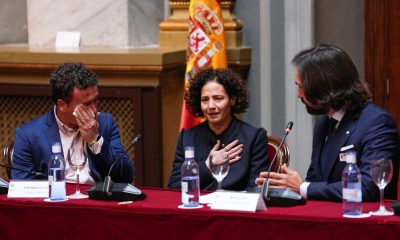
Presentation announcement of Somos Uno 2. Credit: Ayuntamiento de Mijas

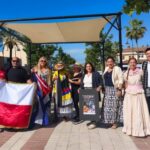
Everyone in Mijas and surrounds will soon be able to enjoy the live music, international gastronomy and traditional dances at the II Festival Somos Uno (we are one). Organised by the Asociación Cubanos Unidos, the multicultural celebration takes place on the boulevard in La Cala de Mijas from 28 to 31 May. Opening times stretch from 12pm to midnight each day to maximise enjoyment for locals and tourists. Last year’s event was a huge hit with everyone that had the whole of La Cala de Mijas dancing in the streets.

Countries participating in II Festival Somos Uno Mijas

Representatives from eleven nations will be contributing cultural and gastronomic elements to the festival. Argentina joins the Netherlands, Mexico, Cuba, Venezuela, Colombia, Uruguay, Spain, Peru, Chile and Italy in this celebration of unity. Stands will be offering traditional food, drinks and crafts from each country throughout the event duration. Participants share their heritage in a spirit of friendship and mutual understanding.

Activities planned for the II Festival Somos Uno

Live performances are scheduled to entertain crowds during afternoon and evening slots. Folk exhibitions and typical dances entertain visitors while international cuisine satisfies appetites.

Cultural integration receives encouragement through this gathering that promotes respect and exchange on the Costa del Sol. Neighbours and guests experience a space where cultures unite via music, art and tradition.

Collaboration behind the II Festival Somos Uno

Support comes from the Mijas Council plus the San Miguel brand. After the success of last year’s event, this collaboration makes the occasion one of the key multicultural appointments in the area. Local authorities are working to make sure of the success of such initiatives that bring communities closer.

Comments from Mijas councillor on Festival Somos Uno

Commitment to diversity and coexistence receives reaffirmation with the second year of the festival. Different cultures constitute one people under a shared message explained by Vía Pública councillor Melisa Ceballos. Her words stress the importance of this annual gathering for encouraging positive relations among residents from multiple backgrounds. Such events strengthen community bonds.

Continue Reading

%

Giant Solar Hole Now Facing Earth

Published

on

giant-solar-hole-now-facing-earth

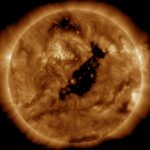
Scientists are monitoring a giant coronal hole on the Sun that could trigger geomagnetic activity and rare auroras this week. Credit sdo.gsfc.nasa.gov

Astronomers and space weather experts are closely monitoring a massive coronal hole on the Sun that is now directly facing Earth and could send strong solar winds towards the planet from May 15. Scientists say the phenomenon may lead to geomagnetic disturbances capable of affecting radio communications, GPS systems and satellites, while also increasing the chances of rare aurora displays appearing much further south than normal.

There is no danger to people on Earth, experts stress. Our planet’s magnetic field and atmosphere continue protecting us from harmful radiation linked to solar activity. But events like this are still taken seriously because modern life depends heavily on technology that can be sensitive to geomagnetic storms.

The timing has attracted particular attention because solar activity has remained unusually intense over recent months, producing spectacular northern lights in places where they are almost never seen.

Now scientists are waiting to see how strongly the incoming solar wind interacts with Earth’s magnetic field once it arrives later this week.

What exactly is the giant ‘hole’ scientists are tracking?

Despite the dramatic headlines circulating online, the Sun has not literally developed a hole.

What scientists are observing is something known as a coronal hole, a region in the Sun’s outer atmosphere where magnetic fields open up and allow charged particles to escape into space much more easily.

These areas often appear darker in solar images because they are cooler and less dense than surrounding regions.

The important part is not how they look, but where they are positioned. When a large coronal hole turns directly towards Earth, the solar wind released from it can travel straight towards our planet at extremely high speeds.

That flow of charged particles can then interact with Earth’s magnetosphere, the invisible magnetic shield surrounding the planet.

According to astronomers monitoring the event, the current coronal hole is both large and positioned in a particularly active area of the Sun, making it capable of producing stronger solar wind streams over the coming days.

Space weather specialists have therefore been following developments very closely ahead of the expected arrival of the solar wind from May 15 onwards.

What people on Earth could actually notice

For most people, the effects may end up being minimal. Scientists continue insisting there is no direct health risk to the public from this type of solar activity. But technology can sometimes react differently.

Moderate geomagnetic storms have the potential to interfere temporarily with GPS precision, radio communications and some satellite operations. Airlines, navigation systems and power operators also tend to monitor these events carefully whenever solar activity increases.

That does not mean major blackouts or widespread disruptions are expected.

In most cases, events of this scale pass with limited impact. Still, experts pay close attention because stronger geomagnetic storms have caused serious technological problems in the past.

One possible side effect attracting excitement rather than concern is the chance of seeing auroras much further south than usual.

Over the past year, northern lights became visible across parts of Europe and North America where sightings are normally extremely rare.

Photos of skies glowing pink, green and purple spread rapidly online during previous geomagnetic events, surprising many people who had never seen auroras outside Scandinavia or Iceland.

If the incoming solar wind interacts strongly enough with Earth’s magnetic field again, similar scenes could become visible in parts of Europe over the next few days.

That possibility is one reason why amateur astronomers and photographers are already keeping a close eye on forecasts.

Why solar storms worry scientists more today than in the past

Interest in space weather has grown sharply over recent years because modern societies are far more dependent on vulnerable technology than they were in the past.

Satellites, GPS navigation, aviation systems, communications networks and electricity infrastructure can all potentially be affected during major geomagnetic storms.

That concern explains why governments and space agencies invest heavily in solar monitoring systems designed to track activity on the Sun continuously.

The event scientists still talk about most is the Carrington Event of 1859, considered the strongest solar storm ever recorded.

At the time, telegraph systems across Europe and North America reportedly failed, with some operators receiving electric shocks and telegraph lines even catching fire.

Back then, the world relied far less on electrical technology than it does today.

Experts believe a solar storm on that scale now could create enormous economic disruption because modern infrastructure depends so heavily on electronic systems and satellites.

That does not mean the current event is expected to reach anything close to those levels. Scientists monitoring the coronal hole are describing it as significant, but not catastrophic.

Even so, events like this remind researchers how closely daily life on Earth remains connected to activity happening millions of kilometres away on the surface of the Sun.

The Sun is entering a particularly active period

Another reason scientists are paying attention is that the Sun is currently moving through one of the most active phases of its natural cycle.

Solar activity rises and falls over roughly 11 year periods. During more active phases, the Sun produces more sunspots, solar flares and coronal holes capable of generating geomagnetic storms.

That increase has already been noticeable throughout the past year.

Several strong solar events produced widespread auroras and raised concerns among satellite operators and communications agencies monitoring space weather conditions.

Researchers expect this active period to continue for some time, meaning similar solar events could become more frequent over the coming months.

For now, scientists are continuing to monitor the incoming solar wind closely while reassuring the public that there is no reason for alarm. But if skies suddenly light up with unusual colours later this week, many people across Europe may end up looking towards the night sky for a very different reason.

Continue Reading

Trending

Copyright © 2017 Spanish Property & News