Connect with us

%

Almost 400 Motorists Caught In Bizarre German Speed Camera Trap

Published

on

almost-400-motorists-caught-in-bizarre-german-speed-camera-trap

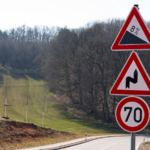
Police say the sign had been constructed from a round 70 km/h sign. Photo credit: Mentor Beqiri/Shutterstock

When driving on a motorway, you generally trust the signs telling you what speed you can legally travel. You are hardly going to pull over and investigate whether somebody has quietly put up a fake one, particularly when it looks like an ordinary road sign.

That is the bizarre situation motorists found themselves in on a road in Haldensleben, Germany, after an unknown person interfered with the speed limit next to a mobile speed camera.  It looked convincing enough to affect what drivers believed they were legally allowed to do. By the time authorities realised what had happened, the consequences had already become a headache for the town, and for hundreds of motorists who had been caught on camera.

The fake sign looked convincing

The bizarre incident happened on Magdeburger Straße, a main route into Haldensleben in Saxony-Anhalt. The road is surrounded by businesses and petrol stations, meaning a change to the speed limit did not necessarily look suspicious to passing motorists. The fake sign showed a maximum speed of 70 km/h, despite the actual limit being 50 km/h. It had been put up independently and was not an official traffic sign issued by the authorities. 

Police say the sign had been constructed from a round 70 km/h sign, a stand and a metal pipe. While officials noticed differences between the homemade setup and the equipment normally used by the authorities, it was apparently convincing enough to affect drivers passing the location. There was an important detail that the person putting up the sign presumably knew: a mobile speed camera was operating on the same stretch of road.

Almost 400 drivers caught by the camera

Between September 4 and September 6, the camera recorded almost 400 photographs of vehicles exceeding the 50 km/h limit and issued the fines. For a driver who had just passed what appeared to be a legitimate 70 km/h sign, being photographed at 60 or 65 km/h would have seemed particularly unfair. From their point of view, they were below the speed shown on the sign.

The problem became even bigger for the authorities once they discovered that the sign had been placed there illegally. The city removed the fake sign, but by then hundreds of photographs had already been taken. What happened next was an unusual twist: the motorists caught by the camera fortunately did not end up paying the fines. 

Almost 400 cases had to be dropped

The city of Haldensleben ultimately had to discontinue all the affected penalty proceedings from that weekend. The reason was not simply that there had been a fake sign. Authorities could not establish beyond doubt exactly when the sign had been put up. Without knowing the precise point at which the fake 70 km/h limit appeared, it was impossible to determine with sufficient legal certainty which drivers had passed the camera while the misleading sign was in place.

That meant the cases could not simply be pursued on the basis of the camera photographs. The decision even affected motorists who had been travelling faster than 70 km/h. The city therefore lost the fines that could otherwise have been issued from the affected measurements. 

Police believe it was deliberate

Authorities are not treating the incident as someone putting up a strange road sign for a laugh. Police believe the unknown person may have deliberately wanted to mislead motorists and cause them to exceed the genuine 50 km/h limit, knowing that the speed camera was operating nearby.

The police have opened an investigation for Amtsanmaßung, a German offence involving unlawfully assuming or exercising an authority that belongs to a public official. They are also describing the incident as a dangerous interference with normal road traffic. There is currently no identified suspect but police have appealed for witnesses who may have seen someone putting up the sign or noticed suspicious activity around the location.

The sign was removed, but the damage was already done

Once the authorities discovered what had happened, the homemade sign was taken down.That solved the immediate problem for motorists, but it could not undo the hundreds of speed-camera photographs already recorded over those three days. The incident has left Haldensleben with an unusual outcome: almost 400 motorists were caught by a speed camera, yet the uncertainty surrounding a single roadside sign meant the resulting penalty cases had to be abandoned.

For drivers, there is also an obvious lesson in how easily a convincing piece of roadside equipment can create confusion. The sign looked official enough to influence traffic, while the camera continued operating according to the actual 50 km/h restriction. And whoever put it there remains unknown.

%

Spain Payslip Change Coming In January 2027

Published

on

spain-payslip-change-coming-in-january-2027

Workers in Spain will see their MEI contribution rise from January 2027. Credit : Quisquilia, Shutterstock

Workers in Spain will see a small deduction from their paychecks starting in January 2027. This is due to an annual increase designed to help fund the country’s pension system.

Intergenerational Equity Mechanism (MEI) is a Social Security tax that you probably have noticed in your monthly paycheck deductions. Beginning on January 1, 2027, the employee’s share of this social security tax will increase from 0.15 per cent to 0.17 per cent of the contribution base. The change is part of a schedule set in Spanish social security law, not a new tax announced for 2027.

For most workers, the change will be modest. Someone who contributes €2,000 per month will pay €3.40 per month in 2027, compared to €3 in 2026. That’s 40 cents less each paycheck, or 4.80 per year, assuming the contribution base does not change.

But how much will be deducted from your salary, and where on your payslip do you find the figure?

Spain payslip changes in 2027: how much will you actually pay?

The amount is determined by the Social Security contribution base and not just the net salary you get in your bank account.

For the employee’s contribution to the MEI for 2027, use the contribution base for common contingencies as stated on the employee’s payslip and multiply it by 0.0017.

For example, a worker with a €1,500 monthly contribution base will pay €2.55 a month, up from €2.25 in 2026. At €2,000, the deduction increases from €3 to €3.40. A €2,500 contribution base means a rise from €3.75 to €4.25, while someone on a €3,000 base will see the contribution increase from €4.50 to €5.10.

The 0.17 percent is the worker’s total MEI contribution for 2027, not the rate of increase. The yearly increase in the MEI is 0.02 percent.

For an employee who maintains a €2,000 contribution base throughout the year, they will pay €40.80 for their MEI in 2027. In 2026, the cost of the MEI was €36.

And employees are not footing the entire bill.

Employers will contribute considerably more. The combined MEI rate will rise from 0.90 per cent in 2026 to 1 per cent in 2027, divided between 0.83 per cent paid by the employer and 0.17 per cent by the employee. Spain’s official legislation confirms that scheduled split.

On a contribution base of, for example, €2,000, the employer would pay €16.60 and the employee €3.40, resulting in a total MEI contribution of €20.

The employer’s share does not come out of the worker’s take-home salary.

Why Spain is taking more from workers’ payslips for pensions

The MEI has been in operation since 2023 and aims to enhance the long-term sustainability of Spain’s Social Security system.

The money goes into the Social Security Reserve Fund, also known as the pension piggy bank in Spain. The country is gearing up for the coming boom in the pension system as large generations come to retirement. However, the contribution does not increase the individual worker’s pension benefits.

And the January 2027 increase will not be the last. According to the plan, the employee’s contribution is to reach 0.18 per cent in 2028 and 0.20 per cent by 2029. In 2029, the combined employer-employee contribution will be 1.20 per percent, which is slated to stay until 2050.

For those wondering where their money is going, the MEI will normally appear on the pay stub under social security contributions and deductions. Sometimes it will be explicitly stated as MEI or Mecanismo de Equidad Intergeneracional.

Will your take-home pay actually fall in January 2027?

Not necessarily.

Although the MEI deduction will be higher, this does not mean that the amount you receive in January will be less than what you received in December.

The increase in salary, change in working conditions, or personal income tax deduction changes may affect the final calculation. The most effective way to measure the impact of the MEI is to compare the contribution base and the MEI deduction on the December 2026 and January 2027 pay stubs.

For most employees, this increase is just a few dozen cents per month and not a drastic cut in take-home pay. But given how closely families are already monitoring their budgets, this is another thing that may get noticed when people get their first paycheck of 2027.

And unlike many January surprises, this one is already written into the calendar.

Continue Reading

%

Literary Stars Descend On Mallorca

Published

on

literary-stars-descend-on-mallorca

American writer Anna Todd explores Mallorca before her appearance at FLEM festival Credit: Instagram/AnnaTodd

Bestselling American author Anna Todd was among the biggest names at this year’s FLEM literary festival, joined by British writers as Magaluf put books and culture centre stage.

Anna Todd brings Mallorca novel home

Anna Todd returned to Mallorca this week to present Sunrise: The Last Sunrise, her latest novel and the first of her books to be set on the island.

The American author, best known for her global After series, appeared at the Festival de Literatura Expandida de Magaluf (FLEM) on Saturday, October 3, in what was her only appearance in Spain this year.

Sunrise, published in 2026, follows 23-year-old Oriah Pera, who travels to Mallorca with her mother and finds herself at a turning point in her life. A trip to the beach leads to a meeting with Julián, a local Spanish man, and a summer romance that becomes part of Oriah’s journey into adulthood.

Mallorca is therefore far more than a backdrop in Todd’s latest work. The island provides the setting for Oriah’s summer, her relationship with Julián and the experiences that force her to reassess her life.

The novel also touches on some of the tensions surrounding modern Mallorca, including the contrast between the island’s appeal to international visitors and the concerns of people living there. Todd discussed the book during her FLEM appearance, which came as she returned to an island that has become increasingly important to her work.

From After to Mallorca

Todd shot to international fame with After, which began as fan fiction before becoming a publishing phenomenon.

The series has been translated into 35 languages and sold more than 12 million copies worldwide, making Todd one of the most commercially successful authors of her generation. She has also worked as a producer and screenwriter on film adaptations of her books.

Her other work includes The Brightest Stars, The Spring Girls and the After graphic novels, while The Last Sunrise marks her latest move into a story rooted in Mallorca.

That connection gave FLEM a particularly strong local hook, with readers able to hear directly from an internationally successful author about a novel inspired by the island.

British authors join international line-up

Todd was not the only international literary star at FLEM 2026.

The festival’s programme included British novelist Anna Hope, author of Expectation, Wake, The Ballroom and Albion. British writer and journalist Lara Pawson also appeared, taking part in a conversation with Mallorcan author Aina Fullana.

Another British name on the 2026 programme was Ben Brooks, who appeared in conversation with German-Afghan writer and poet Aria Aber.

The international line-up helped make the sixth edition one of FLEM’s biggest yet, with more than 30 writers, artists and creators taking part.

Magaluf’s literary transformation

Held from October 1 to 4, the 2026 festival moved to a new home at INNSiDE Wave Calvià, bringing literature, music, podcasts, art and live events together under one roof.

FLEM is organised by independent Palma bookshop Rata Corner and INNSiDE by Meliá, with the aim of bringing literature to new audiences and challenging the traditional image of a literary festival.

The 2026 programme also introduced the new FLEM-Magaluf Novel Prize and a literary residency, adding a stronger focus on supporting emerging writers.

More than 13,000 people attended this year’s four-day festival, according to post-event coverage, an eight per cent increase on 2025.

For four days, Magaluf became an unlikely meeting point for bestselling authors, emerging writers and readers, with Anna Todd’s Mallorca-set novel providing one of the clearest links between the island and the international literary world.

Continue Reading

%

Spanish Court Left In Shock As Domestic Abuse Victim’s Pet Is Dragged Into Violence

Published

on

spanish-court-left-in-shock-as-domestic-abuse-victim’s-pet-is-dragged-into-violence

she eventually decided to leave the home on January 16. Photo credit: Borys Vasylenko/Shutterstock

For many people, a beloved pet is part of the family. So imagine being in an abusive relationship where that animal also becomes a victim, used as another way for someone to frighten, control or punish you. It is a particularly cruel form of abuse because the threat is not only against you, but against something you love and cannot protect from the person hurting you.

That is what a woman experienced during a relationship that involved years of threats, violence and intimidation. A court has now sentenced her former partner to more than four years in prison after hearing how he used her pet rabbit in one of the most disturbing episodes of abuse in the case.

Shocking act of violence towards a pet

Recent reports indicate that woman’s then partner killed the rabbit in front of her before cooking it and then trying to force her eat it, according to the court. The animal was used as part of a deliberate campaign of humiliation and terror against its owner.

The events took place in Montserrat, Valencia, between December 27 and 29, 2021. According to the court’s findings, the abuse began after an argument in which the woman accidentally spat at her partner while blowing hair off of a shaving machine. His response was to tie her up, put a knife to her neck and threaten to kill her.

The abuse progressed

He also threatened to throw her alive into a fireplace and told her there would be blood that night. The woman was eventually untied, but the violence continued. The man forced her hold her rabbit by its legs while he killed the animal with a knife in front of her, telling her he was doing it so she would learn a lesson.

When she escaped to the bathroom and locked herself inside, he broke through the door, dragged her back into the dining room and made her look at the dead rabbit. He then smeared the animal’s blood over her face. Hours later, he cooked the rabbit and tried to make her eat it.

The killing of her pet formed part of a pattern of abuse that the woman had suffered throughout the relationship. The court heard that she was subjected to repeated physical attacks, threats and degrading treatment between October 2021 and January 2022. On one occasion, the man hit her on the head, arms, legs and face with a stick. On another, he tied her hands and feet, put her face down and threatened to cut her throat and throw her into a fireplace.

Abuse continued until she left

She was also forced to kneel on rice scattered across the floor for an hour while being beaten, including punches to her eyes. In January 2022, he punched her in the nose because, according to the court evidence, she was talking too much. When she finally found the courage to eventually leave the home on January 16, he grabbed her by the hair and punched her in the left eye. She reported the abuse the following day after a Guardia Civil patrol attended the property.

The court found that the relationship involved a continuing situation of power and domination, with the violence making living together unbearable. The sentence includes convictions for four offences of physical abuse in the context of gender violence, injury, continuing threats, habitual abuse, an offence against moral integrity and animal cruelty. He must also pay his former partner €3,420 in compensation, while a 1,000-metre restraining and no-contact order has been imposed for 24 years. He has also been banned from working with animals or keeping them for three years.

Abuse can take many forms

Physical violence is only one form of abuse. Physical abuse can include hitting, kicking, choking, burning, restraining someone or using a weapon against them, while psychological and emotional abuse can involve constant humiliation, insults, intimidation, threats, manipulation or deliberately making someone afraid.

Sexual abuse includes sexual activity without consent, unwanted sexual contact and being pressured or forced into sexual acts. Economic abuse can mean controlling someone’s access to money, taking their income, preventing them from working or deliberately making them financially dependent.

Coercive control can include monitoring someone’s movements, controlling who they see or speak to, isolating them from friends and family, dictating what they wear or using threats to make them comply. Pets can also become part of that pattern, with an abusive partner threatening, harming or killing an animal because they know how much it means to the person they are trying to control.

Help is available in Spain

Spain takes domestic violence and abuse very seriously and you do not have to wait for physical violence to begin before asking for help. If someone is frightening you, controlling you, belittling you, threatening you, isolating you or making you feel that you cannot leave safely, those are all reasons to seek support, it is never your fault and you never deserve it. Experts warn that abusive behaviour rarely changes for good without intervention and years of therapy, and can become more severe over time, making it important to seek support sooner rather than later.

Spain’s 016 service provides free and confidential information, legal advice and psychological support for victims of gender violence. It can also be contacted by friends, family members or anyone concerned about someone who may be experiencing abuse. The service can be reached through WhatsApp on 600 000 016. If you are in immediate danger, call 112. Remember, your voice is your power, don’t be afraid to speak up and speak out.

Continue Reading
Advertisement
Advertisement

Spanish Real Estate Agents

Tags

Trending

Copyright © 2017 Spanish Property & News