Connect with us

%

Italian Restaurant Bans Phones At The Door

Published

on

italian-restaurant-bans-phones-at-the-door

A high‑altitude dining room in the Italian Alps is insisting guests leave mobiles in lockers before sitting down. As noise, privacy and “content fatigue” grow, will venues across Spain restrict devices or even follow the no‑phone model?

What’s happening at Yera, the €650 no‑phone restaurant

Set inside the five‑star Forestis hotel above Bressanone (South Tyrol), Yera seats just 18 guests at 1,800 metres and runs a fixed‑price menu at €650 including food and drinks. Chef Roland Lamprecht frames the experience as “forest cuisine”, built around fire, foraging and hyper‑local ingredients such as hare, roe deer and wild berries, finished tableside at a central hearth. Drinks avoid big‑label wines in favour of low‑ABV ferments, kombuchas and infusions capped at around 5%.

Privacy is part of the product. The dining room built from red Peitlerkofel earth, wood and stone, is designed to feel cave‑like, with “opacidad mediática total” (designed for near‑total privacy”) ensuring minimal imagery circulates online. Guests are led in near‑darkness along a torch‑lit path to a two‑storey “sanctuary”. The rule is non‑negotiable: phones and cameras must be locked away before entering.

Yera’s policy is  very in keeping with the overall restaurant feel and vibe, but should there be more focus to remove the race to frame the perfect Instagram shot while food cools in more establishments not just high end dining? By removing devices, this Italian restaurant aims to restore attention, conversation and the rhythm of fire‑led cooking without interruptions.

Spanish legal experts note that hospitality venues can regulate behaviour inside a private space open to the public, provided rules are communicated in advance. Recording can be restricted, and breaches can justify removal. In other words, a phone ban is legally viable if clearly stated.

Are phone bans coming?

A total ban like Yera’s is niche, but pressure to limit device use is building.  Recent UK cases show moves towards stricter device rules: Wetherspoons already discourages filming without consent and audible phone use (speaker calls, loud videos). Other UK venues including Soho House, ATG theatres, Comic‑Con organisers and several London restaurants have introduced bans or restrictions on smart glasses due to privacy and consent issues. These measures aren’t full phone bans, but they show a growing willingness to regulate digital behaviour.

Legal advisers say outright bans on “influencers” as a group are problematic, but conduct‑based rules, no tripods, no lights, no disturbing other diners are permissible if made clear at booking or entry.

Yera shows that anonymity can be sold as luxury, would you leave your phone and switch off for an entire meal?

%

Why The Guardia Civil Says To Take Photos Of Your Car

Published

on

why-the-guardia-civil-says-to-take-photos-of-your-car

Proof of how your car looked before. Credit: GC X

Drivers in Spain have been given a simple piece of advice by the Guardia Civil that could prove very useful if something goes wrong after leaving a car at a garage. A new post from the Guardia Civil on X calls on driver to spend a few seconds photographing their vehicle before handing it over to a workshop.

Its advice is straightforward: photograph the exterior, record the mileage and fuel level, remove personal belongings and valuables, and hand over only the keys that are actually needed. For anyone who has ever left a car at a garage and thought little more about it until collection time, the advice is worth taking seriously.

Why the Guardia Civil wants you to photograph your car

A few quick pictures can create a record of exactly how the vehicle looked when it was left at the workshop. Photographs can show existing scratches, dents or other damage, while a picture of the dashboard can record the mileage and fuel level.

That evidence could become useful if a dispute later arises about damage to the car, how far it has been driven or how much fuel was in the tank when it was handed over.

Personal possessions are another concern. The Guardia Civil advises drivers to remove valuables before leaving a vehicle at a garage rather than assuming everything inside will remain untouched.

Mechanic crashed customer’s car after taking it without permission

A 2024 case in Carmona, Seville Province, shows why the advice about keys and documenting a vehicle is more than just a theoretical precaution.

A customer had left his car with a mechanic for repairs when Guardia Civil officers later found the vehicle badly damaged after an accident on a local road. The mechanic reportedly claimed that the car had been stolen from the workshop.

Investigators found no signs that the doors or starting system had been forced. A forensic examination established that the vehicle had been driven using its original key. Damage was assessed at around €21,000. Investigators concluded that the mechanic had been using the customer’s vehicle without his knowledge or permission. The mechanic was arrested on suspicion of misappropriation of the vehicle.

Another customer car was used for traffic offences

A separate case in Los Barrios, Cadiz Province, also involved a vehicle that had been left with a mechanic for repairs. According to a 2009 Guardia Civil investigation, the owner began receiving traffic fines for speeding and parking offences while the car was supposedly at the workshop.

When the owner went to the garage to ask what had happened, it was closed. A subsequent investigation led to the arrest of a mechanic on suspicion of misappropriation, with the vehicle recovered.

Neither case suggests that drivers should distrust every garage. Most workshops carry out legitimate repairs every day. However, both incidents show why keeping a record of a vehicle before handing over the keys can be pretty sensible.

Spanish garages must provide paperwork

Drivers have legal protection when leaving a vehicle at a Spanish repair workshop. Under Spanish regulations, a garage must provide a “resguardo de deposito” when a vehicle is left there for an estimate or repair. The document must include details such as the vehicle’s make, model, registration number and mileage, as well as information about the work being requested.

Andalucia has its own consumer rules covering vehicle repair workshops, which also require this deposit document. Regional guidance advises customers to keep their copy.

That means motorists have more than photographs to fall back on. A garage’s paperwork, combined with photographs taken before the repair, can provide a useful record of the vehicle’s condition and mileage.

🔧🚗 Dejas el coche en un taller. ¿Has pensado en fotografiarlo antes?

Unos segundos son suficientes:

📸 Estado exterior del vehículo.
⛽ Kilometraje y combustible.
🎒 Retira objetos personales y de valor.
🔑 Entrega únicamente las llaves necesarias.#Prevención pic.twitter.com/ud0SwPv9gs

— Guardia Civil (@guardiacivil) September 7, 2026

What to do before leaving your car at a garage

  • Before handing over your keys, take photographs of all four sides of the vehicle and any existing marks or damage.
  • Take a clear picture of the dashboard showing the mileage and fuel gauge, remove valuables and personal documents, and check that you receive the appropriate paperwork from the garage.
  • Drivers should also keep copies of the estimate, deposit receipt and final invoice.

A few seconds spent taking photographs may feel unnecessary when dropping off a car for an ordinary service. If a problem later appears, however, those pictures could be worth considerably more than the time it took to take them.

The Guardia Civil’s message is simple: document your car before handing over the keys.

Continue Reading

%

‘A Shocking Moment’: Far-Right AfD Makes History In Germany As Political Tide Shifts In Spain And Britain

Published

on

‘a-shocking-moment’:-far-right-afd-makes-history-in-germany-as-political-tide-shifts-in-spain-and-britain

AfD co-leader Alice Weidel, lead candidate Ulrich Siegmund and co-leader Tino Chrupalla celebrate the party’s election victory in Saxony-Anhalt. Credit: Alice Weidel / X

While the AfD celebrated a result few once thought possible in post-war Germany, the silence from Chancellor Friedrich Merz told a story of voters losing faith in the parties that once dominated European politics.

On Sunday night, jubilation erupted inside the AfD’s election gathering in Magdeburg. Party leaders embraced, supporters waved German flags and Ulrich Siegmund, a 35-year-old once presented as a figure from the political margins, stood smiling at the centre of the room.

Some 130 kilometres away in Berlin, Friedrich Merz watched the results arrive at Christian Democratic Union (CDU) headquarters before leaving without addressing the country. His party had just lost half its support in a state it had governed since 2002.

The AfD won 43.8 per cent in Saxony-Anhalt, more than doubling its result from five years ago. The CDU collapsed from 37.1 per cent to just 17.2 per cent. But this isn’t just a story of voters moving further to the right. It’s also a story of people who have stopped believing conventional politics offer anything to them or their country.

The voters who’d stopped turning up

Around 170,000 people who didn’t vote in 2021 returned to the ballot box specifically to support the AfD. Another 82,000 deserted the CDU for the party, while approximately six in 10 manual workers are said to have backed it. Voter turnout climbed from around 60 per cent to 77 per cent, the highest recorded in the state.

The election clearly wasn’t one shaped by apathy. It was an unusually mobilised electorate determined to make its anger visible. For years, established parties could dismiss the AfD as a protest movement on the political fringes, but that perspective becomes quite impossible to sustain when a party wins nearly 44 per cent and finishes first in every municipality in the state.

Saxony-Anhalt’s AfD branch is classified as a confirmed right-wing extremist organisation by the state’s domestic intelligence service, a designation the party rejects. But hundreds of thousands of voters supported it regardless. The harder question to ask is why, and what has changed.

Germany’s old promise no longer feels secure

Germany’s political centre rested for decades on a powerful promise: stable government, secure employment and an industrial economy capable of delivering a better life. However, for years now, that confidence has been badly shaken. Households have faced expensive energy and rising prices, while concern has grown over industry, employment and the future of Germany’s once-dominant economic model. Its struggling car sector, long a source of national pride and well-paid jobs, has become a symbol of that uncertainty.

In Saxony-Anhalt, voters identified the economy, social security and education among their main concerns. More remarkably, they increasingly trusted the AfD to provide answers.

In 2016, 48 per cent considered the CDU the party best able to advance the state’s economy. Only 5 per cent chose the AfD. This time around though, the CDU fell to 28 per cent and the AfD reached 30 per cent, according to exit polling for ARD, Germany’s main public broadcaster,.

A party once chosen principally to shake the system is increasingly being treated as one that might be fit to run it.

Migration remained one of its most effective campaigning issues, even though foreign nationals account for only around 8 per cent of Saxony-Anhalt’s population. Cultural disputes and anxiety over European security also contributed heavily towards voters’ arguments behind their decisions.

Above them all was a devastating judgement on those already governing: 87 per cent were dissatisfied with the federal government, and only one in five believed it could move Germany forward. Merz entered office promising decisive leadership and economic renewal. Instead, many voters see another government caught between competing positions and unable to explain where it is taking the country.

Spain has its own crisis of confidence

The political circumstances in Spain are different, but the public frustration is increasingly familiar. The fallout from the arrival of approximately 70,000 people in Ceuta from Morocco has been driven not only by attitudes towards migration, but by the impression that the government was slow or unable to control events. Approximately 63,000 people were returned within 72 hours, and Prime Minister Pedro Sánchez described it as one of Europe’s fastest return operations and announced €309 million for Ceuta. Nevertheless, a poll for El País and Cadena SER found that 72 per cent held the Spanish government responsible for what happened, while 63 per cent judged Sánchez’s response negatively. Seven in 10 wanted stronger border controls. And Vox, the far-right Spanish Party that champions intense nationalism, recentralisation of the state, and strict anti-immigration policies, was considered the party most capable of managing immigration, ahead of both the governing Socialists and the PP.

Vox consequently reached 17.8 per cent in the poll, while the PP (Partido Popular) and Vox together passed 50 per cent for the first time during the current parliamentary term.

As in Germany, this is not necessarily evidence of millions of people suddenly embracing every policy on the right. It also reflects a belief that the government reacts only after a crisis has escaped its control. Sánchez insists that he will complete his term, potentially leaving voters without a national ballot until 2027. That gives public opinion and frustration time to harden.

Britain has changed its leader, but not people’s mood

Britain has already attempted the political reset Germany and Spain may eventually face. Keir Starmer resigned after Labour lost more than 1,300 councillors in May. Andy Burnham became prime minister in July, promising a more direct style of government and declaring that Labour would not “out-Green the Greens or out-Reform Reform”.

Six weeks later, the national mood had barely moved. YouGov placed Labour and Reform UK level on 23 per cent, with the Conservatives behind both.

Earlier research found that only 16 to 17 per cent of Britons thought the government was performing well on the economy, immigration and taxation. Between 72 and 75 per cent believed it was doing badly.

Changing the person at the top has seemingly unaided the change in feeling that the system beneath him is failing.

Keeping the AfD out will not make the anger disappear

Despite its victory, the AfD remains three seats short of a majority in Saxony-Anhalt’s 83-seat parliament.

The CDU, Social Democrats, Greens and Die Linke refuse to govern with it but cannot easily form a stable government themselves. Five representatives from the Sahra Wagenknecht Alliance could now decide what happens. Daniel Günther, the CDU premier of Schleswig-Holstein, described the result as “a shocking moment for our country”.

Germany’s established parties may still prevent the AfD from governing. But keeping a party out of office is not the same as answering to the people who voted for it. Across Germany, Spain and Britain, parties that once relied on habitual loyalty are confronting voters who now feel poorer, less secure and increasingly ignored. Calling their choices a swing to the right describes where many votes are going and how public opinion is swaying in frustration, but it doesn’t fully explain why they are abandoning their previous parties’ support.

That is the question Europe’s political establishment can no longer avoid. As more voters tire of promises they feel have changed little in their wages, bills or communities, whether those in power can offer anything more convincing may determine where Europe turns next.

Continue Reading

%

Spain Air Pollution Warning: More Than 80% Of Population Breathing Contaminated Air

Published

on

spain-air-pollution-warning:-more-than-80%-of-population-breathing-contaminated-air

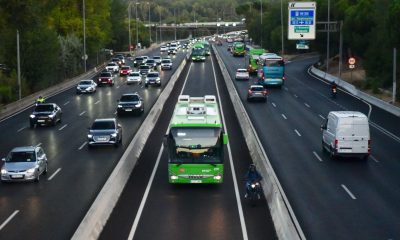
The biggest source of exposure is much closer to home than a factory chimney. Photo credit: Marcos del Mazo/Shutterstock

Many of us expect pollution to be concentrated just to major cities such as Madrid or Barcelona, but shockingly millions of people across Spain are breathing air that would fail the European Union’s tougher pollution limits, with the country heading towards a major change in how air quality is judged.

More than 80 per cent of the population is currently exposed to contaminated air when measured against the new European standards, according to Greenpeace, while almost 33 million people were exposed to pollution above the limits the EU plans to introduce by 2030. The warning comes as Spain prepares to bring its air-quality laws into line with a new EU directive expected to be approved by the end of 2026.

Spain’s pollution problem is bigger than today’s legal limits

For those of us living in Spain, the results mean that the air around our homes, workplaces and schools could be considered too polluted under standards that are about to become the new benchmark. Traffic is the main source of pollution, but people living near industrial sites, ports and airports can also be affected.

The 80 per cent figure comes from Greenpeace mobility chief Cristina Arjona, who says more than 80 per cent of Spain’s population breathes polluted air when assessed against the incoming European directive. This detail is important because Spain is currently working with air-quality legislation dating from 2008. The new EU rules are intended to bring permitted pollution levels closer to World Health Organisation recommendations.

That means an area can comply with the limits currently in force while still falling short of the standards Spain is preparing to adopt. The latest figures from Ecologistas en Acción show the scale of that difference. Its annual air-quality report found that almost 33 million people were exposed during 2025 to pollution above the new EU limits contained in Directive 2024/2881.

Traffic remains the biggest source

For most people, the biggest source of exposure is much closer to home than a factory chimney. Road traffic is the principal source of air pollution in Spain, producing pollutants including nitrogen dioxide and particulate matter through the burning of fossil fuels. People living close to certain industrial facilities, ports, airports and areas where rubble or other materials are loaded and unloaded can face additional exposure.

That makes air quality a problem that can follow people through ordinary parts of their day, particularly in built-up areas with heavy traffic. Greenpeace is also questioning whether all of Spain’s low-emission zones are delivering the reductions expected of them. Municipalities with more than 50,000 inhabitants have been required to establish these zones since 2023, but Arjona says some measures have had limited impact.

In some cases, she argues, areas that were already pedestrianised have been included without producing a significant additional reduction in pollution. Madrid, Barcelona and Pontevedra are among the cities Greenpeace says have achieved improvements.

Heat can make the problem worse

Spain’s pollution problem is also being complicated by increasingly difficult weather conditions. High temperatures and prolonged periods of sunshine can contribute to the formation of ground-level ozone, another major air pollutant. This is particularly relevant during hot weather because ozone is formed through chemical reactions involving other pollutants in the atmosphere.

The latest annual assessment from Ecologistas en Acción found that ozone pollution reached its highest levels in Spain since 2015 in 2025, with heatwaves contributing to the problem. That creates a particular challenge for Spain as extreme heat becomes a recurring feature of summer rather than an occasional event.

What changes before the end of 2026?

The immediate issue for residents is not that Spain’s air suddenly becomes more polluted when the new rules arrive. It is that the legal definition of acceptable air quality is about to become stricter. The new European directive will require Spain to change legislation that has been in place since 2008, with the aim of moving national limits closer to WHO recommendations. Greenpeace is calling for Spain to go further than the minimum European requirements when it incorporates the rules into national law.

The organisation wants measures including effective low-emission zones, fewer motorised journeys and greater use of public transport, cycling and other sustainable forms of transport. It is also calling for greater scrutiny of major infrastructure projects such as airports and ports, alongside changes to where pollution monitoring stations are located.

The air can look clean without being clean

One of the difficulties for residents is that much of the pollution involved cannot simply be seen from the street. Nitrogen dioxide and fine particles can be present in the air without creating a visible haze, while ozone pollution can rise during bright, hot weather.

That makes official monitoring particularly important because residents cannot judge their exposure simply by looking outside. Greenpeace has raised concerns that some monitoring stations are positioned in parks or open areas where traffic levels are lower, potentially giving a less representative picture of the pollution experienced by people living and travelling in busier areas.

Spain faces a tougher air-quality test

The significance of the latest warning is therefore not simply that more than 80 per cent of Spaniards are described as breathing contaminated air. It is that Spain is approaching the point where millions of people will be living under a new definition of what constitutes acceptable air, and the latest evidence suggests a large proportion of the country is not yet meeting it.

With the new EU standards set to shape Spanish legislation from the end of 2026 onwards, pressure will shift towards cities and regional authorities to show whether measures already in place are actually reducing the pollution people breathe. For residents, the change could make air quality a much more visible issue in the months and years ahead, not because the air suddenly changes, but because the standard used to judge whether it is safe is finally getting tougher.

Continue Reading

Trending

Copyright © 2017 Spanish Property & News