Connect with us

%

Avoiding Pirate Taxis In Spain, 2026 – Colours Of Number Plates

Published

on

avoiding-pirate-taxis-in-spain,-2026-–-colours-of-number-plates

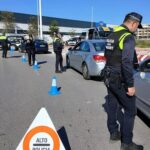
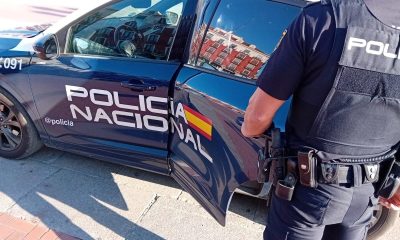
Local police on the lookout for “pirate” taxis. Credit: PLS

Road users in Spain rely on number plates to confirm licensed taxis and VTC services (Uber-style rides). As we begin to enter the holiday period, law enforcement in Spain is cracking down on illegal taxi services and is reminding everyone why checking colours matters for safer travel.

Dave, the friend of the guy down the road, might come with excellent recommendations for an airport run and give the most amazingly reliable service ready to pick you up at your apartment door at 4am to pick you up. But, if you’re really not sure, always use a fully licensed service. But how do you tell?

Spanish authorities introduced mandatory blue rear plates for taxis and vehicles “de transporte con conductor (VTC – Uber or similar)” from August 2018. This change helps passengers and police spot authorised operators quickly, and to avoid the dodgy ones. Vehicles registered after that date must display white characters on a blue background on their number plate. Failure to comply with this rule brings an immediate €200 fine to the driver, or more.

Passengers often identify taxis by roof lights and markings or VTC by company logos. Official confirmation comes only from the number plate colour. Blue plates with white lettering confirm the driver holds proper licences. Without them, travellers risk unlicensed pirate services that operate illegally and lack insurance cover for passengers.

Requirements for becoming a taxi driver in Spain

Aspiring taxi drivers need a category B licence for cars with at least five seats. Many cities demand at least two years of driving experience, depending on the stipulations of the local council. Operators register as self-employed with a registered social security number and often join local cooperatives. Medical and psychological checks ensure fitness for passenger transport. Interestingly, and very importantly, candidates must also prove no criminal record for sexual offences or crimes involving minors.

Understanding coloured number plates across Spain in 2026

Spain uses various plate colours to indicate vehicle purpose and status. Knowledge of these prevents confusion and supports informed choices when hiring transport.

Standard private cars that everyone drives show black letters and numbers on white backgrounds, with the EU blue strip and “E” on the left for “España”. These apply to everyday vehicles without any special permissions for charging passengers for rides.

Blue plates identify licensed taxis and VTC up to nine seats. White characters appear on the blue background, most importantly at the back of the car; front plates can possibly remain standard white with black letters and numbers. This system combats illegal operators and aids quick police identification.

Green plates serve as temporary import or provisional needs, often for recently imported cars awaiting full registration. Validity lasts a short period, usually two months. So a green number plate is pretty rare in Spain, and often on a pretty special car.

Red plates appear on dealer or trader vehicles for test drives and stock movement. Businesses use them under strict controls with journey logs. Red also marks large trailers with black lettering, prefixed with “R” for remolque (trailer).

Yellow plates can denote some mopeds, scooters under 49cc, and light quadricycles. These smaller vehicles follow distinct rules for urban and rural use.

White letters on red backgrounds signal diplomatic vehicles with “CD” for the diplomatic corps. Consular vehicles may use green with “CC”. International organisations display blue plates with “OI”. Agricultural and special machinery, such as tractors, use red lettering on white, prefixed with “E”.

Pink plates have begun to gain a lot of interest in 2026 due to cross-border influences, mainly for certain temporary registrations driving over from France with visible expiry dates. These call attention to the police for more roadside checks by the authorities than usual.

Staying safe with transport choices

Everyone should check number plates of vehicles they do not know before entering. Blue confirms legitimacy and full licensing for a taxi service. There are plenty who offer reliable, trustworthy services as a little job on the side, especially from out-of-town “urbanisations”, but avoid ones you don’t already know very well. Pirate drivers lack this marking, hang around for fares at airports, and expose passengers to risks including insufficient insurance cover and unregulated fares. Local police and Guardia Civil use plate colours for quick enforcement against fraud and will be out in force this summer holiday season, especially at airports.

%

Two Guardia Civil Officers Killed In Spain Maritime Drug Trafficking Pursuit

Published

on

two-guardia-civil-officers-killed-in-spain-maritime-drug-trafficking-pursuit

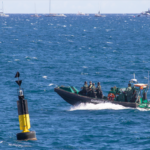
The deaths in Huelva come just over a year after a similar incident in Barbate. Photo credit: SergiCL/Shutterstock

Two Guardia Civil officers have died and two others have been injured after two patrol vessels collided during a maritime operation off the coast of Huelva involving a ‘narcolancha’ (high-speed drug trafficking boat). The incident took place during an active pursuit at sea as officers from the Guardia Civil Maritime Service attempted to intercept the high-speed vessel, which is used by drug trafficking networks to transport illegal cargo along Spain’s southern coastline.

The two officers who died have been identified in Spanish reports as experienced members of the force with long careers in maritime operations. They were aged 55 and 56.

Officers identified and casualties confirmed

Germán P.G., from Teruel, had served in the Guardia Civil for more than three decades, much of it within maritime units in southern Spain. Jerónimo J.M., from Málaga, also had extensive service in coastal operations and was based in Huelva. Two further officers were injured in the collision. One remains in a serious condition, while the second sustained less severe injuries. Emergency teams were deployed immediately after the incident to recover personnel from the water.

The Guardia Civil confirmed that the operation involved a narcolancha operating off the Huelva coastline. These vessels are commonly used by criminal networks transporting drugs from North Africa into Spain and are known for their speed and ability to evade interception.

Maritime operations against drug trafficking

The Guardia Civil Maritime Service carries out regular patrols in waters around Andalusia to intercept vessels linked to drug trafficking networks. Narcolanchas are typically faster than patrol boats and are often used in coordinated smuggling routes through the Strait of Gibraltar and nearby coastal areas.

Spanish authorities have increased maritime surveillance in recent years due to the continued use of these vessels by organised criminal groups.

Similar fatal incident in Barbate

The deaths in Huelva come just over two years after a similar incident in Barbate, Cádiz, where two Guardia Civil officers were killed during an anti-drug operation. In that case, officers were struck by a high-speed vessel while attempting to intercept traffickers inside a harbour area. The collision resulted in two fatalities and led to renewed scrutiny of safety conditions for maritime units operating in southern Spain.

That incident prompted calls from officers’ associations and police unions for improved equipment and greater protection for personnel involved in anti-narcotics operations at sea.

Concerns over working conditions

Following the latest deaths, Guardia Civil representatives have again raised concerns about the risks faced by officers involved in maritime anti-drug operations. Units operating in coastal waters often engage fast-moving vessels in close-range pursuits, where reaction times are limited and visibility can be affected by sea conditions.

Some officers’ groups have argued that resources and equipment have not kept pace with the increasing scale and organisation of drug trafficking networks operating along Spain’s southern coast. The Guardia Civil has not made specific comments on these claims but has previously acknowledged the operational challenges posed by high-speed smuggling vessels.

Political and official response

Spain’s Interior Ministry has expressed condolences to the families of the deceased officers and confirmed that an investigation has been opened into the circumstances of the collision.

Regional authorities in Andalucía have also paid tribute to the officers involved and offered support to the injured personnel and their families. Emergency support services have been activated for those affected.

Investigation underway

An internal investigation is now being carried out by the Guardia Civil, alongside maritime specialists, to determine the sequence of events leading to the collision. Early assessments indicate that the vessels were operating at speed during the pursuit of the narcolancha when the impact occurred.

Further technical analysis of the boats and operational conditions is expected in the coming weeks. The Guardia Civil has confirmed the deaths of two officers in active service and continues to provide

Continue Reading

%

Brussels Rules Airlines Cannot Raise Prices On Tickets Already Bought

Published

on

brussels-rules-airlines-cannot-raise-prices-on-tickets-already-bought

Airlines operating within the EU must ensure that pricing systems reflect the total cost at the time of booking. Photo credit: Frame Stock Footage/Shutterstock

The European Commission has confirmed that airlines cannot increase the price of tickets after they have been purchased, even if fuel costs rise. The clarification comes amid concerns in the aviation sector about higher kerosene prices and whether carriers could pass additional costs onto passengers who have already booked flights.

Brussels has stated that the final price agreed at the time of purchase must be respected, and that customers cannot be charged extra after payment has been completed.

Scope of the pricing rule

The Commission’s position applies to all tickets sold under EU consumer protection rules. Once a passenger has completed a booking and payment, the price is considered fixed. This includes all foreseeable operating costs such as fuel, airport charges and other standard fees.

The rule means airlines cannot introduce post-sale surcharges linked to changes in fuel prices or other cost pressures.

Fuel costs and airline concerns

The clarification follows industry discussion about rising fuel costs and their impact on airline operating expenses. Jet fuel, also referred to as kerosene in aviation, represents one of the largest cost components for airlines. Fluctuations in its price can affect profit margins and planning for carriers.

Despite this, the European Commission has reiterated that cost changes after a ticket has been sold cannot be passed on to passengers who have already completed their purchase.

Consumer protection framework

EU law requires that consumers are informed of the full price of a ticket before completing a purchase. This includes mandatory fees and any unavoidable charges linked to the journey. The objective is to ensure transparency at the point of sale and prevent additional costs being added later.

The Commission has linked its position to existing rules on fair commercial practices, which prevent businesses from altering agreed contract terms after a transaction has been finalised.

Impact on airlines

Airlines operating within the EU must ensure that pricing systems reflect the total cost at the time of booking. Any changes in fuel prices may affect future ticket pricing, but they cannot be applied retrospectively to tickets already sold.

This means carriers may adjust fares for new bookings in response to market conditions, but not for passengers who have already purchased seats.

Passenger implications

For travellers, the ruling confirms that the price shown at the time of booking is the final amount payable.Passengers who have already bought tickets will not be asked to pay additional charges if fuel prices increase after purchase.

This applies regardless of whether tickets are booked directly with airlines or through travel agencies, provided the sale falls under EU consumer protection rules.

Airline pricing practices

Airlines typically set fares in advance based on expected operating costs, including fuel projections. While some fare structures allow for flexibility in pricing new tickets, existing bookings are treated as fixed contracts between the airline and the passenger.

The Commission’s clarification reinforces that any risk associated with fuel price changes after purchase lies with the airline, not the customer.

Regulatory background

EU rules on air transport pricing require full transparency at the point of sale. Airlines must display the final price of a ticket, including all unavoidable taxes and charges, before payment is completed. These rules are designed to prevent hidden costs and ensure that passengers can compare fares accurately across different carriers.

The latest clarification confirms that these obligations extend to protecting passengers from post-purchase price changes.

Wider context

Fuel price volatility has been a long-standing issue in the aviation sector, with costs influenced by global energy markets and geopolitical factors. While airlines can adjust pricing strategies for future sales, EU consumer law limits how and when those changes can be applied.

The Commission’s position reinforces the principle that contracts agreed at the time of purchase remain fixed, regardless of later market fluctuations.

Summary of position

The European Commission has confirmed that airlines operating under EU rules must honour the price of tickets already sold and cannot add extra charges in response to rising fuel costs.

Passengers who have booked flights will pay the amount agreed at the time of purchase, while airlines may only adjust pricing for future bookings.

Continue Reading

%

Spain Records Hottest April Ever In 2026

Published

on

spain-records-hottest-april-ever-in-2026

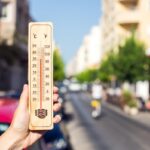
Spain has just recorded its hottest April since records began. Credit : aleks333, Shutterstock

Spain has officially lived through its hottest April since records began in 1961, after temperatures across the country climbed to levels normally expected in early summer rather than spring. According to Spain’s state meteorological agency AEMET, the average temperature across mainland Spain reached 15.1°C in April 2026, breaking the previous record set only three years ago.

For many people across the country, spring barely seemed to exist this year.

Instead, large parts of Spain spent most of April dealing with unusually intense heat, repeated temperature records and increasingly worrying signs of drought just weeks before the start of summer.

Meteorologists say the figures are another sign that extreme weather is becoming less exceptional and more frequent across Spain.

Spain saw temperatures close to 33°C in April

The heat affected almost the entire country during several unusually warm periods throughout the month.

According to AEMET, temperatures remained around 3.2°C above the seasonal average for much of April compared with the 1991 to 2020 climate reference period.

Two particularly hot episodes dominated the month.

The first lasted from April 3 to April 11, followed by another long stretch of heat from April 15 until the end of the month. Between April 18 and April 22, temperatures in some parts of Spain were approaching 5°C above normal for that time of year.

Only a brief cooler spell between April 12 and April 14 interrupted the heat.

Several cities recorded temperatures that felt far more like June than mid spring.

In Santander, on Spain’s normally milder northern coast, temperatures climbed to 32.8°C on April 6. Seville came close to 33°C a few days later, while Tenerife South reached 32.9°C.

Multiple weather stations across Spain broke absolute April heat records during the month.

AEMET also revealed that six individual days during April became the hottest ever recorded nationwide for those specific calendar dates since national records began in 1950.

Those dates were April 10, 18, 19, 20, 21 and 22.

Since the beginning of 2026, Spain has already experienced twelve exceptionally hot record breaking days. According to AEMET, under stable climate conditions, only around five such records would normally be expected during an entire year.

That statistic alone is one of the clearest signs of how rapidly temperatures are changing across the country.

Spain’s climate is swinging between drought and extreme rainfall

The heat is not the only issue worrying scientists. April was also extremely dry across much of mainland Spain.

Rainfall reached only 58 per cent of normal levels for the month, with average precipitation across the peninsula standing at just 36.8 millimetres.

Some of the worst rainfall shortages were recorded in Galicia, Catalonia and parts of the Cantabrian coast.

What makes the situation even more striking is how different conditions were only a few months ago.

January and February were among the wettest seen in Spain for decades, bringing unusually heavy rainfall to many regions.

Meteorologists say this pattern of long dry periods interrupted by intense episodes of rain is increasingly matching what climate scientists have been predicting for southern Europe.

Instead of steady and predictable rainfall spread across the year, precipitation is becoming more irregular and more extreme when it does arrive.

That creates a growing risk of both drought and sudden flooding.

Spain’s Ministry for Ecological Transition says this instability is fully consistent with current climate change projections for the country.

Longer and more intense heatwaves are also expected to become increasingly common.

Europe is warming faster than the rest of the planet

Spain’s record breaking April comes as European officials continue warning that the continent is heating up faster than almost anywhere else on Earth.

Sara Aagesen, Spain’s Minister for Ecological Transition, recently pointed to data from the Copernicus climate programme and the World Meteorological Organization showing that Europe is warming at roughly twice the global average rate.

That reality is already becoming visible across Spain. Heatwaves are arriving earlier in the year, warm nights are becoming more frequent and periods of drought are lasting longer.

At the same time, extreme weather events such as torrential rain and flash flooding continue affecting different parts of the country with increasing regularity.

In response, the Spanish government has now launched a new public platform called GOTA designed to centralise hydrological and meteorological information.

Officials say the system is intended to improve transparency around water management while helping citizens better understand climate related risks.

But for many people in Spain, the changes are already becoming impossible to ignore without needing statistics or scientific reports. When cities are approaching 33°C in April and spring starts feeling more like the middle of summer, the shift becomes very difficult to miss.

And with summer still weeks away, many people are already wondering what the coming months could look like if temperatures continue rising at this pace.

Continue Reading

Trending

Copyright © 2017 Spanish Property & News