Connect with us

%

Bonnie Tyler Placed In Induced Coma After Emergency Surgery In Portugal

Published

on

bonnie-tyler-placed-in-induced-coma-after-emergency-surgery-in-portugal

The operation reportedly took place at Faro Hospital in southern Portugal. Photo credit: S. Kuelcue/Shutterstock

Singer Bonnie Tyler has been placed in an induced coma following emergency intestinal surgery in Portugal, according to statements released by her representatives. The 74-year-old singer underwent surgery at a hospital in Faro after suffering a perforated intestine. Reports state that the medical emergency occurred while she was in Portugal, where she owns a property in the Algarve region.

Representatives for the singer said doctors placed her in an induced coma following the operation to assist her recovery and allow her body to rest after surgery. No further medical complications have been publicly confirmed.

Emergency surgery carried out in Faro

The operation reportedly took place at Faro Hospital in southern Portugal after Tyler required urgent medical treatment. A perforated intestine is considered a serious medical condition because it can allow contents from the digestive system to enter the abdominal cavity, increasing the risk of infection and other complications. Treatment usually requires emergency surgery.

The singer’s representatives stated that the procedure was completed successfully and that Tyler remains under medical supervision. At present, no official timeline has been provided regarding her recovery or when she may regain consciousness.

Representatives issue update on singer’s condition

Statements carried by several media outlets said Tyler’s medical team decided to place her in an induced coma as part of post-operative care. An induced coma is a medically controlled state used in some cases following major surgery or severe illness to reduce strain on the body during recovery.

No statement has suggested that the singer suffered cardiac arrest or another unrelated medical emergency. Her representatives have not released additional details regarding her current condition beyond confirming that she remains in hospital.

Career spanning more than five decades

Bonnie Tyler became internationally known during the 1970s and 1980s for her distinctive voice and rock ballads. She achieved worldwide success with songs including Total Eclipse of the Heart and Holding Out for a Hero.

Born Gaynor Hopkins in Wales, Tyler began her recording career in the mid-1970s and later became one of the best-known British female singers of the era. “Total Eclipse of the Heart”, released in 1983, became a number one single in several countries, including the United Kingdom and the United States.

She also represented the United Kingdom at the Eurovision Song Contest 2013 with the song “Believe in Me”.

Ongoing performances before medical emergency

Before the medical emergency, Tyler continued to perform internationally and remained active in touring and television appearances. She has regularly appeared at music festivals, nostalgia concerts and televised events in Europe over recent years.

No announcements have yet been made regarding whether upcoming appearances or scheduled performances will be postponed or cancelled following her hospitalisation. Fans and public figures have begun posting messages of support on social media following reports of her condition.

Hospital treatment continues in Portugal

The singer remains under medical care in Faro while recovering from surgery. At present, neither her representatives nor the hospital have released detailed information about her prognosis. Medical privacy laws in Portugal limit the amount of information hospitals can publicly disclose without family consent.

Further updates on Tyler’s condition are expected to come through her management team or official representatives rather than directly from the hospital. The reports published on Wednesday stated that doctors considered the induced coma necessary to support her recovery following the emergency procedure.

%

Murcia Receives Record 41 Blue Flag Awards In 2026

Published

on

murcia-receives-record-41-blue-flag-awards-in-2026

Murcia equals Balearics with record Blue Flag beach awards Photo Credit: Cartagena Department of Tourism

In 2026, the Region of Murcia reached an incredible milestone for its beaches. In its best year ever for Blue Flag awards, the region will receive a total of 41 Blue Flags in 33 beaches and eight marinas across six of its municipalities. With these honours, the Region of Murcia has now matched the Balearic Islands as the single-province region with the highest number of Blue Flag beaches in the whole of Spain.

What is the prestigious Blue Flag beach and marina award?

The Blue Flag award, which is awarded annually, is a prestigious international honour awarded by the Foundation for Environmental Education. It certifies that a beach, marina, or boat operator meets strict standards for high water quality, environmental safety and management, sustainability, and education. In other words, to receive a Blue Flag award is to certify that the area meets all the strict criteria for the distinction and maintains the highest quality.

The Region of Murcia leads the charge: World-class beaches and marinas

Unsurprisingly, the charming coastal municipality of Aguilas leads the charge in the region. The municipality boasts ten award-winning beaches and two award-winning marinas, and maintains its spot as the third most decorated town in Spain, just behind Vigo and Sanxenxo. Aguilas was also recently named the best European destination for taking a boat ride, and its beaches have been recognised in travel and nature magazine National Geographic for their beauty and high quality.

The Costa Calida city of Cartagena follows close behind, with nine beach awards and two marina awards. One of these beaches is shared with San Javier, the Banco del Tabal-Calnegre beach.

In the regional ranking, Mazarron comes in third. The coastal municipality boasts six beach awards and two marina awards. San Javier and San Pedro del Pinatar received three Blue Flag awards each for their beaches, though the latter received two more for its marinas. Last but not least, Lorca received an award for its Calnegre beach.

All coastal regional parks in Murcia are world-class

Amazingly, with this new round of awards, every coastal regional park in the Region of Murcia now boasts at least one Blue Flag beach. 

The Balearic Islands benefit from having 15 award-winning municipalities, compared to the Region of Murcia’s six.

The recognition by this prestigious organisation is a nod to the Region of Murcia’s commitment to sustainability, maintaining the beauty of its natural areas, the quality of its waters, and a variety of other factors that make its beaches top-of-the-line. 

Here is the total list of award-winning beaches in the Region of Murcia:

Aguilas

  • El Hornillo
  • La Carolina
  • La Higuerica
  • Levante
  • La Colonia
  • Poniente
  • Casica Verde
  • Matalentisco
  • Calarreona
  • Las Delicias

Cartagena

  • La Azohia-El Cuartel
  • Cala Cortina
  • Levante (Cabo de Palos)
  • San Gines
  • Isla Plana
  • La Chapineta
  • El Portus
  • Calblanque
  • Cala del Barco

Mazarron

  • Rihuete
  • Bahia-La Reya
  • Nares
  • Playa Grande-Castellar
  • El Alamillo
  • El Mojon

San Pedro del Pinatar

  • El Mojon
  • Las Salinas
  • La Torre Derribada

San Javier

  • La Ensenada del Esparto
  • El Pedrucho
  • El Arenal
  • Banco del Tabal-Calnegre (Cartagena & San Javier)

Lorca

  • Calnegre

Continue Reading

%

Off-Duty Nurse Saves Man’s Life With CPR On Caleta De Velez Promenade

Published

on

off-duty-nurse-saves-man’s-life-with-cpr-on-caleta-de-velez-promenade

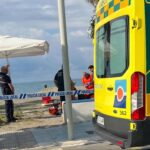
Emergency crews arrive at scene in Caleta. Credit: Velez Malaga FB

Quick action by a passing runner prevented tragedy in this coastal spot near Velez-Malaga. A man collapsed suddenly while walking on the promenade in Caleta de Velez on Friday, May 8. Witnesses described symptoms consistent with a cardiac arrest. Tension rose among bystanders until an off-duty nurse spotted the emergency.

He immediately started cardiopulmonary resuscitation (CPR) manoeuvres. His immediate response kept the man alive until emergency services arrived. Paramedics and local police officers joined efforts minutes later. Together they stabilised the patient, who managed to regain vital signs.

Community spirit makes difference

This incident ended as a major fright rather than another tragic loss. Coordinated response from services combined with the nurse’s bravery and cool-headedness proved decisive. Many locals now praise the anonymous hero. Everyday citizens trained in basic first aid often separate life from death in such moments.

AEDs ready on Velez-Malaga promenades

Public access defibrillators (AEDs) sit at several points near the promenades in Torre del Mar and Caleta de Velez. One device stands at the Paseo Marítimo in Torre del Mar close to the lighthouse area. Lifeguard stations along the beaches carry additional units during the season. Municipal facilities and port zones also hold them as part of broader cardioprotection efforts in Velez-Melaga.

Anyone can use these machines in an emergency, not just medical professionals. Voice prompts guide users step by step. No specific medical training is required. Open the case, follow spoken instructions, and attach pads as directed. The device analyses heart rhythm automatically and advises a shock only when needed. It will not release an electric shock if it detects a heartbeat.

Knowledge saves lives every day

Learning CPR and locating nearby AEDs equips people to act confidently. Apps and maps from local authorities help identify exact positions. Regular training sessions take place across the area so that when it is the moment to save a life, passersby need not panic, and can act decisively. Time is of the essence. Residents and and people simple on their hols can benefit from this preparation, especially in busy promenade zones where people exercise and stroll.

Incidents like this remind everyone of simple actions that matter. Quick CPR combined with fast AED access boosts survival chances dramatically. Communities stronger in first aid create safer environments for all. We raise our hats to the brave and decisive actions of the off-duty nurse who acted today, and wish the victim of the incident the fastest recovery.

List of public AED defibrillators in the Velez-Malaga

Continue Reading

%

Hantavirus Evacuees Arrive In The Netherlands For Hospital Treatment

Published

on

hantavirus-evacuees-arrive-in-the-netherlands-for-hospital-treatment

Some patients were taken directly to hospitals in the Netherlands. Photo credit: Jaromir Chalabala/Shutterstock

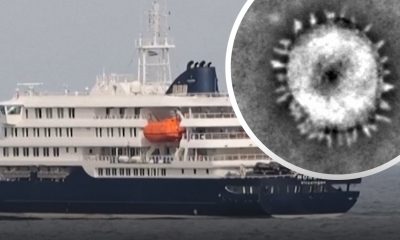
Several patients linked to a hantavirus outbreak have been transferred to the Netherlands for hospital treatment following coordinated medical evacuations involving European health authorities. The first group of patients arrived on the evening of Wednesday, May 6, at Amsterdam Airport Schiphol. They were met by Dutch medical teams and taken by ambulance to specialist hospitals for further care.

Emergency staff were present at the airport to assist with the arrivals. Some personnel used protective equipment during transfers in line with standard procedures for infectious disease cases. The patients were transported after being identified as requiring medical treatment linked to hantavirus infection. The evacuations formed part of a wider international response involving several European countries.

Coordinated medical transfers across Europe

The transfers to the Netherlands were carried out through medical evacuation flights arranged between health authorities and transport services. Some patients were taken directly to hospitals in the Netherlands, while others were transferred onwards to facilities in Germany. The exact distribution of patients between countries has not been fully detailed by authorities.

Dutch health services confirmed that procedures were in place to receive and treat incoming patients under infectious disease protocols. No personal information about those affected has been released. Further arrivals have been reported, with additional patients expected to be assessed and transferred depending on medical need.

Monitoring and public health response

The Dutch National Institute for Public Health and the Environment (RIVM) confirmed that individuals linked to the outbreak are being monitored. Authorities stated that the risk of wider transmission in the Netherlands remains low. RIVM said hantavirus is mainly transmitted through contact with infected rodents or contaminated environments. It is not generally spread easily between people.

Health officials have also begun contact tracing for individuals who may have been in close proximity to confirmed or suspected cases during travel and treatment. Hospitals involved in care have not released detailed updates on patient conditions due to medical privacy rules.

Confirmed case in Dutch hospital

Dutch reporting confirmed that at least one evacuated patient tested positive for hantavirus after being admitted to hospital in Nijmegen. The patient is receiving specialist treatment. No further medical details have been provided.

Other patients transferred to the Netherlands are undergoing testing and observation while results are processed. The World Health Organisation has issued outbreak notices relating to the cluster of infections and said international monitoring is continuing.

Information on hantavirus

Hantavirus is a virus carried mainly by rodents. Humans can become infected through contact with contaminated urine, droppings or saliva, or by inhaling particles in enclosed spaces.

Symptoms may include fever, muscle pain, fatigue and breathing difficulties. Some strains can lead to more severe illness affecting the lungs or kidneys. Human-to-human transmission is considered rare for most forms of hantavirus, although health authorities continue to monitor cases linked to shared environments.

Ongoing hospital treatment

Patients transferred to the Netherlands remain under medical supervision. Hospitals are continuing assessments following arrival and initial treatment abroad. Dutch authorities have not announced any public restrictions related to the cases.

Further updates are expected from health agencies as testing and treatment continue.

Continue Reading
Advertisement
Advertisement

Spanish Real Estate Agents

Tags

Trending

Copyright © 2017 Spanish Property & News