Connect with us

%

Murcia Receives Record 41 Blue Flag Awards In 2026

Published

on

murcia-receives-record-41-blue-flag-awards-in-2026

Murcia equals Balearics with record Blue Flag beach awards Photo Credit: Cartagena Department of Tourism

In 2026, the Region of Murcia reached an incredible milestone for its beaches. In its best year ever for Blue Flag awards, the region will receive a total of 41 Blue Flags in 33 beaches and eight marinas across six of its municipalities. With these honours, the Region of Murcia has now matched the Balearic Islands as the single-province region with the highest number of Blue Flag beaches in the whole of Spain.

What is the prestigious Blue Flag beach and marina award?

The Blue Flag award, which is awarded annually, is a prestigious international honour awarded by the Foundation for Environmental Education. It certifies that a beach, marina, or boat operator meets strict standards for high water quality, environmental safety and management, sustainability, and education. In other words, to receive a Blue Flag award is to certify that the area meets all the strict criteria for the distinction and maintains the highest quality.

The Region of Murcia leads the charge: World-class beaches and marinas

Unsurprisingly, the charming coastal municipality of Aguilas leads the charge in the region. The municipality boasts ten award-winning beaches and two award-winning marinas, and maintains its spot as the third most decorated town in Spain, just behind Vigo and Sanxenxo. Aguilas was also recently named the best European destination for taking a boat ride, and its beaches have been recognised in travel and nature magazine National Geographic for their beauty and high quality.

The Costa Calida city of Cartagena follows close behind, with nine beach awards and two marina awards. One of these beaches is shared with San Javier, the Banco del Tabal-Calnegre beach.

In the regional ranking, Mazarron comes in third. The coastal municipality boasts six beach awards and two marina awards. San Javier and San Pedro del Pinatar received three Blue Flag awards each for their beaches, though the latter received two more for its marinas. Last but not least, Lorca received an award for its Calnegre beach.

All coastal regional parks in Murcia are world-class

Amazingly, with this new round of awards, every coastal regional park in the Region of Murcia now boasts at least one Blue Flag beach. 

The Balearic Islands benefit from having 15 award-winning municipalities, compared to the Region of Murcia’s six.

The recognition by this prestigious organisation is a nod to the Region of Murcia’s commitment to sustainability, maintaining the beauty of its natural areas, the quality of its waters, and a variety of other factors that make its beaches top-of-the-line. 

Here is the total list of award-winning beaches in the Region of Murcia:

Aguilas

  • El Hornillo
  • La Carolina
  • La Higuerica
  • Levante
  • La Colonia
  • Poniente
  • Casica Verde
  • Matalentisco
  • Calarreona
  • Las Delicias

Cartagena

  • La Azohia-El Cuartel
  • Cala Cortina
  • Levante (Cabo de Palos)
  • San Gines
  • Isla Plana
  • La Chapineta
  • El Portus
  • Calblanque
  • Cala del Barco

Mazarron

  • Rihuete
  • Bahia-La Reya
  • Nares
  • Playa Grande-Castellar
  • El Alamillo
  • El Mojon

San Pedro del Pinatar

  • El Mojon
  • Las Salinas
  • La Torre Derribada

San Javier

  • La Ensenada del Esparto
  • El Pedrucho
  • El Arenal
  • Banco del Tabal-Calnegre (Cartagena & San Javier)

Lorca

  • Calnegre

%

Hantavirus Evacuees Arrive In The Netherlands For Hospital Treatment

Published

on

hantavirus-evacuees-arrive-in-the-netherlands-for-hospital-treatment

Some patients were taken directly to hospitals in the Netherlands. Photo credit: Jaromir Chalabala/Shutterstock

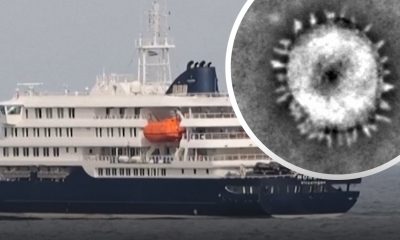
Several patients linked to a hantavirus outbreak have been transferred to the Netherlands for hospital treatment following coordinated medical evacuations involving European health authorities. The first group of patients arrived on the evening of Wednesday, May 6, at Amsterdam Airport Schiphol. They were met by Dutch medical teams and taken by ambulance to specialist hospitals for further care.

Emergency staff were present at the airport to assist with the arrivals. Some personnel used protective equipment during transfers in line with standard procedures for infectious disease cases. The patients were transported after being identified as requiring medical treatment linked to hantavirus infection. The evacuations formed part of a wider international response involving several European countries.

Coordinated medical transfers across Europe

The transfers to the Netherlands were carried out through medical evacuation flights arranged between health authorities and transport services. Some patients were taken directly to hospitals in the Netherlands, while others were transferred onwards to facilities in Germany. The exact distribution of patients between countries has not been fully detailed by authorities.

Dutch health services confirmed that procedures were in place to receive and treat incoming patients under infectious disease protocols. No personal information about those affected has been released. Further arrivals have been reported, with additional patients expected to be assessed and transferred depending on medical need.

Monitoring and public health response

The Dutch National Institute for Public Health and the Environment (RIVM) confirmed that individuals linked to the outbreak are being monitored. Authorities stated that the risk of wider transmission in the Netherlands remains low. RIVM said hantavirus is mainly transmitted through contact with infected rodents or contaminated environments. It is not generally spread easily between people.

Health officials have also begun contact tracing for individuals who may have been in close proximity to confirmed or suspected cases during travel and treatment. Hospitals involved in care have not released detailed updates on patient conditions due to medical privacy rules.

Confirmed case in Dutch hospital

Dutch reporting confirmed that at least one evacuated patient tested positive for hantavirus after being admitted to hospital in Nijmegen. The patient is receiving specialist treatment. No further medical details have been provided.

Other patients transferred to the Netherlands are undergoing testing and observation while results are processed. The World Health Organisation has issued outbreak notices relating to the cluster of infections and said international monitoring is continuing.

Information on hantavirus

Hantavirus is a virus carried mainly by rodents. Humans can become infected through contact with contaminated urine, droppings or saliva, or by inhaling particles in enclosed spaces.

Symptoms may include fever, muscle pain, fatigue and breathing difficulties. Some strains can lead to more severe illness affecting the lungs or kidneys. Human-to-human transmission is considered rare for most forms of hantavirus, although health authorities continue to monitor cases linked to shared environments.

Ongoing hospital treatment

Patients transferred to the Netherlands remain under medical supervision. Hospitals are continuing assessments following arrival and initial treatment abroad. Dutch authorities have not announced any public restrictions related to the cases.

Further updates are expected from health agencies as testing and treatment continue.

Continue Reading

%

Massive Boat Capsizes In Estepona, But On The Road

Published

on

massive-boat-capsizes-in-estepona,-but-on-the-road

Dramatic scenes took place in Estepona when a huge boat capsized onto its side in a busy port access area. The trouble was, it wasn’t in the water. It was at the road entrance to Estepona’s bustling harbour.

Incident details

Emergency teams rushed to the Puerto Deportivo de Estepona late on Thursday afternoon after a large boat toppled during road transit. Witnesses described chaotic moments around 8pm as the oversized load shifted on a specialised transport lorry and crashed onto the carriageway at the main roundabout.

Background of the vessel

Salvage crews had lifted the boat from the water only days earlier. It had been submerged in one of the marina pontoons for roughly two to three months before being refloated. Workers then moved the craft ashore via the local boatyard and fixed it aboard a heavy lorry transport for final removal from the site. Or, at least, they thought it to be fixed.

How the accident happened

Problems arose as soon as the lorry entered the roundabout. The vessel’s considerable size and height made stability difficult during the turn, causing it to lose balance and fall sideways off the flatbed. Debris and liquids poured across the road surface immediately afterwards as the road entrance and exit closed everyone inside the harbour.

Spill and response

Bilge water mixed with accumulated waste from being months underwater created a messy spill that required an urgent cleanup operation. Firefighters and officers from Policia Local and Policia Nacional arrived promptly. Teams worked to contain the liquids, close off the affected zone and plan safe recovery of the overturned craft without further disruption to traffic or the environment.

Local impact

Authorities focused on quick clearance so normal access to the popular Estepona marina could resume. Situated on the Costa del Sol, this harbour attracts many visitors and boat owners throughout the year. Such incidents draw attention because of the unusual sight of a massive boat causing road blockages in a normally smooth-flowing area.

What happens next?

Specialist recovery equipment will likely return to right the boat and complete its removal. Investigations may examine load securing methods and route planning for future oversized marine transports in the region. Residents and marina users expressed surprise at the scale of the overturned vessel blocking such a key junction.

Continue Reading

%

Mercadona Changes Delivery Rules In Spain

Published

on

mercadona-changes-delivery-rules-in-spain

Some Mercadona stores in Spain no longer offer home delivery services. Credit : Azulblue, Shutterstock

Many Mercadona customers across Spain are only discovering at the checkout that their local store no longer offers home delivery. The supermarket giant has changed the rules for in store delivery orders, meaning some branches have stopped sending groceries to customers’ homes altogether. For shoppers who relied on the service for heavy weekly shops, the change is already causing frustration, especially among older residents, families and people without a car.

Until now, the system was straightforward. Customers could walk into almost any Mercadona, do a large shop in person and pay €6.50 to have their groceries delivered later that day or the following day. But since May 7, that no longer applies everywhere.

Now, whether home delivery is available depends entirely on the individual store and the customer’s address.

Mercadona customers now have to ask in store if delivery still exists

One of the biggest complaints from shoppers is that there is no easy way to know in advance whether a store still offers the service.

Instead of publishing a list of branches affected by the changes, Mercadona is telling customers to ask directly inside the shop.

On the company’s website, Mercadona explains that customers must provide their address and postcode at the nearest store to check whether they fall within that branch’s delivery area.

For regular shoppers, that has created confusion because many assumed the service still worked the same way it always had. Some customers are only finding out after filling a trolley with heavy groceries.

The change mainly affects people who preferred doing their shopping in person but used delivery afterwards to avoid carrying bags home.

That includes many elderly shoppers, parents buying large family shops and residents living in areas where walking back with multiple bags simply is not practical.

Online shopping through Mercadona’s website and app is still available. But plenty of customers preferred choosing fresh products themselves rather than relying entirely on online orders.

Now those shoppers may have to change their routine completely if their nearest store no longer delivers.

For some, that could mean travelling to another branch that still offers the service. Others may move fully to online shopping. And some may simply stop using Mercadona for large grocery shops altogether.

The changes are reopening memories of previous delivery chaos in Murcia

The reaction has been particularly strong because many customers still remember recent delivery problems in parts of Murcia.

Not long ago, Mercadona suspended deliveries to Camposol, Hacienda del Álamo and nearby urbanisations, leaving many residents suddenly without access to the service they depended on.

At the time, the decision caused significant anger among local residents, especially older people and expats without reliable transport.

Complaints quickly spread online as customers described the difficulties of travelling long distances for groceries or carrying large shops home.

The company eventually restored deliveries after a couple of weeks, but the episode highlighted how important supermarket delivery services have become for many communities across Spain.

That is part of the reason the latest changes are worrying some shoppers now.

In bigger cities with multiple Mercadona stores nearby, customers may still have alternatives. But in smaller towns, coastal urbanisations and residential areas where public transport is limited, losing delivery access can create genuine practical problems.

For many people, supermarket delivery stopped being a luxury a long time ago.

It became part of everyday life.

Mercadona says stores are changing as part of a huge transformation plan

The delivery changes are arriving at the same time Mercadona is investing billions into redesigning its supermarkets across Spain.

Company president Juan Roig recently announced plans to spend €3.7 billion transforming around 1,700 stores under a new model known internally as ‘Store 9’.

According to Roig, the redesigned stores are supposed to create a more convenient shopping experience focused heavily on fresh produce and prepared meals.

The company plans to give more space to meat, fish, fruit and vegetable sections while reorganising frozen products and prepared food areas.

Mercadona also wants to centralise preparation spaces inside stores into dedicated workshop areas as part of the redesign.

Roig described the project as a move away from supermarkets focused mainly on transactions towards stores organised more around internal processes and efficiency.

But for customers currently finding home delivery disappearing from certain branches, the timing feels awkward.

Many shoppers say convenience is exactly what they feel they are losing. Dragging heavy bags through car parks, walking long distances in summer heat or relying on taxis for grocery runs does not exactly feel like an upgrade for people who had become used to simple home delivery.

So far, Mercadona has not announced that the service is disappearing nationwide. The company is instead introducing a more selective system where delivery depends on location and branch coverage.

Still, the lack of clear communication has left many customers confused.

At the moment, shoppers are being forced to figure things out branch by branch. And for some people across Spain, especially those who depended heavily on home delivery, the weekly supermarket shop may suddenly become a lot more complicated than it was just a few weeks ago.

Continue Reading
Advertisement
Advertisement

Spanish Real Estate Agents

Tags

Trending

Copyright © 2017 Spanish Property & News