Connect with us

%

Bought This Protein Dessert In Spain? Check Your Fridge After Glass Warning

Published

on

bought-this-protein-dessert-in-spain?-check-your-fridge-after-glass-warning

AESAN says the affected batch was sold across almost all of Spain. Credit: Arla Foods

If you regularly buy protein desserts in Spain, it may be worth checking your fridge before reaching for your next snack. Spain’s food safety agency, AESAN, has issued a warning over a batch of Arla Protein vanilla cookie puddings after concerns that it could contain pieces of glass. The product was distributed across much of Spain, and shoppers are being urged not to eat it if the batch number matches the affected product.

Only one batch is affected in Spain

Shoppers who’ve picked up Arla Protein’s vanilla cookie pudding are being told to check the jar before they tuck in. AESAN said on Tuesday October 27 that the pudding may contain fragments of glass, and asked anyone who has it at home not to eat it.

The alert covers a single batch, number ES26271001, with a best-before date of April 25 2027. It applies to the 200g jars, which are sold chilled.

How to check what’s in your fridge

Look at the batch number and the best-before date on the jar. If both match the details above, that’s the product AESAN is worried about and you should stay away from. If not, there should be no concern. 

The agency hasn’t said where to take affected jars back, or whether shops are offering refunds. However, it has asked the regional authorities to check that the pudding is being pulled from sale. 

The pudding was sold almost nationwide

According to AESAN’s alert, the pudding was first distributed across almost the whole of Spain. There’s no list of regions, provinces or supermarkets specifically, so no area should be ruled out from checking.

The warning was raised by Denmark through the EU’s rapid alert system for food and feed. Nothing has been published about how any glass might have got into the product.

Other countries have recalled more flavours

Spain isn’t the only country dealing with it. Arla has recalled several Protein Pudding batches in Denmark, describing the chance of glass as “extremely limited”, while the UK’s Food Standards Agency has told shoppers that chocolate, salted caramel and vanilla cookie puddings sold at Tesco, Asda, Sainsbury’s and Morrisons may contain glass. Australia and New Zealand have issued recalls too.

Those recalls cover more flavours and different dates, though. In Spain, AESAN’s alert only names the one vanilla cookie batch for now.

So if the number on your jar matches, don’t eat it, and keep an eye on AESAN’s alerts page in case more batches are added.

%

Marbella Want A7 Elviria Exit Reopened

Published

on

marbella-want-a7-elviria-exit-reopened

Drivers in Elviria and Las Chapas have had weeks of slow journeys since an A-7 exit closed in September, and Marbella Town Hall now wants it back. It plans to ask the Ministry of Transport and Sustainable Mobility to reopen the motorway exit towards both areas, near La Vibora, for the time being.

What the town hall is asking for

Mayor Angeles Muñoz announced that the town hall’s governing board, has approved sending an urgent report to the ministry. Town hall teams for infrastructure and planning wrote it, with help from the Traffic department and the Local Police. It asks for a short-term fix until the planned roadworks in the area are done.

Muñoz criticised the closure, saying it happened “unilaterally and without prior notice” to the town hall, residents and affected businesses. She said a 2021 permit from the central government’s state roads office allowed some connections to be removed. The same permit covered a new southern service road and changes to the Elviria junction. Neither has been finished. The town hall says it sent a formal request on September 23 to reopen the exit straight away and has had no reply as yet.

What drivers have been facing

Marbella’s report includes the findings of a Local Police study dated October 15, based on inspections, photographs and traffic analysis. Problems listed include cars bunching up on Avenida Jardines de la Golondrina, queues and rear-end collisions near the A-7, and more traffic on inner streets with one lane each way. Some stretches of road surface are also in poor condition.

Pedestrians are more exposed near schools and commercial areas, the report warns. Residents, hotels, holiday accommodation and restaurants are affected too. According to Muñoz, the Elviria junction now takes traffic that used to be spread across other entrances, and it does not have the right layout for that much traffic.

Parents from the English International College are getting increasingly frustrated, “the simple school run is now messy, frustrating and a complete inconvenience. It needs sorting”

The 95-metre plan

Marbella wants only the exit back, not the slip road onto the A-7, which it believes could be more dangerous. A slowing-down lane of about 95 metres, with a 40 km/h limit, would lead into roughly 40 metres of town road up to the roundabout on Avenida Víbora Baja.

Muñoz said this would restore access with road safety in mind while the southern service road and the final Elviria junction changes are carried out. The town hall says it would ease pressure on the junction, reduce queues reaching the A-7, cut extra journeys and spread traffic more evenly.

Continue Reading

%

Poland Court Standoff Pits PM Against President

Published

on

poland-court-standoff-pits-pm-against-president

Massive rally in Warsaw. Credit: Viral X image

Poland’s long-running fight over its top court has turned into open confrontation in Warsaw. On Friday, October 30, judges backed by Prime Minister Donald Tusk’s government suspended Constitutional Tribunal president Bogdan Swieczkowski and his deputy for a month. Supporters of the previous nationalist government called it a “coup”, while the prime minister insisted it was the only way to restore proper rule of law after years of political control under Law and Justice (PiS).

Hundreds of people gathered outside the tribunal building as riot police stood guard. Some protesters tried to cut through fences. Three people were detained. President Karol Nawrocki, who was flying to Senegal, ordered his plane to turn around over Malaga, and rushed back to Warsaw. He later pushed past judges at the entrance and described the events as a forcible takeover of a constitutional body.

How the clash began

Judge Anna Korwin-Piotrowska, elected by the current parliamentary majority, suspended tribunal president Bogdan Swieczkowski and his deputy for a month and said she was taking temporary charge. She argued he had blocked new judges from sitting. Those judges had sworn their oaths in parliament after President Nawrocki refused to do it himself. Swieczkowski, a PiS appointee, called the move a “coup d’état”.

Prime Minister Tusk backed the suspension. He said restoring the rule of law after years of PiS control is the government’s duty and that “there is no other way”. Justice Minister Waldemar Zurek also asked for the two men’s immunity to be lifted so they could face charges.

Both sides dig in

Government supporters say PiS packed the tribunal between 2015 and 2023 and that European courts had already raised concerns about some appointments. They claim the suspension simply lets the court function properly again.

Opposition figures, including PiS leader Jaroslaw Kaczynski, insist the government has no power to suspend the president, the head of state. They say judges sworn in without the president’s involvement are not legitimate and that the events amount to an illegal takeover. Nawrocki held talks on Saturday, but Tusk’s party stayed away and no agreement was reached. Swieczkowski has said the judges he recognises will boycott a general assembly called by Korwin-Piotrowska for November 3.

Background and what happens next

This row sits on top of a decade of disputes that began when PiS packed the tribunal with its own people. Tusk’s coalition won power in 2023 promising to reverse those changes and unlock EU funds that had been frozen over rule-of-law concerns. Nawrocki’s election as president in 2025 gave the opposition a powerful veto and the ability to slow judicial reforms.

Previous EWN coverage looked at the political gridlock expected after Nawrocki’s win and how Tusk survived a confidence vote amid the fallout.

Protests continued into the weekend, with police still outside the building. Korwin-Piotrowska’s temporary leadership is due to last about a month. Whether the two camps can find any common ground, or whether the standoff simply hardens ahead of the judges’ meeting, remains the open question. For now both sides are digging in, each claiming they are the ones defending Poland’s constitution.

Continue Reading

%

Why Glasgow Museum Took Mummies Off Display

Published

on

why-glasgow-museum-took-mummies-off-display

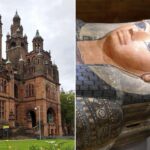
Historic remains of Nekht, an Egyptian priest. Credit: KAG FB

Kelvingrove Art Gallery and Museum in Glasgow has taken several ancient Egyptian human remains off public display after deciding the people involved never gave permission to be shown.

Visitors now find empty cases and a simple notice reading: “We have removed human remains from this display as a mark of respect.” Staff at Glasgow Life, the organisation that runs the museum, explained the move follows a draft policy that only allows human remains on show when there is documented, informed consent from the deceased person or, in some cases, their descendants. Without that paperwork, it’s impossible for people who died thousands of years ago, to have said ‘yes I agree to have my remains on public display in a museum.’ So, the remains stay in storage.

Items taken down include the painted coffin and body of Nekht, an Egyptian priest from the Middle Kingdom period who lived between roughly 1985 and 1797 BC. His remains, excavated at Beni Hasan and given to Glasgow in 1923, had been on view for generations. A mummified right hand recovered from the Valley of the Kings in Luxor, plus a mummified male head and right foot, have also gone. Kelvingrove draws more than 1.3 million visitors a year, so the change is hard to miss.

What brought about the decision

Glasgow Life pointed to the International Council of Museums’ revised Code of Ethics, published in June 2026. The updated guidance tells museums to “uphold the inherent dignity of human remains and promote respect for their significance.”

Decisions about such material should involve descendants or communities of origin when those groups can be identified. A 2025 report from the UK’s All-Party Parliamentary Group on Afrikan Reparations also raised concerns about displaying Egyptian mummies without any form of consent, describing the practice as a disregard for the wishes of the people originally buried.

Scottish Conservative MSP Murdo Fraser called the move “woke madness at its most ridiculous.” He added that Egyptian mummies were now being cancelled by a society so focused on modern sensibilities that it had lost perspective. People go to museums to learn about ancient civilisations, he argued, not to find history tucked away because it fails today’s standards.

Similar moves elsewhere in Britain

Manchester Museum made a comparable choice in September 2026 when it removed the mummified body of Asru, an Egyptian woman who had been on display in the city almost continuously since 1825. Curators said the decision matched what they understood of her own wishes and of elite Egyptian practices of the time, which expected mummified bodies to stay wrapped and out of sight. They had consulted Egyptian colleagues, members of the diaspora and visitors before acting. At Glasgow’s Hunterian Museum, the body of Lady Shep-En-Hor is now covered by a specially made textile so visitors cannot see her, though her ornate sarcophagus is still on view. Staff said she “deserved privacy in death” after consulting Egyptologists.

National Museums Scotland has said it has no plans to remove its Egyptian mummies, arguing they stay on display only when they help tell a clear story. The British Museum continues to show mummified people as well. Both museums in Glasgow have indicated they would consider repatriation if Egypt or another appropriate body requested it.

Readers interested in Egyptian finds can look at earlier Euro Weekly News coverage of King Tutankhamun’s full treasure collection heading to the Grand Egyptian Museum and the discovery of Pharaoh Thutmose II’s tomb. Full details of the Glasgow decision appear in BBC News reporting, while the Manchester case is covered here.

Continue Reading

Trending

Copyright © 2017 Spanish Property & News