Connect with us

%

British Airways Flight Plunges 28,000 Feet Before Emergency Return To London

Published

on

british-airways-flight-plunges-28,000-feet-before-emergency-return-to-london

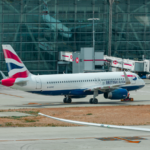
British Airways has confirmed that the aircraft experienced a technical issue. Photo credit: David McQ/Shutterstock

There are few things more unsettling on a flight than realising the aircraft is suddenly going down, and it is even worse when you are thousands of metres above the ground with no idea why. British Airways passengers experienced exactly that on Monday when their flight to Chicago lost more than 8,500 metres of altitude before turning around and heading back to London.

The Boeing 777 had been making its way across the Atlantic when the dramatic descent began, forcing the crew to declare an emergency and abandon the transatlantic journey. It comes just days after the extraordinary flydubai incident that saw another passenger flight plunged into an emergency over the Middle East.

British Airways plane drops 8,500 metres over Ireland

BA295 left London Heathrow at around 11:50am on Monday, October 5, bound for Chicago O’Hare on what should have been an eight-hour-and-40-minute journey. Around an hour after take-off, the Boeing 777 had reached a cruising altitude of approximately 37,000 feet when something went wrong over Ireland. Flight-tracking data showed the aircraft rapidly descending to around 9,000 feet, a difference of roughly 28,000 feet, or more than 8,500 metres, in a matter of minutes.

The crew also transmitted the 7700 emergency code, alerting air traffic control that the aircraft was experiencing a general emergency. Instead of continuing west towards Chicago, the pilots turned the aircraft around and began heading back towards London.

BA flight circles before returning to Heathrow

The Boeing 777 did not immediately return to Heathrow. After turning around, the aircraft spent several hours flying over the UK and surrounding waters, with tracking data showing it circling over the Bristol Channel and travelling over parts of Devon and south-west Wales before making its way back towards Heathrow.

The reason for the lengthy flight back was the amount of fuel still on board. BA295 had been prepared for a transatlantic journey, meaning it had far more fuel than it would need for a short return to London. The aircraft therefore spent time in the air burning fuel before landing. The flight eventually touched down safely at Heathrow at around 5pm, almost five hours after leaving London. The passengers had expected to arrive in Chicago, but instead found themselves back at the airport they had left that morning.

British Airways confirms technical problem

British Airways has confirmed that the aircraft experienced a technical issue, although the airline has not said what the problem was. A spokesperson said: “The safety of our customers and crew is always our top priority,” and confirmed that the aircraft landed safely after the pilots returned to Heathrow.

Passengers were able to leave the aircraft normally, with the airline saying its teams were working to get their travel plans back on track. Reports have also emerged of oxygen masks hanging from the ceiling inside the aircraft, with passengers reportedly using them during the incident. British Airways has not confirmed that a cabin pressurisation problem caused the descent, so the exact reason for the sudden loss of altitude remains unknown.

The 7700 code used by the crew does not reveal what went wrong. It is the standard transponder signal for a general emergency rather than a code identifying a particular technical failure. The airline has not yet provided further details about the fault that prompted the crew to abandon the journey to Chicago.

Passengers forced to abandon Chicago trip

For the passengers on flight BA295, the emergency brought their plans to Chicago to a sudden pause, with British Airways now working on how to get the passengers back on their original travel plans as quickly as possible.  With several other Heathrow-to-Chicago services still scheduled, the passengers could potentially continue their journey later than planned, although the airline has not said which flights they will be offered we just hope that the next one doesn’t decide to take the plunge and lands them safely at their destination.

%

Spain Faces Major 24-Hour General Strike This Autumn — How It Could Affect You

Published

on

spain-faces-major-24-hour-general-strike-this-autumn-—-how-it-could-affect-you

UGT and CCOO say wages are not keeping pace with the cost of housing and inflation. Photo credit: Uvamen/Shutterstock

If your salary is already disappearing into rent, mortgage payments, bills and food before the month is over, the latest announcement from Spain’s two biggest unions is likely to get your attention. UGT and CCOO have agreed to call a 24-hour general strike this autumn, arguing that wages are no longer enough to give people access to decent housing. 

The exact date has not yet been announced, so there is no need to change your plans just yet. However, the proposed stoppage could affect working days, public transport, schools and other services across Spain when it goes ahead, with the unions now working with the Sindicato de Inquilinas (tenants union) and other social organisations on the timing and mobilisation.

Why are UGT and CCOO calling a general strike?

The unions are linking two problems that increasingly collide in everyday life: what people earn and what they have to pay for somewhere to live. UGT and CCOO say wages are not keeping pace with the cost of housing and inflation, leaving workers unable to afford suitable accommodation despite being in employment. Their demand is therefore not simply for lower rents. They want salaries that allow people to pay for a home without being pushed into financial difficulty. 

The decision follows the rejection in Congress of housing measures backed by the unions last Friday. It also comes after major demonstrations over Spain’s housing crisis, with protesters demanding action on rents, the supply of affordable homes and protection for people struggling to remain in their homes.  For the unions, the workplace is part of that argument. CCOO leader Unai Sordo has said housing costs are closely linked to wages and collective bargaining, arguing that workers cannot negotiate better living conditions if their earnings remain squeezed. 

What will the strike actually mean for you?

If you are employed in Spain, the first thing to know is that you will not automatically be required to strike. Taking part in a lawful strike is a worker’s right, while employees who choose to work are also protected from being forced to join it. However, striking means your employment contract is suspended for the duration of the stoppage and you do not receive your normal salary for that period.  That means anyone considering joining the 24-hour stoppage will need to weigh the lost day’s pay against supporting the unions’ demands.

The impact could be much more noticeable outside individual workplaces. A general strike can affect transport, schools, public services, deliveries, shops and other businesses depending on how many workers participate and which sectors are affected. Public services will not simply shut down. Where services are considered essential, minimum services can be imposed so that certain activity continues during a strike. The precise arrangements for this particular stoppage will only become clear once the date and official minimum-service requirements are established. 

What should you be prepared for?

At this stage, don’t start rearranging your life around a strike date, because there isn’t one yet. Once the date is announced, workers should check with their employer about how their workplace will operate and whether any particular arrangements apply. If you rely on trains, buses, metro services or flights, check the operator’s information before travelling rather than assuming your normal service will run.

Parents should also watch for information from schools and local authorities, particularly if they normally rely on public transport for the school run. Anyone with an appointment, journey or other time-sensitive commitment should allow extra time and check for cancellations or reduced services closer to the day.

The same applies to businesses. A company does not necessarily have to close because a general strike has been called, but staffing levels can affect opening hours and the services it can provide. The unions have not yet completed the final procedural step either. The agreement announced on October 5 still has to be ratified by the highest governing bodies of UGT and CCOO. 

When will Spain’s general strike happen?

UGT and CCOO say the date will be agreed alongside the Sindicato de Inquilinas and other social organisations. UGT general secretary Pepe Álvarez has also said the strike will not be held during the election campaign. Spain is due to hold a snap election on November 29, adding another significant deadline to the autumn calendar. 

The planned stoppage would be the first general strike backed by both UGT and CCOO since 2012, making it a significant national mobilisation rather than an isolated dispute involving one industry or group of employees.  For millions of people already struggling to make a salary stretch far enough to cover a roof over their heads, the argument behind the strike is about something considerably more basic than a day’s disruption: whether having a job in Spain is enough to afford somewhere to live.

Continue Reading

%

Why Rain Opened A Hole In Catalonia Street

Published

on

why-rain-opened-a-hole-in-catalonia-street

Floods and sinkholes appearing after heavy rains. Credit: JOC X

The weekend storm in Catalonia was already a serious travel story. Monday’s rain did something else. It opened the road.

Two sinkholes appeared in Granollers, in the Vallès Oriental, after ground soaked since Saturday took another 107 litres per square metre in a morning, about 50 of them in half an hour. The town’s running total is now about 350 litres.

The larger hole is on Carrer Josep Umbert i Ventura, in front of the courts. Firefighters put it at about five metres across and six deep. Offices opposite, including the courthouse, were evacuated. No one was hurt, the buildings were cleared, and staff were allowed back. The hole is still cordoned off, and crews warned it could grow. A second collapse opened on Carrer Equador, in the Font Verda neighbourhood. The ring road flooded, Rodalies stopped, water reached hospital stores, and schools stayed shut. Protecció Civil sent an ES-Alert and, for a time, told the county to stay indoors.

Sinkhole season: Beware post-rains roads

Holes like these are a regular Spanish autumn event, and they are not usually the limestone caves people picture. The word in Spanish is socavón, and most of the ones that open after a cloudburst are washouts. Rain finds a crack in the asphalt, or overwhelms a gully, and runs into the layers under the road. Once that sub-base is saturated it loses its strength, and the carriageway drops into the void. Spain is well set up for it.

Long dry spells bake and crack the surface. A Mediterranean downpour can then dump a month of rain in an hour, onto drains that were never built for that. Blocked culverts and ground already full from a previous storm do the rest. There is a slower kind too. Large parts of the east and south sit on limestone, and water widens fractures for years before a doline appears with little warning. The Granollers holes look like the first kind: a road that had simply taken all the water it could.

Autumn storms in Spain

Monday was a second burst, not a repeat of Saturday’s airport closures. It still added to the toll. A second person was found dead in a flooded garage in Montornès del Vallès, after the death at a Tordera campsite already reported. Crews are still searching for a person swept away on Sunday in the stream at Pineda de Mar. The day brought at least 1,650 calls to 112 and about 46 rescues, including a woman and a three-year-old pulled from a car in Coma-ruga. On Sunday the Besòs touched about 900 cubic metres a second at Santa Coloma.

Extremadura had its own red-alert afternoon on Sunday, separate from the Catalan coast. Tierra de Barros, La Serena and the south of Badajoz were the focus. The regional flood plan was switched on, an ES-Alert went to 90 municipalities, Barcarrota recorded 79 litres, and roads were cut around Salvatierra de los Barros. The damage has not matched events further east.

New alerts signal danger

Tuesday is still the wet day flagged on Sunday, but the warnings have shifted. Orange alerts now cover Huesca and Lleida. Extremadura, Toledo and Salamanca are on yellow, with the heaviest falls still expected there, across western Castilla-La Mancha, the Sistema Central and the Pyrenees. Hail is possible. Yellow warnings also cover much of Andalucia, Galicia, Madrid and the Barcelona coast. Stay out of streams and underpasses, and do not drive through standing water.

Continue Reading

%

Isuzu D-Max 2.2 Review: New Engine Specs, Towing & MPG

Published

on

isuzu-d-max-2.2-review:-new-engine-specs,-towing-&-mpg

Isuzu is retiring its long serving 1.9-litre turbo diesel from the D-Max pick-up range and replacing it with a new 2.2-litre unit that promises better performance and efficiency, and at the same time offering a new 8-speed automatic transmission option alongside the standard 6-speed manual box.

The new 2.2-litre engine produces 400Nm of torque, with 255Nm at just 1,000rpm, and a total power output of 163PS. Fuel economy now offers a whisker under 8.56 l/100km (33mpg) combined and the benchmark 100kph/62 mph reached in, a still leisurely, 12.2 seconds. To be fair it’s hardly the kind of vehicle you’ll be taking to the Nürburgring and certainly the previous versions still felt more than brisk enough despite the leisurely acceleration. The new power unit is centred on greater efficiency and performance with improved refinement.

A shift-on-the-fly system allows rolling switches between two and four-wheel-drive high and there’s a selectable rear differential lock and rough terrain mode. An 800mm wading depth is complemented by good approach, departure and ramp breakover angles. In terms of payload the D-Max 2.2 can deliver 1205kg along with a maximum braked towing capacity of 3500kg.

To coincide with the new power unit there are some styling changes and specification upgrades across the model line-up.  New-style sidesteps are included on DL40 and V-Cross models, and there’s a new Urban Moss metallic paint finish, plus a new 360-degree Surround View Camera that deploys digital cameras on the front radiator grille, tailgate and wing mirrors, displaying images on the infotainment screen when moving or parking.

Internal changes to the new 2.2 model include revised seat designs, with enhanced cloth and leather trims. High-grade textured cloth is offered as standard on the DL20 model, and leather is standard on DL40 and V-Cross versions.

There are three body styles; single cab, extended cab and double cab with the double cab models offering a 6-speed manual gearbox or the optional new 8-speed automatic. The trim levels range from the entry Utility model through to the top-of-the-range V-Cross.

Prices start from €39,251 (£33,495 excluding UK VAT) for the lead-in single cab Utility version through to €50,384 (£42,995 excluding UK VAT) for the flagship V-Cross model. Unless white is your favourite colour then Isuzu is being a tad miserly in expecting you to fork out an additional €703 (£600 excluding UK VAT) for any other colour.

Overall then the new engine brings what was an ageing, although reliable and well-proven, power plant up to a more modern level of efficiency, performance and refinement.

Continue Reading

Trending

Copyright © 2017 Spanish Property & News