Connect with us

%

Brits In Spain Get A New Banking Option As Monzo Launches With Free Accounts

Published

on

brits-in-spain-get-a-new-banking-option-as-monzo-launches-with-free-accounts

Monzo’s launch gives Spain’s residents another free bank account to consider. Credit: lilaclion / Shutterstock

Brits living in Spain have a new bank to weigh up as Monzo launches here, with free accounts and a 4 per cent savings pot. Whether it could replace your current one is another matter, with some small print to check first.

Monzo has opened accounts to the public in Spain

Monzo, the British app-only bank used by around 16 million people in the UK, started opening accounts to the public in Spain on Wednesday October 28. Until now, access has been limited to people on a waiting list that opened in May. 

There are five types of accounts: personal, joint, children’s (for ages six to 17), business and a basic account, all run through one app and described by Monzo as free. It also says its personal accounts carry no foreign exchange charges, with purchases abroad converted at the Mastercard rate. 

Joint accounts need both holders to have a Monzo account, while the children’s version needs a parent or guardian with their own. The business account is for autónomos and limited companies, which could matter to self-employed Brits, and Monzo says it already has one million business customers in the UK. Its Spanish site is also available in English.

The bank has opened offices in Barcelona and Madrid and had hired more than 50 staff by May. Its Spain boss, former Western Union and N26 executive Francisco Sierra, called the launch “a huge milestone for Monzo” and said the bank has “big ambitions here”. 

It’s entering a busy market, up against Revolut, N26 and Santander’s online bank Openbank. Monzo’s own research claims close to 60 per cent of Spaniards have been caught out by unexpected bank fees, which helps explain its pitch of free accounts.

Why the British bank is arriving through Ireland

Monzo’s British banking licence doesn’t cover the EU after Brexit, so the company claimed a European one through Ireland in December 2025. It launched there in April this year, which makes Spain its second EU market. 

In Spain, customers are served by Monzo Bank Europe DAC, a branch registered with the Banco de España. That matters for your money as deposits are protected by Ireland’s guarantee scheme up to €100,000 per customer, and not by the UK scheme that backs Monzo’s British accounts.

That isn’t unusual, though. Revolut’s Spanish accounts are currently covered by Lithuania’s scheme up to the same €100,000, and the cover could move to France if the company shifts its Spanish customers to its new French bank. 

Can British residents open an account?

Monzo’s launch announcement doesn’t mention foreigners at all, so the answer has to come from the small print. Its Spanish site says the basic account is for people who live in Spain, are 18 or over and don’t already have a payment account here, unless one is about to close. That would suggest that anyone living in Spain could open an account. 

Monzo’s help page then spells out what ID counts. Spaniards need a DNI (national identity card), other EU nationals can use their own ID card or passport, and nationals of non-EU countries can use a TIE (foreigner identity card) or passport. That would appear to cover Brits living here legally, although British residents aren’t explicitly named. 

To move up to a full personal account, the same page says you must declare Spanish tax residence and provide a NIF (Spanish tax number), which foreign residents normally have in the form of their NIE (foreigner identity number).

Anyone who owns a home in Spain but lives in the UK looks to be out of luck for now, as the accounts are only described for people living in the country and using it as their main residence.

The 4 per cent savings pot is the main attraction

Monzo’s savings pot pays 4 per cent a year (TAE, the Spanish equivalent of AER) for 12 months on the first €5,000, as long as it’s opened before Thursday December 31. After that, the rate drops to 2.50 per cent on balances of up to €100,000. Interest is paid monthly, and the pot needs a Monzo current account alongside it, which pays nothing. 

Savings interest is taxable in Spain, with 19 per cent withheld at source. One Spanish finance site worked out that €5,000 would earn about €196.50 before tax, which is roughly €159 after it. The standard rate is also variable, although Monzo has to give at least a month’s notice before cutting it.

What’s still unclear before you switch

Monzo’s website says the accounts come with a Spanish bank account number (IBAN) and work with Bizum, the mobile payment app that’s now spreading into Spanish shops. However, a launch-day review on Finect said the Spanish IBAN is still planned for this autumn and that wages can’t yet be paid in. The same review and others also report limits on free cash withdrawals, so it’s worth checking the fees document in the app. Finect also notes that the contract can be cancelled within 14 days of opening.

Nor is it clear whether a Spanish Monzo account can be linked to a British one, as the help pages don’t say.

So if you’re thinking of switching, open the app to see what Monzo asks of you, and keep your current bank open until your wages, bills and Bizum payments are definitely working.

%

Barcelona Airport Halts Departures As Baby’s Medical Emergency Forces Plane To Land

Published

on

barcelona-airport-halts-departures-as-baby’s-medical-emergency-forces-plane-to-land

The aircraft was directed to park very close to the runway exit. Photo credit: Santi Rodriguez/Shutterstock

A flight to your holiday destination is unlikely to go exactly to plan if you end up making an unscheduled stop in another country. But for one family travelling with a baby, the diversion to Barcelona was not an inconvenience or a change of travel plans. It was an urgent race to get their child medical attention.

The aircraft was flying from Casablanca in Morocco to Istanbul in Turkey when the crew reported that an infant, just a few months old, needed urgent medical assistance. The flight was diverted to Barcelona-El Prat on Sunday, November 8, so the baby could be taken off the plane and transferred for treatment.

A medical emergency thousands of feet above the ground

There was no option to continue towards Istanbul and wait until the aircraft reached its scheduled destination. The crew requested an emergency diversion to Barcelona after reporting that the baby had medical problems requiring immediate attention.

The child’s condition has not been disclosed, and there is no information about whether the baby became unwell during the flight or had an existing medical problem. What is clear is that the crew considered the situation urgent enough to change course and request priority landing at another airport.

Barcelona airport gives the aircraft priority

Air traffic controllers coordinated a direct approach to runway 24L, allowing the aircraft to land as quickly as possible. The runway is closest to the sea and is normally used for take-offs, rather than arrivals. The airport also had to consider the amount of fuel still on board and the aircraft’s weight before the landing. Once the arrangements were made, the flight was given priority, with other movements adjusted to leave the runway clear.

The emergency landing briefly disrupted normal operations at Barcelona-El Prat. Take-offs were stopped temporarily, while other aircraft waiting to land were held until the diverted flight had safely touched down. The reports do not specify how many flights were affected or how long the interruption lasted, but the pause allowed the aircraft carrying the baby to land without competing with other movements.

Ambulance ready to take baby from the plane

Getting the aircraft onto the ground was only part of the operation. The next priority was making sure medical staff could reach the baby without having to wait for the plane to taxi across the airport. After landing, the aircraft was directed to park very close to the runway exit.

This allowed emergency personnel to get to the plane quickly and carry out the evacuation, with the baby taken away by ambulance for medical attention. The positioning was arranged specifically to speed up access for the medical teams. Rather than following the usual route to a stand or terminal, the aircraft stopped in a location that allowed the infant to be transferred as soon as possible.

Controllers send message of support

Spain’s air traffic controllers confirmed the incident in a post on X, explaining that the crew had requested an urgent diversion because of the baby’s medical problems. They also thanked the flight crew, medical staff and airport operations personnel who helped coordinate the response. Their message ended with a wish for the baby to recover soon and well. It was a brief acknowledgement of the people involved in an operation where every minute mattered to the child waiting for medical care.

La tripulación del vuelo Casablanca Estambul solicita desviarse de urgencia al aeropuerto de Barcelona 🛬 Hay un bebé de apenas meses a bordo con problemas médicos que requieren atención urgente 👶🚨

Coordinamos aproximación directa a la pista 24L, la más cercana al mar y usada para despegues 🛫 Para ello, nos aseguramos de que podrán tomar y, una vez hecho, paramos despegues y hacemos esperar momentáneamente a los aterrizajes.

Una vez en tierra, se les facilita estacionamiento muy cercano a la salida de pista 🚑 Ahí, los servicios médicos pueden llegar se inmediato y realizar la evacuación. Reanudamos operativa.

Esperamos que el pequeño se recupere pronto y bien ❤️‍🩹
Gracias a todos los implicados en el operativo; personal sanitario, tripulación, operaciones…

#emergencia #atc #aviacion #airtrafficcontrol

— 😉Controladores Aéreos 🇪🇸 (@controladores) November 8, 2026

There has been no further public information about the baby’s condition, the treatment received or which hospital the ambulance took the infant to. The airline has also not released details about arrangements for passengers continuing to Istanbul. The aircraft’s diversion brought the journey to an unexpected halt in Barcelona, but the reports have not confirmed whether the flight later continued to Istanbul or what happened to the passengers. The baby’s condition also remains unknown.

Continue Reading

%

Spain’s €17bn Electricity Grid Overhaul Aims To Unblock Housing, Factories And Major Investment

Published

on

spain’s-e17bn-electricity-grid-overhaul-aims-to-unblock-housing,-factories-and-major-investment

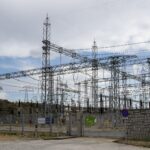
The proposal includes 19 new electricity substation sites. Photo credit: DFLC – Multmedia Designer/Shutterstock

The shortage of electricity connections has become another obstacle for Spain’s housing market, with new developments, factories and major investment projects competing for space on an already overstretched network. Now the Government is increasing the capacity it plans to make available to the autonomous communities, adding almost 20 gigawatts to its original proposal in a move that could unlock projects worth billions of euros.

The revised plan will make 47.3 gigawatts of additional connection capacity available for new demand by 2030, compared with the original 27.7 GW proposal presented in September 2025. The increase follows demands from regional governments, which have warned that insufficient access to the electricity network is holding back housing construction, industrial expansion and economic development.

Madrid, Aragón and Andalucía receive the biggest allocations

The investment required to deliver the expansion has also risen to more than €17 billion, €3.4 billion above the initial proposal. The number of connection points is set to increase by 52 per cent to 300, giving major electricity users more opportunities to connect to the national transmission network.

The distribution gives Madrid the largest additional allocation, with 6.5 GW, followed by Aragón with 6 GW and Andalucía with 5 GW. Castilla-La Mancha will receive 4.1 GW, while the Comunitat Valenciana has been allocated 3.8 GW. The increases reflect the different projects each region wants to attract. Madrid has pressed for more capacity to supply new housing developments in the north and south of the region, as well as planned data centres.

Andalucía, meanwhile, has asked the ministry to address what it considers a shortfall in its electricity network. La Rioja and the Balearic Islands will not receive additional demand connection capacity under the revised allocation, although their networks will still benefit from improvements to electricity transmission.

New homes, factories and green hydrogen projects

Access to electricity has become a major consideration for developers planning new housing, particularly in areas where existing networks cannot accommodate additional demand. Without an available connection, projects can struggle to progress even when land and planning permissions are in place. The revised plan identifies housing as a priority in Madrid, Andalucía, Catalonia, the Canary Islands, the Balearic Islands, Murcia, the Comunitat Valenciana and Castilla y León. More capacity is also earmarked for industrial development in the Basque Country, Cataluña, Galicia, Extremadura, Navarra, Murcia and the Comunitat Valenciana.

Data centres are included in the plans for Aragón and Madrid, while the availability of electricity for green hydrogen production is a priority in Andalucía, Castilla y León, Murcia, Cantabria, the Basque Country and Galicia. Rail electrification and cleaner port operations also feature in the proposals for several regions.

Andalucía provides an example of how the additional capacity could be used. Its allocation includes 5 GW for new electricity demand, with the regional proposal prioritising industry, including hydrogen production. According to the ministry, 70 per cent of the demand covered by its revised proposal relates to industrial projects, with the remainder covering housing, port decarbonisation and railway electrification.

A €17 billion investment with a long way to go

The infrastructure needed to support that expansion is substantial. In Andalucía alone, the proposal includes 19 new electricity substation sites, 1,283 kilometres of new power lines and improvements to another 651 kilometres of existing lines. The region is also expected to receive more than 8 GW of additional access capacity for renewable generation, alongside 1 GW for energy storage. Across Spain, the revised programme includes 193 electricity substations, 6,706 kilometres of new transmission lines and the upgrading of 8,164 kilometres of existing network.

The number of connection positions available to serve new demand through distribution networks will rise to 300, while positions for direct industrial consumption on the transmission network will reach 162. The plan follows an examination of 2,566 objections submitted by regional governments, businesses and other interested parties. The changes have increased the proposed investment from €13.6 billion to more than €17 billion, making it the largest electricity network planning programme in Spain’s history, according to the ministry.

When will the new electricity capacity become available?

However, announcing additional capacity does not mean every proposed home, factory or data centre will automatically receive an electricity connection. Red Eléctrica must still deliver the infrastructure, and developers must secure the necessary access permissions. Some projects have already experienced delays lasting up to 20 years, a problem the Government has previously criticised the network operator over.

The regional governments have also questioned the speed of the latest consultation process, with several councillors expressing concerns about the rushed meetings used to finalise the allocations. The ministry now wants to complete the remaining parliamentary step before taking the plan to the Council of Ministers.

Environment Minister Sara Aagesen is due to present the revised proposals to the Congressional Permanent Deputation on November 12. This will allow the Government to proceed with approval before the November 29 general election, after which it will enter caretaker status. For communities waiting for new homes, industrial investment and employment opportunities, the additional capacity could remove one of the obstacles holding projects back. But the real test will be whether the promised investment translates into functioning infrastructure and connections on the ground, rather than another round of plans waiting to be delivered.

Continue Reading

%

Almuñecar Turns Up The Volume

Published

on

almunecar-turns-up-the-volume

Musical November in Almuñecar. Credit: Casa de la Cultura Almuñecar

Queen, Beatles, flamenco and heavy metal headline Costa Tropical’s November cultural programme.

Almuñecar is getting ready for a busy fortnight of entertainment, with a varied November cultural programme bringing live music, dance, classical performances and some familiar tribute acts to the Costa Tropical.

Music, film and music in Almuñecar

From heavy metal and flamenco to the music of Queen and The Beatles, the programme offers plenty of choice for residents and visitors looking for something to do as the autumn season continues. The latest events follow the town’s Almuñecar jazz festival and its Jazz en Otoño autumn music programme.

One of the first events takes place on Friday, November 13, when the Casa de la Cultura hosts Un concierto de película at 8pm. Combining music, cinema and charity, the concert features the Motril choir Son de Caña and supports humanitarian work through the ACOES Honduras foundation.

Metal fans will have a very different experience the following afternoon. The second Sexitanian Falling Metal festival arrives at Parque El Majuelo on Saturday, November 14, from 5pm. Five bands from across Spain are scheduled to perform: Fallen At Dawn, Inyourface, Bourbon Kings, Inxight and El Santo. Further information and tickets for Sexitanian Falling Metal II are available from the organisers.

Saturday evening brings a change of pace, with contemporary dance production ILOCUO taking to the stage at the Casa de la Cultura at 8pm. Classical music lovers can return on Sunday, November 15, when Cuarteto Arriaga performs at 7pm.

From Flamenco to Afro-Cuban rhythms

The programme continues on Thursday, November 19, with Noches de Tango, followed by Sireré Flamenco on Friday, November 20. The latter combines traditional flamenco with Afro-Cuban rhythms in a production featuring dancer Laura García.

One of the most anticipated performances could be The Gospel of Queen, arriving on Saturday, November 21, at 8pm. The production combines the legendary British rock band’s music with gospel singing, featuring Bohemians and Gospel Sounds Granada.

Sunday, November 22, brings two more musical events. The Almuñecar Municipal Band celebrates Santa Cecilia, patron saint of musicians, with a concert at 1pm. Admission is free, subject to available capacity.

Beatles fans can then enjoy an evening with tribute act The Silver Beats, performing at 7pm at the Casa de la Cultura.

Music is not the only attraction in the wider November programme. Almuñecar is also hosting literary activities, historical talks, storytelling sessions for children and cultural exhibitions.

With events catering for very different musical tastes, the town is offering residents and visitors plenty of reasons to enjoy its cultural calendar beyond the summer months. The town’s official Almuñecar events calendar provides further information about local activities.

Continue Reading

Trending

Copyright © 2017 Spanish Property & News