Connect with us

Latest

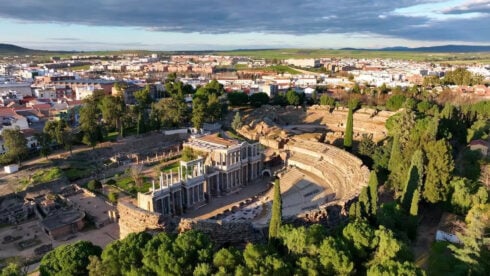
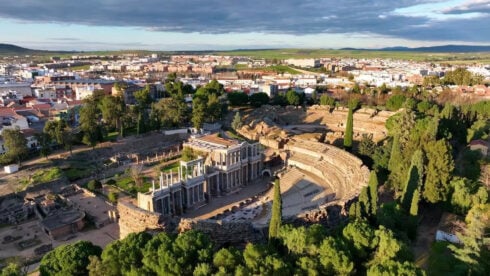
The World’s Best-Preserved Roman Bridge And A Theatre Still Putting On Plays After 2,000 Years Await Visitors To This Ancient Roman Capital

Published

on

the-world’s-best-preserved-roman-bridge-and-a-theatre-still-putting-on-plays-after-2,000-years-await-visitors-to-this-ancient-roman-capital

Latest

Spain’s Transport Minister Blames Rail Crash On ‘inexplicable Human Error’

Published

on

By

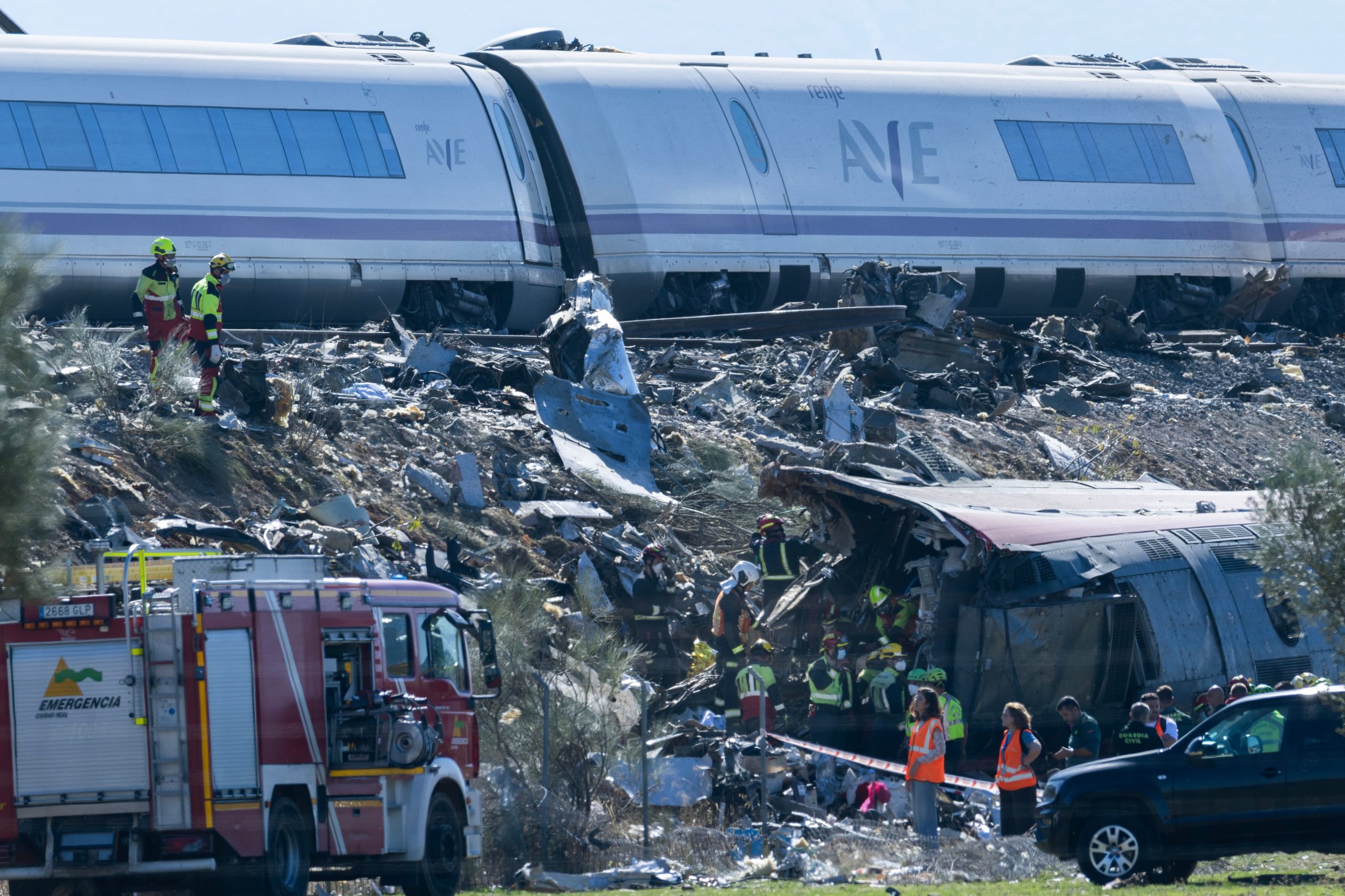
A rail collision in Spain that claimed at least 68 lives on Wednesday came after a train was ordered to go in “error” by Spanish rail infrastructure manager Adif, despite a technical failure that halted all services, the transport minister said.

Spanish Minister of Transport Óscar Puente has directly blamed a decision by the Adif control centre for the accident between a Renfe AVE high-speed train and an Iryo train at the entrance to Urda station (Toledo) on Wednesday.

Adif is Spain’s state-operated rail infrastructure manager tasked with building, managing and maintaining the tracks, while Renfe runs Spain’s public trains.

The first findings relating to the accident in the central region of Castilla-La Mancha are likely to revive questions about rail safety in Spain after another high-speed collision in January killed 46 people.

Don’t miss our journalists’ daily news roundup from Spain

Puente said 69 kilometres (43 miles) of track were affected by an outage of the automatic control system, which “caused all the trains that were running at that time to stop automatically”.

READ ALSO: What we know so far about Spain’s deadly train collision

“The decision to resume traffic, while that system had not been restored, belongs to the control centre, and the control centre… took the decision to resume traffic in circumstances that, from our point of view, are inexplicable,” Puente said.

🔴 Óscar Puente atribuye a un error humano “inexplicable” que se ordenara reanudar la marcha al AVE antes del accidente con el Iryo en Urda https://t.co/XkQscRdDWU https://t.co/WWZwZV9ZLx

— elDiario.es (@eldiarioes) October 28, 2026

A train operated by state company Renfe restarted and travelled 25 kilometres until it collided with a stationary train belonging to private Spanish company Iryo, at a speed that could have reached “up to 200 kilometres per hour”, Puente added.

“It is clear that, in the control centre, the decision was taken to restart, and then they had more than enough time to verify the error, and they did not fix it,” Puente said.

With additional reporting by The Local Spain’s Alex Dunham

Continue Reading

Argentina

Flávio Bolsonaro Lands In Miami After Fleeing Brazil Via Argentina

Published

on

flavio-bolsonaro-lands-in-miami-after-fleeing-brazil-via-argentina

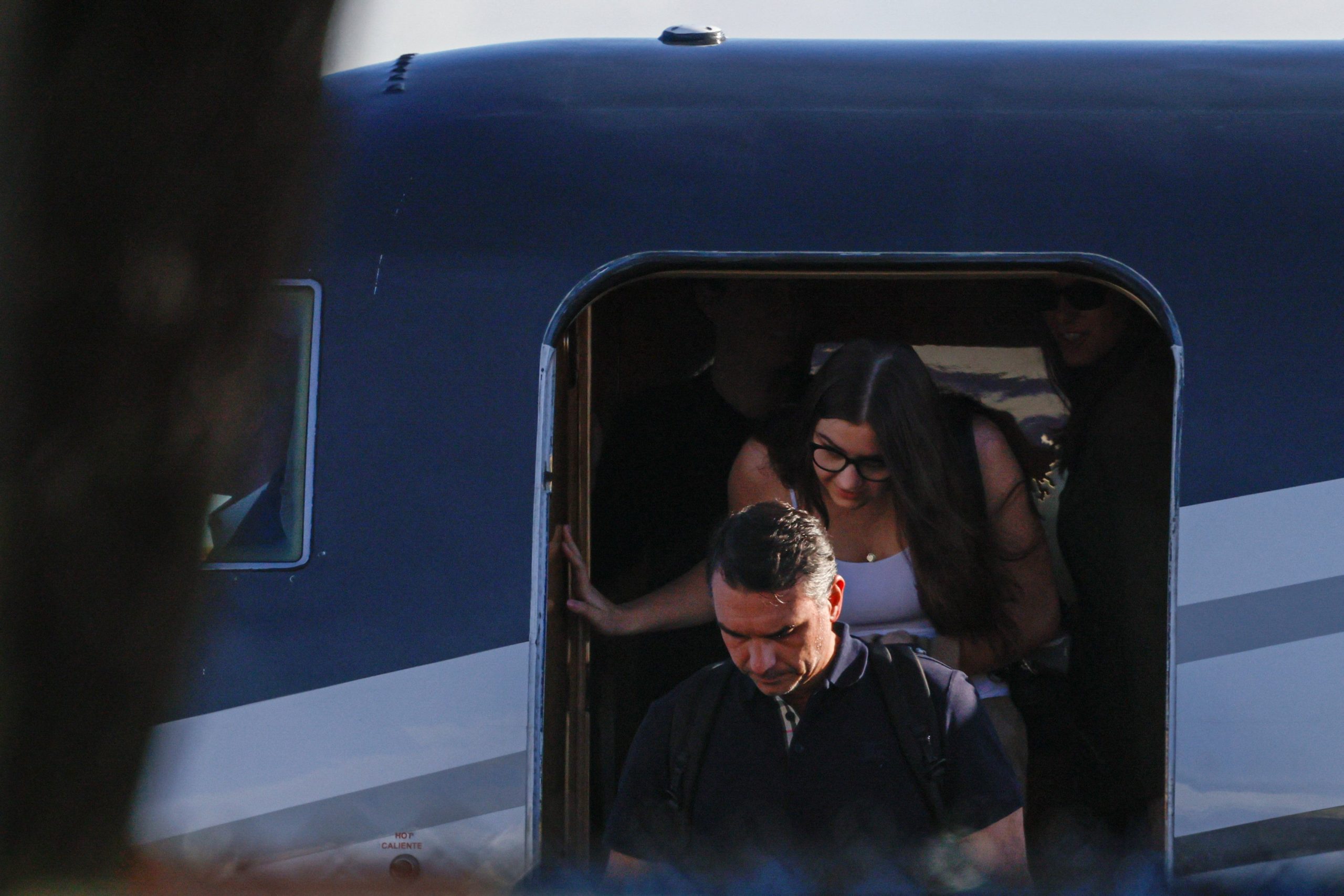
The plane carrying Flávio Bolsonaro and his family landed in Miami, Florida, on Wednesday morning. The Brazilian senator arrived at Opa-locka Executive Airport, north of Miami, at 9:20 a.m., after fleeing Brazil less than two days after losing the Brazilian presidential election to Luiz Inácio Lula da Silva.

Bolsonaro arrived in Florida after promising he would remain in Brazil to lead the opposition to Lula. Before leaving the country, he failed to comply with an order from Brazil’s Supreme Court requiring him to surrender his passports. On Tuesday, the administration of Donald Trump announced that it would issue visas for Bolsonaro, his wife and their two daughters.

Tuesday was marked by a series of confusing and self-serving accounts, with no one certain of Bolsonaro’s whereabouts. Earlier in the day, Argentina’s immigration authorities denied that he had entered the country, which was true at the time: he had not yet crossed the border.

Bolsonaro entered Argentina at 10:50 p.m. that night with his wife and two daughters, crossing via the Tancredo Neves International Bridge, which links Foz do Iguaçu, Brazil, with Puerto Iguazú, Argentina. The crossing was later confirmed by Argentina’s immigration agency in a statement issued at 2 a.m.

Barely 40 minutes after crossing the border, the family was on board a Gulfstream G400 operated by Baires Fly, which had been waiting at Puerto Iguazú airport since Monday.

Brazilian Supreme Court Justice Alexandre de Moraes, regarded as the Bolsonaro family’s chief adversary, had ordered the cancellation of Flávio Bolsonaro’s Brazilian passports and the surrender of his Italian passport, which he obtained in 2023.

According to the flight manifest, Bolsonaro crossed the border using his European passport, while his wife and daughters travelled on Brazilian passports. The aircraft took off shortly after midnight for Guayaquil, Ecuador. It landed there before dawn, refuelled and departed again half an hour later, according to the newspaper El Universo.

Flávio Bolsonaro is under investigation by Brazil’s Supreme Court on suspicion of money laundering and foreign-exchange evasion alongside his friend Willer Tomaz, a lawyer with business interests in the betting industry. Federal Police investigators suspect the senator is Tomaz’s silent partner. According to Folha de S.Paulo, Bolsonaro at one point had administrative access to a bank account belonging to a Tomaz company registered in Madeira, and the two men share addresses, travel records and business associates. Both deny any wrongdoing.

Bolsonaro’s stopovers were not accidental. Javier Milei’s Argentina is the Bolsonaro family’s closest ally in the region and has yet to recognize Lula’s election victory. “There will be no statement,” Milei’s government said. In July, at the launch of Flávio Bolsonaro’s campaign in São Paulo, Milei referred to Lula as a “convict” and a “thief,” prompting Brazil to summon its ambassador in Buenos Aires for consultations.

Daniel Noboa’s Ecuador, meanwhile, is one of Donald Trump’s closest partners in Latin America and, by extension, an ally of the Bolsonaros. Neither Argentina’s presidency nor Baires Fly immediately responded to requests for comment.

Bolsonaro’s decision to leave Brazil comes after a defeat that neither he nor his supporters had expected. Although he finished ahead of Luiz Inácio Lula da Silva in the first round on October 4, Lula staged a comeback to win Sunday’s runoff with 51.79% of the vote, compared with 48.21% for Bolsonaro. It was an unprecedented turnaround in Brazil’s democratic history.

Flávio Bolsonaro did not concede defeat, but hours later insisted he had never intended to leave the country and would instead lead the opposition against the left. His Senate term expires at the end of the year and, after 24 years in politics, he will no longer hold elected office. Without a seat in Congress, he will also lose the legal protections afforded to officeholders.

What Bolsonaro plans to do in the United States remains unclear, but the path has already been paved. The country has become a political rear base for the Bolsonaro family. His father, Jair Bolsonaro, flew to Orlando two days before leaving office in December 2022 and spent three months there while his supporters stormed Brazil’s Congress, Supreme Court and presidential palace in Brasília. His brother, Eduardo Bolsonaro, has lived in Texas since early 2025 and, from there, lobbied the Trump administration to impose tariffs on Brazil and sanctions on Moraes. Brazil’s Supreme Court later sentenced Eduardo Bolsonaro to four years and two months in prison over those efforts.

The Trump administration has made its support clear. His administration appointed a Brazil adviser close to the Bolsonaro family and has now opened the door to the son who was expected to inherit the Bolsonaro political movement.

On Monday, less than 24 hours after Brazil’s election, Trump publicly questioned the result. “It looked like another rigged election, frankly,” the Republican president told reporters. “I didn’t take sides, but it was a terrible look for the world.”

Trump, who faces pivotal elections of his own in less than a week and has already sown doubts about the process, went on to add: “Elections have to be indisputable, and it looked really bad to me.”

Sign up for our weekly newsletter to get more English-language news coverage from EL PAÍS USA Edition

Continue Reading

Adif

What Is The LZB Signaling System, One Of The Key Factors In The Fatal Train Accident In Spain?

Published

on

what-is-the-lzb-signaling-system,-one-of-the-key-factors-in-the-fatal-train-accident-in-spain?

The Madrid–Seville high-speed rail line, where two trains collided on Wednesday, has several signalling and protection systems designed to regulate traffic, control the distance between trains and reduce the risk of accidents. According to government sources, early evidence suggests the collision may have been triggered by human error after a failure in the line’s main signalling system.

The collision occurred at kilometer 118 of the line, between the towns of Mora, Orgaz and Urda, in the province of Toledo, on Spain’s oldest high-speed railway, which opened in April 1992 to coincide with that year’s Universal Exposition in Seville.

According to Adif’s Network Statement, which details the characteristics of the rail infrastructure and the access conditions for train operators, the infrastructure uses the German LZB (Linienzugbeeinflussung) system, a railway safety technology that continuously monitors train speeds and transmits traffic instructions to the engineer’s cab. However, when the automated safety system fails, operations revert to manual control.

Early reports suggest that the safety system failed on Wednesday, causing eight trains in the area to be brought to a halt. The control center subsequently switched to manual operation and instructed all trains to resume their journeys. One Iryo service, however, was unable to restart and remained stationary on the track. Following an instruction issued by the controller at Madrid’s Atocha control center, an AVE high-speed train travelling behind it resumed service and shortly afterwards collided with the Iryo train at a speed that has not yet been determined.

The Madrid-Seville high-speed rail line is currently undergoing a major modernization program. The LZB system is being replaced by the more advanced European Rail Traffic Management System (ERTMS), an EU initiative designed to standardize railroad signaling and control systems across Europe and ensure interoperability between national networks. The version being deployed on the line, ERTMS Level 2, also provides continuous speed and braking supervision but relies on radio communications rather than information transmitted at fixed points by trackside devices.

Rail safety does not depend on a single technology. The infrastructure combines signaling systems, train-detection equipment, and block-control procedures designed to maintain safe separation between trains and prevent conflicting movements. Among the protection systems in use is ASFA (Announcement of Signals and Automatic Braking), which transmits information from trackside beacons to the train operator. Installed on all major lines owned by Spain’s state-owned railway infrastructure manager Adif, including the route connecting central Spain with Andalusia, ASFA alerts operators to certain fixed signals, monitors speed as trains approach them, and can automatically apply the brakes in specific situations, such as when a train passes a stop signal.

In addition to these train protection systems, the rail network relies on a range of traffic-management safety mechanisms, including block-control systems. According to Adif’s Network Statement, the line where the crash occurred is equipped with an Automatic Block Control (BCA) system. Under this system, train operators receive continuous information in the cab about speed and distance, helping ensure that speed limits are not exceeded.

Adif’s signalling technical standards (NAS 811) also include train detection systems, which are used to divide the track into sections (blocks) and continuously identify the presence or absence of movements, enabling safe management of rail traffic.

Added to all this are the communications systems with the command center. Spanish high-speed lines use GSM-R, a mobile technology that enables voice and data communications between trains and control centers through dedicated frequency bands to avoid interference. GSM-R replaced the older analog Train-Ground system, which provided communications between individual trains and the control center.

Investigators will now have to reconstruct the full sequence of events, from the possible signaling failure to the order for trains to resume service and the subsequent collision, in order to determine whether the prescribed procedures were followed and whether any technical or human errors contributed to the crash.

Sign up for our weekly newsletter to get more English-language news coverage from EL PAÍS USA Edition
Continue Reading

Trending

Copyright © 2017 Spanish Property & News