Connect with us

%

Mallorca’s Festes Del Turista

Published

on

mallorca’s-festes-del-turista

A festival designed to bring visitors and the local community together Credit: Instagram/eastmallorca_

The 2026 Festes del Turista got off to a lively start in Cala Bona last weekend, with the harbour filled with the sounds, flavours and atmosphere of a festival designed to bring visitors and the local community together.

The celebrations began on Saturday, September 19, with the traditional Nit de Vins, an evening dedicated to Mallorcan wine and local produce at the Port de Cala Bona.

More than simply a series of end-of-summer events, the Festes del Turista celebrate the relationship between Cala Millor and Cala Bona and the thousands of people who visit the resorts each year. Held as the main tourist season begins to wind down, the festivities give residents and holidaymakers the chance to come together and enjoy local food, wine, music and traditions. They also offer an opportunity to show visitors a side of the destination beyond its beaches and hotels, creating a genuine community atmosphere in which tourists are invited to feel part of the area.

Wine gets the celebrations underway

The Nit de Vins was organised by Fogoneu 15 with the support of the Consorci de Turisme and provided the perfect opening to this year’s programme.

Taking place at the harbour, the event offered visitors the chance to sample a selection of local wines in a relaxed seaside setting.

Tickets cost €15 and included wine tastings, while people wanting to take their favourite bottles home could benefit from a €5 discount on purchases made within the event area.

The evening also placed the spotlight firmly on Mallorca’s wine-producing tradition and the importance of local products to the area’s tourism offering.

Joan Mestre Adrover, president of the Consorci de Turisme and Tourism Councillor for Sant Llorenç, said the event demonstrated what the destination represents, highlighting quality, local produce and an atmosphere where residents and visitors can feel part of the celebrations.

Pep Miquel Servera Leno, vice-president of the Consorci, mayor and Tourism Councillor for Son Servera, described the event as an important meeting point that helps strengthen the identity of the destination.

He also highlighted the importance of cooperation between local organisations and producers in creating experiences that showcase the area’s character.

A packed programme continues

The Nit de Vins was only the beginning, with the Festes del Turista continuing across Cala Bona and Cala Millor over the coming days.

On Wednesday, September 23, bands from Son Servera and Sant Llorenç des Cardassar will take part in a street parade along Passeig Cristòfol Colom and Carrer Sol.

A flamenco performance will follow at the Port de Cala Bona on Thursday, September 24, before traditional Mallorcan dancing takes centre stage during Sa Revetla on Friday evening.

Saturday, September 26, will bring another busy day, beginning with first-aid and lifeguarding activities at Cala Millor beach before the return of Turistapa 2026.

The popular food event will take place at Parc de la Mar, with local restaurants, hotels and associations serving tapas, giving visitors another opportunity to discover the area’s culinary scene.

The day will also feature a performance by the Al·lots de Llevant castellers, followed by an evening show.

Fireworks over Cala Millor Bay

One of the biggest highlights of the celebrations comes on Sunday, September 27, which also coincides with World Tourism Day.

A local produce fair will take place at Parc de la Mar from 7pm, followed by a parade featuring the Dimonis de Son Ganxo.

The traditional correfoc will then bring fire, music and spectacle to the celebrations before the festival’s most spectacular moment, with a major fireworks display over Cala Millor Bay at 10.30pm.

The programme continues into October, with the Festes del Turista concluding on October 3 with a charity race at Parc de la Mar, followed by a gala dinner at participating hotels.

Now in its 51st edition, the festival has become an established part of the Cala Millor and Cala Bona calendar, offering a colourful way to celebrate the people, traditions, food and culture that make the destination more than just a summer holiday resort.

%

Torre Del Mar ONCE Seller Hands Out €1.235 Million In Lottery Prizes

Published

on

torre-del-mar-once-seller-hands-out-e1.235-million-in-lottery-prizes

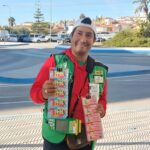
Juan Carlos Zalazar, regular ONCE ticket seller. Credit: OV FB

Juan Carlos Zalazar sold a lottery ticket that won €1.235 million in local lottery prizes along his usual Torre del Mar route, including one €500,000 jackpot and 21 prizes of €35,000.

Torre del Mar ONCE seller delivers €1.235 million

Zalazar sold 22 winning coupons during his Thursday, September 24 route around Torre del Mar. The winning number was 35972, with series 044 taking the top €500,000 prize.

Zalazar has worked as an ONCE seller since 2022 and does not have a fixed sales point. His winning tickets went to customers he knows from his daily rounds, spreading the money among several familiar faces in the Axarquia town. Born in Bolivia, Zalazar has lived in Spain for 20 years.

Lottery windfall arrives on wedding anniversary

An extra twist came on the same day as Zalazar’s 15th wedding anniversary. His wife is from Torre del Mar, and he joked that the payout had given them a reason to extend their celebrations.

“I’m very happy to have been able to give so much luck to my customers, who are there every day,” he said.

Some winners needed convincing before celebrating. Zalazar said one customer was doubtful because the previous day’s winning number had also ended in two. Friday brought no day off for the lucky seller. He was back on his route as usual.

How much does the ONCE Cupón Diario pay?

The Cupón Diario is drawn from Monday to Thursday. The main prize is €500,000 for matching all five numbers and the series, while 49 coupons matching the five numbers win €35,000.

Thursday’s coupon was dedicated to sport and the UN Sustainable Development Goals, carrying the message ‘Sport for sustainable development’.

The Torre del Mar payout comes less than two weeks after another ONCE windfall in the Axarquia area. On September 13, seller Francisco Lucia sold a Sueldazo in Torrox Costa worth €2,000 a month for ten years, or €240,000 in total.

ONCE uses income from its lottery products to fund programmes and services for people who are blind or have severe visual disabilities. The organisation also provides employment opportunities for thousands of people with disabilities, with its network of more than 21,400 sellers playing a central role in distributing its lottery products across Spain.

Continue Reading

%

Relatives In Spanish Care Homes May Not Be Able To Choose Their Own Bed Time

Published

on

relatives-in-spanish-care-homes-may-not-be-able-to-choose-their-own-bed-time

Care home routines can leave little room for personal choice, new figures show. Credit: Robert Kneschke / Shutterstock

Ask a Spanish care home whether it has a personalised care plan for your relative and the answer is almost certainly yes. Ask whether that plan means they choose their own bedtime and, according to new figures, there’s a good chance it doesn’t. 

Nine in 10 care homes say they have a personal plan

Spain has published its second full count of residential care centres, and for the first time it used the same standard everywhere rather than letting each region measure things its own way. The Ministry of Social Rights, Consumo y Agenda 2030 (Spain’s social affairs ministry), through Imserso (the Institute for the Elderly and Social Services), counted 7,893 centres between homes for older people and homes for people with disabilities, and asked every one of them how they run day to day.

Nine in 10 said they had a personalised care plan for each resident. On paper, that sounds like exactly the individual attention families hope for when they choose a home. In practice, according to the same figures, it doesn’t always stretch as far as when someone goes to bed. 

Just under half let residents choose their bedtime

Only 46.9 per cent of centres said residents could decide for themselves when to go to bed and get up. In the rest, that call is made for the whole home rather than left to the individual, whatever their own habits might be.

It’s an easy detail to overlook when weighing up a care home, where the assumption is usually ‘of course you’d still get to live by your own routine, just with more support around you’. These figures suggest that isn’t always the case, and the gap between having a written plan and actually letting someone choose their own hours is exactly where families’ expectations and reality can part ways. 

It’s worth being clear what the census measures, too. The figures come from centres describing their own policies, not from residents describing what their days are really like, so a home that ticks the box for flexibility on paper could still fall short of it in practice. Officials have also said this second count isn’t directly comparable with the first from 2024, since both the methodology and the centres included have changed.

Restraints, pets and shared rooms tell a similar story

The rest of the census paints a similar picture of a sector still working towards full personal choice rather than delivering it everywhere. Three in four centres say they have a plan to phase out physical or mechanical restraints, and just over half allow residents to keep a pet, though that figure drops sharply in publicly run centres compared with private ones.

Fewer than half of residents have a room to themselves, with shared bedrooms still the norm across both elderly and disability centres. Ownership matters too, with nearly two in three elderly residences privately owned and run, and the rest split between public ownership and centres that are publicly owned but privately managed. 

The census follows a bigger shift in how Spain cares for elderly people 

This count lands only a week after Congress approved Spain’s biggest overhaul of dependency and disability law in 20 years, a reform aimed squarely at people cared for at home rather than in residential settings. That law lets home carers accompany someone to appointments, combines previously separate services and allows friends or neighbours to be paid as informal carers, but it says nothing about what happens once someone actually moves into a home.

Rosa Martínez, Spain’s Secretary of State for Social Rights, said the point of the census wasn’t to grade individual homes but to finally see the sector clearly. “You cannot transform what you do not know,” she said, arguing that a shared national standard was overdue after years of each region measuring what it could, however it could.

What to ask before choosing a home

There’s no way to check a specific home’s real routine from a national spreadsheet, so the most reliable option is still to ask directly, and specifically, rather than accepting a general reassurance about “personalised care”.

The questions that are most important to ask before signing anything:

  • Do residents choose their own bedtime and wake-up time, or does the home run one fixed schedule for everyone?
  • Does that answer change for residents who need more support, or who share a room?
  • How often and when are visits allowed, and does that change at short notice? 
  • Can residents keep their own belongings, furniture or a pet in their room?
  • How is a personalised care plan actually put into daily practice, rather than just written down?

A written care plan is a start, not proof, so the safest way to know how a home really runs is still to ask before signing anything, not after a relative has already moved in.

See also: Families caring for elderly parents in Spain say Brexit has left them with impossible choices and Understanding live-in home care, for families weighing up alternatives to residential care.

Continue Reading

%

Is Your Supermarket Kefir Really Kefir? Spanish Study Raises A Surprising Question

Published

on

is-your-supermarket-kefir-really-kefir?-spanish-study-raises-a-surprising-question

The researchers found considerable differences depending on the type of product. Photo credit:Tetyana_Pidkaluyk / Shutterstock.com

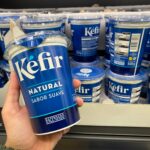
Kefir has gone from something most people had barely heard of to a regular fixture in Spanish supermarket fridges. It is sold as a healthy fermented drink, often bought by people looking for an easy way to add beneficial bacteria and other microorganisms to their diet. But there is a rather awkward problem hiding behind the label.   A study by researchers at Spain’s Universitat Rovira i Virgili has found that you cannot reliably tell from the packaging whether the kefir you are buying contains yeast, one of the microorganisms traditionally found in kefir fermentation.

Researchers examined 170 kefir products sold in Spain and initially found that just 36 mentioned yeast on their labels.  After one manufacturer corrected an apparent labelling error affecting two products, that figure rose to 38. So, in a supermarket aisle packed with bottles proudly calling themselves kefir, the name alone may not tell you very much about what is actually inside.

What makes kefir kefir?

The distinction is important because traditional kefir is rather more complicated than ordinary yoghurt. Kefir is produced through fermentation involving a community of microorganisms. These include lactic-acid bacteria, acetic-acid bacteria and yeasts, which work together during the fermentation process. That mixture is part of what gives traditional kefir its particular characteristics.

The researchers compared Spanish supermarket products with the international Codex Alimentarius definition of kefir, which recognises the combination of bacteria and yeasts involved in its production. The problem is that European food labelling rules do not require manufacturers to list every microorganism present in a fermented product. That leaves shoppers with a surprisingly simple problem: the front of the bottle may say kefir, but the label may not tell them whether yeast is actually part of the fermentation.

Researchers checked 170 supermarket products

The study was carried out in August 2025 and looked at 170 products from 46 brands sold through national and regional supermarket chains covering around 60 per cent of the Spanish market. The researchers recorded information including the type of milk or other base used, whether the kefir was drinkable or spoonable, its price, whether it was organic and what manufacturers said about its microorganisms. Only 36 products, or 21.2 per cent, explicitly mentioned yeast.

The researchers later issued a correction after Danone informed them that two Activia kefir products did contain yeast, despite it not appearing on their packaging because of an error during the production of the labels. That brings the number to 38 products, or 22.35 per cent. The finding does not mean that the other 132 products were fake kefir or contained no yeast. The study was primarily an examination of product information and labelling, rather than a laboratory test proving the microbial composition of every bottle, that distinction is crucial.

Some kefir products were more transparent

The researchers found considerable differences depending on the type of product.Among cow’s milk kefirs, yeast was declared on 29.9 per cent of labels. None of the goat’s milk, sheep’s milk, mixed goat-and-sheep, plant-based or water kefirs in the sample declared yeast. Drinkable products were also more likely to mention it than spoonable kefirs. Yeast appeared on the labels of 35.7 per cent of drinkable products, compared with 13.1 per cent of spoonable versions. There were differences according to where the products were made, too. 

Yeast was declared by 14.7 per cent of nationally produced products, compared with 53.3 per cent of products whose origin was not Spanish. The figures produced another unexpected result when researchers looked at price. Among the cheapest products, 36.8 per cent declared yeast. That fell to 28.1 per cent in the middle price group and just one of the 56 products in the highest-price group. Organic kefir was even more striking. None of the 63 organic products examined declared yeast, compared with 35.5 per cent of conventional products.

What should Spanish shoppers make of it?

The study does not mean people should stop buying kefir, nor does it show that most supermarket kefir is somehow fraudulent. What it does show is that consumers cannot use the label alone to establish the microbial composition of many products sold as kefir. For people buying it specifically because they want traditionally fermented kefir, that lack of information is significant. The researchers argue that clearer labelling would give consumers a better understanding of what they are buying.

They also point to the lack of specific microbiological requirements for kefir under current European rules, compared with the international Codex standard. Kefir may have become a familiar sight in Spanish supermarket fridges, but the research suggests that the name on the bottle does not necessarily give shoppers the full story. And when the whole reason for buying a fermented food is what is happening inside it, that seems like a fairly important detail to leave off the label.

Continue Reading

Trending

Copyright © 2017 Spanish Property & News