Connect with us

%

Calvià Celebrated Europe Day With Music, Markets And Family Activities In Palmanova

Published

on

calvia-celebrated-europe-day-with-music,-markets-and-family-activities-in-palmanova

Palmanova’s seafront promenade hosted music, markets and family activities during Calvià’s Europe Day celebrations. Credit: Facebook/Ayuntamiento de Calvia

Palmanova transformed into a lively multicultural festival this weekend as Calvià celebrated Europe Day with live music, street performances, food stalls and family activities along the Passeig de la Mar.

The all-day event took place on Sunday, May 10, bringing together residents, tourists and local associations for one of the municipality’s most colourful community celebrations of the spring season. Organised by Calvià Town Hall, the festivities ran from 10am until 10pm and attracted families throughout the day.

International market and live entertainment filled the promenade

Visitors explored an international market stretching along the seafront promenade, while children enjoyed face painting sessions, inflatable attractions and street parades held throughout the day.

The event placed a strong focus on cultural diversity and European coexistence, with organisers highlighting the importance of solidarity and community spirit in one of Mallorca’s most international municipalities. Local associations and performers helped create a festive atmosphere designed to reflect the many cultures that form part of everyday life in Calvià.

Several parades moved through Palmanova during the celebration, while the main stage hosted a full programme of performances ranging from traditional Mallorcan dance to modern music acts.

Traditional dance and music shared the stage

The entertainment programme began in the morning with performances by a modern dance academy followed by the official opening ceremony. One of the highlights of the day was a Ball de Bot performance featuring traditional Mallorcan dancing accompanied by live music, bringing a local cultural element to the European-themed celebration.

Throughout the afternoon and evening, DJ sessions and live bands kept crowds gathered near the stage area. Organisers scheduled several festive-style performances that continued until the closing concert in the evening.

The seafront atmosphere, warm spring weather and family-friendly programme helped maintain a steady flow of visitors across the day.

Calvià continued tradition of Europe Day celebrations

Europe Day celebrations have become an established annual tradition in Calvià, where a large international population has helped shape the municipality’s identity over recent decades.

Town hall officials described the event as an opportunity to celebrate coexistence and strengthen connections between local communities and international residents living across the municipality.

Palmanova’s Passeig de la Mar once again served as the centrepiece for the festivities, with market stalls, performances and activities spread across the waterfront area until the event concluded at 10pm.

The celebration formed part of wider Europe Day events taking place across Mallorca and Spain marking European unity, cultural exchange and cooperation between member states.

%

Palma’s Binter NightRun Transformed The City Into A Huge Open-Air Sporting Festival

Published

on

palma’s-binter-nightrun-transformed-the-city-into-a-huge-open-air-sporting-festival

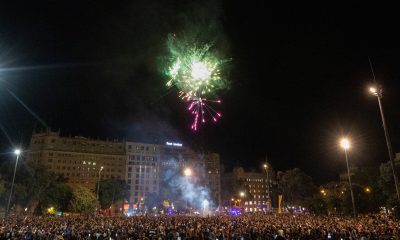
Palma’s Binter NightRun drew thousands of runners and spectators for its sixth edition across the city centre. Credit: Instagram/Binter NightRun

Thousands of runners and spectators filled the streets of Palma on Saturday night as the sixth edition of the Binter NightRun turned the city centre into one of Mallorca’s biggest sporting events of the spring.

The popular night race returned to Palma on May 9 with illuminated routes, live music, DJs and entertainment points spread across the city, creating a festival atmosphere that continued late into the evening. Organisers described the event as one of Spain’s leading urban night races, attracting participants of all ages and abilities.

Three races brought runners through Palma’s landmarks

The event featured three different race formats designed to appeal to both experienced runners and families. The Green Family Mile, a charity-focused 1.7-kilometre route, began at the Dalt Murada esplanade beneath Palma Cathedral. The race was designed as an accessible and inclusive event encouraging participation from families and casual runners.

Later in the evening, participants took part in the 5K and 10K races through Palma’s historic centre and waterfront areas. The 5K route began near the Consolat de Mar on Passeig Sagrera, while the longer 10K race started at Bellver Castle before runners descended into the city centre under special lighting and entertainment effects. Large crowds gathered along the routes as runners passed some of Palma’s best-known landmarks including the Cathedral, the seafront promenade and the old city walls.

Music, lights and entertainment created festival atmosphere

Unlike a traditional road race, the Binter NightRun focused heavily on creating an entertainment experience for both runners and spectators. Throughout the evening, DJs, music stages and lighting installations animated the route while bars and terraces across Palma remained busy with visitors watching the race unfold. Organisers promoted the event as a combination of sport, tourism and nightlife, helping strengthen Palma’s growing reputation for large-scale urban sporting events.

Participants were encouraged to arrive early, with race bib collection taking place at El Corte Inglés Alexandre Rosselló throughout Friday and Saturday before the event.

Palma continued growing role in sports tourism

The Binter NightRun forms part of a wider race series held in several Spanish cities including Tenerife, Murcia, Zaragoza and Las Palmas. Palma’s edition has steadily expanded in recent years and is now considered one of the island’s standout sports tourism events. Earlier this year, the race was officially promoted at FITUR 2026 as part of Mallorca’s international tourism strategy.

For many runners, however, the appeal went beyond competition. The combination of illuminated streets, warm Mediterranean temperatures and a festive city atmosphere once again transformed Palma into a giant nighttime celebration of sport and community.

Continue Reading

%

Spanish Foods May Worsen Allergies

Published

on

spanish-foods-may-worsen-allergies

Spring allergy season has hit Spain super hard once again, with olive pollen, grasses, and cypress triggering sneezing, itchy eyes, congestion, and fatigue across the country. Millions of people are turning to antihistamines for relief from the misery that is allergies, but few realise that some traditional Spanish foods may also be adding to their discomfort.

Antihistamines are designed to block the body’s histamine response, certain foods in your favourite tapas naturally contain high levels of histamine or encourage its release. For people already suffering with allergies, the combination can sometimes make symptoms feel worse rather than better.

Why histamine-rich foods matter during allergy season

Histamine is a chemical involved in both the immune system and allergic reactions. During hay fever season, the body already produces more histamine in response to pollen. Some foods, especially aged, cured, fermented, or preserved products also contain histamine.

Although antihistamine medication helps reduce symptoms, experts say large amounts of dietary histamine may still contribute to headaches, flushing, congestion, skin irritation, digestive issues, and tiredness in sensitive people.

According to medical sources people with suspected histamine intolerance or severe seasonal allergies may benefit from temporarily reducing high-histamine foods while symptoms are at a high. 

Traditional Spanish foods highest in histamine

Spain’s Mediterranean diet is widely considered one of the healthiest in the world, but several beloved staples happen to fall into the high-histamine category.

Cured meats

Jamon serrano, chorizo, fuet, salchichon, and other cured meats develop histamine during the ageing and fermentation process. The longer the curing time, the higher histamine levels can become.

For allergy sufferers, large tapas platters filled with cured meats may sometimes contribute to blocked sinuses, headaches, or feelings of fatigue.

Aged cheeses

Mature Manchego, Cabrales, Mahon, and blue cheeses are also known for naturally elevated histamine levels. Fresh cheeses tend to contain less histamine than aged varieties.

Experts note that fermentation and ageing are two of the main drivers behind histamine build-up in foods.

Anchovies and preserved seafood

Boquerones, anchovies, canned tuna, sardines, mussels, and other conservas can also contain significant histamine levels, particularly when preserved for long periods.

Seafood itself is not necessarily the problem, freshness is key. Fresh grilled fish generally contains lower histamine levels than canned or heavily preserved alternatives.

Vinegar-heavy tapas and pickled foods

Popular tapas dishes prepared with vinegar or brine, including olives, pickled vegetables, and boquerones en vinagre, may also trigger symptoms in people sensitive to histamine.

What allergy sufferers should eat instead

Doctors are not advising people to avoid traditional Spanish cuisine entirely. Instead, experts recommend focusing more on fresh foods during peak allergy periods.

Lower-histamine options may include:

  • Fresh grilled fish
  • Tortilla española
  • Fresh chicken
  • Rice dishes
  • Most fresh vegetables
  • Olive oil-based meals
  • Fresh goat’s cheese
  • Seasonal fruit except citrus for sensitive individuals

When to speak to a doctor

Histamine intolerance is not the same as a food allergy, and many people can eat these foods without any issue at all. However, if allergy symptoms seem unusually severe despite taking antihistamines, diet may be worth discussing with a pharmacist or doctor.

If you are tearing your eyes out and have a streaming nose this season then making a few temporary changes to the tapas menu could help some sufferers breathe a little easier.

Continue Reading

%

ITV Prices Rise Sharply Across Spain

Published

on

itv-prices-rise-sharply-across-spain

ITV prices in Spain continue to vary sharply depending on the region and vehicle type. Credit :rafa jodar, Shutterstock

Two drivers can take almost the same car for an ITV inspection in Spain this year and walk away paying completely different prices. In some regions, motorists are paying little more than €30, while in others the bill for a diesel vehicle is climbing past €60. And with prices rising again in several parts of the country, many drivers are starting to ask the same question: how can the same mandatory inspection cost so much more depending on where you live?

The ITV has always been one of those unavoidable expenses for drivers in Spain. But in 2026, it is becoming a growing frustration, especially for people already dealing with higher fuel prices, insurance increases and tighter driving restrictions in many cities.

What surprises many motorists is that there is no single ITV price across Spain. The inspection itself is mandatory nationwide, but the amount people actually pay depends on the autonomous community, the type of vehicle and even the station they choose.

For drivers with diesel cars, the difference can be especially painful.

Why the ITV costs much more in some parts of Spain

Many drivers assume the ITV works like a national fixed fee. It does not. The technical side of vehicle inspections is regulated under Royal Decree 920/2017, which establishes the safety and environmental checks stations must carry out. But pricing is left largely in the hands of the autonomous communities.

That is where the big differences begin.

Some regions regulate tariffs directly. Others operate with more open competition between private ITV companies. As a result, prices can vary sharply from one province to another.

In Catalonia, for example, a standard petrol car inspection currently sits at just over €40, while a diesel vehicle rises to roughly €45.

In Andalusia, prices vary depending on the vehicle type and station, but diesel inspections can approach €50.

Meanwhile, in places such as Cantabria and the Valencian Community, certain diesel vehicles may end up paying more than €60 for the inspection.

Madrid is another example where drivers often see major price differences between stations because the market is more liberalised. That means comparing prices before booking an appointment can genuinely save money.

Some motorists are now even travelling to neighbouring towns or nearby stations purely because the difference in price is worth it.

Diesel drivers are still the ones paying the highest prices

If there is one group feeling the increases most, it is diesel car owners.

Diesel vehicles usually cost more to inspect because the ITV includes stricter emissions testing and additional pollution controls. That extra scrutiny pushes the price up compared with petrol vehicles.

Electric cars can sometimes be slightly cheaper depending on the region, although not dramatically so. For many drivers, however, the frustration is not only about the ITV itself. It is the feeling that driving in Spain is becoming steadily more expensive from every angle.

Insurance has gone up for many households. Fuel prices remain unpredictable. Parking is becoming more complicated in some cities and Low Emission Zones continue expanding. Against that background, even an extra €10 or €15 on an ITV inspection feels annoying to many motorists.

The inspection stations themselves argue that rising operational costs are partly behind the increases.

Energy bills, equipment maintenance and updated inspection technology all come at a price. Modern vehicles also contain increasingly sophisticated electronic systems that ITV stations now have to test properly.

Environmental regulations have added further pressure, especially for diesel engines. Industry sources say some stations had already delayed tariff increases for years and are now trying to recover higher operating costs gradually.

What drivers can do to avoid paying more than necessary

One thing many motorists still do not realise is how much prices can vary between stations in the same area.

In regions with a more competitive system, the difference between two nearby ITV centres can sometimes be surprisingly large for the exact same vehicle. That is why many drivers now compare prices online before booking.

Some stations also offer cheaper appointments during quieter hours or discounts for online bookings, although these promotions are not always easy to spot.

Another way drivers end up spending more than necessary is by failing the inspection over small problems.

Faulty lights, worn tyres, warning lights on the dashboard, damaged wipers or registration plate issues remain among the most common reasons for a failed ITV.

That means checking the vehicle properly beforehand can save both time and money. Drivers are also being advised not to leave the appointment until the last moment.

In some areas, waiting lists can become longer during busy periods and driving with an expired ITV can lead to fines as well as problems with insurance if an accident occurs.

Spanish rules allow drivers to complete the inspection up to 30 days before the expiry date without changing the renewal cycle for the next ITV. For many motorists, that extra flexibility is becoming increasingly useful. But despite all the comparisons, discounts and planning, one reality remains the same across Spain in 2026.

The ITV is still compulsory for everyone. The only thing that changes dramatically is the amount drivers end up paying for it.

Continue Reading

Trending

Copyright © 2017 Spanish Property & News