
Africa
‘Caporalato’, The System That Enslaves Thousands Of Migrants In Italy’s Fields: ‘If You Don’t Do What They Ask, They Threaten To Set You On Fire’


When Tazeeb Tazeeb arrived in Italy in 2021 after fleeing Pakistan —where he had received threats for his work as a journalist— and walking the Balkan route, he thought he had left his troubles behind. He found work in the fields of the Veneto region alongside other countrymen, and accepted a contract he barely understood. “It says here you have to do what I tell you,” the foreman who had acted as the intermediary to get him the job kept telling him. That was the first red flag.
For months, the 29-year-old woke up at 4.00 am to work the grape harvest and perform other farm tasks. At times he worked 12-hour shifts for weeks on end. “You couldn’t get sick, you couldn’t rest. The only rule was to work and shut up. There was always someone watching us,” he recalls.
He shared housing provided by the foreman, with mattresses spread across the floor: “It was a house for four people and 20 of us lived there.” They picked grapes with their bare hands. “They didn’t give us gloves, goggles or boots. Each worker had to buy their own shears and protective gear,” he continues. They also had to pay five euros a day for getting a ride to the fields.
The promised pay never arrived. The intermediary gave them some food and reminded them he was covering their lodging. “At first they paid us three or four euros an hour. Then, for eight months we were paid nothing. We discovered that the employer had already handed our wages to the intermediary, but we still hadn’t been paid,” the day laborer explains.
Threats were part of the routine. “If you didn’t do what they asked without complaining, they threatened to set you on fire,” Tazeeb says. Only when he and other coworkers went to the union did they uncover the deception: the contract listed barely 10 hours of work per week.
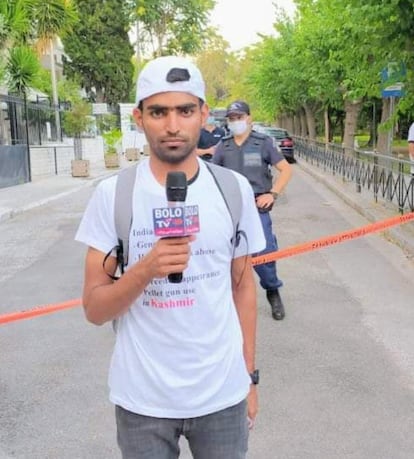
Tazeeb had become one of the many victims of the so-called caporalato in Italy, the illegal labor brokerage system in which foremen or recruiters supply agricultural companies with labor under exploitative conditions. Under this system the capo organizes the recruitment, transportation, housing and even salary payments, often keeping part of the wages, which gives them enormous power over workers.
Foreign victims
Although the phenomenon historically also affected many Italian workers, for years now the majority of victims have been foreigners, especially from Africa, Asia and Eastern Europe. They are often in a more vulnerable position because of language barriers, irregular legal status and a lack of support networks. “They always look for people who don’t speak Italian well and don’t know their rights. They take advantage of people who need to work. Whoever has just arrived in Italy almost always ends up in agriculture because, without papers, they have no other option,” Tazeeb explains.
According to the latest report from the Placido Rizzotto Observatory, linked to the FLAI-CGIL union, about 240,000 people are exposed to caporalato and other forms of labor exploitation in Italian agriculture, almost a quarter of the sector’s workforce. More than 70% are non-EU citizens and around 50,000 are women.
Jean-René Bilongo, president of the Observatory, stresses: “Caporalato turns people into objects and discards them when they are no longer useful. It is a form of modern slavery and a grave wound to the culture of work.”
Tazeeb was one of the first migrant seasonal workers to denounce the abuses he suffered, almost four years ago. Although the courts ruled in his favor and he now has a residence permit, the process was long and tortuous. He still works in the fields but also runs a small agricultural cooperative he set up with several colleagues: with it he has replaced the intermediary or capo and tries to secure for other day laborers the conditions he never had.
However, he says the system continues to haunt him. The prices many employers are willing to pay barely cover wages, taxes and social contributions. “If I accept those conditions, I can’t work legally,” he says. After years in the Italian fields, he feels he still hasn’t escaped the web of precariousness and exploitation that feeds caporalato: “Many employers tell me that other Pakistanis or Indians accept working for less. I’ve only found one or two people who pay fairly. I’ve only once been able to send money to my family,” he laments.
When, on June 1, 2026, four migrant day laborers were brutally killed in Calabria —burned alive inside a car— many asked again how it was possible that, in mid-2026, labor exploitation remains so widespread in Italy’s fields. Yet those who have long investigated the phenomenon say that tragedy was not an exception but the most extreme manifestation of a system that continues to affect tens of thousands of people.
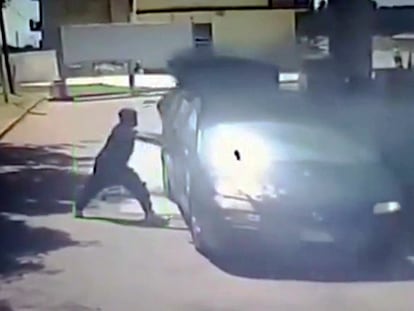
For Marco Omizzolo, a sociologist at Sapienza University, a researcher at Eurispes and one of Italy’s leading experts on the subject, the main reason caporalato persists is as simple as it is forceful: “Because it is convenient. It’s economically profitable.” Added to that, he explains, is a widespread sense of impunity. “Many employers who exploit migrant labor are convinced they will never be inspected or that controls will be minimal,” the researcher laments.
Omizzolo knows that reality from the inside. After more than two decades studying the phenomenon, he lived for almost two years with Indian day laborers and even infiltrated as an agricultural worker to document the system from within. “We worked 14 to 16 hours a day for wages that in some cases barely reached €300 or €350 a month,” he recalls.
If a decade ago caporalato was more visible, today it has taken on much more sophisticated forms. “It’s no longer what it was in 2011, but it has shown an extraordinary capacity to adapt,” says Yvan Sagnet, founder of the No Cap organization and a former day laborer. Sagnet led the historic 2011 Nardò strike, the first large protest by migrant day laborers in Italy, a milestone that put the phenomenon at the center of the national debate and opened the way to initial legal reforms. “Today exploitation hides behind fake cooperatives, subcontracting or apparently legal mechanisms. Social tolerance has decreased and inspections have increased, but it’s still there,” he says.
In Calabria, thousands of workers still live in shacks, abandoned buildings or improvised camps. Doctors for Human Rights (MEDU), one of the organizations that assists migrant agricultural workers in southern Italy, regularly documents housing without running water, electricity or adequate sanitation. In some cases waste is burned in the open air and seasonal workers cycle several kilometers to reach fields along unlit roads.
Medical teams commonly find respiratory illnesses, dermatological problems, muscle disorders and work-related injuries that sometimes require hospitalization. “It’s necessary to stop treating caporalato as a permanent emergency and accept that it is a structural problem of the Italian agricultural system, which feeds on the vulnerability of thousands of workers. Rights, protection and decent living conditions must be guaranteed to those who sustain one of the country’s main productive sectors,” says Martina Castelli, national coordinator of MEDU.
Omizzolo has also documented an even more extreme reality. Since 2014 he has investigated agricultural workers forced to use opiates, methamphetamines and other stimulants to endure punishing workdays. One worker explained his situation to him this way: “Without those substances I can’t work. If I can’t work, I can’t eat. If I can’t eat, I can’t support my family. I’m forced to drug myself to survive.” “Society defines itself as democratic and constitutional, but it produces the contemporary slave,” the researcher notes.
Italy approved a specific law against caporalato in 2016 that expanded judicial tools to fight labor exploitation. Although it was an important step forward, it remains insufficient to eradicate the phenomenon. “Inspections are too sporadic,” Yvan Sagnet says.
“Agromafias”
The mafias have found a business in caporalato. Researchers and unions have for years denounced that local clans and foreign criminal intermediaries operate in a coordinated way. The sole survivor of the Calabria massacre, currently under police protection, told investigators there was a large Pakistani mafia network behind control of agricultural labor.
Tazeeb shares that perception and says he has heard intermediaries boast about their ties to local clans and claim the seasonal workers’ complaints did not worry them. “Italian mafias and some foreign intermediaries work together. And when they work together, the ones who always suffer are the workers,” he stresses.
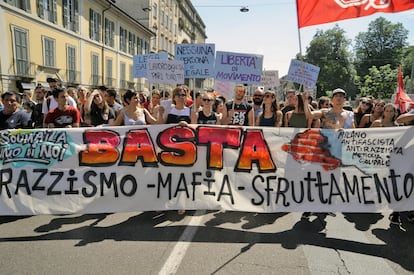
According to the latest report from Eurispes, one of Italy’s main socio-economic research institutes, mafias infiltrated in the agri-food sector —known as “agromafias”— now move more than €25 billion a year through activities such as caporalato and labor abuses, food fraud, control of logistics and diversion of public funds.
Omizzolo explains that in certain agricultural areas “the territory is better controlled by the mafias than by the state.” In that context, he argues, some employers find it more useful “to maintain a relationship of favor with the mafias than a relationship of law with the state” to exploit workers with total impunity.
Bilongo insists that the vast majority of Italian growers comply with the law, but warns that there is a core of employers and intermediaries who exploit the system’s gaps and the vulnerability of agricultural employees to keep that abusive practice alive.
The murder of the four day laborers in Calabria has once again put the phenomenon at the center of Italy’s political and social debate. The country’s main farm organization, Coldiretti, has called for stepped-up inspections, guarantees of decent working and living conditions for seasonal workers and protection for the vast majority of farmers who obey the law. Meanwhile, Agriculture Minister Francesco Lollobrigida has promised “zero tolerance” for those who exploit workers. “They are not employers, they are criminals,” he said, adding that caporalato amounts to unfair competition for producers who follow the rules. The government has announced an increase in inspections against labor abuses.
Sign up for our weekly newsletter to get more English-language news coverage from EL PAÍS USA Edition




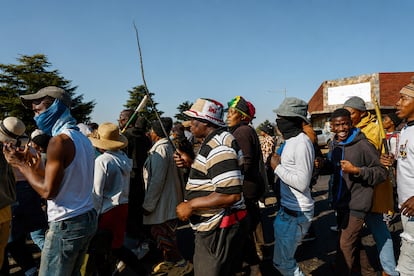
The chants are perceived as a distant murmur. They filter through the low-rise houses of Katlehong, a working-class neighborhood in eastern Johannesburg, South Africa. Gradually, a hundred or so people come into view, waving wooden sticks in the air. Brandishing South African flags, they dance and chant slogans in Zulu against illegal immigration.
A man with a megaphone rallies the crowd. Before they reach her, a young woman — with her hair gathered in a cascade of fine braids — hurriedly closes the door of her house, a humble, single-story structure protected by metal bars.
On the first Thursday of protests by South Africa’s anti-immigration groups, the demonstrators are scouring the neighborhood for undocumented immigrants. They’ve vowed to take to the streets every week to pressure President Cyril Ramaphosa’s administration to expel all undocumented immigrants from the country. This comes after months of marches, threats and attacks against foreigners. Similar demonstrations are taking place in neighborhoods and cities across the country, with Durban and Johannesburg as the main centers.
However, things are different compared to what happened on June 30, when thousands of people (according to estimates in the South African press) took to the streets. That was after their ultimatum — which these groups issued to the government — had expired. On Thursday, July 9, on the other hand, the day ended without major disturbances or large gatherings. Rather, the small, scattered demonstrations drew groups of around 50 to barely over 100 people.
The objective seems to have changed: it’s no longer simply about demonstrating, but rather about undertaking what have come to be known as “door-to-door” campaigns. That is, going house to house to find foreign citizens and urge them — sometimes politely, sometimes forcefully — to leave the country. And, unlike other episodes of racial tension in the country’s history, the protagonists of these protests are, for the most part, Black South African citizens who are targeting Black immigrants.
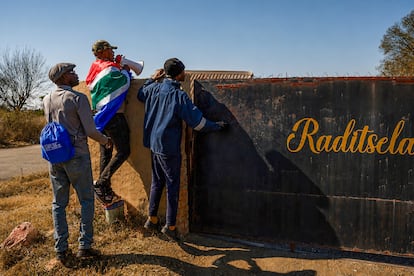
In the township of Katlehong, the march stops in front of a vacant lot surrounded by a concrete wall. Several old buses are barely visible. A neighbor warns: “Sothos from Lesotho live here!” Then, three men climb the low wall and peer over; others begin banging on the large metal gate with their sticks, while the rest chant slogans. No one responds from inside. After several tense minutes, the march continues. “There are definitely people inside,” a straggler protests, as the rest keep walking.
“The idea isn’t to hurt anyone,” insists Patrick Dube, a neighborhood representative, as he marches alongside the others. “We want them to go back to their country, get their papers in order and return legally.” Dube argues that the violence that occurred during other similar protests was due to people who “misinterpreted” the movement and took the law into their own hands.
However, there have been so many cases in which South African citizens have forced immigrants to show their papers — or have even evicted them from their homes under the pretext of their irregular status — that numerous public officials, including President Cyril Ramaphosa himself, have had to reiterate that, under South African law, immigration control duties are strictly to be carried out by the authorities.
Ramaphosa has acknowledged that there’s a problem with irregular immigration and has promised to tighten its enforcement. But, at the same time, he has condemned vigilantism and insisted that citizens cannot replace the state.
The main driving force behind the campaign is Jacinta Ngobese-Zuma. She’s the leader of a movement called March & March, which collaborates with other anti-immigration organizations. On social media, their message has spread like wildfire. They’re demanding that the government strengthen border controls, expedite the deportation of undocumented immigrants, and reserve access to employment and public services for South Africans. Ngobese-Zuma has managed to unite popular discontent over issues such as unemployment (exceeding 30%), corruption and high crime rates by blaming immigrants, even though they represent only 4% of the approximately 63 million people living in the country.
During a rally held on Thursday, July 9, in Durban, Ngobese-Zuma insisted that the demonstrations will continue every Thursday until the government takes action. “The government has been asleep on the job for too long. If we had a government that was responsive and listened to what the people want, then we wouldn’t have the problem of being on the streets today,” she says. The leader, moreover, rejects the notion that her movement is xenophobic.
While the marches continue to spread through different neighborhoods, the number of people choosing to leave South Africa is also increasing. The Malawian government reported this past Thursday that more than 38,000 of its citizens have returned from South Africa in recent weeks for safety reasons. Zimbabwean authorities, for their part, estimate that more than 60,000 people have returned since the start of the crisis.
Like in Katlehong, marches are taking place in other areas of Johannesburg, but these aren’t as peaceful. The tension has erupted into violence in Dunnottar, a town in the eastern part of the Johannesburg metropolitan area, home to a large community of Ethiopian, Somali, Pakistani and Bangladeshi immigrants, some of whom run small grocery stores selling imported goods
On July 9, the pavement of a central street was littered with broken glass after about 50 protesters attacked foreign-owned businesses with stones and bottles. The shopkeepers defended themselves, leading to a pitched battle that ended with police intervention. Among the migrants, three suffered minor injuries and went to the police station to file a report. This is according to Ali Hussein, a Bangladeshi who owns a neighborhood supermarket. He says he has lived in the country for almost 20 years: his wife and children are South African, while he himself holds a South African passport.
“They say we come to take their jobs, but we provide work for South Africans and offer a service to the community with our businesses,” he laments. A young South African man who was also present (and who preferred not to give his name) confirmed this: “I work for a foreigner and I think what’s happening is a disgrace.”
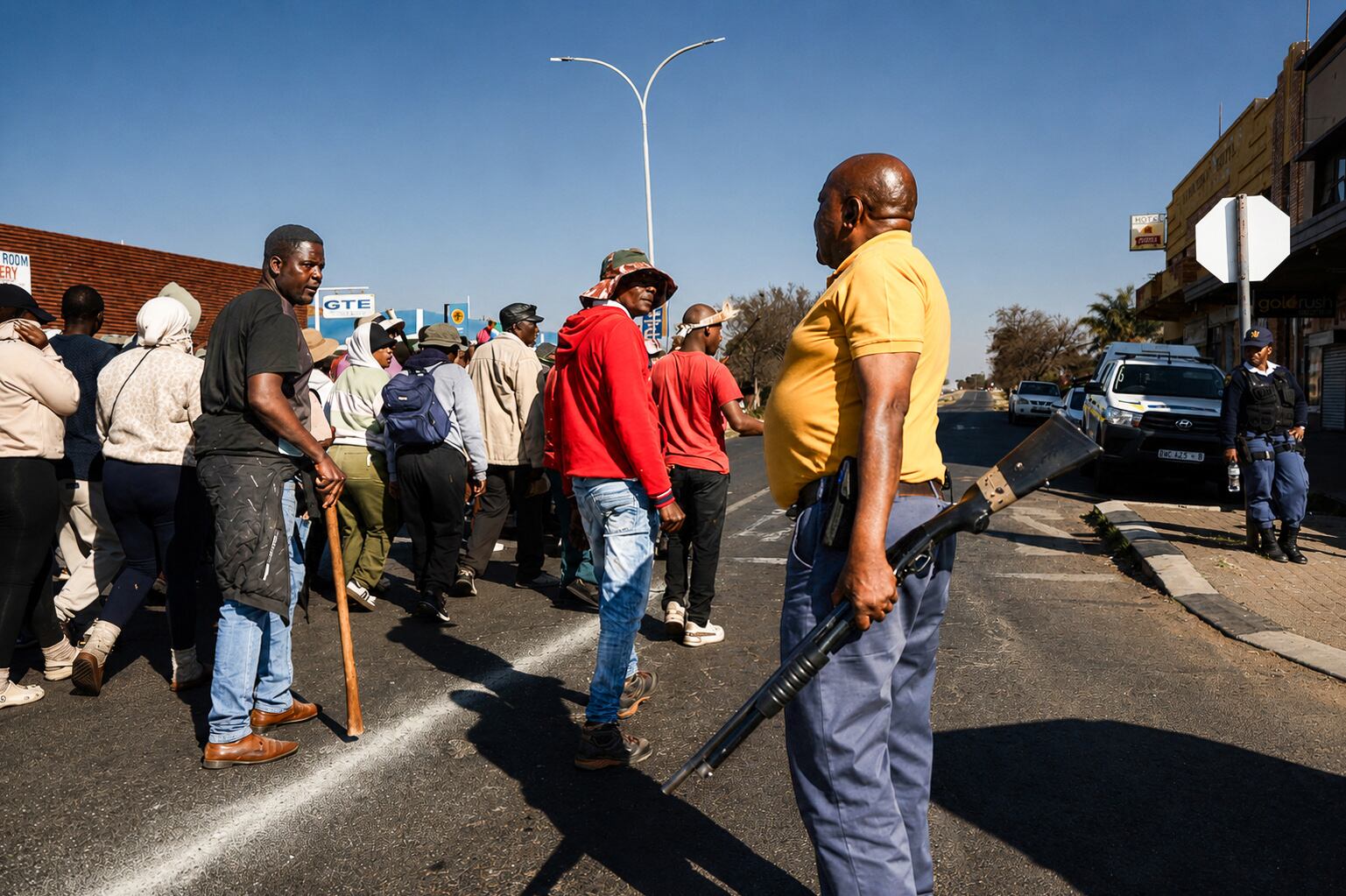
Meanwhile, the 50 or so enraged citizens eye the immigrants suspiciously from across the road, barely 70 feet away. Some are armed with sticks, broom handles and even leather whips. The police, positioned between the two groups, have deployed eight vehicles, a truck and a dozen officers. Still, the rioters are undeterred.
After a while, the group sets off again, shouting slogans in Zulu against the merchants, which Hussein understands. “They’re insulting our mothers,” he says. For a few minutes, it seems like the situation might spiral out of control again: the group advances toward the police cordon, continuing to chant slogans and dance. That is, until the head of the operation pulls out a shotgun from one of the vehicles, confronts several protesters and orders them to turn around. Finally, the march continues down the street.
Similar scenes unfolded this past Thursday in other parts of the country, such as in the townships of Soweto and Alexandra, where — according to Reuters — protesters dragged people from their homes, accused them of being undocumented and handed them over to the police.
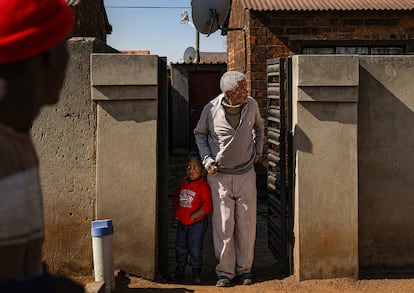
Back in the township of Katlehong, many residents watched the march from behind their fences. Some filmed with their phones. Others applauded enthusiastically when the group stopped in front of another house where, they said, a foreigner lived. Behind the fence, a tiny barbershop made of corrugated metal sheets was also visible. “We neighbors know where the immigrants live; people warn us,” Dube explains.
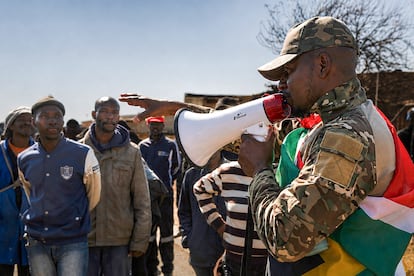
The ritual repeats itself. The man with the megaphone rallies the crowd. Several people bang on the fence with their sticks. No one comes out. Dube maintains that the problem isn’t just the immigrants, but also the companies that — according to him — hire them in order to get away with paying lower wages. “We’ll have to go and talk to them, too,” he says. “Maybe next Thursday, at the next demonstration.”
A few feet away, Dube and a neighbor knock on the door of another house. This time, a woman answers, claiming to be South African. They ask her to report any undocumented immigrants in the neighborhood if she knows of them. She nods silently and shuts the door.
“We just want the law to be enforced,” says Dube, at the end of the march. But in Dunnottar, Hussein points to the broken windows of his supermarket and responds: “I already obey the law.” Between these two statements lies one of the major tensions currently gripping South Africa — a tension that, for now, shows no sign of being resolved.
Sign up for our weekly newsletter to get more English-language news coverage from EL PAÍS USA Edition
Africa
Mercenarios Rusos Resisten A Duras Penas La Ofensiva De Los Rebeldes Tuaregs En El Norte De Malí


Man Arrested For Assaulting Six-Month Pregnant Partner At Malaga Airport
Selling in Catalonia just got slightly easier: One pointless obligation has been scrapped

Santa Pola Castle Fortress Reopens


-

 New Developments2 weeks ago
Stylish 3-Bedroom Apartment With Panoramic Sea Views – Benalmádena
-

 New Developments2 weeks ago
Luxury Villas For Sale, Estepona – ProjectL1
-

 Uncategorized2 weeks ago
F1 season ticket announced for 2027 and it
-

 Bélgica2 weeks ago
Bélgica No Logra Repetir La Gesta De 1986: “Pero Hemos Jugado Bien”
-
News from Spain2 weeks ago
Spain is about to get a rare six planet show and most people won’t even know it’s happening
-
Bet2 weeks ago
Norway lost the match, but won the internet with airline Instagram bet
-
Air passenger rights2 weeks ago
Booked your flight through an online travel agency? New EU rules could make refunds much easier
-

 %1 week ago
Watch The Bizarre ‘Joker’ Stunt That Disrupted Pamplona’s Bull Run