Connect with us

Ceuta crisis

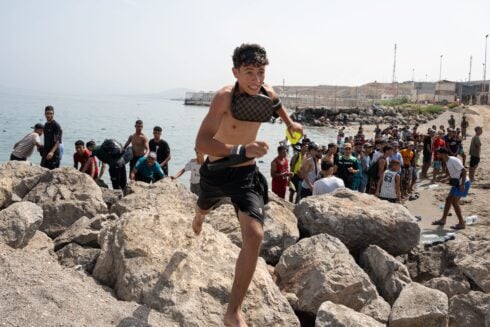
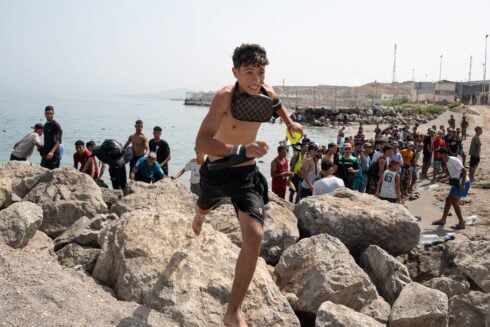
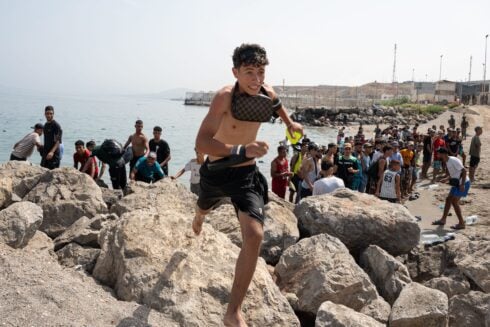
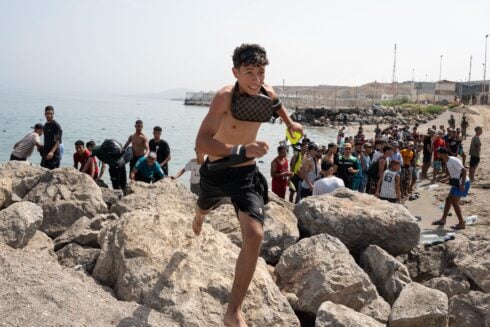
Ceuta Migrant Crisis Driven By Mystery Social Media Campaign Urging Moroccans To ‘storm The Border Fence’ – And Calls For Second Crossing In August

Published

on

ceuta-migrant-crisis-driven-by-mystery-social-media-campaign-urging-moroccans-to-‘storm-the-border-fence’-–-and-calls-for-second-crossing-in-august

%

Could The Rock Become A New Gateway Into Schengen?

Published

on

could-the-rock-become-a-new-gateway-into-schengen?

Spain has spent the past few weeks dealing with intense pressure on its borders, while just across the water, a very different border has been dramatically opened up.

Gibraltar’s land frontier with Spain disappeared on July 15 under the new UK-EU agreement, moving Schengen immigration controls to the Rock’s airport and port. For British expats living on the Costa del Sol, that should mean easier journeys into Gibraltar. Yet Spanish security officers are warning that quicker crossings must not come at the cost of proper border controls.

The timing is particularly interesting. Spain has recently faced a major migration crisis in Ceuta, where tens of thousands of people crossed from Morocco, putting enormous pressure on Spanish authorities, and the events in Ceuta have put border security firmly back in the spotlight. That makes one question increasingly relevant: could Gibraltar’s new system create opportunities for people trying to reach the Schengen area illegally?

Guardia Civil warns that security cannot be sacrificed

Olaya Salardon, communications secretary of the Asociación Unificada de la Guardia Civil, has warned that officers need much greater clarity about how the new Gibraltar arrangements will work. “Our concern is not the fence itself, but that security does not become a bargaining chip,” she said. Spanish officers want (and still don’t have) clear information about responsibilities, protocols and which authorities will take charge of particular border and security operations.

That matters because the old physical frontier has not simply disappeared without replacement. Schengen controls have moved to Gibraltar’s airport and port, where Spanish officials and Frontex are involved under the new arrangements.

Salardon has warned that any gaps in security could benefit organised criminal groups rather than ordinary citizens. For British expats who regularly travel between Spain and Gibraltar, that concern is not just theoretical. A border that is quicker to cross is only an improvement if travellers can also have confidence in the system protecting it.

Gibraltar says it must not become a back door into Schengen

Gibraltar’s Chief Minister Fabian Picardo has also addressed the issue directly. He has argued that the Rock should not be regarded simply as a convenient gateway into the Schengen area. “There has to be an economic relationship with Gibraltar, you have to contribute to Gibraltar loyally,” Picardo said, while also stressing that Gibraltar should not be seen “simply as a door to enter the Schengen area more easily”.

His comments take on added relevance after the recent events in Ceuta. Spanish authorities were faced with a huge influx of people arriving from Morocco, leading to a major security operation and agreements on returning migrants. The episode demonstrated just how quickly pressure can build around Spain’s external borders.

Gibraltar is a completely different situation, and there is no suggestion that the Ceuta events are linked to the Rock. However, both cases underline why control of Europe’s external borders remains such a sensitive issue.

What does this mean for British expats?

For British residents in Spain, the most visible change is likely to be much easier movement by road. Cars travelling between La Linea and Gibraltar no longer face the old routine land-border checks, removing one of the biggest frustrations for commuters, shoppers and visitors. Brexit rules have not, however, disappeared.

British citizens are still subject to the relevant Schengen entry requirements when entering the Schengen area unless they benefit from specific residence or other rights. The new Gibraltar arrangement does not turn a British passport into an EU passport or restore general freedom of movement. That distinction could become increasingly important as people get used to the new border.

Security is not the only issue British expats will notice. Gibraltar has introduced a new Transaction Tax as part of the customs arrangements linked to the treaty. The standard rate started at 15 per cent, with more changes due under the agreed timetable. Gibraltar’s government has also had to correct claims that the new tax automatically means shop prices will rise by 15 per cent.

Officials say the tax is based on the value of goods when imported or produced rather than simply being added to the final price paid by customers. Tobacco, alcohol and fuel are also covered by new arrangements intended to reduce tax differences with Spain and tackle smuggling. For expats who regularly cross the border to shop or fill the car, those changes could eventually be just as noticeable as the disappearance of the old frontier.

The fence has gone: Now the system faces its first real test

Gibraltar’s new border is supposed to make life easier for thousands of people who cross between the Rock and Spain every day. Yet the real test will be whether faster movement can be delivered while maintaining effective immigration, customs and criminal controls.

The Guardia Civil wants reassurance that security will not be sacrificed. Picardo insists Gibraltar should not become an easy gateway into Schengen. Spain’s recent experience in Ceuta shows why those questions matter.

Continue Reading

Ceuta beach

Ceuta crisis deepens while Italy and Denmark push for deportation centres

Published

on

By

The situation demonstrates the scale of the pressure facing Ceuta. Photo credit: CitezenGo on X

Residents in Ceuta are facing a migration crisis that has moved far beyond the border, with around 1,500 migrants now living in makeshift shelters on a beach while police investigate alleged sexual assaults involving girls under 14. Thousands of people have taken to the streets demanding action, while Italy and Denmark are pressing for tougher European migration policies and repatriation centres outside the EU.

The situation has placed the Spanish enclave under intense pressure after the mass arrival from Morocco. Accommodation is struggling to cope, vulnerable migrants are living without permanent shelter and local authorities are calling for greater support as European governments debate how to prevent another large-scale crossing.

Around 1,500 migrants camp on Ceuta beach

Playa del Trampolín has become an improvised settlement for around 1,500 migrants who have nowhere else to stay after existing reception facilities reached capacity. Makeshift shelters made from reeds, branches, plastic and other materials now line parts of the beach. Many of those staying there are understood to be from sub-Saharan Africa, including a sizeable group of Sudanese migrants.

The beach has effectively become temporary accommodation, with people sleeping outdoors while waiting for authorities to determine what will happen next. The situation demonstrates the scale of the pressure facing Ceuta. The city has limited space and resources to accommodate a sudden increase in arrivals, while people requiring protection cannot simply be left without somewhere safe to stay. The beach camp has also created additional demands for local services, with municipal workers dealing with the consequences of hundreds of people living in an area that was not designed to function as a migrant reception centre.

Concerns grow over vulnerable children

The situation involving minors has added another serious concern, at least five girls under the age of 14 have reportedly been treated at Ceuta’s University Hospital following alleged sexual assaults, according to health sources cited by Spanish media. Police are investigating several suspected cases and prosecutors are examining some of the allegations.

The cases remain under investigation and the allegations should not be described as confirmed rapes. There have been no convictions establishing that the reported assaults took place as alleged. Nevertheless, the reports have intensified concerns about the safety of vulnerable migrants, particularly children who arrive without the protection of parents or other adults. The issue also highlights the difficulties faced by authorities when large numbers of people arrive in a short period and existing accommodation and safeguarding systems are placed under severe pressure.

Thousands protest in Ceuta

The situation has now triggered a major public response within the city as thousands of people gathered in Ceuta for a demonstration under the slogan “Basta ya. Ceuta no se rinde” (enough is enough, Ceuta will not give up) calling for action from the Spanish Government and greater support for the city.

The protest brought together people from different religious and cultural communities, making it broader than a demonstration organised around a single political group. The message from the streets was focused on the impact of the migration crisis on daily life in Ceuta and the need for authorities to regain control of a situation that has developed rapidly.

Ceuta’s president Juan Jesús Vivas has also called for greater assistance from Madrid, arguing that the city cannot be expected to deal with the consequences of a crisis of this scale on its own. The pressure is particularly acute because Ceuta is a small Spanish territory surrounded by Morocco. Its geography means that accommodation, healthcare and emergency services can quickly become overwhelmed when arrivals increase sharply.

Italy and Denmark call for repatriation centres

The political consequences are no longer limited to Spain, Italian Prime Minister Giorgia Meloni and Danish Prime Minister Mette Frederiksen have joined forces in demanding a tougher European response to irregular migration. The two leaders have rejected what they describe as “uncontrolled immigration” and called for repatriation centres to be established in third countries outside the EU. Their proposal is aimed at people who have been ordered to leave Europe but cannot be returned immediately to their countries of origin.

Under the idea being promoted by the two governments, migrants awaiting removal could potentially be transferred to facilities outside the European Union rather than remaining inside Europe while their cases are resolved. Meloni has already pursued a similar approach through Italy’s agreement with Albania, although that arrangement has encountered legal and operational difficulties. The Italian and Danish governments are also calling for more effective deportations and stronger measures against irregular migration.

Migration policy under renewed pressure

The timing of the proposal is significant because the Ceuta crisis has provided a fresh example of the difficulties faced by European countries when large numbers of people arrive within a short period. The debate is not limited to how migrants enter Europe. Governments are also facing questions over accommodation, returns, child protection and what happens to people whose applications fail.

The European response has traditionally relied on a combination of border controls, asylum procedures, agreements with countries outside the bloc and returns. Meloni and Frederiksen are now pushing for greater use of arrangements outside EU territory, arguing that Europe needs alternatives to the current system. That approach is likely to face scrutiny over the legal safeguards that would apply to people transferred to third countries, particularly those seeking asylum or claiming protection.

Ceuta left dealing with immediate consequences

While governments debate longer-term solutions, Ceuta is dealing with the immediate consequences. Around 1,500 migrants remain in the beach camp, existing facilities are under pressure and allegations involving minors are being investigated. At the same time, thousands of residents have publicly demanded action and local authorities are seeking additional help. The crisis has therefore developed into three connected problems for Spain.

There is the question of what happens to those who arrived during the mass crossing, the urgent need to provide safe accommodation for those who remain and the wider question of how Europe intends to handle irregular migration in the future. For Ceuta, the consequences are already being felt on the ground.

A beach has become an improvised camp, local services are under strain and residents are demanding answers. Meanwhile, two European governments are using the latest crisis to press for a fundamental change in how migrants who have no right to remain are dealt with. The events in Ceuta have turned a sudden border crisis into a much wider European argument over migration, returns and who should carry responsibility when the existing system reaches its limits.

Continue Reading

Ceuta crisis

Spain ramps up Ceuta defences with nearly 300 riot cops and 2,000 troops as social media promotes August 15 migrant rush

Published

on

By

Spanish authorities are taking no chances after credible intelligence has pointed to a possible repeat of last month’s chaotic border breach, and perhaps even bigger. Interior and Defence ministries have steadily built up forces in the North African enclave following the July 30 incident that saw tens of thousands cross from Morocco.

Messages organising another push have flooded Facebook, Instagram and TikTok in recent days. Slogans such as “15/08” and “al-hajma” (the offensive) keep appearing, with the Moroccan border town of Fnideq (Castillejos) named as the launch point. Groups numbering up to 400,000 members have been sharing the calls. Guardia Civil and the CNI both rate the online activity as genuine, yet officials stress any fresh attempt is unlikely to match the scale of the previous one because of the heavy presence now in place.

Heavy security numbers already on the ground

Almost 300 anti-riot officers are now said to be stationed in Ceuta, with 45 more arriving only yesterday to join the 225 already sent from Andalucia units. Guardia Civil has added three platoons (60 officers) to its border reserve group, plus 160 extra personnel for public order duties drawn from southern commands. Two thousand Armed Forces members remain deployed and will stay for as long as Interior deems necessary. Their mere presence is expected to act as a strong deterrent even without a formal state of emergency.

Specialist support includes six officers from the Immigration and Borders unit for processing work and another six from the Information service. Two teams of divers (eight personnel) from the GEAS underwater unit, the vessel Duque de Ahumada with a 12-strong Guardia Civil crew, two medium patrol boats, four inflatable speedboats, a helicopter and a new drone surveillance group that began operating this weekend complete the package. A 500-metre maritime barrier now stretches from the Tarajal breakwater to block swimming approaches.

Ceuta president keeps pressure on Madrid and Brussels

Juan José Vivas, president of the autonomous city, has spoken of residents living with their “souls on edge”. Many locals still ask whether the scenes of a week earlier could return. After meeting King Felipe VI this week, he reminded everyone that the borders sit under the control of a third country that does not recognise Spanish sovereignty over the enclave. He expressed full confidence that state security forces and the army would stop any repeat.

Calm called for but early-week watch begins

Officials call for cool heads. A similar social media call last September 15 2025 came to nothing once proper coordination with Moroccan counterparts and a solid joint device were in place. Sources note that anyone planning another attempt might try to jump the gun this week, thinking the 15th will be the most heavily guarded day. Monitoring therefore starts in earnest from Monday.

Guardia Civil voices on the ground hope some of the extra resources will stay once the immediate risk fades. They want a permanent boost of at least 200 information officers in Ceuta, longer breakwaters at Tarajal and Benzú, clear written orders for mass-entry scenarios, and genuine European Union involvement. For now the message from Spain is straightforward: the city is locked down and ready.

Ceuta’s small size and position as one of the European Union’s only land borders with Africa mean any large movement quickly overwhelms local services. That reality explains the rapid and layered response now visible on the streets, at sea and in the air. Whether the online chatter turns into action or simply fades under the weight of the new deployments remains the question hanging over the coming days.

The question on critics’ minds today is “if Spanish intelligence has been monitoring Moroccan social media, then how did this happen last time?”

Continue Reading

Trending

Copyright © 2017 Spanish Property & News