Connect with us

%

Could Your Front Door Be Opened With A Piece Of Plastic? Spanish Police Reveal How To Protect It

Published

on

could-your-front-door-be-opened-with-a-piece-of-plastic?-spanish-police-reveal-how-to-protect-it

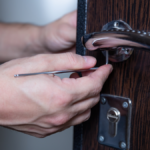
A door’s security ultimately comes down to what’s fitted inside the lock. Credit: Jannissimo / Shutterstock

Leaving a key turned only once instead of double locking a front door might feel like enough, but police say it can be the difference between a secure home and a ‘come on in’ invitation for burglars. Their advice: swap an old lock cylinder as regularly as you’d swap an old mattress.

How a piece of plastic can force open an unlocked door

Inspector Jefe Manuel, a Spanish National Police officer with more than nine years’ experience investigating forced-entry burglaries, used a small strip of plastic as the basic prop in a video shared by the force. He explains that when a door is not locked properly, with the key turned through every rotation the mechanism allows, that plastic can be enough to release the latch from outside.

🏠La #seguridad de tu #casa comienza antes de que accedas a ella

🚪🔐Por eso son tan importantes los elementos de seguridad de la #puerta de acceso

Toma nota de estas recomendaciones
No se lo pongas fácil a los delincuentes❌🕵️‍♂️#Consejos #SomostuPolicía pic.twitter.com/mTi3qcocNl

— Policía Nacional (@policia) August 26, 2026

It is a habit most people never think twice about. Many treat a single turn of the key as ‘job done’, when the lock’s full security only engages once every turn has been made.

Why police compare an old lock cylinder to a worn-out mattress

“You probably change the mattress in your home every so often. Well, you need to do the same with the security parts of your door, especially the cylinder,” Manuel says in the video, comparing the small mechanism inside the handle, known as the bombín in Spanish, to a household item everyone accepts has a shelf life. 

The reasoning behind the advice is fairly straightforward. Cylinders are exposed to weather, wear and the risk of a lost or copied key, and their condition should be checked every eight to ten years, with a locksmith able to judge whether they still offer real protection.

The certified ‘ideal duo’ locksmiths are being asked to fit

Manuel recommends what he calls the ideal pairing, where the lock allows it: a high-security protector, a metal cover that shields the cylinder from drilling, picking or extraction tools, fitted together with a certified high-security cylinder. 

He points out that cylinders carry quality certificates in the same way as other everyday products, and advises asking a locksmith specifically for one certified under recognised standards, including DIN EN 1303 (the main European standard for cylinder locks), SKG (a Dutch security-testing mark) or VdS BZ+ (a German certification for burglary resistance). A locksmith should be able to show which of these a replacement cylinder meets before it goes anywhere near the door.

The lock upgrade recommended for elderly and dependent residents

One further option Manuel highlights is the double-clutch cylinder, which takes a key from both sides at once. It means the door can always be opened from outside using the original key, even if another key has been left in the lock on the inside. He recommends it in particular for dependent people or those using teleasistencia, Spain’s telecare alarm service that many elderly residents rely on to call for help. With a standard cylinder, a key left inside can lock out anyone trying to reach them in an emergency, including the carers or emergency services responding to that call.

It echoes earlier warnings from authorities, including a locksmith’s viral trick for keeping squatters out and why some common warning signs do not deter burglars the way homeowners assume.

The advice amounts to a general reminder that a lock is not a fit-and-forget fixture. Checking its age, its certification and how fully it gets turned each time the door closes costs nothing and, according to the officer explaining it, could be what stands between a house and an unwanted visitor.

%

Huge Fire Near Wembley Forces Amazon Warehouse Evacuation Amid ‘explosion’ Reports

Published

on

huge-fire-near-wembley-forces-amazon-warehouse-evacuation-amid-‘explosion’-reports

A huge plume of smoke rose over north-west London after the fire broke out. Credit: @CaptainXeno91 / X

Smoke from a fire in an industrial estate barely a mile away from Wembley Stadium was seen as far away as Westminster, and the blaze brought in 125 firefighters, shut the Metropolitan line and forced a nearby Amazon warehouse to evacuate, with the cause still unclear. 

125 firefighters and a drone team tackle blaze at LondonEnergy site

London Fire Brigade said it received more than 70 calls reporting the blaze from shortly after 11:34am on Friday August 28, at a site on Hannah Close in Neasden, a residential and industrial pocket of the London borough of Brent just south of the stadium, behind the area’s IKEA store. 

Twenty fire engines and around 125 firefighters were sent to the scene, backed up by a drone team, a hose-laying unit and a high-volume pump.. Three 32-metre ladders were also deployed, with crews coming from Wembley, Park Royal, Willesden and surrounding fire stations.

The affected site is run by LondonEnergy, the waste and recycling operator that processes rubbish for several London boroughs. Reports from the scene described a single unit roughly 100 metres by 150 metres as ablaze, with smoke visible more than nine miles away.

There’s a large fire in North London / Brent area pic.twitter.com/HCV2gYqm0z

— CaptainXeno (@CaptainXeno91) August 28, 2026

Reports of an ‘explosion’, but the cause remains unclear 

Several eyewitnesses reported hearing an explosion as the fire took hold, and video shared on social media showed a thick plume of black smoke rising over the area. London Fire Brigade described the blaze as breaking out at a waste facility, though it has not confirmed any explosion, and said the cause of the fire was not yet known. The London Ambulance Service said no patients were being treated at the scene, and there were no reports of anyone injured, despite the scale of the response.

Amazon warehouse evacuated as smoke spread across Neasden

A nearby Amazon warehouse was evacuated as a precaution once smoke began spreading across the industrial estate, according to reports from the scene. London Fire Brigade urged people to avoid the area altogether, while residents nearby were told to close their doors and windows and stay indoors because of the large amount of smoke being produced.

Tube and rail lines thrown into disruption

The Metropolitan line was suspended entirely, and the Jubilee line was hit with severe delays, with Neasden, Wembley Park, Willesden Green and West Hampstead stations all closed as the part suspension was extended through the afternoon. 

Chiltern Railways also reported disruption towards Aylesbury, with delays between London Marylebone and Harrow-on-the-Hill expected to continue until 2pm, while the North Circular road saw queueing traffic as drivers were diverted around the scene. 

It is the latest in a run of large precautionary responses across the capital this year, following an evacuation at Heathrow’s Terminal 4 over a hazmat scare and a fire at a west London substation in the spring.

Wembley Stadium itself unaffected, days before its biggest weekend

Wembley Stadium itself was left unscathed by the fire, which broke out around a mile from the ground and away from any of the surrounding event infrastructure. The venue is due to host All In: London, All Elite Wrestling’s pay-per-view show expected to draw tens of thousands of fans through those same Tube and rail links that have been affected, this Sunday August 30. It is the second time this year Wembley has made headlines beyond football and music, after plans for a “ticket tax” on visitors emerged in the summer.

Firefighters remained at the scene into Friday afternoon, working to bring the blaze under control as the cause continued to be investigated.

Continue Reading

%

DGT Plans Traffic Light Changes From October: What It Means For Drivers And Pedestrians

Published

on

dgt-plans-traffic-light-changes-from-october:-what-it-means-for-drivers-and-pedestrians

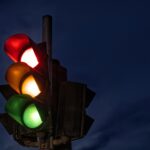
Spain updates traffic light phases and safety rules for road users. Photo Credit: Tsvetoslav Hristov / Unsplash

Spain’s traffic authority, the Directorate General of Traffic, or DGT, is preparing a new update to the road regulations that will affect all drivers, including those riding on scooters, bicycles and motorcycles: from October 1, 2026, the traffic authority will introduce changes to traffic lights that will enhance safety for vulnerable road users, in particular pedestrians.

The most major change for drivers and pedestrians

The most significant change concerns pedestrian crossings where traffic lights previously allowed drivers to encounter a flashing amber light while pedestrians would see a steady green walking signal. Under the old regulations, drivers would proceed with caution while yielding to pedestrians.

With the new update, there will be no simultaneous signals. This means a flashing amber light for motor vehicles can no longer be seen at the same time as a steady green walking signal for pedestrians.

Instead of the flashing amber light, vehicle traffic signals must now show a steady red light first before transitioning, giving pedestrians a clear and protected space to cross.

Traffic light confusion causes hundreds of pedestrian fatalities and injuries in Spain

This change is being made because, according to DGT safety data, the conflicting concurrent signals contributed to hundreds of pedestrian injuries and fatalities in urban areas in recent years. The measure aims to significantly reduce injuries and road accidents, and more closely align Spain’s signalised intersections with international road safety practices.

Many drivers interpreted the flashing amber light as a way to proceed without needing to yield to the pedestrian, leaving the pedestrian exposed to possible accidents as they coincided with the turning of the cars.

In short, this change will adjust the timing and coordination between traffic light phases and pedestrian indicators. For drivers, this means that they will steadily encounter red signals more consistently, while pedestrians will more frequently have the right-of-way. This will also eliminate ambiguity about who must stop.

New regulations for users of personal mobility vehicles: Follow these rules or face a €200 fine

In addition to this rule change, the DGT is also introducing new regulations that will affect users of personal mobility vehicles, including scooters, bicycles and motorcycles in urban areas. In particular, the minimum age to operate them will be 15, and helmets will become mandatory. These vehicles must also always be ridden with their lights on, and reflective vests must be worn at night or in conditions of low visibility. Those who use these vehicles while working must wear them at all times. Outside urban areas, their use may also be authorised on roads segregated from motor traffic, including bike lanes.

If these rules are not followed, they will be considered serious offences and can be punishable by a fine of up to €200.

Drivers also have new rules when it comes to bicycles on the road: when overtaking bicycles, drivers must reduce their speed to at least 20 kilometres per hour below the speed limit and, when there is more than one lane in each direction, drivers must change lanes completely and maintain a lateral distance of 1.5 metres.

For motorcyclists, protective gloves will be mandatory on intercity roads, and closed-toe shoes will be required on all types of roads. Failure to comply with any of these rules will constitute a serious offense punishable by a €200 fine. Moped helmets must be approved beforehand, and delivery drivers using motorcycles must wear a reflective vest at all times. Non-compliance with this rule will also result in a €200 fine.

When will these changes take place?

Most of these changes will take effect on October 1, 2026. However, the measures related to mandatory lighting for PMVs and the requirement that motorcycle users’ helmets be approved will come into force on October 1, 2027.

Continue Reading

%

Spain Housing Shortage

Published

on

spain-housing-shortage

No quick fix: Spain needs eight years to plug 740,000-home housing gap. Credit: Gumbariya / Shutterstock.com.

Spain could need at least eight years to address its housing shortage, even if construction more than doubles from recent levels, according to the Real Estate Market Report 2026 from OBS Business School.

The report estimates there is a deficit of around 740,000 homes. Since 2021, approximately 1.2 million new households have been created, compared with just 474,000 completed homes.

The growing gap between supply and demand is also contributing to rising property prices and worsening affordability, particularly in popular tourist areas.

Housing shortfall

OBS estimates that more than 230,000 homes would need to be developed every year for eight years to close the gap.

This would represent a 128 per cent increase on the 2024 construction rate, illustrating the scale of the challenge facing Spain’s housing market.

The shortage is particularly serious in areas where population growth and housing demand are strongest.

Limited available land, planning procedures, labour shortages, financing difficulties and rising construction costs are among the barriers to increasing supply.

Even with a significant acceleration in construction, the report suggests resolving the shortage would therefore be a long-term process rather than something that could be achieved within just a few years.

Prices and affordability

Housing prices have meanwhile risen to an average of €2,429 per square metre, 36.5 per cent above their 2007 peak.

Affordability is also worsening. An average household now spends around 44 per cent of disposable income on the first year of a mortgage.

In tourist areas such as Benidorm and Marbella, the figure can exceed 80 per cent, placing considerably greater pressure on households trying to buy property in locations where demand is particularly high.

Rental supply is also tightening, with 14,000 fewer properties available in 2026.

The combination of fewer available homes, higher purchase prices and tighter rental supply continues to make finding affordable housing difficult in many parts of the country.

Luxury homes

At the opposite end of Spain’s property market, the country’s most expensive home currently for sale is a €70 million villa on Marbella’s Golden Mile, according to idealista.

The 13-bedroom Bellagio property includes several pools, a gym, sauna, bowling alley and cinema.

Spain’s ten most expensive properties are all located on the Costa del Sol or Balearic Islands, underlining the extraordinary prices being commanded at the very top of the country’s luxury property market.

Continue Reading

Trending

Copyright © 2017 Spanish Property & News