Connect with us

climate change

Deadly virus could trigger next pandemic as doctors warn Spain faces new infection threats

Published

on

People can become infected through contact with contaminated materials. Photo credit : blvdone/Shutterstock

A mosquito bite could expose you to an infection that was once associated with tropical countries, without you ever leaving Spain. Now, infectious disease specialists are also warning about the potential threat posed by Lassa fever, a potentially deadly virus that one expert believes could cause a future pandemic.

Experts from the Spanish Society of Infectious Diseases and Clinical Microbiology (SEIMC) say warmer temperatures, changing rainfall, deforestation and growing international mobility are altering the conditions in which pathogens and the insects or animals carrying them survive. Their concern is that infections can reach new places more quickly and become harder to predict.

Diseases are no longer confined to familiar regions

At a meeting organised by SEIMC and the National Association of Health Journalists, infectious disease specialist Luis Buzón said international travel makes it increasingly difficult to think of illnesses as belonging to one particular region. Someone can travel between continents within hours, potentially carrying an infection into an area where conditions may allow it to spread.

Veterinary virologist Antonio Rivero pointed to chikungunya as an example. After a major outbreak on the French island of Réunion around 15 to 20 years ago, the disease has since appeared in mainland Europe, including France. The specialists warned that other infections could follow as the insects carrying them expand into new areas. 

Mosquitoes and sandflies already found in Spain

Several insects capable of transmitting these diseases are already established in the Iberian Peninsula. Aedes mosquitoes can carry dengue, Zika and chikungunya; Culex mosquitoes transmit West Nile virus; and Phlebotomus sandflies can spread Toscana virus. Warmer conditions and changing rainfall can extend the period when some insects are active and help them survive in places that were previously less suitable.

The European Centre for Disease Prevention and Control has recorded locally acquired dengue and chikungunya cases in Europe, with international travel helping to introduce infections into areas where Aedes mosquitoes are established. Spain is already monitoring West Nile virus, which circulates mainly between birds and mosquitoes. By November 4, 149 locally acquired human cases had been reported in Spain during 2026. 

Lassa fever is the disease raising particular concern

Among the infections discussed by the specialists, Lassa fever stood out as one of Rivero’s biggest concerns. The virus is endemic in parts of West Africa and is carried by rodents, which can contaminate food and household items through their urine and droppings. People can become infected through contact with contaminated materials or infected rodents. Human-to-human transmission is also possible through direct contact with blood or other bodily fluids, particularly in healthcare settings where infection-control measures are inadequate.

The World Health Organization says there is no epidemiological evidence of airborne spread between people.  Rivero said Lassa fever repeatedly features among the World Health Organization’s high-priority pathogens because of its potential to cause a major international health threat. He described it as more severe than mpox and suggested the recent spread of mpox should serve as a warning of how quickly infections can cross borders. 

Why doctors take Lassa fever seriously

Around 80 per cent of people infected with Lassa virus have no symptoms or only mild illness, according to the WHO. In more serious cases, the disease can affect several organs and cause bleeding, breathing difficulties and shock. The WHO reports an overall case fatality rate of about 1 per cent, rising to 15 per cent or more among patients hospitalised with severe disease. 

There is currently no licensed vaccine. Early diagnosis and supportive medical care improve the chances of survival, but identifying the infection can be difficult because its early symptoms, including fever, weakness and headache, resemble those of other illnesses. The specialists were warning about Lassa fever’s potential, not reporting an outbreak in Spain. 

Other infections on the radar

The doctors also highlighted mpox, which demonstrated how an infection associated with particular regions could cause outbreaks thousands of kilometres away. Dengue and Zika remain concerns because of Aedes mosquitoes, while West Nile virus is already monitored in Spain. Toscana virus, spread by sandflies, can cause illness including meningitis or encephalitis. 

The experts called for a One Health approach that considers people, animals and the environment together. Changes to climate, land use and wildlife can affect how infections emerge and spread, while international travel makes it harder to treat them as problems belonging to individual countries.

Spain’s health system faces a changing challenge

Buzón called for the development of infectious diseases as a medical speciality in Spain, arguing that health services need the expertise to identify and manage infections that may be unfamiliar to frontline teams. He acknowledged that no health system can be fully prepared for every unexpected emergency, but said early detection and scientific preparation are essential. 

The specialists urged clear public communication without alarmism. Their concern is not that people should be afraid of travelling or spending time outdoors, but that doctors must prepare for infections that may appear in places where they were once rarely seen


%

Ozone Hole Bigger Than North America Hits A 10-Year High: What NASA Says Happens Next

Published

on

ozone-hole-bigger-than-north-america-hits-a-10-year-high:-what-nasa-says-happens-next

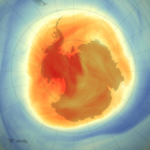
The Antarctic ozone hole on September 18, the day it reached its peak size. Credit: NASA Earth Observatory / Lauren Dauphin

The hole in the ozone layer above Antarctica has grown to its biggest size in 10 years, covering an area larger than the whole of North America at its peak. NASA and NOAA have now laid out what caused it, how scientists measured it and how far the long road to recovery has come.

The ozone hole peaked at 27.1 million square kilometres

Scientists at NASA and the US National Oceanic and Atmospheric Administration (NOAA) said the hole over the South Pole reached its maximum on Friday September 18, covering 27.1 million square kilometres (10.5 million square miles). That’s bigger than the whole of North America, and it makes this the largest ozone hole for a decade. 

Across the whole stretch from September 7 to October 13, it averaged 25 million square kilometres (9.6 million square miles), which is more than twice the size of the United States. At its peak it reached about 90 per cent of the biggest hole ever recorded, which came on September 9, 2000.

It’s now the seventh biggest in 48 years of monitoring, though it wasn’t as deep as the record holes of 10 to 20 years ago. It’s also a sharp jump from last year, when the hole ranked as the fifth smallest since 1992, so the swing has been enough to catch plenty of people off guard.

How scientists keep watch from the bottom of the world 

Teams at the South Pole Baseline Atmospheric Observatory launch weather balloons carrying ozone-measuring instruments, known as ozonesondes, up through the sky, with one such launch carried out on October 18. A Dobson spectrophotometer, an optical instrument, also measures the total amount of ozone overhead.

Scientists count the hole as the area where ozone falls below 220 Dobson units, which is why the map NASA released shows it in warm colours against the paler surroundings. 

Satellites have been tracking the ozone layer since 1979, with NASA’s Aura, NOAA-20, NOAA-21 and the joint NASA and NOAA Suomi NPP satellite among those named in the latest findings.

Those readings showed the thinnest point directly above the pole was 105 Dobson units on October 17. That’s the scientists’ standard measure, where 100 units would squash all the ozone overhead into a layer just one millimetre thick at ground level, and it sits well above the lowest value ever recorded over the South Pole, 92 units in October 2006. 

Weather helped the hole stay open

Every southern spring a hole opens in the ozone layer above Antarctica, and this year scientists say it simply refused to close up as quickly as usual.

The damage starts with human-made chemicals containing chlorine and bromine, which drift up into the stratosphere (the layer of atmosphere high above the weather). There, ultraviolet light breaks them down, and the freed atoms attack ozone on the surface of clouds that form in the freezing Antarctic air.

Paul Newman, a longtime leader of NASA’s ozone research team, said an unusually powerful polar vortex had “extended ozone depletion in the Antarctic this season”. NOAA’s Amy Butler explained that weak weather waves in August and September kept the strongest winds several degrees of latitude further from the pole, which let the vortex stay large and widened the area where ozone is destroyed.

Newman added that the hole could have been 1 to 2 million square miles bigger still if ozone-damaging chemicals were as common as they were at their peak in 2000.

The long-term recovery is still on track

So why aren’t scientists sounding the alarm? Because the chemicals behind the damage, including chlorofluorocarbons (CFCs) once used in aerosols, fridges and air conditioners, were replaced under the 1987 Montreal Protocol, an international treaty. NOAA‘s Stephen Montzka said chlorine from those chemicals in the Antarctic atmosphere has now fallen by about a third from its 1980s peak.

NASA and NOAA say the layer is still expected to recover by the 2070s. That long wait is down to how stubborn the old chemicals are, as they can linger for decades in the atmosphere and inside old products and landfills. Newman also pointed out that in recent years the hole has been forming later in the season, which he said shows the ozone layer is healing. Last year’s fifth-smallest hole and this year’s big one show how much a single season’s weather can swing the picture, even as the chemistry underneath keeps improving. 

Why the ozone layer is worth guarding

High up in the stratosphere, the ozone layer acts as a shield that soaks up much of the sun’s harmful UV radiation before it reaches the ground. Thinner cover lets more through, which raises the risk of skin cancer and cataracts in people, and of damage to animals, plants and crops. That’s why scientists track the hole’s size every year, and why a swing as big as this year’s gets so much attention.

It’s also worth knowing this is a different thing from the ozone that turns up in air pollution reports. Ozone in the stratosphere protects life, while ozone at ground level is a pollutant, so the two shouldn’t be mixed up.

The findings from NASA and NOAA concern the Antarctic and don’t address any change in UV levels elsewhere. So the next test comes when the hole reforms next southern spring, when scientists will be watching to see whether it starts forming later in the season again.

Continue Reading

%

Western Europe Hits September Heat Record

Published

on

western-europe-hits-september-heat-record

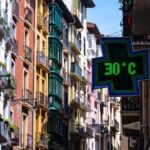
Spain experienced exceptional heat in 2026. Credit : Mike Workman, Shutterstock

September is the month when autumn begins, when the summer haze of the preceding months gradually melts away; but across much of Western Europe, the arrival of autumn brought little relief from the heat. September 2026 has been officially classified as the joint hottest September in the annals of the climate of Europe, on a level with the hottest in the year 2023.

Spain was one of the countries where high temperatures had settled in recent weeks, and after the hottest summer on record, this was another unusually warm month.

In the West, as per the new figures released Monday, October 12, by the European Union’s Copernicus Climate Change Service (C3S), the temperature average for the month of September was 2.51 degrees higher than average, matching the record set in 2023.

The new study also showed that September, 2026, was the second warmest September ever on record and sea temperatures set a new high for that month.

For the people living in Spain these figures indicate the persistence of the heat, which has been unusually continuous beyond the usual period of the summer season.

Western Europe records its joint-hottest September on record

The last Copernicus climate bulletin reports that Western Europe experienced the joint-warmest September in the ERA5 climate data set, equalling the record set in 2023. Compared with the usual mean temperature for this period of the year, it was 2.51 degrees centigrade higher in the region, a significant deviation from the normal start of the meteorological autumn.

However, the picture across Europe was not entirely uniform.

In terms of the whole continent, September 2026 ranks as the third hottest September on record. The average temperature in Europe was 16.26°C, which is 1.54°C higher than the 1991-2020 average.

This distinction is very important. Though Western Europe matched its previous September record, that did not mean that every single country had its hottest September.

The global figures were equally striking. In September, according to Copernicus, the average world surface temperature was 16.27 ° C, and therefore was the second warmest September ever recorded.

It was 0.82°C above the average September temperature of 1991-2020, and 0.11°C below the September of 2023, which remains the hottest on record for September. As compared with the calculated mean average temperature of 1850 to 1900, September 2026 was 1.63° warmer.

It was also the second consecutive month in which the global temperature exceeded the threshold of 1.5 ° C above the level of the pre-industrial period.

This does not mean that the goal set by the Paris Agreement on limiting the rise in global temperature to an increase of 1.5°C for the long term has been permanently overshot, because the target relates to the average temperature of a much longer period and not to a month.

Nevertheless, the latest measurements highlight the continuing rise in global temperatures.

Spain’s record-breaking summer continued into September

For Spain, September’s exceptional European temperatures followed an already extraordinary summer.

According to the Spanish State Meteorological Agency (AEMET), the summer of 2026 was the hottest in the country’s official temperature record, which goes back to 1961.

Across mainland Spain, the average temperature in June to August was 24.5°C, a whole 2.4°C above the mean for the period of 1991–2020.

It also exceeded the previous record, set in 2025, by 0.3°C. But what made that summer special was not so much the high temperatures, as the length of time these extreme conditions were in existence.

During the summer, AEMET recorded three heatwaves across mainland Spain and the Balearic Islands, including one lasting 23 days in July and another lasting 24 days between July and August, an exceptional record.

The previous record was 41 days in 2022. And the heat did not disappear when September arrived.

AEMET had noticed another hot spell between September 2 and 7, affecting 16 provinces over a period of six days, according to a provisional report of September 9.

It was the fifth heat wave recorded in the history of the observatory after those in September 1987, 1988, 2006, and 2016.

A summary of the season published on September 21 by AEMET described a summer which had not been restricted to the usual three months, with unusually high temperatures in late May and early September. The meteorological agency also predicted an autumn warmer than usual throughout Spain, with a probability of sixty to seventy percent.

However, it is important to distinguish between the exceptional heat in Spain and the greater European record.

Copernicus has confirmed a joint September temperature record for Western Europe, not a new national September record for Spain.

The unprecedented summer weather combined with the abnormal heat of September demonstrates the disturbance of the customary transition from summer to autumn.

Record ocean temperatures add to concerns about Europe’s changing climate

In the latest report on the Copernicus programme, we can also see a new important development – the unusually high temperatures in the seas.

In September of that year, the mean temperature of the surface of the ocean between latitudes 60° south and 60° north had attained the highest figure ever recorded for that month.

A new world record has been established. It comes at a time when the El Niño phenomenon in the tropical Pacific is gaining strength and is influencing both world weather and temperatures.

The warmer waters are the most important, since they contain vast masses of heat and play the principal part in the regulation of the earth’s temperature.

They also contribute to raising the temperature of the atmosphere, and thus to increasing the quantity of water which falls as rain under favorable atmospheric conditions.

For Spain and other Mediterranean countries, the temperature of the seas is an important factor to study, especially during the autumn months, when atmospheric disturbances may produce heavy rainfall.

However, a record of the whole ocean does not necessarily imply that in September every part of the Mediterranean Sea enjoyed the highest temperature ever. It does not mean that we can attribute to warmer waters a particular storm or a flood that is observed without further scientific analysis.

The general trend still raises questions about how residents, businesses, and tourists will cope with longer spells of heat.

For people living in Spain, prolonged periods of unusually high temperatures can affect daily routines, outdoor work, energy consumption and the comfort of homes that are not designed to cope with persistent heat.

The tourism industry may also see changes in seasonal travel patterns, as warmer conditions extend beyond the traditional summer months. However, this does not necessarily mean that Spain’s tourist season will become longer or that every region will benefit equally.

These latest figures are not a forecast for the coming weeks, nor do they suggest that Spain will experience continuously warm weather throughout autumn.

What they do show is how exceptional 2026 has already been. Western Europe has matched its September temperature record, Spain has experienced its hottest summer on record, and global sea surface temperatures have reached a new high for September.

Together, these findings highlight how unusually high temperatures can extend beyond the peak summer months, raising questions about how Spain will adapt to increasingly prolonged periods of heat.

Continue Reading

Trending

Copyright © 2017 Spanish Property & News