Connect with us

Alaska

Democratic Maneuvers In Alaska Give Trump Ammunition To Disregard Election Results

Published

on

democratic-maneuvers-in-alaska-give-trump-ammunition-to-disregard-election-results

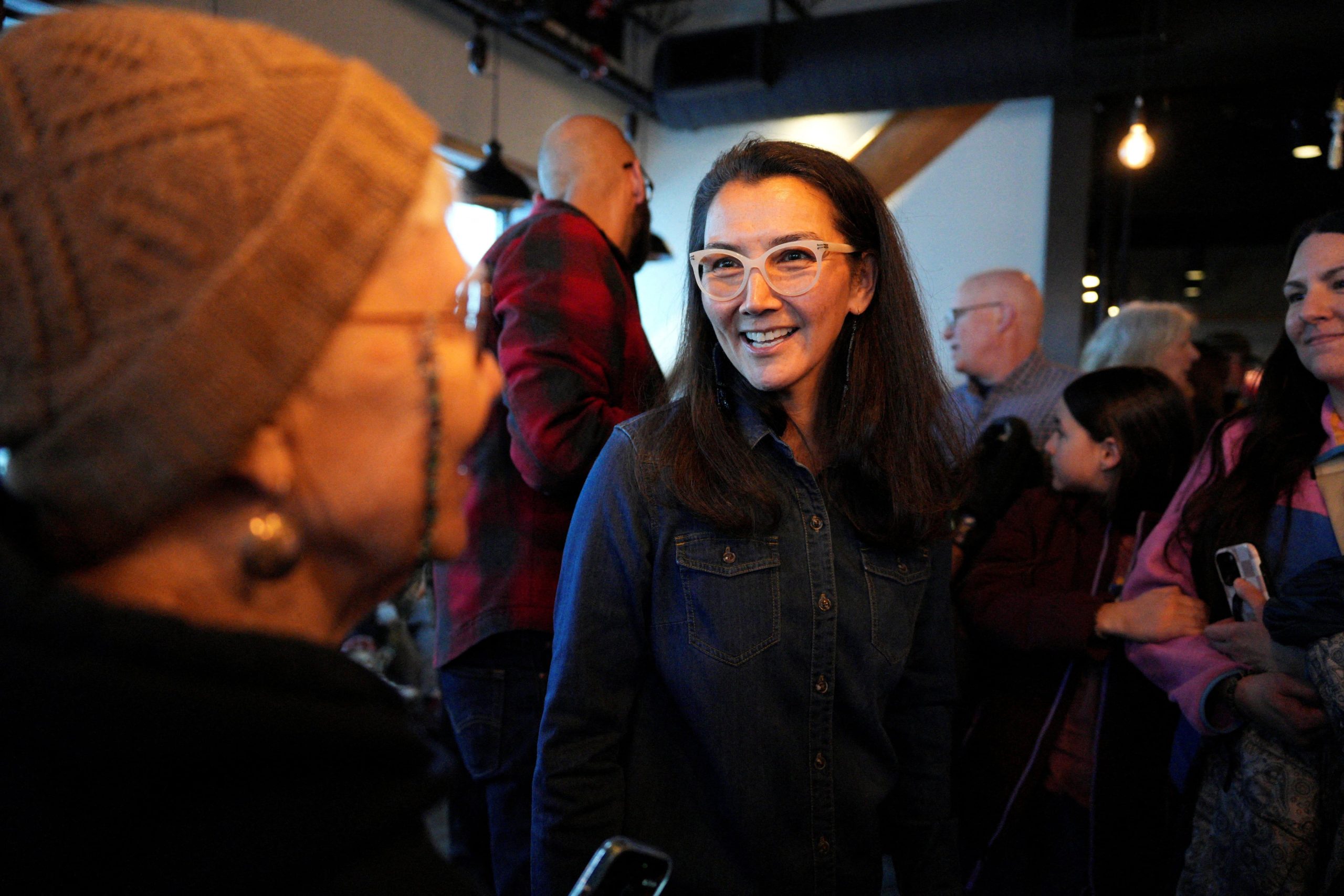
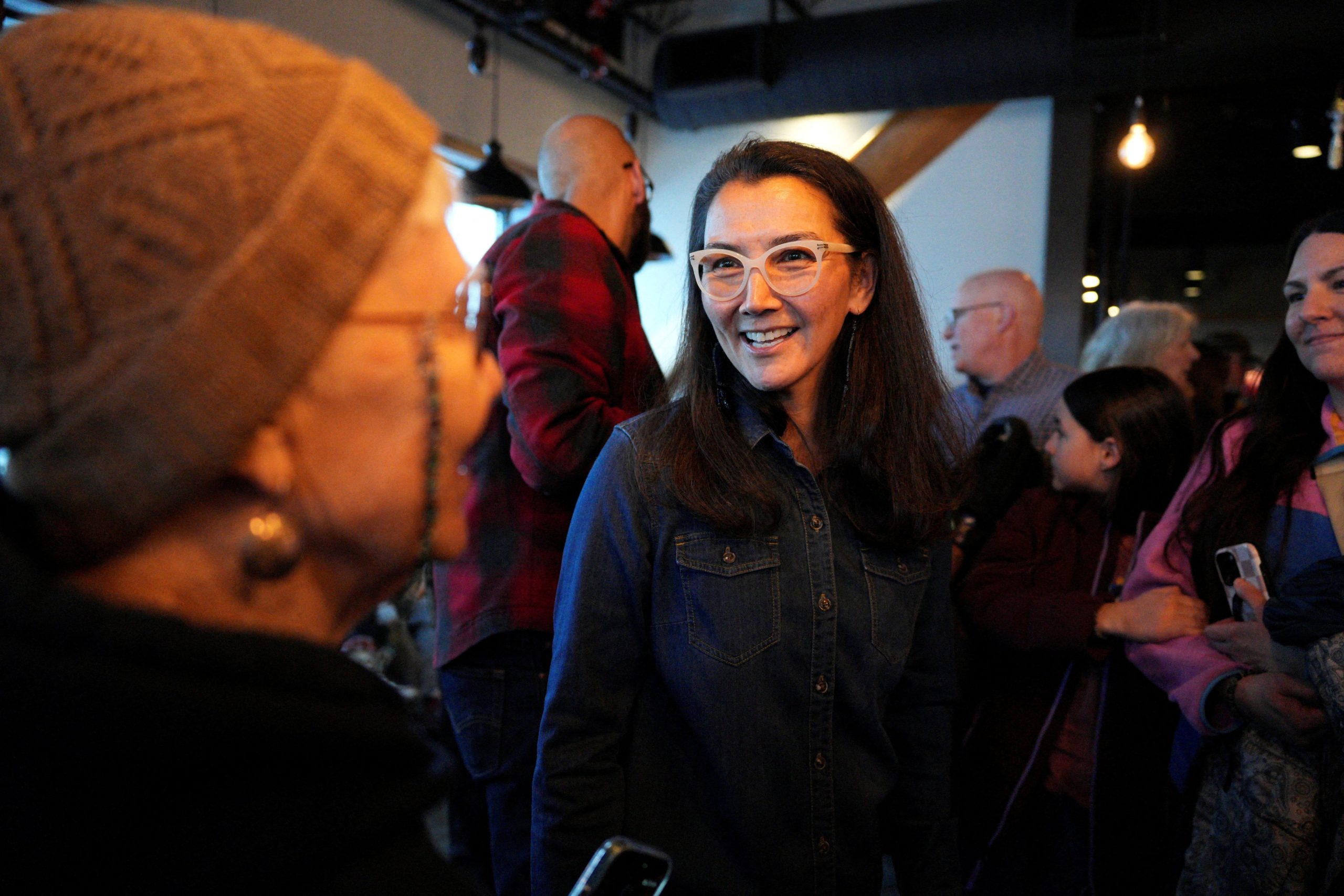
The controversy in Alaska over the contest for a Senate seat keeps growing. President Donald Trump remarked Thursday on the pivotal race that could determine control of the Senate in next Tuesday’s midterm elections. The president, whose administration’s future is at stake, questioned whether Alaska’s Democratic Senate candidate, Mary Peltola, could take her seat even if she wins. His remarks come after The New York Times revealed that Peltola’s team maneuvered to recruit a third candidate with the same name as her Republican rival in an effort to split the Republican vote in the state’s election.

The disclosure about the Democratic maneuver, which is neither illegal nor unprecedented, has given political ammunition to a president all too willing to question electoral results that are not favorable to him. Asked by reporters whether his party in the Capitol should refuse to allow Democrat Peltola to be sworn in if elected, Trump answered ambiguously. “Well, you’re going to have to see what happens. It’s hard to believe that she could even be allowed to run,” he said before boarding Air Force One to fly to South Carolina for a rally.

Trump also said Wednesday that Peltola’s advisers should be prosecuted and demanded that the Republican candidate be allowed to run alone. In a post on his social network Truth, the president wrote: “Mary Peltola should suffer the Legal and Political consequences for what she has done, A FRAUD ON THE AMERICAN PUBLIC. And Dan Sullivan should be allowed to run without either Mary Peltola or FAKE Dan Sullivan on the Ballot.”

Trump’s remarks come amid calls to investigate Peltola’s campaign just five days before the midterms. On Wednesday night, Alaska’s Republican governor, Mike Dunleavy, called for an inquiry to determine whether the candidate should face criminal charges or a civil action suit for seeking people with the same name as the incumbent senator, Republican Dan Sullivan, in an apparent attempt to dilute his votes next Tuesday.

On Thursday, the chairman of the Committee on Oversight and Government Reform joined Dunleavy and announced an investigation into Peltola’s campaign. “Knowing they can’t win on the issues, Democrats schemed to rig the U.S. Senate election in Alaska by deliberately confusing voters. This is part of a broader pattern of misconduct by today’s Democrat Party,” said Republican James Comer of Kentucky.

“Americans deserve answers about this latest attempt by Democrats to defraud the American people, and we will get them,” he added.

These reactions follow the The New York Times scoop revealing that Peltola’s advisers spent months trying to persuade a retired man named Dan J. Sullivan to enter the race for one of Alaska’s two U.S. Senate seats, specifically the seat currently held by Republican Dan S. Sullivan. According to the New York paper, the Democrat’s team engineered the second Sullivan’s candidacy (who will appear on the ballot as an independent) precisely to split the Republican vote.

The matter had already escalated to the state Supreme Court, which had cleared the way for the two Dan Sullivans to appear on the November 3 ballot.

Nevertheless, Trump’s party appears to be trying to exploit the controversy just as polls indicate Democrats could gain control of the Senate. The Republican administration last week filed a preemptive lawsuit to block the election result if Peltola wins. The Justice Department argued that the presence of two candidates with the same name could siphon votes from Dan S. Sullivan and ultimately benefit Peltola.

Governor Dunleavy said on his social media that the The New York Times report “reveals disturbing new evidence of an organized effort to manipulate Alaska’s elections.” He said that the Alaska Division of Elections investigated these same concerns in June of this year. “The new report substantially corroborates the division’s findings. I am therefore directing the Department of Public Safety to investigate whether this scheme violated Alaska’s laws and whether criminal charges or civil action are warranted. The evidence will determine what happens next,” he added.

His vice president, J. D. Vance, echoed those remarks in comments to the press: “She is trying to steal a Senate seat from the voters of Alaska, and it’s disgraceful, so whether it’s criminal or not, she certainly has committed a great moral failing,” he added.

Peltola, for her part, calls all of this a “distraction.” “This is just another distraction. It’s another diversion,” she said in a video posted online. ”This is all stuff to sell newspapers. This is all stuff to get subscriptions,” she said about the New York paper’s report.

Patricia Vélez and Nicholas Dale Leal contributed to this story.

Alaska

US Midterms: When Will We Know Who Controls Congress?

Published

on

us-midterms:-when-will-we-know-who-controls-congress?

The short answer to the million-dollar question is this: how long it takes to know the results of Tuesday’s midterm elections will depend on how close the races are. If the polls are broadly correct, control of the House of Representatives could be decided by tonight, while the Senate may become clear in the early hours of Wednesday morning. But if the key contests are tight, it could take days, or even weeks, to determine the Senate’s balance of power. The House could also take longer than expected.

What to expect

Democrats need 218 of the House’s 435 seats to win control. At the end of October, forecasting models from Silver Bulletin and The Economist gave them a 95% chance of doing so, while Decision Desk HQ put their odds at 80%.

The Senate is a closer contest. Republicans currently hold 53 seats and need only 50 to retain control, since Vice President J. D. Vance can cast the tie-breaking vote. Democrats need 51 seats, meaning they must gain four more seats than they lose.

According to EL PAÍS’s polling average, Democrats are leading in North Carolina, Ohio, Maine, Texas, Kansas, Alaska and Iowa, all currently represented by Republican senators. But the margins are narrow: about three points in Kansas, Ohio, Texas and Maine; roughly one point in Alaska; and less than half a point in Iowa. Those leads are well within the typical margin of error of political polling.

What to watch, hour by hour

All times are Eastern Time. The first results will begin to come in as soon as polls close.

  • 7:00 p.m.: Georgia and Virginia. The first competitive House districts to report are in Virginia. In Georgia, Democrat Jon Ossoff is defending his Senate seat with a polling lead of about nine points. If that race looks competitive, it would be an ominous sign for Democrats.
  • 7:30 p.m.: North Carolina and Ohio. This is the first real test for the Senate. In North Carolina, Roy Cooper leads Michael Whatley by roughly 11 points. In Ohio, Sherrod Brown holds a three-point advantage over Jon Husted. If Brown wins, the Democrats’ path becomes much easier; if he loses, they will need to win almost everywhere else.
  • 8:00 p.m.: Pennsylvania, Florida, New Jersey, Maine and New Hampshire. Many of the most competitive House districts are located in these states. In Maine, Susan Collins trails Troy Jackson by about three points, but the state uses ranked-choice voting. If no candidate wins more than 50% of first-preference votes, it could take days before a winner is known.
  • 9:00 p.m.: The crucial hour for the Senate. Polls close in Texas (where James Talarico faces Ken Paxton), Iowa, Kansas, Michigan, Minnesota and Nebraska, where independent candidate Dan Osborn trails Republican Pete Ricketts by less than two points. Key House districts in New York, Wisconsin, Arizona and Colorado will also be reporting results.
  • 11:00 p.m.: California, Washington and Oregon. California counts votes slowly. If control of the House remains in doubt by then, districts in the state could delay a final outcome for several days.
  • 1:00 a.m.: Alaska, where Mary Peltola and Dan Sullivan are running nearly neck and neck. Alaska typically takes about two weeks to complete its vote count.

Three possible scenarios

  • Democrats take control early: If Roy Cooper and Sherrod Brown win early the Senate races in North Carolina and Ohio, and James Talarico and Josh Turek prevail in Texas and Iowa, Democrats would secure the four seats they need by the early hours of the morning, without having to wait for Maine or Alaska. That is assuming they hold on to all the Democratic-held seats currently up for election. The House would likely be decided even earlier, much as it was in 2018, when Democratic control became clear on election night.
  • A nail-biter: If control of the Senate comes down to Maine and Alaska, there is little chance of a result tonight. In 2022, the Senate was not decided until the following Saturday, while the House remained unresolved for another eight days after Election Day.
  • Republicans hold on: If Jon Husted keeps Ohio in Republican hands and Susan Collins survives in Maine, Democrats would need to win virtually all of the remaining competitive races. In that scenario, Republicans could effectively secure control of the Senate in the early hours of the morning, once results from Texas and Iowa are called.

It is worth being cautious with the first wave of results. States count early votes, Election Day ballots and mail-in votes in different ways and in different orders. That can create an early advantage for one party that later fades as more votes are counted.

Sign up for our weekly newsletter to get more English-language news coverage from EL PAÍS USA Edition

Continue Reading

Alaska

Las Maniobras Demócratas En Alaska Dan Munición A Trump Para No Acatar El Resultado De Las Elecciones

Published

on

las-maniobras-democratas-en-alaska-dan-municion-a-trump-para-no-acatar-el-resultado-de-las-elecciones

La polémica en Alaska por la contienda a un escaño en el Senado no para de crecer. Donald Trump se pronunció este jueves sobre esta carrera decisiva que podría determinar el control del Senado en las elecciones de medio término del próximo martes. El presidente de Estados Unidos, que se juega el futuro de su mandato en las midterms del 3 de noviembre, puso en duda que la candidata demócrata al Senado por Alaska, Mary Peltola, pueda ocupar su escaño incluso si gana. Sus declaraciones llegan después de que The New York Times revelara que el equipo de Peltola maniobró para encontrar un tercer candidato con el mismo nombre que su rival republicano, con el objetivo de dividir el voto republicano en los comicios de ese Estado.

Seguir leyendo

Continue Reading

Trending

Copyright © 2017 Spanish Property & News