
ElPais
Eating Spicy Wings And Guessing Games: When Selling The Movie Becomes The Show


Penélope Cruz eating spicy chicken wings on the interview show Hot Ones, her eyes watering from the heat as she laughs and reproaches her family for persuading her to go on the program. Jennifer Lopez being interviewed aboard a New York City subway car. Jennifer Garner painting at an easel, palette in hand, while answering questions from someone off camera. Jeremy Allen White sitting down to eat while chatting on a podcast hosted by Jessie Ware and her mother, chef Lennie Ware. The star-studded cast of The Odyssey showing off their skills in a guessing game while trying to conceal their boredom with a marathon publicity tour.
The new formats for promoting films, born out of social media and designed with the sole aim of achieving that coveted (and increasingly fleeting) viral moment, have pushed some of the biggest names in film, music and entertainment to take on all manner of challenges in pursuit of attention. Sometimes at any cost.
In an article published last July, headlined “Acting the fool: why have Hollywood press tours become so gimmicky?”, the British newspaper The Guardian highlighted the juvenile and often downright silly nature of many of these promotional exercises. The piece’s author, Jesse Hassenger, linked the phenomenon to what he calls the “Fallonization” of journalism, a reference to television host Jimmy Fallon, whose trademark style relies on exaggerated enthusiasm and interviews packed with games, skits and banter.
If conventional television planted the seed with interview programs that gradually evolved into full-blown entertainment shows packed with games, challenges and activities, social media has capitalized on the appetite for lighter formats in which conversation is often secondary to entertainment. In this kind of content, the film itself tends to take a back seat and, at times, its promotion is overshadowed when the clip that racks up millions of views online focuses on a celebrity’s controversial remark, a witty quip or an apparently spontaneous moment that is endlessly recycled into memes.
The views and engagement generated by these videos attest to their popularity. But does this online exposure actually reach a broader audience? Or, in the scramble to capture a sliver of attention, does it merely add another layer of noise?
Nicholas Quah, a journalist and critic at Vulture, a website covering film and the entertainment industry, offered his take on the issue in an interview with U.S. public radio network NPR last December: “These days, as a direct result of […] the monoculture dissolving and there being thousands, if not millions, of social media influencers all having their own little piece of the overall audience, there’s just a lot more to do, and there’s a lot less certainty on how a publicist and a talent’s able to generate a sense of awareness,” he said, describing how the way films are sold to the public has changed in recent years.
A similar view is shared by Pablo Muñoz and Sunde J. Sastre, co-directors of the Master’s in Entertainment Marketing at the ECAM School of Cinematography and Audiovisual of the Community of Madrid and founding partners of CØLLAGE.
“Today a film or series doesn’t just compete against other releases,” says J. Sastre. “It competes against a sunny day, against TikTok, YouTube, video games, podcasts and absolutely everything that demands our time and attention. So promoting a release only with traditional interviews seems quite limited.”
In Muñoz’s view, the problem arises when viral content performs brilliantly, yet nobody remembers which film it was meant to promote. “You can have 10 million views and create a fantastic meme… but not necessarily interest in the release. That’s why I would distinguish between virality and promotional effectiveness,” he says. “A good campaign should achieve attribution and transfer part of that attention to the title.”
Standing out, or simply being visible, in today’s fast-moving media ecosystem is no easy task, and in Hollywood, press tours have become an extension of the performance itself. Promotional budgets there often exceed the entire production budget of a feature film in countries such as Spain.
Some stars struggle to keep smiling through it all. Kristen Stewart, for example, is often too transparent to disguise her reactions when, for the umpteenth time, she is asked to take part in yet another game related to the Twilight franchise, nearly two decades after its debut.
Others embrace the spectacle with gusto. During the promotional campaign for Marty Supreme, Timothée Chalamet even climbed to the top of the Las Vegas Sphere, the spherical venue that rises more than 110 metres above the city. For Marty Supreme, the actor also joined the trend known as “method dressing,” a term coined to describe outfits inspired by the characters or worlds of the films being promoted, a strategy most commonly associated with actresses on the red carpet.
As is often the case at public appearances and red-carpet events, it is women who devote hours to crafting their image. Zendaya and Margot Robbie have turned method dressing into a remarkably powerful tool for keeping their films in the public eye. In Zendaya’s case, the actress appears only briefly in blockbusters such as the first Dune film and The Odyssey, yet much of the publicity surrounding both productions focused almost exclusively on her and on the film-inspired looks she wore throughout the promotional campaign.
As for Robbie, no fewer than 165 brands were incorporated into the outfits she wore during the Barbie press tour. The looks were later collected in a book created with her stylist, Andrew Mukamal, and published by Rizzoli.

Although actors such as Alexander Skarsgård, Jacob Elordi and Pedro Pascal have also embraced this way of extending a film’s universe through clothing, Muñoz points to a certain “asymmetry” in what is expected of women and men on the red carpet during promotional campaigns.
“It is hard to deny that, historically, an actress’s look generates headlines, photo galleries, social-media conversation, fashion content and editorial coverage in its own right. And from a marketing perspective, that ultimately becomes another promotional layer for the film,” he argues.
In the view of Gabi Plaza, a content creator specializing in film and television, these formats help strengthen the bond with audiences, and their viral appeal goes beyond merely generating amusing soundbites. “Buzz always makes people more interested in something, for better or worse. Thanks to social media, audiences feel much more connected to actors, actresses and public figures in general, which makes it easier for them to form personal opinions about them.”
In that sense, she argues that even when a celebrity is “canceled,” that doesn’t always have a negative effect at the box office. “It may happen that a film gains more exposure because, following social media promotion, the lead was canceled, as happened in the case of Karla Sofía Gascón,” she recalls, in reference to the scandal over the Spanish actress’s controversial posts on Twitter.
Or the opposite: “Someone might see a film just because its promotion went viral online or because a particular actor has come across especially well.”
Judging by the sheer number of formats now in circulation, it may seem that nobody has yet found the magic formula that directly links creative, innovative promotion to box-office success, and that the industry is still operating largely through trial and error.
One of the pioneers of this approach was London-born Amelia Dimoldenberg, who built a following with irreverent interviews staged as first dates and conducted over fried chicken. Over the course of almost a decade, her YouTube series Chicken Shop Date has featured guests including Paul McCartney, Idris Elba and Rosalía. Yet last September, Dimoldenberg announced that Chicken Shop Date would be coming to an end and that the current season would be its last.
When Dimoldenberg launched the project, there was nothing quite like it with any significant reach. But over the past decade, the landscape has changed, and interview shows built around food have gone from being an innovative idea to becoming a genre in their own right. And if the algorithm has identified an interest in this kind of content, endlessly sliced into reels and TikToks, it will keep serving up similar videos ad infinitum, to the point where audiences may grow tired of a film’s promotional campaign before the movie has even been released.
This saturation of marketing has also become part of the conversation surrounding some of the most high-profile releases of recent years. Barbie, for example, reportedly had a marketing budget of $150 million, exceeding the film’s $145 million production budget.
Something similar happened with The Devil Wears Prada 2, which was being promoted from the moment the project received the green light. During filming, scenes shot on location were photographed by the press, the actresses fuelled anticipation through their social-media posts, the trailer was unveiled with great fanfare and, by the time the film reached cinemas, some audience members were already showing signs of promotional fatigue.

“For me, there’s a fairly simple rule: promoting earlier does not mean revealing earlier. You can build anticipation for a long time while preserving mystery,” says Sastre. “In fact, I increasingly believe that audiovisual marketing should begin well before release, even during development or filming. But not necessarily to communicate more, rather to better plan what to reveal, when to reveal it and what to reserve for when the theater lights finally go down.”
Sign up for our weekly newsletter to get more English-language news coverage from EL PAÍS USA Edition










America
United States Resumes Air Traffic After Nearly Five-Hour Shutdown That Forced 6,000 Flight Cancellations


America
Branko Milanovic, Economist: ‘This Defeat For Trump Will Not Have A Major Impact On US Policy Toward Asia Or Europe’


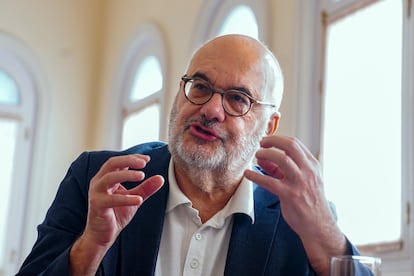
Branko Milanovic dislikes university campuses that are located in idyllic settings, especially those far removed from any urban area. He believes that students — at least those studying social sciences, like economics — should be in the heart of cities, “taking the subway every day, watching how people cross the street, getting cheated out of five dollars… that’s the real world.”
Milanovic, 73, belongs to that breed of economists obsessed with keeping academia connected to real life. He’s one of the leading international figures in the study of inequality. For 20 years, he worked as a senior economist at the World Bank.
Currently, the Serbian-American researcher teaches at the City University of New York (CUNY). He has his office amidst the bustle of Fifth Avenue, in the heart of Manhattan, a place that could easily provide enough material for several PhDs in macroeconomics.
After delivering a lecture on November 6 at the Rafael del Pino Foundation in Madrid, Spain, several young people approached him to ask for a photograph. Milanovic is also one of those economists with rock star status in academic circles. In his interview with EL PAÍS, he addressed current events in the United States, but also the latest global economic transformations. And he used a term that he coined to describe the new ruling elites: “homoploutia.”
What does it mean? “Through my empirical work on income distribution in the United States,” he replies, “I realized that, both [in the U.S.] and in other countries, there’s a growing percentage of people at the top who are simultaneously in the highest decile of both capital income and labor income. Now, you could say, ‘well, this is a really good development, because it breaks that contradiction which always existed between so-called earned and unearned income.’ But, on the other hand, you start thinking, ‘well, maybe these guys are now forming an elite.’ They’re hard working, they’re very well educated, they have high labor income and they also have very high capital income. And it’s very hard, maybe, to get into that elite.”
The concept, which he develops in his latest book, The Great Global Transformation: National Market Liberalism in a Multipolar World (2025), is different from the aristocracy in the United States formed by the new tech billionaires, who’ve amassed considerable political power under Donald Trump.
“First, they’ve become very influential in the media: Jeff Bezos acquired The Washington Post, Elon Musk controls Twitter, Bloomberg obviously controls Bloomberg… I think it’s quite problematic. But we just saw how Musk spent a lot of money in the U.S. midterm elections [to help the Republicans] and failed. So, money doesn’t guarantee that you win,” he points out.
The interview with EL PAÍS took place just three days after the U.S. midterms, a veritable Democratic tsunami. This was a major setback for Trump, not only because a Democratic majority in Congress limits his power, but also because of the political message it sends both within and beyond the most powerful country in the world. However, Milanovic notes, “I don’t think it will have much impact on geopolitics. I think the policies with respect to China, the Middle East and Europe will continue, but things might be different for Europe psychologically, because now Europeans will say ‘well, America isn’t so crazy,’” he notes.
In fact, in his opinion, the next U.S. president, regardless of their political affiliation, “isn’t going to change policies regarding China; Joe Biden, who came after Trump’s first term, didn’t modify them.”
“Trump defined the moment by abandoning neoliberal globalization and going after China… but the same thing would have happened if Hillary Clinton had won the [2016] election, even though he did it in a more extreme way,” the economist adds.
In his latest work, he precisely addresses this decline of traditional globalization and the advent of a new order, which he defines as national market liberalism.
“The rules of neoliberalism — domestic and foreign — are the same, whether we’re talking about trade, movement of capital, movement of labor, technology… neoliberals would have liked a world without borders. My argument is that now, domestically, we continue with those neoliberal ideas, but externally, a different, mercantilist policy has been introduced… and this combination hadn’t occurred until now,” he states.
Milanovic believes that the crisis of globalization stems from a “paradox.”
“The success of neoliberalism,” he explains, “was the reduction of global inequality [and] the inequality between countries, but that same success has led to global conflict: it made China much more powerful, which became a threat to American hegemony. And also, Asian people in general have become richer and they’ve taken the positions of the European lower and middle classes. So, there’ve been two effects: conflict between nations and the impoverishment of the middle classes in the developed world.”
“The paradox is very important,” he adds. “Positive developments can also have negative consequences.”
And what role can Europe play in this multipolar context? “Well, I can give you my opinion, which may be wrong… but I think the problem with the European Union — not necessarily with individual countries — is that it hasn’t moved beyond the mindset of the 1990s. Now,” he acknowledges, “it’s totally understandable, because for Europe, the 1990s were really the best time. But that world no longer exists. And I think Europe’s problem is ideological: it must [learn to operate] in a world [defined by] multipolar competition.”
When asked about the model of social democracy that defines a large part of European society, Milanovic responds: “Keep it. But don’t tell everybody that they’re inferior to you because they don’t have it. You know, China isn’t going to have the same model. India is not going to have the same model. Brazil is not going to have the same model. And those are big countries.”
Sign up for our weekly newsletter to get more English-language news coverage from EL PAÍS USA Edition
Alexandria Ocasio-Cortez
Democrats Turn To 2028 After Midterm Gains Boost Moderates And Progressives

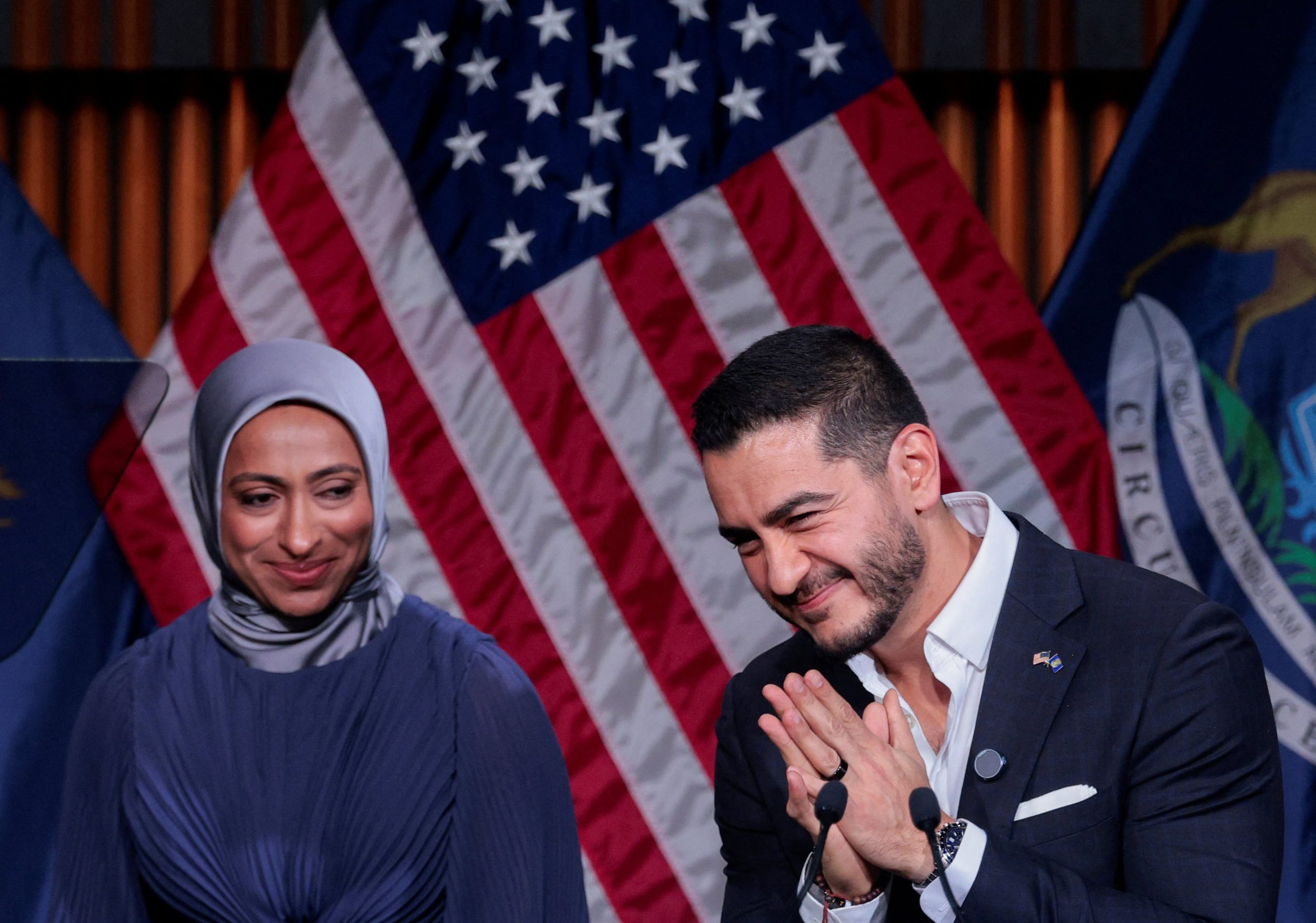
Ten days have passed since Democrats delivered one of the most consequential midterm victories in modern U.S. history. The scale of the Republican defeat has drawn comparisons to the post-Watergate elections of the 1970s. But for Democrats, the harder task begins now: converting an electoral backlash against Donald Trump into a durable political project. They achieved their main objective, but the hard part starts now.
Their most important challenge will be convincing voters who turned their backs on the party of Hillary Clinton, Joe Biden and Kamala Harris that a new generation of leaders has answers to the problems they face in their daily lives. Looking ahead to the 2028 presidential election, Democrats will have to organize internally, decide what policies to offer and, above all, determine which wing of the party will take the lead: establishment centrists, such as Hakeem Jeffries, the likely next Speaker of the House, or progressives led by Alexandria Ocasio-Cortez.
Two things seem certain. First, the top priority is bringing soaring prices under control. The high cost of gasoline, housing, food, healthcare and virtually every other necessity of daily life helps explain election results that Florida Governor Ron DeSantis described as “close to an extinction-level event for Republicans.”

The challenge, however, is that Donald Trump will remain in the White House for another two years and has threatened to veto any major legislation emerging from Congress. It is also unclear who would reap the political benefits of any improvement in Americans’ quality of life ahead of 2028: the president’s party, or the Democrats, who emerged from the midterms with control of both chambers.
“The American people don’t want us to get even. They want us to get things done on their behalf. We ran on affordability. We won on affordability. And now it’s our job to govern on affordability,” Jeffries said Thursday on Morning Joe. That view is widely shared within the party.
Little interest in impeachment
A second lesson from the midterm election is that Democrats have little interest in pursuing impeachment proceedings against Trump. Such an effort would consume enormous political energy and, as previous attempts demonstrated, is unlikely to produce the desired outcome. Rather than removing the president from office, it could once again provide him with a powerful platform.
Democrats are equally reluctant to refight the culture-war battles over transgender rights and other identity issues that conservatives have so effectively weaponized in recent years. Perhaps no one has captured the party’s mood more clearly than Gina Hinojosa, the governor-elect of Texas: “The left-right paradigm just does not meet the moment of our time,” she said. “This is about 99.9% of us in the same boat against 15 billionaire tech guys who are frankly controlling government. And that’s what the people voted against in this election […] And we didn’t just have Democrat supporters, we had independent supporters and Republican supporters.”
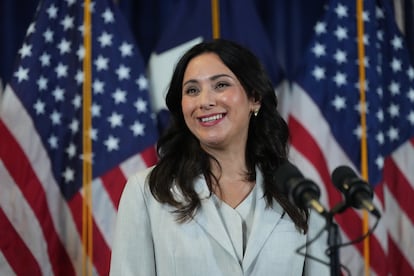
Dave Hopkins, a political science professor at Boston College, sees a similar dynamic at work. In a video call, he argues that over the past decade Democrats have paid a steep political price for culture-war battles, which have undermined the party’s appeal among working-class voters, including members of minority groups such as Black and Latino Americans. “There is a consensus among the party’s factions that they now have to focus on the economy and equal opportunity,” said Hopkins, whose latest book, Polarized by Degrees, examines how the educational gap and the culture war have transformed U.S. politics. “The problem is that the recipe for achieving that improvement varies greatly depending on which leaders propose it.”
Two competing visions
The internal battle has not yet begun, but few doubt that it will eventually emerge. As Democrats move to advance legislation, the question will be which vision of the party prevails.
Centrists have taken comfort from the scale of the party’s victory in the House of Representatives. With only a handful of races still to be called, Democrats already hold 255 seats, with female lawmakers in the party surpassing 100 for the first time.
That gives the Democrats a sizable cushion above the 218 seats required for a majority, making it difficult for the party’s left flank to use the threat of defections as leverage in internal negotiations. As a result, the scenes of dysfunction that frequently marked the past two years, when Republicans controlled the House by just four seats, are unlikely to be repeated.
The breadth of the Democratic Party’s success in these midterms across virtually every corner of the country, with the notable exception of Florida, which now stands as the Republican Party’s last major stronghold, undercuts an argument that progressives had already begun to make. Ocasio-Cortez, who threw herself into campaigns such as that of Abdul El-Sayed, viewed his race as a test of the left’s electoral strength. If a candidate like him could win in a swing state such as Michigan, then perhaps she, too, could begin to contemplate a presidential run.
The problem for progressives is that El-Sayed won, but so did a host of centrists across the South and the Midwest. And the Democrats who delivered the most commanding victories, including Jon Ossoff in Georgia and James Talarico in Texas, are not identified with the party’s left wing.
It is also striking how Democratic leaders have adopted a message tightly focused on Americans’ everyday concerns, insisting that their priority lies at home rather than abroad.
El-Sayed, the incoming senator who has emerged as one of the rising stars of the left, has justified his opposition to aid for Israel by arguing that a country grappling with its own social problems cannot prioritize helping others abroad. “I don’t believe it’s my responsibility to buy defensive weapons for a foreign government when our kids are defenseless against schools that have been underfunded for a very, very long time,” he said before the election.
Mark Brewer, a professor at the University of Maine, agrees that the party is shifting toward domestic priorities: “Democrats have taken note of the lessons of Trump, who became very popular with his promise of America First. The problem is he said he would keep the country out of unnecessary foreign conflicts, but he ended up starting a war [against Iran] of his own accord. Also, Israel is increasingly less popular. All this will affect Democrats’ future decisions.”
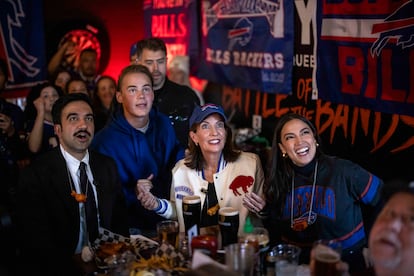
And finally, who is waiting in the wings with an eye on the 2028 presidential race? At this stage, predictions are futile. A wide field of contenders is likely to take shape over the coming months, ranging from former vice president Kamala Harris, who is making less and less effort to conceal her interest in another run, to Ocasio-Cortez, as well as senators such as Jon Ossoff and Mark Kelly and governors including Josh Shapiro. The contest is wide open, and it will remain so until January 2028, when the Democratic primaries begin. This time, in South Carolina.
Sign up for our weekly newsletter to get more English-language news coverage from EL PAÍS USA Edition
Leonid meteor shower returns to Spain with its best display of shooting stars
Gibraltar plans lifetime cigarette ban for anyone born after 2008

“¡Enano!” O La Historia De Una Agresión En Madrid


-

 New Developments3 weeks ago
How To Get A Tourist Rental Licence In Andalusia (Spain) – Step-By-Step Guide 2025
-

 New Developments2 weeks ago
Luxury Villas For Sale, Estepona – ProjectL1
-
Age Concern Marbella - San Pedro3 weeks ago
Halloween lunch sells out as 51 join Marbella get-together
-
Consumer Rights Spain4 weeks ago
EU offers extra year of warranty on phones, but Spain faces delays
-

 %4 weeks ago
Santa Pola Museo Del Mar
-
Barcelona riots3 weeks ago
Looting and street violence hit Barcelona as El Corte Inglés customers are trapped
-

 %3 weeks ago
Spain Orders Replacement Of Eight Million Gas Meters: New Rules, Costs And Deadlines
-
Living in Spain4 weeks ago
Rejected for Spain’s widow’s pension? Unmarried parents could get a second chance