
ElPais
Susan Sarandon: ‘Sometimes People Call Me A Communist. I Think That’s Just Their Way Of Saying Someone Is Out Of Their Mind’

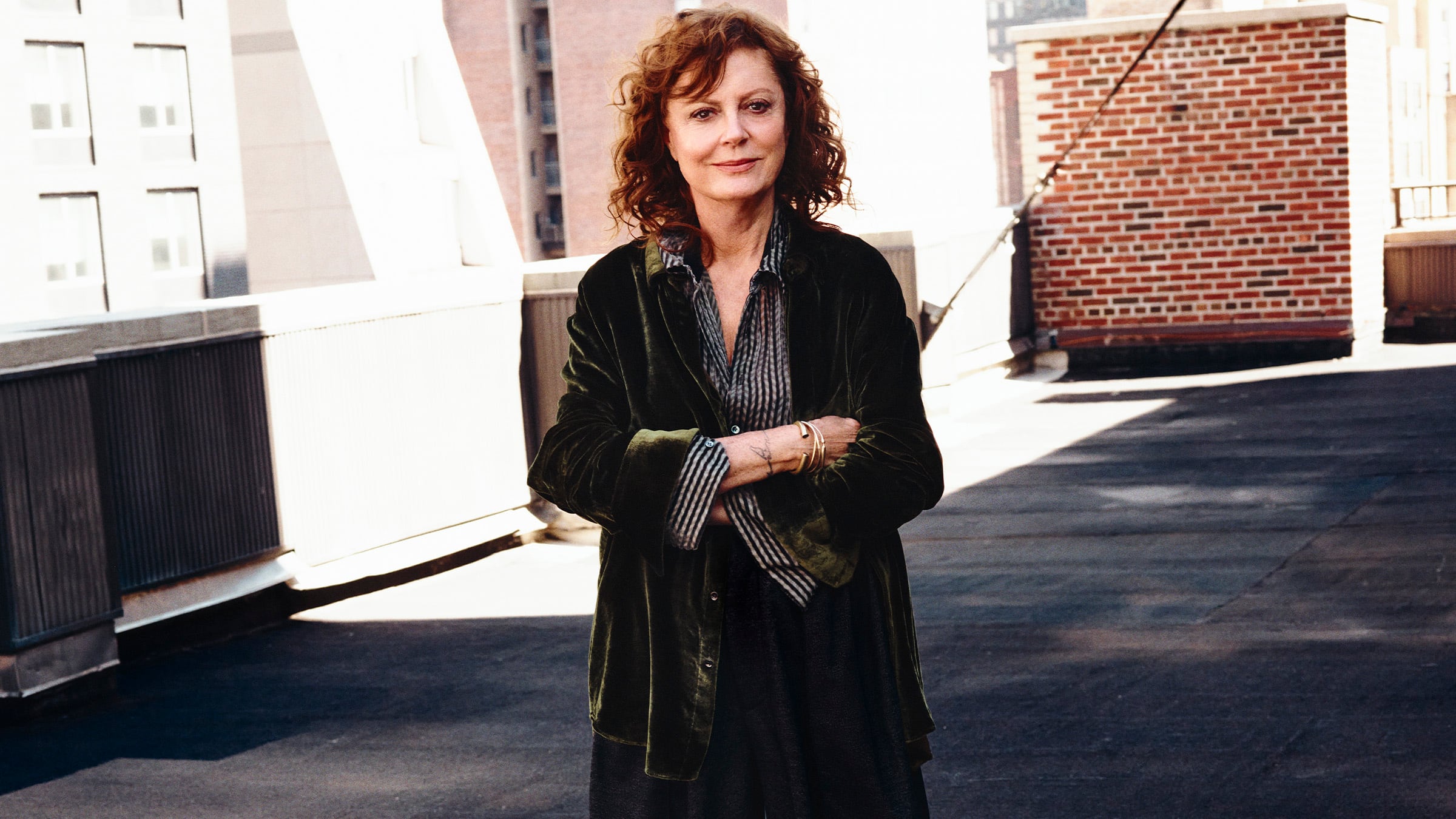
On September 25, just a week after this interview, Susan Sarandon, 80, was arrested outside the United Nations headquarters in New York. She was protesting, alongside actresses such as Hannah Einbinder and Cynthia Nixon, against Israeli Prime Minister Benjamin Netanyahu’s address to the General Assembly. It was not the first time she had been arrested, and it may not be the last.
Sarandon, who has appeared in more than 100 films, has starred in Hollywood hits such as The Client, Stepmom and The Witches of Eastwick; cult classics including The Rocky Horror Picture Show and Thelma & Louise; and socially engaged films such as Dead Man Walking, which earned her an Academy Award. She has also appeared in the TV series Friends and worked with French director Louis Malle.
Sarandon chooses her projects much as she lives her life: without preconceived limits, guided by a mix of curiosity and defiance. “When I read a script, I want to be moved. I want the character to be something I haven’t done before. It’s great if there’s a proven director, but sometimes they’re new directors. It’s great if you can get paid, but sometimes you don’t.”
Her latest project, The Accompanist, for example, is by first-time director Zach Woods. In the movie, she plays Sylvia, a troubled and eccentric foster mother.
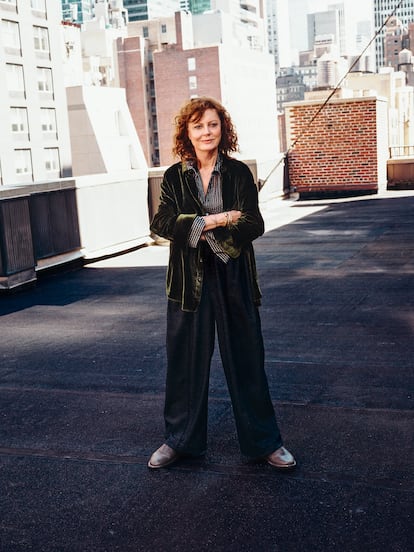
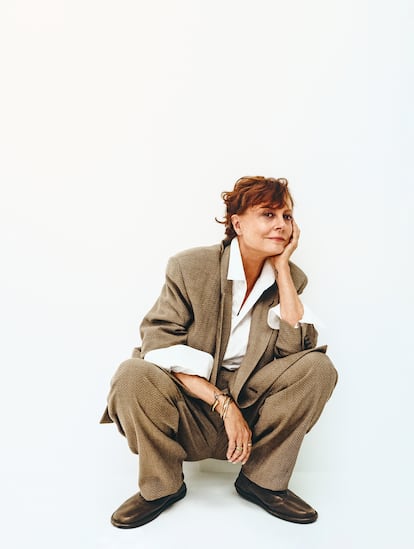
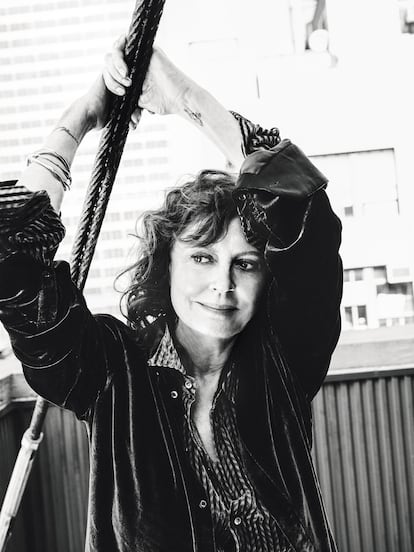
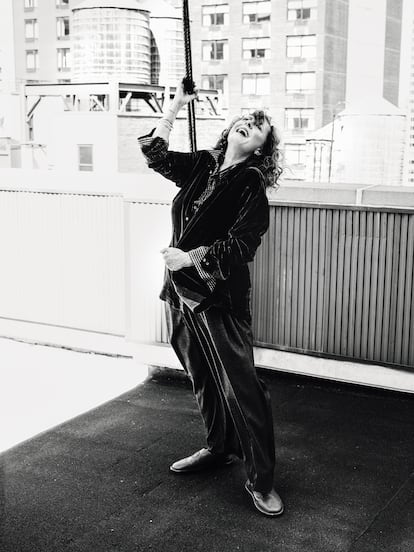
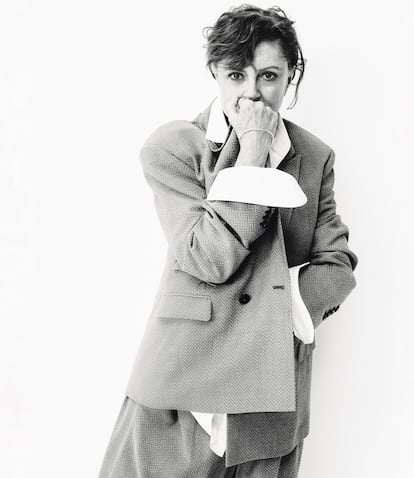
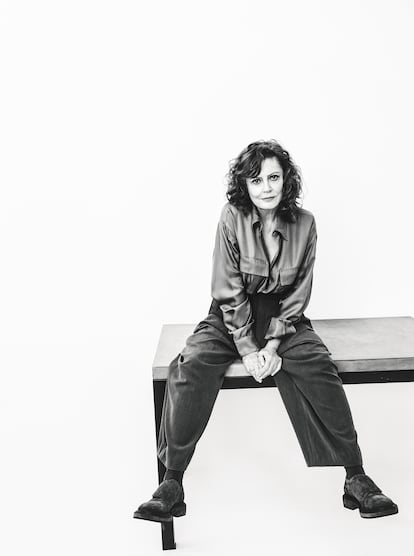
Sarandon arrives right on time for the interview with EL PAÍS’ fashion supplement Smoda. She tries on clothes for the shoot and eats breakfast while having her makeup done. Later, during the photo shoot, she jumps onto a table in a single bound and effortlessly crouches down. Nimble in both body and mind, she sits for the interview just days before turning 80, a milestone she has already celebrated at a ranch in Montana with her grandchildren and her three children: Eva Amurri, whom she had with Franco Amurri, and Jack and Miles Robbins, from her more than 20-year relationship with Tim Robbins.
“I wanted to be with my family, and the only week my grandkids had open in their busy schedules was in August,” she says.
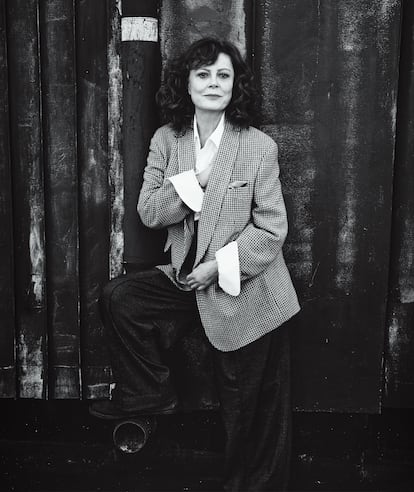
Question. In The Accompanist, you play Sylvia, a funny, tough and vulnerable woman who also happens to be remarkably tolerant as a foster mother. Were you an open-minded mother yourself?
Answer. Let’s say certain things don’t bother me that maybe bother other people. I talked to my children about drugs, about sex… They grew up in New York, and if you live downtown, it’s not hard to raise a kid to be open to different religions, races and family structures… That was one of the reasons I wanted to raise them in the city, because I felt I wasn’t vigilant enough to raise them with that openness to difference, and the city is great for that, you know: all kinds of art, all kinds of everything… that helps. My feeling was that if you’re going to raise privileged kids, at least you have to make sure they’re aware of their privilege and don’t take it for granted.
Q. The film presents exactly the opposite of a privileged upbringing: a young girl is forcibly removed from her home by an inexperienced child welfare worker, played by Aubrey Plaza.
A. Yes, and I want to mention one thing that we found out during a press junket: Aubrey’s mother and my mother were both in foster care. My mother grew up in foster care and an orphanage, and so did her mom. We didn’t know that while we were filming. There are a few problematic things about the foster system, but one of the worst is that when foster kids turn 18, they’re thrown out without any job, without any housing, without anything. No training, no education, no job, no money. Boom, you’re out.
Q. You are the eldest of nine siblings. What was your childhood like?
A. My childhood was fine. I mean, I didn’t know any different. It wasn’t a very playful childhood because, as the eldest, my sisters tell me I was the one who put them to bed, bathed them and did all those things because there was always a baby at home. A large family definitely teaches you to survive in chaos. I’m very good at that. You also get used to having no privacy. When I was little, I didn’t go out much because they needed me at home. But it was okay.
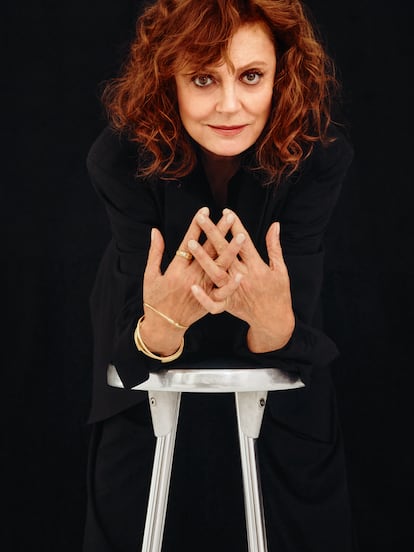
Q. Did becoming a mother affect the choices you made in your career?
A. Yes. For example, Jane Campion offered me a very good part in a film and it was exactly when my daughter was starting middle school, which is a huge transition and she was very nervous, and Jane Campion told me I could go back and forth, but I would spend the whole time waiting to leave. Of course my daughter doesn’t know or remember this. I should throw it in her face now [laughs]. But yes, there were things I turned down because it wasn’t the right time. I tried to have big movies line up with the summer, like Thelma & Louise or The Client. They were all done on location and my kids were with me in the summer. I remember the first time I did a film without my children with me. It was the one with Richard Gere and JLo, and I thought, “Jesus, what do I do?” I no longer had to arrange for them to come to set at lunchtime or look up where the museum was. I think one of the gifts I gave my children is flexibility. They’re adaptable, you know, because of their horrible upbringing [laughs].
Q. Did they complain?
A. I remember one of my kids saying: “When I was little, there were all these artists dancing in our living room, playing the piano and helping us make art.” He was telling a friend who said something like: “That sounds great, actually.” It’s normal — you have to be mad at your parents, but only until you’re 30. After that, you have to start taking some responsibility for yourself. Your dad was cold? OK. Then you be warm.
Q. You often play strong but vulnerable women. That’s the case with Sylvia, but also with Sister Helen, the role that won you the Oscar for Dead Man Walking, your fourth nomination. How important was that Oscar?
A. If I was going to win for anything, I’m glad it was for that film because I found the book, I found the nun who wrote it and she gave me the book, I worked on the script; I basically produced the film. There was a huge responsibility because I knew it was the first time a film was going to show both sides of what the death penalty means. People have very strong opinions about the death penalty, just like they do about birth control, but nobody had any idea of the specifics of what actually happens or how unjust it is or how it doesn’t really bring any solace to the victims. What I loved about the book was that Sister Helen doesn’t start out as a hero. She gets pulled in, little by little. She’s a real person who sees something wrong and begins to ask questions. Those are the women I love to play. Sister Helen and I are still friends. She lived in our house while Tim was deciding whether he wanted to do the film, until one day I threw a hissy fit and said, “You have to decide now if you’re going to do it because otherwise I’m going to take the book to someone else.” And he said: “Okay, I’ll look at it.”
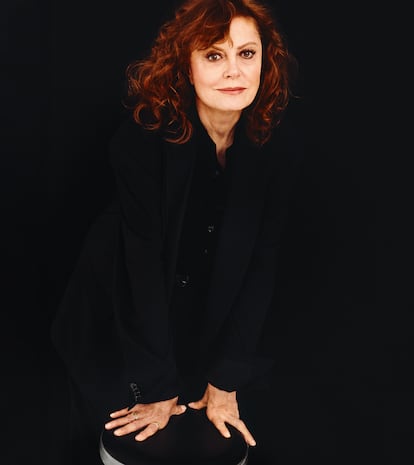
Q. Did your own activism evolve in much the same way, almost by accident?
A. No. I was already taking part in protests at college; in the late 1960s it was easy to be against the Vietnam War. And I kept doing it. In 1984 I was in Nicaragua delivering baby formula and things like that. I’ve been an activist for a long time because I believe you have a responsibility within your community to do everything you can to make sure people are fed, have a home and can live with dignity.
Q. Protesting and speaking out about the genocide in Gaza has cost you work. Is this the first time your activism has had consequences for your career?
A. No, it has happened before, but not so badly. For example, during the AIDS epidemic you weren’t supposed to speak about it publicly, and when I spoke at the Oscars about Haitian refugees with HIV who were in Guantánamo, I was kicked out of the Academy. But the important thing is that I’m not a victim; we should be talking about the victims and what is happening in Gaza and the West Bank.
Q. In 2018, you were arrested for protesting the separation of children from their parents at the U.S.-Mexico border. Are you still active on immigration issues?
A. Yes, I was arrested years ago during that first wave of children being separated from their parents at the border, and I think I’m due to go to the Elizabeth detention center [an immigrant detention center in New Jersey] and raise some hell there about what is happening to refugees in this country. A lot of the people being picked up are citizens; they have all their paperwork. They’re not arresting criminals.
Q. You’ve also been active in supporting refugees in other parts of the world.
A. I was on Lesbos, and it was heartbreaking because migrants thought that once they survived that existential threat of getting on those boats with fake life jackets, everything would work out. But then they ended up in that camp. Those days my cell phone barely worked, but I managed to speak with my daughter Eva. She was calling with my granddaughter, who was then two, and there was a woman there with a child about the same age, and the two girls looked at each other and pointed, and I thought: “My granddaughter simply got lucky being born where she was.” I asked a woman how she could risk making that journey with her small child, and she said: “If you’re on the top floor of a burning building and you know you’ll die if the fire reaches you, you jump. You hope for the best, but you jump.” And that’s what all these people were doing.
Q. For decades, you have used your fame and platform to champion social causes. Is there a misconception about you that you’ve stopped trying to correct?
A. I’m not sure because I don’t read any of that stuff. Every now and then, someone calls me a communist. I think it’s just the easiest way to try to say somebody’s out of their mind, a lefty. But I’m definitely not a communist. I’m not a Democrat either, though. I’ve said it before. I’m a patriot. I’m an independent.
Q. But do you vote?
A. Yes. But I can’t vote in the primaries because I’m not a Democrat, so I can only vote in the general elections. But we got [New York Mayor Zohan] Mamdani anyway, even without my communist vote.
Q. Do you like Mamdani?
A. I love him. He’s making substantial, concrete, actual positive change in New York; he’s making life materially better for many working people. He’s very smart.
Q. At 80, is there something you wish you had understood earlier?
A. Make mistakes faster. Make mistakes — big ones — but make them faster. You know when something is toxic, so get out of it. You feel it in your gut when you’re not being authentic, when you’re not being true to yourself, so listen to that and absorb it, but it doesn’t need to take two years. You could probably learn the lesson in about four months. I always give everyone too many chances.
Q. Is there anything you miss about being younger?
A. Definitely. Physically, because mentally I don’t think of myself as 80 — that still surprises me. But you notice how the body slows down. The other day I was talking with my grandkids, and I said, “I just want to be all used up when I die.” With nothing left to spare. As they say in sports, “don’t leave anything on the field.” Just show up. That would be a good epitaph if I were going to be buried, which I’m not. But if it were, “She showed up” seems like a good one. It’s pretty simple.
Q. This year, Thelma & Louise was featured on the official poster for the Cannes Film Festival to mark its 35th anniversary. It’s become an iconic film. When you were making it, did you have any sense of what it would become?
A. We were making a cowboy movie with trucks and women, and it turned into this other thing because we really didn’t understand how that genre was held by white heterosexual heroes. When you gave two women guns and freedom, it was very threatening to people. There was a lot of pushback. At first, they said we were condoning suicide, although no one said that about Butch Cassidy and the Sundance Kid. But, of course, they also said the film hated men and that the male characters weren’t very good. The film provoked an unexpected backlash. And then, because it became so controversial and popular, I don’t even know how much money it made. It’s funny because I get letters saying: The Rocky Horror Picture Show woke me up, and after seeing Thelma & Louise I left town.
Q. You’ve worked with Joel Schumacher, Barry Levinson and George Roy Hill, as well as with new directors like Zach Woods. Is there any director you’d like to work with?
A. I love all those fabulous Mexican directors: [Alejandro] Iñárritu, Guillermo del Toro, Alfonso Cuarón… Anything they did I would like to have done. Another director I love is Danny Boyle. He’s such a good filmmaker; last night I watched his film Ink. And Chloé Zhao is also a director I’d like to work with. When I saw Nomadland and Hamnet, I thought: “These are grown-up films.” These are people who know how to make a film. It’s not just television. They’re actual filmmakers.
Q. You recently received a Goya in Spain. What did that recognition mean to you?
A. I hadn’t realized what a big deal it was when I went. I might have been too scared to go if I’d known… [laughs]. But I love Spain. I’m sure there are terrible things in your country, like everywhere. But Spain and Ireland have really come through and dared other countries to be more morally responsible, and I appreciate that.
Q. How familiar are you with contemporary Spanish cinema?
A. There used to be all these little cinemas in New York that programmed independent films. When I was with Louis Malle, he would physically take his films to the projectionist because everyone knew the good projectionists. That’s how old I am. And that’s also how The Rocky Horror Picture Show was discovered — in gay cinemas and tiny venues. But there’s hardly any left, so it’s hard to see films that aren’t commercial and I don’t know much about contemporary Spanish cinema. Of course, I love all of Pedro [Almodóvar]’s work. He has a very particular point of view. I protested with him in Los Angeles against the Iraq War, right around the Oscars. I really admire him. Although I’m kind of mad he’s never put me in one of his films, but that’s okay.
Credits
Styling: Juan Cebrián
Makeup, hair styling, and nails: Genevieve Herr (Sally Harlor), Matthew Monzon (TMG LA) and Pattie Yankee.
Production: Cristina Serrano.
Production assistant: Pete Koukov.
Set design and on-set editor: Elaine Winter and Mari Siviakova.
Photo editing: La machine.
Local production: Drita Curanaj (R3 Mgmt) and Wojtek Szaulinski.
Tailor: Margarita Babina.
Photography assistants: Christopher Morel and Keegan Eckart.
Styling assistant: Fern Cerezo and Jan Anthonio Diaz.











America
Matt Barreto: ‘More Than A Reversal Or A Shift In Voting Trends, The Latino Vote Is A Repudiation Of Trump’


Matt Barreto has spent years studying the Latino vote and advising the Democratic Party on an electorate whose support, while often taken for granted, is far from guaranteed, as became clear in 2024 when Latino voters helped propel Donald Trump to victory. Barreto worked on Hillary Clinton’s 2016 presidential campaign, Joe Biden’s 2020 campaign, and Kamala Harris’s 2024 bid. He also led Latino outreach for the Senate campaigns of Catherine Cortez-Masto in Nevada and Michael Bennet in Colorado. Between 2021 and 2025, during the Democratic administration, he served as a White House adviser.
He is currently a professor of Political Science and Chicana/o and Central American Studies at UCLA and president of BSP Research, the polling and research firm he co-founded. His latest polling for the November 3 midterm elections points to a return to the Democratic Party among Latino voters who backed Trump two years ago, helping Democrats regain control of the House of Representatives. However, he warns that this does not reflect growing support for Democrats so much as a rejection of President Trump. He believes that while both parties have begun to rethink how they engage with Latino voters, this remains an electorate that, despite being the fastest-growing voting bloc in the country, still does not receive the attention it deserves.
Question. You have worked on several election campaigns. What are the differences between presidential elections and midterms in terms of voter turnout and motivation?
Answer. Presidential elections always have the highest motivation and the highest enthusiasm for all Americans, and this is especially true for racial and ethnic minorities. Some people just don’t feel as connected, especially if they’re in a state that maybe doesn’t have an exciting election contest. We know there will be a drop-off this year compared to 2024, but the question will be whether or not it is a large drop-off or a small drop-off. Some states like Texas are running very close to presidential-level turnout.
Q. Early voting has increased in these midterm elections, even setting records in some places compared with 2022. What do you think is driving that trend?
A. Latino voters are very frustrated about the lack of economic recovery. Trump came into office on a campaign promise of economic recovery. He talked about his business experience and said he would understand how to manage the economy. But the economy has gotten worse, especially for Latino and working-class voters. This is the single biggest factor that is holding him back, and the entire Republican Party: voters are frustrated with grocery prices, gas prices, and tariffs. What’s more, health care costs have gone up because they’ve canceled the Affordable Care Act subsidies, and they’ve canceled Medicaid expansion. Everything is expensive, and when you’re the incumbent, you have to answer to the voters. And so that’s what is motivating the election far and wide for Latino voters.
Q. Polls are showing now that the Democratic Party has an advantage over the Republican Party. How reliable are the surveys? Could there be any surprises?
A. I don’t think there’s going to be any major surprises this year. Almost every single survey is showing that Democrats are on pace to win back the House, with seven points on average; I think that is almost a certainty. The Republicans have a lot of negative ratings, by the fact that they haven’t differentiated themselves from Trump. The Senate is definitely much more up for grabs.

Q. Are we truly seeing a return of Latinos to the Democratic Party, or is it rather a move away from Trump?
A. It is a sharp move away from Trump. And because we have a two-party system in the United States, Latino voters are going to the Democrats. I wouldn’t say it’s a reversal; I would say it’s a repudiation of Trump. It’s definitely not a trend. It’s one data point, and that’s what we said in 2024. What happened in 2024 wasn’t a trend — although a bunch of people thought it was — and now here we are looking at the opposite.
But the Democrats will need to have a message after this election about why Latinos should continue to support them, and they will need to have some deliverables. This is part of the reason that the Latino vote looks as though it swings back and forth: there’s no overarching partisan alignment among Latinos, so each party always needs to make their case every two years.
Q. Why is the Latino vote so relevant this year?
A. Because it has appeared to shift between Democrats and Trump for the last three or four elections. Democrats had a very good election in 2018, the first time Trump was president during that midterm. The Democrats took the House back, and Latinos voted pretty heavily Democratic. But then, in the next few elections, Republicans started to get more votes, especially in 2024. And now in 2026, it looks like the Latino vote is shifting back.
The other factor is that the Latino vote is growing faster than any other vote. Latinos are now an important voting bloc, not just in Texas, but in North Carolina, in Georgia, and in a number of states. The Senate race in Iowa might be decided by two or three percentage points and Latinos are up to about five or six percent in that state.
Q. Latino voter turnout has traditionally been lower than that of other voter groups. What accounts for this?
A. Historically, there has not been a lot of party outreach, and so if the candidates don’t come knock on your door or call you, then you’re less likely to vote. And the candidates focus on people who they think are likely voters, and so if they don’t think you’re a likely voter, they don’t call you.
There has been a long history of under-mobilization of the Latino community, and that’s the primary reason, not because Latinos don’t care about politics. That’s starting to change. We are seeing a big change in places like Texas. There’s lots of outreach and lots of ads in English and Spanish. There is a Latina running for governor. It’s a very exciting time to be seeing this dramatic increase in Latino voter outreach.
Q. Which groups of Latinos are more likely to abstain from voting?
A. Younger people. And part of the reason that Latinos appear to have lower voter turnout is that we’re the youngest group. So the same trend exists for young white voters, young Black voters, young Asian voters, especially in a midterm. And for Latinos, our largest demographic segment is voters under 40, while for white voters, their largest demographic segment is voters over 60. People who are over 60 — whether they are Latino, Black, or white — vote at super high rates because they’ve been around, they see the political system, and understand why their vote can influence things. Whereas younger people don’t have as much faith in the system.
Q. There are around four million Latinos who can vote for the first time because they turned 18 years old. Is there anything that defines them?
A. They are very concerned about getting a good-paying job and being able to afford a place to live. They want to make sure they have health care. They are just starting out in their careers, and typically the political parties and the established politicians don’t do a good job of talking to younger voters, especially younger Latino voters. So if they don’t hear from the political parties and the candidates, they’ll probably vote at low rates. And this is a very, very important group because it’s substantial in size.
Q. The first concern of the Latinos is the economy. That is also the main concern of all citizens. Is it right to keep speaking about them as a separate group?
A. All Americans have the same worries this election: the cost of living, affordability, gas prices, and the war in Iran, which has very low support. So there are a lot of similarities. There is also a sense of anti-establishment, anti-incumbent sentiment that we’re seeing across the board. At the same time, all voters want to feel like the politicians care about their community. Latinos might have the same concerns, but if the politicians never show up in the Latino part of town, or they never air any ads in Spanish, or they don’t have any Latinos on their staff, then it doesn’t matter if you have the same concerns because you feel left out.

Q. Latino organizations insist that Hispanics do not vote as a monolithic bloc. Does it still make sense, then, to study them as a single electoral group?
A. Most Latinos agree that they have a lot in common with other Latinos. However, you shouldn’t think of them as a cohesive unit. Do all 40 of them like the same food, music, and candidates? No. So the diversity doesn’t mean that Latinos aren’t a voting bloc; they are, but they still have diversity in the same way that all groups do. If you think about the groups that have gotten other attention — such as working-class white men — they don’t all vote the same, they don’t all vote 100% Republican, and they don’t all have the same issues. But they’re an interesting demographic group because they do have a lot in common, and that’s the same with Latinos.
Q. Beyond the economy, Latinos are the group most affected by this administration’s aggressive immigration policies. To what extent does this influence whether Latino voters change their vote?
A. Immigration is not the number one issue for Latinos, but it is the number one anger issue. And anger leads to mobilization. Many people are very upset; they didn’t think Trump would be as extreme. They thought he was only going to be finding these so-called criminals, but he’s not. So when you have an economy that’s not recovering, and you have your immigration police in the streets — literally shooting people —, it’s a terrible situation. That’s why you see people like María Elvira Salazar in Florida and others distancing themselves from Trump. It’s a double negative in the same cycle. If the economy was doing amazing and everyone was making $300,000, people would still be mad about immigration, but the economy always drives people’s vote.
Texas barometer
Q. The race for the Senate seat in Texas between Democrat James Talarico and Republican Ken Paxton has attracted enormous attention and campaign spending. Trump has been more involved there than in other contests. Will it serve as a barometer for the supposed shift in the Latino vote?
A. Texas is interesting, and we need to look at the results by region. We have the South Texas Rio Grande Valley region that has gotten a lot of attention because it has voted heavily Democratic and more 50-50 for Trump in recent years. That is a very interesting region because it is very working class, it’s lower income, less educated, and near the border. That’s the first region to pay attention to because it does send a signal, not just for Latinos, but for its large rural areas.
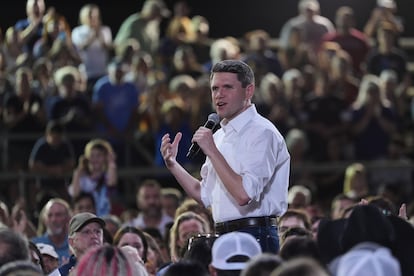
Given Trump has generally done very well with rural voters and Republicans, it tells us something not just about Latinos down there, but about rural Americans, working-class Americans in general, as well as Latinos in the rest of the country who might be in a similar situation. And then you have the cities, which tend to be much more democratic. In the past, they have not been a particularly strong electoral force, because they haven’t had high voter turnout. Houston, for example, has one of the lowest voter turnout rates of any big city in America. Definitely, there are a lot of clues in Texas that we’ll get as we get the data.
Q. Beyond Latino voters, is there another group that could drive a shift into Congress?
A. We’re seeing similar trends with Asian Americans, another group that is very immigrant-heavy and also shifted in 2024. We’re seeing similar shifts back: this group, which is also very economy-oriented, thought that Trump was going to recover the economy; however, they are very upset about the cost of living and the lack of progress on affordability.
Q. Republicans have made a major effort to redraw electoral districts in ways that reduce the influence of minority voters, a practice known as gerrymandering. What impact will this have on the election results?
A. They drew these districts based on the 2024 vote, where Trump did much better with Latinos, but now he’s doing much worse. In states such as Texas and Florida, the districts that got redrawn may not perform for Republicans. They made some wrong assumptions by only looking at the 2024 data.
Sign up for our weekly newsletter to get more English-language news coverage from EL PAÍS USA Edition
Barcelona
Wendy Brown, Political Scientist: ‘Our Organization Of Life Is Unsustainable And We Know It’

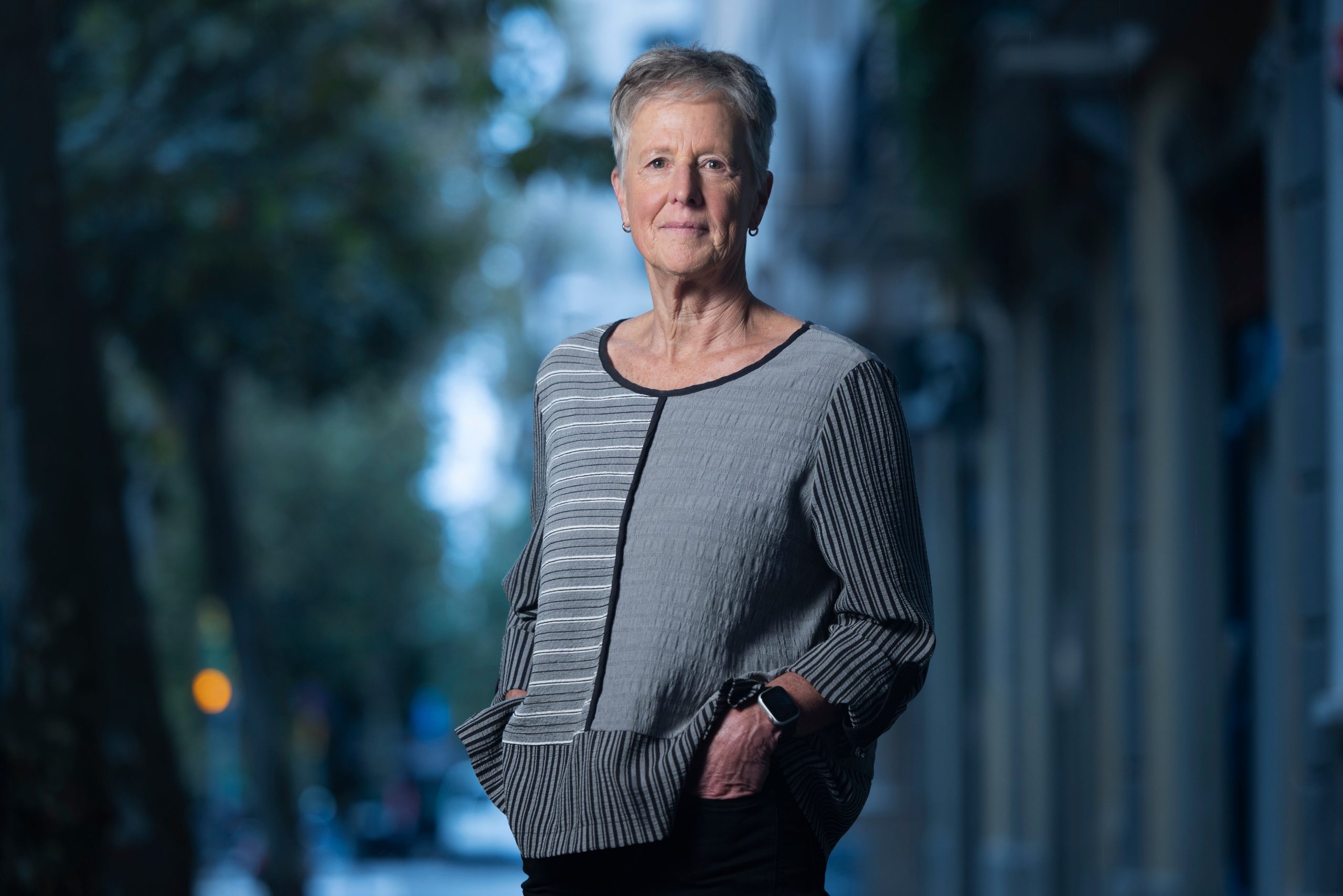
In this in-between moment, after everything and before whatever comes next, political theorist Wendy Brown focuses on the fundamental questions. She speaks about the significance of the upcoming elections, the nihilistic spiral of neoliberalism, the deep problem of naturalized masculinist logic, the demands shared by voters on the left and the right, and the social movements searching for a way out of a world in flames, stoked by opportunistic demagogues.
Brown is the UPS Foundation Professor in the School of Social Science at the Institute for Advanced Study in Princeton and emerita professor of political science at the University of California, Berkeley. Long before that, she was an outstanding student — as classmates at Thomas Downey High School recall on Facebook — who was able to continue her education thanks to the public scholarship system.
But her education did not stop in the classroom. She was also shaped by the anti-Vietnam War, anti-imperialist, anti-racist, feminist and LGBTQ+ movements of the 1960s and 1970s, which transformed the U.S. landscape and, by extension, the world beyond it.
The political theorist shares her life with philosopher Judith Butler, and together they form one of the most influential intellectual partnerships in contemporary thought. She is the author of books such as Walled States, Waning Sovereignty; States of Injury; In the Ruins of Neoliberalism and Nihilistic Times.
In an age of anger and distraction, the California-born scholar keeps her focus, urging people to look beyond today’s bleak realities and to work toward building a reparative democracy.
Brown, who was in Barcelona for the Bienal del Pensament, meets with EL PAÍS in a hotel in the city’s Eixample district. At one point during the conversation, she gets up to close four doors: the noise from outside, together with the strains of How Deep Is Your Love by the Bee Gees playing over the hotel sound system, makes it difficult to follow the flow of her thoughts.
Question. You say neoliberalism is not only an economic system. What do you mean by that?
Answer. Michel Foucault helped us understand that beyond the economic realm, neoliberalism also shapes social life, family and values. We know this intuitively because we see its effects: each of us has to be entrepreneurial, constantly attending to our own value… Neoliberalism also reshapes concepts like freedom and equality to suit itself, casting equality as the right to compete or freedom as the right to develop as an economic individual. All this has a very powerful effect. It hollows out democracy, it de-democratizes us, it de-politicizes us, and it makes us oriented simply toward questions about economic value.
Q. The reality is that tragedies such as ecocide and genocide are being enabled by democratic governments. Is democracy losing its meaning?
A. Yes. Liberal democracy, as a governing form, is exhausted. It can’t solve the climate emergency, the dismantling of the welfare state or the increasing numbers of people living at a barely sustainable level.
Q. In this context of intensified neoliberalism and the rise of the far right, to what extent is it a response to the decades-long process of dethroning the white man from the top of the political, social, cultural and domestic hierarchy?
A. The far right is a form of neoliberalism. Middle-class white men have suffered a loss of place as a result of neoliberalism, but they scapegoat women, migrants and the rest of the world. At the same time, they are also reacting to feminist and anti-racist challenges to their ownership of the world. The combination of neoliberal dethronement and the challenges posed by social movements is producing a tremendous reaction, fueled by opportunistic right-wing demagogues.
Q. Neoliberalism threatens our lives, our communities and the planet. What role does nihilism play in this?
A. Nihilism is an emptying, a loss of shared values, and neoliberalism pushes nihilism to levels never seen before. What it does is reduce the value of any aspect of life — social encounters, love — to its price, and that is a severe form of nihilism. The combination of nihilism with fatalism — the idea that there’s no stopping the planet’s trajectory, droughts, fires, dictatorships — leads us into an emergency. What matters is to introduce the question of what can and must be done.
Q. People talk about apathy, yet protest movements are spreading across France, Serbia, India, Ecuador, the U.S. and Spain.
A. Yes, each in its own way, these are movements that contest that fatalism and nihilism. Faced with the growing disaster of capitalist right-wing politics, with humanitarian tragedies and ecocide, there are people — somewhat in the spirit of the anti-WTO protests of the 1990s— saying “another world is possible.” We see it in the groups that have fought for years to protect the Amazon, or the Latin American feminist movement Ni Una Menos [against femicide]. There’s a cry of “we have enough,” and we want a different way of life.
Q. How can those forces be channeled politically?
A. We must transform the democratic system, not center it on individual interests but on the idea of producing life conditions. We should move toward a model I call reparative democracy, based on taking care of one another, a model more oriented to stopping, controlling and repairing the damages caused by neoliberalism. Our organization of life is unsustainable and we know it.
Q. What should the role of the left be?
A. Its unfinished task is building coalitions beyond sectarian politics. The right is good at that. In my country, figures like Steve Bannon, who can’t stand the tech bros, know they must keep them on board, together with various Republican groups and the financial powers… They stay firm, united, and that is how they win. The left must learn to make coalitions and not be afraid of seizing power.
Q. In Spain, there is a perception that we have a lot at stake in the upcoming elections in November. Is it the same in the United States with the midterms?
A. Yes, it is a very important election. The damage that the Trump regime does to basic institutions, to poor and working people and, especially, to the planet must be stopped. The truth is that most people have moved well away from the center to the left or the right. But at the same time, voters are in some respects more connected than they realize. There is a shared rejection of a world ruled by elites, of corruption, and of data centers… Political movements, like [New York Mayor Zohran] Mamdani’s, are focusing on basics, working to provide affordable housing, food and transportation, and that appeals to many people. There are common concerns, and that could transform politics.
Sign up for our weekly newsletter to get more English-language news coverage from EL PAÍS USA Edition
alicia vikander
Trailblazing, Sexualized, Legendary: Lara Croft And ‘Tomb Raider’ Celebrate 30 Years Of Adventure


She might have celebrated with her favorite dish: beans on toast. Or perhaps she treated herself to a chocolate-and-orange cookie, the other delicacy she loves. The truth is that on October 24, Lara Croft deserved at least a small break from so many adventures. Accustomed to piling up milestones, last Saturday she marked a special one: 30 years since the release of the first Tomb Raider. A passionate lover of history, the archaeologist has spent three decades writing the story of the video game alongside her own. And, arguably, of popular culture, judging by 100 million copies sold, 2,300 magazine covers, exhibitions, films, and songs she has starred in. “You’d be amazed how persuasive I can be, even with dangerous men,” she said in one of her games. The facts back her up. She does not even need to draw her famous twin pistols.
First, she had to win over her own industry. At a time when Peach awaited rescue from Super Mario and Princess Zelda pinned her hopes on the warrior Link, Tomb Raider brought a strikingly obvious change for 1996: women could take the lead. And men would identify with them too.
“They were afraid players would reject her. Instead, she became distinctive. I suppose some wanted to protect her. But I want to believe many saw her as powerful, cool,” says Paula Sáez Pérez, author of the book La última exploradora: un recorrido por la saga Tomb Raider (The Last Explorer: A Journey through the Tomb Raider Saga).
“She helped ensure we no longer question that in video games today,” adds Miguel Aguerralde, author of Tomb Raider: el viaje de Lara Croft (Tomb Raider: The Journey of Lara Croft).
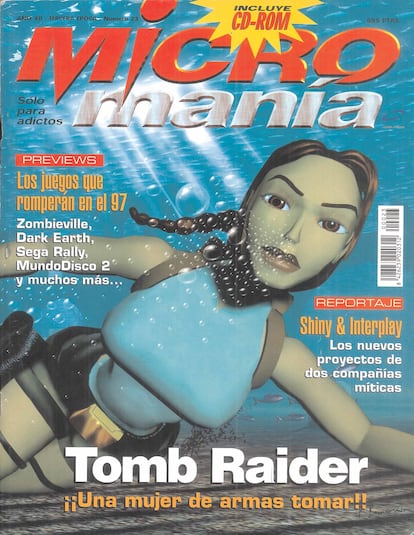
Gradually, she also made clear she hadn’t come to be wed to anyone or anything — except exploration. Facing freezing temperatures in tiny shorts and a tank top hardly helped the mission. “They weren’t thinking about female players, but about boys. Still, it was welcome that she was so self-assured and there were no developed romance arcs [and the fictional Lara even has a birthday on Valentine’s Day]. The idea that she was overly sexualized is a bit simplistic: for the time she wasn’t that bad, and characters then weren’t very deep. Although things like the infamous ‘pyramidal breasts’ or marketing with suggestive images are fair criticisms,” Sáez says.
In any case, while she toured about 30 countries — from the Colosseum to Kilimanjaro, from Antarctica to Yucatán — the adventurer began another journey: moving away from being a sexual object toward iconic status. The two new video games in development and the television series in production are meant to cement that from 2027. For now, among her many Guinness records, she already holds the title of the most versatile female digital character ever.
“When she appeared on the scene, video games had heroes, and female mascots,” Sáez Pérez sums up. The origins of the work achieved another feat: it came out of three years’ work by a team of six people. A handful by the standards of the time, and even fewer given the game’s scale: it pioneered building a three-dimensional environment to move through freely. The person responsible for designing those levels was Heather Gibson, the team’s only woman, although Lara Croft’s creator was developer Toby Gard.
Gard’s idea changed several times: to avoid the Indiana Jones homage becoming a copy, he chose a woman. He drew inspiration from the punk heroine Tank Girl, from Jamie Hewlett’s comics, and from singer Neneh Cherry. Initially, he thought of Lara Cruz, a South American mercenary. But developer Core Design wanted her to be British: the surname came from among the most common entries in the phone book. Early sketches show Lara in military uniform and holding a bouquet made of severed heads. In the end, she was made more elegant: a millionaire daughter of aristocrats. It’s not for nothing that she carries the title Countess of Abingdon.
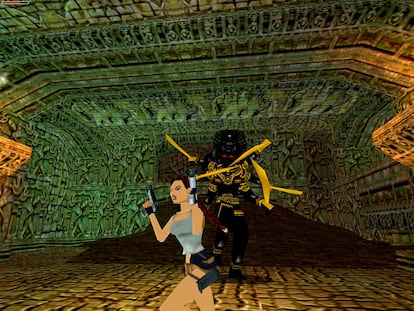
It was an immediate hit. “There are photos of team members sleeping under desks; after the success they released a game a year,” Sáez Pérez recalls. “It also worked because of the concept itself — adventure and action, an immersion in a movie — when the norm was platformers like Sonic and Mario or fighting games like Street Fighter. Another hook was the high difficulty level,” Aguerralde emphasizes. Sales continued to skyrocket with the second installment in 1997 and the third, 12 months later, which added another milestone: it was among the first video games to offer multiple routes to complete the same level.
By 1999, three years after its launch, Tomb Raider had become a phenomenon. Lara Croft appeared on clothing, deodorants, scooters, luxury pens, and playing cards. She was dressed in Gucci or Alexander McQueen, turned up at U2 concerts, and energy drink Lucozade temporarily renamed itself Larazade.
Janet Swallow, vice president of licensing at distributor Eidos in those years, cites two emblematic cases in a promotional dossier: they rejected a request from a racehorse owner who wanted to rename his horse Lara Croft for fear the animal might fall going over the first fence; they did, though, authorize a Dutch tulip breeder to name a variety after the archaeologist. At the height of her fame — afraid of nothing beyond her aunt’s corgi, because of a traumatic childhood bite — Lara seemed unstoppable. But after so much tomb raiding, she discovered her own.

At the end of the fourth installment, The Last Revelation, a pyramid collapsed with the explorer still inside. Perhaps developers did not plan an eternal rest, but they did pause after the frenetic pace. Core Design began receiving angry messages from fans. “PlayStation told them: ‘No, that’s not happening,’” Sáez Pérez says.
The market was clamoring for more Lara Croft video games. Her big-screen debut, starring Angelina Jolie, widened the phenomenon. Then came Chronicles, with an experimental narrative device: at the wake, several characters shared memories that the player could experience. Next came perhaps the darkest and most criticized entry, The Angel of Darkness. Still, both left marks: the PC edition of Chronicles included the game’s level editor, which the gaming public still tinkers with today. The latter title introduced stealth movement and attack mechanics that are now common in many action games.
However, for a few years the archaeologist grew less persuasive. There were hiatuses, remasters, and a tricky puzzle even for Lara: how to revive the franchise? “I think her success is because she’s a relatable character. Through the games you see different dimensions of Lara — from self-confidence to geeky traits — there’s a lot to make you want to support her but also feel connected to her in different situations,” reflects Raul Siqueira, game director at Crystal Dynamics, the studio now in charge of the saga.
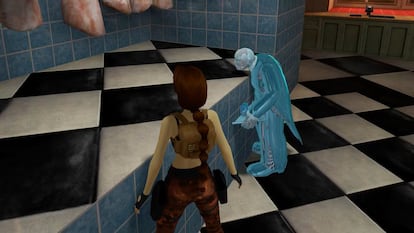
The road back to glory therefore involved reconnecting with the audience: the saga’s original fans, but new ones as well. In Tomb Raider II, back in 1997, the archaeologist could spend downtime in her mansion. Some players invented a challenge: get the butler, Winston, to follow them into the freezer and then leave quickly, closing the door behind them.
Years later, in 2016, Crystal Dynamics thanked that enduring passion with a nod: in an expansion for Rise of the Tomb Raider, players could find a letter from the poor man complaining about the incident, which had left him “shaking” and a bit upset. And the saga’s own rebirth, with the trilogy that began in 2013, listened to what was happening outside — and, finally, to the other half of the world. Tomb Raider, named the same as the original, reset the story from zero. For the first time, it was conceived by a female writer: Rhianna Pratchett (Terry Pratchett’s daughter).
“It would have been preferable if many more women had worked on a character like her, because in the end it shows,” Sáez Pérez says. In that 2015 installment, in particular, an unprecedented Lara appeared: younger, scared, complex, more human. “It was the first time she was taken seriously,” the expert notes.
Although there was criticism that her apparent fear of firearms quickly turned into cold proficiency, Sáez Pérez says that was not the writer’s decision but one made for gameplay reasons. The fact is it kick-started another successful phase: there were two more installments, a film starring Alicia Vikander and the announcement of an upcoming series, with Sophie Turner attached and written by Phoebe Waller-Bridge (Fleabag).
Next year will also bring Legacy of Atlantis, yet another reimagining of the original game, and Catalyst, the saga’s continuation, is scheduled for 2028 and promises the “largest Tomb Raider world to date.”

Otherwise, Catalyst’s synopsis contains all the franchise pillars: forgotten tombs, ancient mysteries, spectacular landscapes, puzzles to solve and, of course, lots of action. The number of polygons that make up the character has skyrocketed (from 250 to over 200,000); the presence of women in game development has increased, though not by much — at least judging by the most visible faces leading the new video games.
Today’s Tomb Raider titles offer many accessibility options and details such as the ability to listen to dialogue in Quechua or Yucatec. The essence, however, remains exploration, a thirst for puzzles, and adventure. “I’m not good at conversations,” Lara admits throughout the series. On another occasion, she remarked, “We’re facing a myth — except that it’s all real.” She was referring to King Arthur’s tomb. But, in reality, she could have been talking about herself.
Sign up for our weekly newsletter to get more English-language news coverage from EL PAÍS USA Edition

Stylish 3-Bedroom Apartment With Panoramic Sea Views – Benalmádena

Marbella Want A7 Elviria Exit Reopened

Álex De Miñaur – Carlos Alcaraz En Directo, La Final Del Torneo De Viena En Vivo


-
Catalonia4 weeks ago
Why the rain opened a hole in front of Granollers’ courts
-
DGT2 weeks ago
Viral video in Spain sparks fury over drivers who ‘have no idea how to drive’
-

 %4 weeks ago
Spain Payslip Change Coming In January 2027
-

 Arabia Saudí3 weeks ago
Un Ataque De Los Hutíes Contra El Aeropuerto De Riad Causa Al Menos 12 Muertos Y Más De 300 Heridos
-
200 people quarantined4 weeks ago
Russia plague alert as lab worker dies and 200 people are placed in quarantine
-

 America3 weeks ago
Un Tirador Mata A Ocho Personas En Una Vivienda En Pensilvania
-
 House prices3 weeks ago
Spanish House Prices Rise 9pc But Market Growth Stalls In H1 2026
-
airports2 weeks ago
Travelling between Spain and Italy? The extra border checks could soon end