Connect with us

%

Elche Breast Cancer Run And Walk

Published

on

elche-breast-cancer-run-and-walk

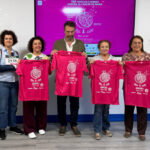
Elche’s annual Breast Cancer Run. Credit: Ayuntamiento de Elche.

Thousands of people are expected to turn Elche pink on Sunday, November 22, as the city’s annual Breast Cancer Run and Walk returns for its 22nd edition. With more than 9,000 participants expected, the event will bring together runners, walkers and families for a morning of sport, entertainment and fundraising in support of local breast cancer association AMACMEC.

More than 9,000 expected at Elche charity event

The 22nd annual Breast Cancer Run and Walk takes place on Sunday, November 22, raising funds and awareness for local breast cancer association AMACMEC.

More than 9,000 people are expected to take part, with a choice between a 10km run and a 5km walk, making the event suitable for serious runners, families and those simply wanting to support the cause.

Both routes leave Paseo de la Estacion at 10:00 AM.

The choice of distances allows people with different levels of fitness to get involved, whether they want to compete in the run or enjoy the walk while supporting the charity.

Registration includes T-shirt and refreshments

Entry costs €12 for adults and €5 for children aged up to 12, including an event T-shirt, refreshments, a free lunch and activities.

Registration is available through AMACMEC, participating sales points and online at chiplevante.com, with entries remaining open until the day of the event.

The event provides an opportunity for residents and visitors to support the association while taking part in one of Elche’s biggest annual charity gatherings.

Zumba and children’s race add to fun

The morning continues with a Zumba session at 11:45 AM and a children’s race at 12:30 PM, with youngsters taking part receiving a commemorative medal.

There will also be inflatables, crafts and more Zumba, giving families plenty to enjoy beyond the main run and walk.

Prizes will be presented to the first three men and women across the finish line.

Charity morning finishes at 1:30 PM

The event is due to finish at 1:30 PM, following a morning of running, walking and family entertainment.

With thousands expected to join the event, the 22nd edition will once again bring the Elche community together to raise awareness of breast cancer and support the work of AMACMEC.

%

Burglar In Spain Drinks Himself To Sleep In Bar Raid Gone Wrong

Published

on

burglar-in-spain-drinks-himself-to-sleep-in-bar-raid-gone-wrong

Repeated robberies leave businesses facing repair bills. Photo credit: Sonia Bonet/Shutterstock

A Bilbao bar owner could have been forgiven for expecting a nasty surprise after discovering someone had broken into the premises. Finding the alleged burglar fast asleep inside, with a half-empty bottle of orujo beside him, was probably not what he had in mind.

The bizarre incident happened in the early hours of Friday at the Río-Oja bar in Bilbao’s Casco Viejo. The suspected thief reportedly forced his way inside, helped himself to three beers and opened a bottle of orujo, because, why not? But unfortunately for him, his attempted robbery took an unexpected turn.

An attempted robbery turns into a drinking session

According to Antena 3 Noticias, the man forced open the bar’s metal shutter to gain entry. The alarm system was switched off because it was undergoing maintenance, allowing him to enter without triggering it.

Rather than making a quick getaway with valuables, he reportedly treated the premises as his own private drinking spot. He consumed a fair amount of alcohol including half a bottle of Orujo, a traditional Spanish grape pomace brandy with considerably more kick than your average cerveza.

Neighbours call the police

Noise coming from the premises alerted nearby residents, who contacted the police after suspecting someone had broken in. When officers arrived, they discovered the alleged burglar having forty winks inside the establishment. Beside him sat his Achilles heel: the bottle of orujo, with around half its contents remaining. His night ended in police custody rather than with the stolen goods he may have originally been hoping to find.

The bar had already been targeted

The incident might sound like a comedy of errors, but the Río-Oja has a much more serious problem. The bar had reportedly been targeted for the third time in 2026. During a previous break-in in August, thieves forced the shutter and escaped with €300. Two other nearby establishments were also reportedly targeted that Friday night, adding to concerns among local traders about security in Bilbao’s Casco Viejo.

Repeated robberies leave businesses facing repair bills, damaged entrances and stolen cash or equipment. Even when intruders fail to take anything, owners still have to deal with the damage and the cost of making their premises secure again.

Repeated break-ins leave bar owners worried

Local hospitality businesses have expressed concern about the number of robberies and are calling for greater security in the historic centre. For the Río-Oja’s owner, another break-in means yet more repairs and the worry of being targeted again.

The latest intruder may not have managed to steal anything, but he certainly left the bar with a story that will be difficult to forget. Most customers are eventually asked to leave when a bar closes. This one needed the police to show him the door.

Continue Reading

%

Ozone Hole Bigger Than North America Hits A 10-Year High: What NASA Says Happens Next

Published

on

ozone-hole-bigger-than-north-america-hits-a-10-year-high:-what-nasa-says-happens-next

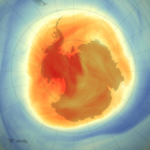
The Antarctic ozone hole on September 18, the day it reached its peak size. Credit: NASA Earth Observatory / Lauren Dauphin

The hole in the ozone layer above Antarctica has grown to its biggest size in 10 years, covering an area larger than the whole of North America at its peak. NASA and NOAA have now laid out what caused it, how scientists measured it and how far the long road to recovery has come.

The ozone hole peaked at 27.1 million square kilometres

Scientists at NASA and the US National Oceanic and Atmospheric Administration (NOAA) said the hole over the South Pole reached its maximum on Friday September 18, covering 27.1 million square kilometres (10.5 million square miles). That’s bigger than the whole of North America, and it makes this the largest ozone hole for a decade. 

Across the whole stretch from September 7 to October 13, it averaged 25 million square kilometres (9.6 million square miles), which is more than twice the size of the United States. At its peak it reached about 90 per cent of the biggest hole ever recorded, which came on September 9, 2000.

It’s now the seventh biggest in 48 years of monitoring, though it wasn’t as deep as the record holes of 10 to 20 years ago. It’s also a sharp jump from last year, when the hole ranked as the fifth smallest since 1992, so the swing has been enough to catch plenty of people off guard.

How scientists keep watch from the bottom of the world 

Teams at the South Pole Baseline Atmospheric Observatory launch weather balloons carrying ozone-measuring instruments, known as ozonesondes, up through the sky, with one such launch carried out on October 18. A Dobson spectrophotometer, an optical instrument, also measures the total amount of ozone overhead.

Scientists count the hole as the area where ozone falls below 220 Dobson units, which is why the map NASA released shows it in warm colours against the paler surroundings. 

Satellites have been tracking the ozone layer since 1979, with NASA’s Aura, NOAA-20, NOAA-21 and the joint NASA and NOAA Suomi NPP satellite among those named in the latest findings.

Those readings showed the thinnest point directly above the pole was 105 Dobson units on October 17. That’s the scientists’ standard measure, where 100 units would squash all the ozone overhead into a layer just one millimetre thick at ground level, and it sits well above the lowest value ever recorded over the South Pole, 92 units in October 2006. 

Weather helped the hole stay open

Every southern spring a hole opens in the ozone layer above Antarctica, and this year scientists say it simply refused to close up as quickly as usual.

The damage starts with human-made chemicals containing chlorine and bromine, which drift up into the stratosphere (the layer of atmosphere high above the weather). There, ultraviolet light breaks them down, and the freed atoms attack ozone on the surface of clouds that form in the freezing Antarctic air.

Paul Newman, a longtime leader of NASA’s ozone research team, said an unusually powerful polar vortex had “extended ozone depletion in the Antarctic this season”. NOAA’s Amy Butler explained that weak weather waves in August and September kept the strongest winds several degrees of latitude further from the pole, which let the vortex stay large and widened the area where ozone is destroyed.

Newman added that the hole could have been 1 to 2 million square miles bigger still if ozone-damaging chemicals were as common as they were at their peak in 2000.

The long-term recovery is still on track

So why aren’t scientists sounding the alarm? Because the chemicals behind the damage, including chlorofluorocarbons (CFCs) once used in aerosols, fridges and air conditioners, were replaced under the 1987 Montreal Protocol, an international treaty. NOAA‘s Stephen Montzka said chlorine from those chemicals in the Antarctic atmosphere has now fallen by about a third from its 1980s peak.

NASA and NOAA say the layer is still expected to recover by the 2070s. That long wait is down to how stubborn the old chemicals are, as they can linger for decades in the atmosphere and inside old products and landfills. Newman also pointed out that in recent years the hole has been forming later in the season, which he said shows the ozone layer is healing. Last year’s fifth-smallest hole and this year’s big one show how much a single season’s weather can swing the picture, even as the chemistry underneath keeps improving. 

Why the ozone layer is worth guarding

High up in the stratosphere, the ozone layer acts as a shield that soaks up much of the sun’s harmful UV radiation before it reaches the ground. Thinner cover lets more through, which raises the risk of skin cancer and cataracts in people, and of damage to animals, plants and crops. That’s why scientists track the hole’s size every year, and why a swing as big as this year’s gets so much attention.

It’s also worth knowing this is a different thing from the ozone that turns up in air pollution reports. Ozone in the stratosphere protects life, while ozone at ground level is a pollutant, so the two shouldn’t be mixed up.

The findings from NASA and NOAA concern the Antarctic and don’t address any change in UV levels elsewhere. So the next test comes when the hole reforms next southern spring, when scientists will be watching to see whether it starts forming later in the season again.

Continue Reading

%

Catral Celebrates November

Published

on

catral-celebrates-november

Art, dance and live music are bringing a varied cultural programme to Catral this November, with three events at the town’s Casa de Cultura. From landscapes inspired by the light of eastern Spain to a dance tribute honouring pioneering women and a concert celebrating the patron saint of musicians, residents have plenty of opportunities to enjoy local culture throughout the month.

Levant Lights exhibition showcases Spanish landscapes

Local painter Aron Martinez is showcasing his Levant Lights Art Exhibition at the Casa de Cultura.

The exhibition features a collection of what the artist describes as “sensitive landscapes”, inspired by the light and scenery of eastern Spain.

It will remain open until Sunday, November 15, with opportunities to visit during the week and at weekends.

The collection offers visitors a chance to explore the artist’s interpretation of the region’s landscapes, with the distinctive light of eastern Spain providing the inspiration behind the works.

Dance performance honours pioneering Spanish women

Dance follows on Saturday, November 14, when the Arraigo company performs Open the Door at 8:00 PM.

The production pays tribute to Las Sinsombrero, the pioneering female artists and writers associated with Spain’s Generation of ’27.

Through dance, the performance brings attention to the creative contributions of women whose work formed part of an important period in Spanish cultural history.

The event adds a different artistic dimension to Catral’s November programme, following the landscape exhibition with a live stage production.

Santa Cecilia concert celebrates musical tradition

Music rounds off the trio of events on Saturday, November 21, when the Symphonic Band of Sociedad Union Musical La Constancia celebrates the patron saint of musicians, Santa Cecilia.

Conducted by Mario Ortuno, the concert begins at 8:00 PM.

The performance continues the tradition of marking Santa Cecilia with live music, bringing the town’s musical community together for an evening at the Casa de Cultura.

All events take place at Casa de Cultura

All three events take place at the Casa de Cultura, Calle Oscar Espla, 03158 Catral.

With painting, contemporary dance and a symphonic concert included, the November Cultural programme offers something for audiences with different artistic interests.

For more information, contact Catral Town Hall on (+34) 965 723 001.

Continue Reading

Trending

Copyright © 2017 Spanish Property & News