Connect with us

European News

Eurovision Song Contest 2026: Full list of finalists, favourites to win, how to watch and vote

Published

on

The Eurovision Song Contest 2026 is set to deliver its grand final this Saturday evening in Austria. Vienna will welcome 25 competing acts to the Wiener Stadthalle on 16 May for a night packed with emotional performances and dramatic results.

Why 2026 ranks as the most controversial contest in recent memory

Political tensions have led to controversial withdrawals and public protests before the semis even began. Spain opted out entirely in a formal boycott, joining several other nations that cited deep concerns over one participant’s involvement. Organisers have faced intense criticism for proceeding with the line-up despite calls for exclusions, leaving many viewers divided over whether music and politics can truly stay separate.

From modest start to worldwide phenomenon

Eurovision was launched back in 1956 to unite European countries through shared songs in the years following wartime division. The original, and then secret role, was to test broadcasting equipment across the continent at the beginning of the Cold War. It was a resounding success, not only in terms of technology, but with regards to bringing nations and cultures together in unity and a sense of brotherhood following decades of war and division.

Its format quickly captured hearts with memorable melodies, bold costumes and live orchestras that evolved into today’s extravagant productions. Global audiences now exceed 180 million because the contest mixes national pride with camp, fun entertainment that causes endless online debates and viral moments year after year.

How Spanish viewers can follow the action and cast votes

Spanish audiences can still gain full access via the official Eurovision YouTube channel for a free live stream starting at 9pm CEST. Dedicated apps and partner websites also carry the broadcast in high quality. Voting opens during the show for international fans through the Eurovision app or website, where Rest of the World participants submit scores that count toward the final tally. No national Spanish vote exists this year down to the boycott, yet fans abroad can still influence outcomes easily from any device.

Complete list of 2026 Grand Finalists

🇪🇺 Eurovision Song Contest 2026 – Grand Finalists
# Country Artist Song
1 🇩🇰 Denmark Søren Torpegaard Lund “Før vi går hjem”
2 🇩🇪 Germany Sarah Engels “Fire”
3 🇮🇱 Israel Noam Bettan “Michelle”
4 🇧🇪 Belgium Essyla “Dancing on the Ice”
5 🇦🇱 Albania Alis “Nân”
6 🇬🇷 Greece Akylas “Ferto”
7 🇺🇦 Ukraine Leléka “Ridnym”
8 🇦🇺 Australia Delta Goodrem “Eclipse”
9 🇷🇸 Serbia Lavina “Kraj mene”
10 🇲🇹 Malta Aidan “Bella”
11 🇨🇿 Czechia Daniel Zizka “Crossroads”
12 🇧🇬 Bulgaria Dara “Bangaranga”
13 🇭🇷 Croatia LELEK “Andromeda”
14 🇬🇧 United Kingdom LOOK MUM NO COMPUTER “Eins, Zwei, Drei”
15 🇫🇷 France Monroe “Regarde!”
16 🇲🇩 Moldova Satoshi “Viva, Moldova!”
17 🇫🇮 Finland Linda Lampenius x Pete Parkkonen “Liekinheitin”
18 🇵🇱 Poland ALICJA “Pray”
19 🇱🇹 Lithuania Lion Ceccah “Sólo Quiero Más”
20 🇸🇪 Sweden FELICIA “My System”
21 🇨🇾 Cyprus Antigoni “JALLA”
22 🇮🇹 Italy Sal Da Vinci “Per Sempre Sì”
23 🇳🇴 Norway JONAS LOVV “YA YA YA”
24 🇷🇴 Romania Alexandra Căpitănescu “Choke Me”
25 🇦🇹 Austria COSMÓ “Tanzschein”

Running order for the Grand Final • Vienna, 16 May 2026

Current favourites to take the trophy

Bookies place Sweden near the top with FELICIA’s sharp electronic track “My System”. Italy follows closely thanks to Sal Da Vinci’s emotional ballad, while Ukraine draws strong support for Leléka’s powerful folk-inspired entry. Austria, the host nation, and Germany round out the leading predictions, though surprises often appear once public votes combine with jury scores.

Will 2027 bring a return to business as usual

Most people either involved in the competition, or serious fans, express hope that current divisions will ease enough for every interested country to join without boycotts or exclusions. Reduced political pressure could restore the contest to its traditional open format and full roster of participants. Only time will tell whether this year’s disruptions prove temporary or signal lasting changes to the event’s structure.

Continue Reading
Click to comment

Leave a Reply

Your email address will not be published.

%

EU Plans Single Ticket For Europe Train Travel

Published

on

eu-plans-single-ticket-for-europe-train-travel

The EU wants to make international train travel easier with a single ticket covering journeys across multiple European countries. Credit : European Union – 2025

The European Commission wants to make train travel across Europe much simpler by allowing passengers to buy one single ticket covering journeys operated by different rail companies across multiple EU countries. Under the proposed reform, travellers would also receive stronger passenger protections if delays or cancellations cause them to miss connections during international journeys.

For many travellers, booking flights across Europe with different airlines is already straightforward. Doing the same by train can quickly become complicated, expensive or sometimes impossible, especially when multiple operators are involved. Brussels now wants to change that as part of a broader effort to make rail travel more attractive across the European Union.

The proposal would force train operators to share ticketing data with online sales platforms and, in some cases, even allow competitors to sell their tickets. EU officials say the goal is to remove barriers that currently make cross border rail travel frustrating for millions of passengers.

The reform could become one of the biggest changes to European rail travel in years if approved.

Why train travel across Europe can still feel surprisingly difficult

Travelling across several European countries by train sounds simple in theory. In reality, many passengers discover the system becomes far more complicated once different national operators are involved.

A traveller going from Spain to Germany or from Belgium to Italy may need to buy several separate tickets across different websites, each with different rules, conditions and refund policies.

Sometimes routes are not even displayed together despite connecting perfectly in practice.

One of the biggest problems appears when delays happen. Under current rules, if passengers buy separate tickets and miss a connection because the first train arrives late, they are not always protected for the rest of the journey. In some cases, travellers must buy completely new tickets themselves.

That uncertainty has discouraged many people from choosing rail for long international trips, even as Europe pushes greener transport alternatives.

The European Commission now wants to simplify the process by encouraging what it calls ‘multimodal cross border journeys’ through integrated ticketing systems.

EU Transport Commissioner Apostolos Tzitzikostas said the reform is designed to make travelling across all 27 member states “simpler, smarter and more comfortable”.

According to the Commission, passengers should eventually be able to plan, compare and buy international rail journeys much more easily through online platforms.

What the new EU train ticket rules would actually change

The proposed legislation would require railway companies to make ticket and timetable data available to online booking platforms.

That means passengers searching for routes across Europe could see different operators combined within the same booking system rather than needing to jump between multiple websites.

The proposal also targets competition inside the rail market.

If a railway operator controls more than 50 per cent of a market, it may be required to display competing offers and even allow rival companies to sell its tickets if requested.

Brussels believes this could help increase transparency and keep prices competitive for passengers.

Online ticket platforms would also have to present offers “neutrally and transparently” under the proposed rules. But for many travellers, the biggest change concerns passenger rights.

The Commission wants passengers buying multi operator journeys in a single transaction to receive one combined ticket covering the entire route. That would mean stronger legal protections if disruptions occur during the trip.

If a delay causes a missed connection, passengers could gain access to rerouting, reimbursement, accommodation assistance and compensation rights even when different companies operate different parts of the journey.

Responsibility would be shared between operators.

The company causing the delay would have to handle reimbursements or compensation, while the operator responsible for the missed onward connection would need to help passengers continue their journey.

At the moment, those protections often disappear once separate tickets are involved.

Brussels sees rail reform as part of Europe’s green future

The Commission also sees the reform as part of its broader climate and transport strategy.

European officials have spent years trying to encourage more people to switch from short haul flights and car travel towards rail, which generally produces lower emissions.

Transport accounts for roughly a quarter of greenhouse gas emissions inside the EU, making it one of the most difficult sectors for Europe’s climate ambitions.

Brussels believes simpler ticketing could help convince more travellers to choose trains for international journeys. There is also clear public demand for easier booking systems.

A recent Eurobarometer survey found that around one in four Europeans experienced problems trying to book rail journeys involving different train operators. For people living near borders or in rural areas, fragmented rail systems can make international travel unnecessarily stressful.

European Commission Vice President Raffaele Fitto said improving rail connectivity is also about strengthening cohesion and reducing invisible barriers inside the single market.

The reform still needs approval from EU member states and the European Parliament before becoming law, meaning implementation could take time.

Even so, the proposal signals how serious Brussels has become about reshaping European rail travel.

For travellers frustrated by juggling multiple bookings, unclear passenger rights and disconnected train systems, the changes could eventually make cross border rail journeys feel much closer to booking a single international flight.

And for Europe’s rail industry, it may mark the start of a more connected network where travelling from one side of the continent to the other becomes far easier than it is today.

Continue Reading

Danish royal family

Health concerns grow after Queen Margrethe II rushed to Copenhagen hospital

Published

on

By

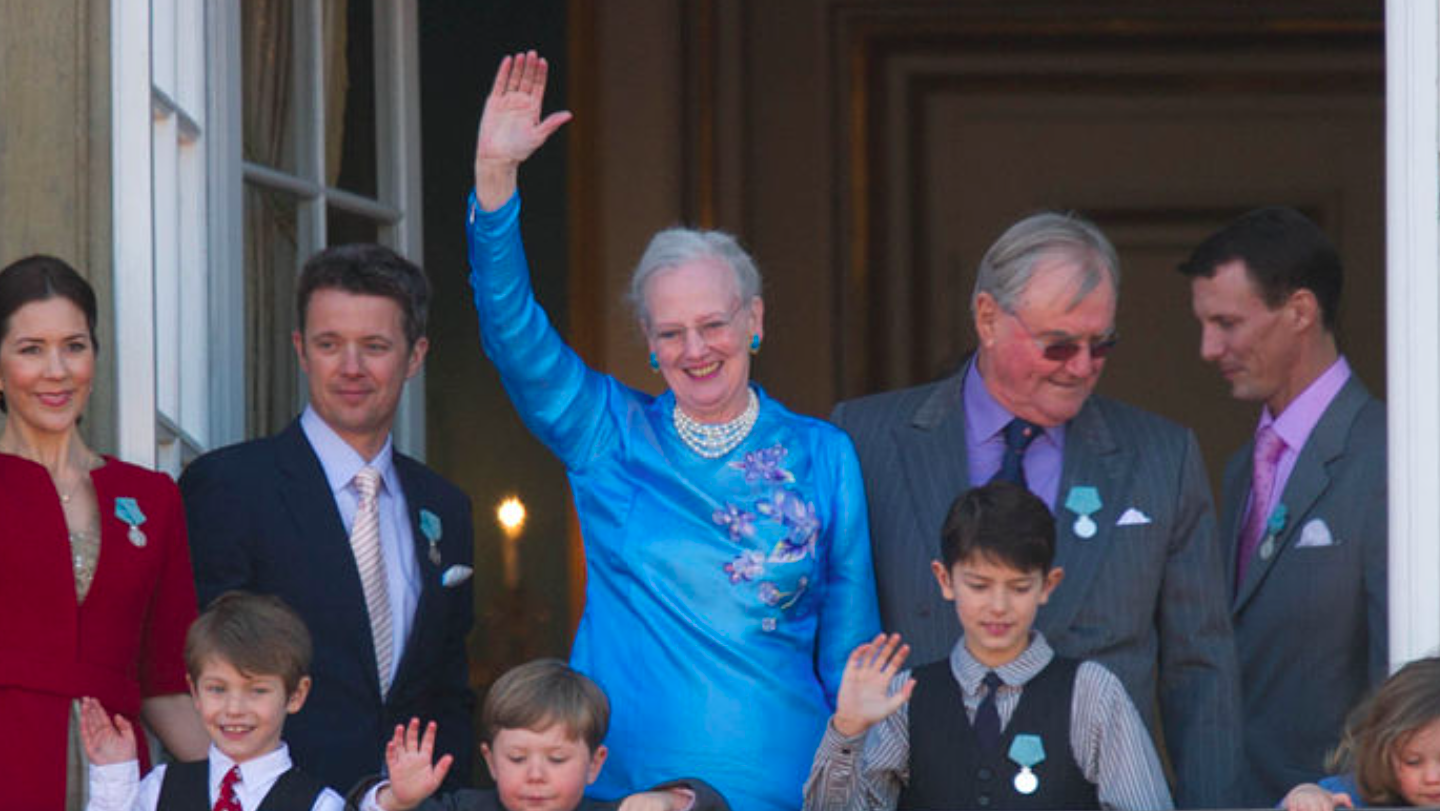
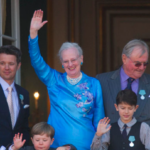
Margrethe abdicated on 14 January 2024 after 52 years on the Danish throne. Photo credit: CC Wikipedia

Former Danish monarch Margrethe II has been admitted to hospital in Copenhagen after suffering angina, according to the Danish Royal House. The 86-year-old was taken to Rigshospitalet today Thursday, May 14, and is expected to remain there over the weekend for observation and further examinations. The Danish court confirmed in a statement that the former queen was hospitalised due to “heart cramps”, the Danish term commonly used for angina pectoris, a condition caused by reduced blood flow to the heart muscle.

Officials said she was “tired, but in good spirits”. Margrethe cancelled a planned engagement earlier in the day before the announcement of her hospitalisation. Danish media reported growing concern after her absence from recent public appearances. No further medical details have yet been released by the royal household, and it remains unclear whether additional treatment will be required following the examinations.

Health concerns have increased in recent years

The hospital admission follows a series of health problems affecting the former queen in recent years. In 2023, Margrethe underwent major back surgery, spending several weeks recovering before returning to public duties. She later referred to the operation during her New Year speech announcing her abdication, saying it had caused her to reflect on her future role and responsibilities. She was also hospitalised in September 2024 after falling at Fredensborg Castle, suffering injuries including a fractured wrist and damage to vertebrae in her neck.

Although she later recovered, the incident renewed public discussion in Denmark about her health and advancing age. In May 2025, the former queen spent several days in hospital after becoming ill with a cold. Despite these setbacks, she has continued to take part in selected royal events, cultural engagements and family occasions since stepping down from the throne. Most recently, Margrethe attended celebrations connected to the 80th birthday of Sweden’s King Carl XVI Gustaf and events marking the anniversary of Denmark’s liberation during the Second World War.

Abdication brought end to historic reign

Margrethe abdicated on January 14 2024 after 52 years on the Danish throne, formally handing power to her eldest son, King Frederik X. The decision surprised many people in Denmark, where monarchs traditionally remain on the throne for life. She became queen in January 1972 following the death of her father, King Frederik IX, and went on to become the longest-serving monarch in Danish history.

During her reign she remained one of Denmark’s most recognisable and popular public figures, known for her direct manner and annual New Year speeches watched by millions across the country. Beyond her constitutional role, Margrethe also became known for her artistic and cultural interests. She worked as an illustrator, costume designer and translator, contributing to theatre productions, films and book projects over several decades.

Public attention focused on Copenhagen hospital

News of the former queen’s hospitalisation quickly attracted widespread attention across Denmark and other European countries, with Danish broadcasters interrupting regular programming to provide updates from the royal household. Large numbers of Danes continue to follow developments involving Margrethe despite her abdication, reflecting her long-standing place in Danish public life and the continuing popularity of the monarchy.

The Danish Royal House said further updates would be provided if there were significant developments in her condition. For now, Margrethe remains under medical observation at Rigshospitalet in Copenhagen while doctors continue examinations.

Continue Reading

%

Health Concerns Grow After Queen Margrethe II Rushed To Copenhagen Hospital

Published

on

health-concerns-grow-after-queen-margrethe-ii-rushed-to-copenhagen-hospital

Margrethe abdicated on 14 January 2024 after 52 years on the Danish throne. Photo credit: CC Wikipedia

Former Danish monarch Margrethe II has been admitted to hospital in Copenhagen after suffering angina, according to the Danish Royal House. The 86-year-old was taken to Rigshospitalet today Thursday, May 14, and is expected to remain there over the weekend for observation and further examinations. The Danish court confirmed in a statement that the former queen was hospitalised due to “heart cramps”, the Danish term commonly used for angina pectoris, a condition caused by reduced blood flow to the heart muscle.

Officials said she was “tired, but in good spirits”. Margrethe cancelled a planned engagement earlier in the day before the announcement of her hospitalisation. Danish media reported growing concern after her absence from recent public appearances. No further medical details have yet been released by the royal household, and it remains unclear whether additional treatment will be required following the examinations.

Health concerns have increased in recent years

The hospital admission follows a series of health problems affecting the former queen in recent years. In 2023, Margrethe underwent major back surgery, spending several weeks recovering before returning to public duties. She later referred to the operation during her New Year speech announcing her abdication, saying it had caused her to reflect on her future role and responsibilities. She was also hospitalised in September 2024 after falling at Fredensborg Castle, suffering injuries including a fractured wrist and damage to vertebrae in her neck.

Although she later recovered, the incident renewed public discussion in Denmark about her health and advancing age. In May 2025, the former queen spent several days in hospital after becoming ill with a cold. Despite these setbacks, she has continued to take part in selected royal events, cultural engagements and family occasions since stepping down from the throne. Most recently, Margrethe attended celebrations connected to the 80th birthday of Sweden’s King Carl XVI Gustaf and events marking the anniversary of Denmark’s liberation during the Second World War.

Abdication brought end to historic reign

Margrethe abdicated on January 14 2024 after 52 years on the Danish throne, formally handing power to her eldest son, King Frederik X. The decision surprised many people in Denmark, where monarchs traditionally remain on the throne for life. She became queen in January 1972 following the death of her father, King Frederik IX, and went on to become the longest-serving monarch in Danish history.

During her reign she remained one of Denmark’s most recognisable and popular public figures, known for her direct manner and annual New Year speeches watched by millions across the country. Beyond her constitutional role, Margrethe also became known for her artistic and cultural interests. She worked as an illustrator, costume designer and translator, contributing to theatre productions, films and book projects over several decades.

Public attention focused on Copenhagen hospital

News of the former queen’s hospitalisation quickly attracted widespread attention across Denmark and other European countries, with Danish broadcasters interrupting regular programming to provide updates from the royal household. Large numbers of Danes continue to follow developments involving Margrethe despite her abdication, reflecting her long-standing place in Danish public life and the continuing popularity of the monarchy.

The Danish Royal House said further updates would be provided if there were significant developments in her condition. For now, Margrethe remains under medical observation at Rigshospitalet in Copenhagen while doctors continue examinations.

Continue Reading

Trending

Copyright © 2017 Spanish Property & News