
ElPais
Eva Millet, Writer: ‘The Constant Pursuit Of Perfection Is A Recipe For Guilt, Frustration And Unhappiness’


Donald Trump
Honduras Under Nasry Asfura: State Cuts, Violence And The Shadow Of Juan Orlando Hernández

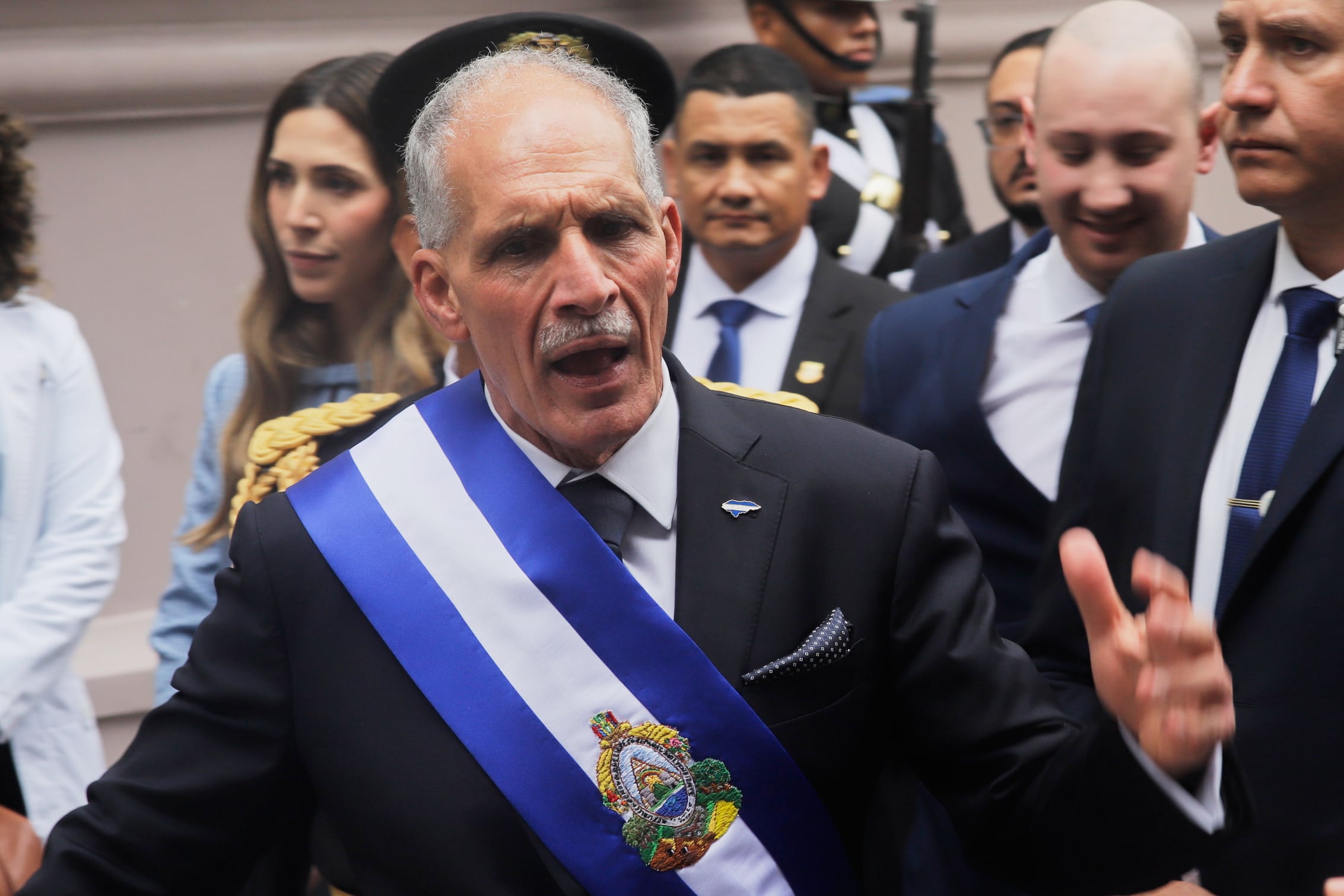
Nasry Asfura came to Honduras’s presidency with a promise that would define the course of his administration: to shrink the State to make it leaner and more “efficient” in a country of 11 million people. At a modest inauguration ceremony on January 27, following elections marred by allegations of irregularities, the new president, backed by U.S. President Donald Trump, asked to be judged by his actions and pledged to get to work immediately. Six months later, with a record tarnished by inefficiency and public dissatisfaction, his government is preparing to confront the return of former president Juan Orlando Hernández, who was convicted of drug trafficking in the United States and later pardoned by Trump.
The austerity drive began almost immediately. In less than a month, the new administration cut staff at 113 institutions and abolished 10 of them entirely. Those eliminated included the National Housing and Human Settlements Commission (Convivienda), the Secretariat for Transparency and the Fight Against Corruption, and the Program for Memory, Truth, Reparation, Justice and Non-Repetition for victims of serious human rights violations.
The first major test came in the healthcare system. During his first month in office, Asfura personally took charge of the portfolio and appointed himself minister of health. Under a declared state of emergency and through an exceptional regime, he approved a trust fund worth 500 million lempiras (about $18.7 million) to address the health crisis. According to the executive branch, the measure was intended to solve medicine shortages, reduce the surgical backlog, estimated at between 13,000 and 20,000 patients waiting for procedures, and restore the operational capacity of public hospitals.
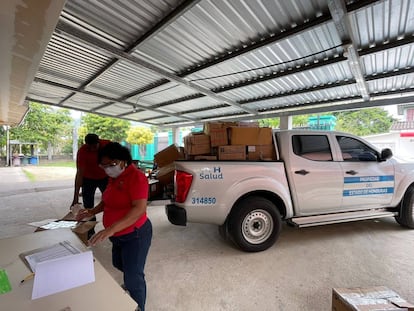
That, however, quickly drew criticism. Various sectors warned that the scheme favored the contracting of private services through a health trust fund and extraordinary agreements. Rather than providing an effective solution, critics argued, it opened the door to the privatization of healthcare.
“Public healthcare has been at the core of corruption in Honduras, and I think that is one of the reasons why the president himself took on that role. But so far, the public perception remains that the fundamental problems persist. Hondurans who depend on public healthcare have seen very few changes,” says Agresio Girón, a political analyst and master’s graduate in political science from the University of Utah.
Four months on, the results have been limited. Hospitals continue to face complaints over shortages and operational deficiencies. In late May, the government itself acknowledged delays in the disbursement of funds and reported that only 227 surgeries had been carried out. Local newspaper La Prensa reported at the end of June that the government had spent 10 million lempiras (about $372,000) on 154 surgeries, at an average cost of $2,400 per procedure.
Beyond the debate over its effectiveness, the decision cemented Asfura’s governing style: a reliance on states of emergency, trust funds, and extraordinary executive powers.
Benefits for the private sector and closer ties with Israel
Not all of the extraordinary measures have advanced at the same pace. While the healthcare emergency has stalled, other decisions by the executive branch and Congress have been implemented swiftly.
In its first six months, the government not only benefited the private healthcare sector through multimillion-dollar contracts. It also approved the Law for the Strengthening and Protection of the Agro-Industrial Sector, which requires the Public Attorney’s Office and the police to act immediately in cases of land occupations affecting agro-industrial projects. Its implementation has already led to the forced eviction of three communities, including a Garífuna community on the Caribbean coast whose land rights are protected by the Inter-American Court of Human Rights (IACHR). At the same time, Congress is considering amendments to the General Energy Law that would privatize electricity distribution.
“These three facts tell us who Asfura is governing for: he is governing for the private sector. By contrast, he has shown himself incapable and negligent toward the rest of the population,” says Lucía Avilés, a researcher at the Center for the Study of Democracy (CESPAD). According to Avilés, the situation is further complicated by the fact that, six months into his term, Asfura still faces allegations of electoral irregularities which, she says, undermine the legitimacy of his administration.
Israel Melo, a Jesuit priest and director of the Reflection, Research and Communication Team (ERIC-Radio Progreso), says: “One of Asfura’s biggest mistakes upon taking office is that his only interlocutors have been big business, Donald Trump, Javier Milei and Benjamin Netanyahu. He has remained disconnected from the population when his main challenge is to rebuild the legitimacy that was lost from the very beginning.”
Even before taking office, Asfura signaled a dramatic shift in foreign policy when he traveled to Jerusalem in January 2026 to meet Israeli Prime Minister Benjamin Netanyahu, describing Israel as a “true friend” of Honduras. Under his administration, the Honduran government has forged a close political and strategic alliance with the Israeli government, reopening what both countries have described as a “new era” in bilateral relations.

Anti-corruption efforts in a country long plagued by that scourge have also lost momentum under Asfura. The establishment of the International Commission against Corruption and Impunity in Honduras (CICIH), one of his flagship campaign promises, quickly stalled. The president acknowledged that launching it during his first year in office would be “very difficult” and instead replaced it with a national anti-corruption policy whose results have yet to become visible. By contrast, the abolition of the Transparency Secretariat moved ahead without delay, and its functions were transferred to an attorney general’s office headed by Dagoberto Aspra, a former lawyer who represented Asfura in cases involving alleged corruption.
Security: The unraveling promise
The fight against crime has also deteriorated significantly. During the first quarter of 2026, homicides rose by 5.65% compared with the same period the previous year, and at least 18 massacres have been reported so far this year.
With a homicide rate of 26.6 per 100,000 inhabitants, Honduras remains the most violent country in Central America and the third most violent in Latin America, behind only Haiti and Ecuador. Despite this, the Asfura administration has yet to present a National Security Plan.
In mid-May, two massacres in the Caribbean region left 24 people dead, including five police officers. Although the government dismissed two senior police commanders and assembled an emergency interagency task force, more than two months later there has been no significant progress in the investigation.
This has been compounded by a rise in extortion and disappearances. Local media report that nearly 300,000 Honduran households pay the so-called “war tax,” a form of criminal extortion. The government responded by claiming, without providing evidence, that 80% of extortion complaints are false.
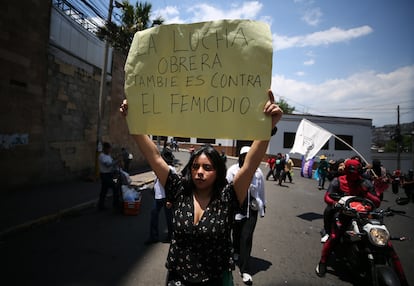
The situation surrounding gender-based violence is equally alarming. As of 16 July, women’s rights organizations had recorded 150 femicides, equivalent to one killing every 31 hours. The Visitación Padilla Women’s Movement for Peace has denounced the fact that 95% of these cases remain unsolved.
The shadow of Juan Orlando Hernández
Asfura’s first six months in office have also been shaped by the geopolitical context. His arrival in power coincided with Donald Trump’s support and with the U.S. pardon granted to former president Juan Orlando Hernández (JOH), who was convicted on drug-trafficking charges and remains a key figure within the ruling National Party.
According to analysts, Hernández’s return, which took place last Sunday, threatens to undermine the government’s ability to govern.
“In Honduras, there is a ‘deep state,’ a real power behind the formal power. There is Asfura’s power in the presidency and Tomás Zambrano’s in Congress, but also a structure entrenched within government and in organized-crime networks that answers to Juan Orlando Hernández,” says sociopolitical analyst Eugenio Moreno.
Although Washington maintains close ties with the current administration, concerns have emerged in the U.S. Congress over worsening security conditions, human rights violations and some of the government’s reforms. At the same time, relations with China have cooled, while Honduras has signalled a willingness to strengthen ties with other actors, including Russia.
For Asfura, the pressure stems not only from criticism of his administration but also from the challenge of governing in the shadow of his predecessor. Hernández returned on Sunday after a local court quashed the arrest warrant against him, while his supporters organized a nationwide welcome that threatens to overshadow a president who came to office promising security, efficiency and zero tolerance for crime and corruption.
Sign up for our weekly newsletter to get more English-language news coverage from EL PAÍS USA Edition

These are hard times in Madrid, where evictions are unceasing. Early in July, Adolfo, 60, was evicted in the working-class neighborhood of Vallecas along with his daughter and grandson. Another eviction was scheduled for the following week, another the week after that and a further one on July 22 — a bleak month for the neighborhood, according to the Platform for People Affected by Mortgages (PAH). Three evictions in Vallecas in barely a month. In the Spanish capital, the scene repeats itself across different districts — Usera, Tetuán and Carabanchel — driven by court orders that in the Madrid region empty an average of six homes a day, according to data from the General Council of the Judiciary.
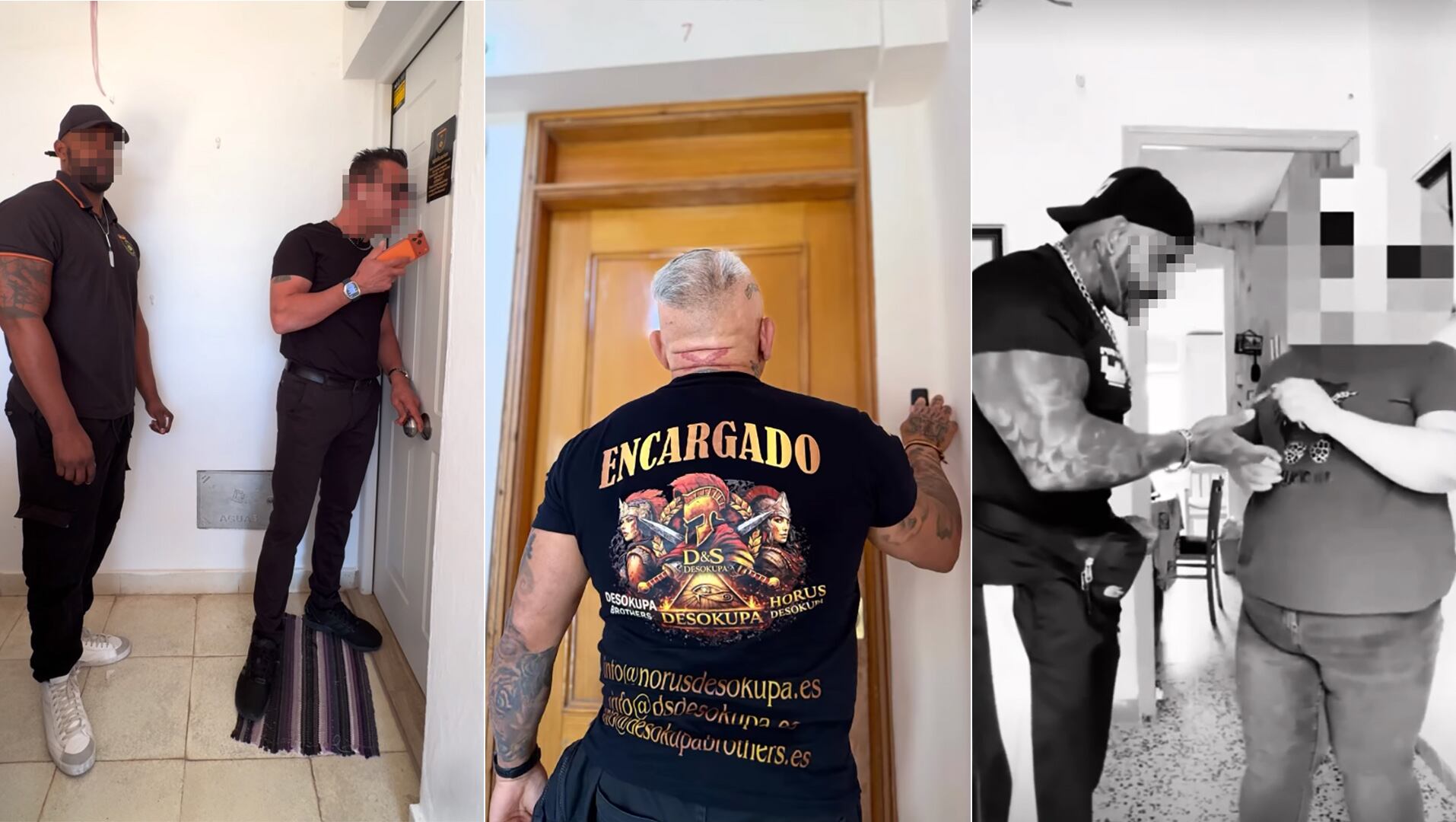
Alongside evictions, the business of desokupación (the removal of illegal squatters) has also grown — a universe of companies linked to gyms, boxing clubs, and private security firms that operate in a legal gray area, combining intimidation with negotiation. The same dynamic is spreading to other regions such as Catalonia, Castilla–La Mancha, Andalusia, and Valencia, local neighborhood associations told reporters.
“Last week they put glue in my lock and on Tuesday they cut the electricity cables,” says Ghita Hachemi, a tenant on Membezas Street in the Entrevías area, just as a technician enters her home to restore power after two days in the dark. “Every week they come up to the door and bang on it, insult me, or offer me money,” she says.
Hachemi pays the Spanish bank BBVA the amount agreed with the firm as social rent every month. However, a year ago her home was sold to a new owner who wants her out as soon as possible and, since she has nowhere else to go, he has hired D&A, a desokupación company tasked with forcing her out of her home.
Although D&A is not registered in the companies registry, it is common in the sector for these outfits to appear, change names, dissolve and then reappear under new initials, often registering with a share capital of just €3,000 ($3,400). They advertise aggressively on social media, promising to lawfully evict tenants in less than 24 hours.
With fees ranging from €2,000 ($2,290) to €4,000 ($4,590) for a recovery, “they have popped up like mushrooms,” says Diego Sanz, a PAH member. “They change names, but they’re the same people. They emerged during the pandemic. A lot of them disappeared later, but now we’re seeing them come back,” he says of a business that has grown markedly in the last year following in the wake of the well-known desokupación company run by Daniel Esteve, Desokupa.
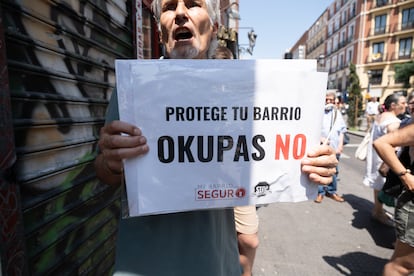
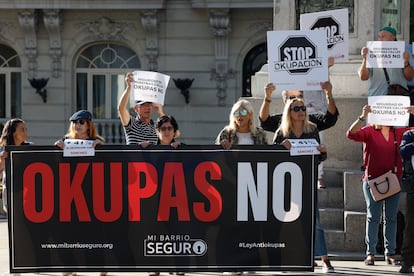
Esteve, a former boxer and security entrepreneur, created the first brand in 2016 to turn the extrajudicial recovery of occupied homes into a recognizable, media-savvy business that coupled controversial methods with a political agenda opposing many of the government’s social measures. His formula combined physical intimidation, negotiation with occupiers, social media videos and a forceful aesthetic that brought public notoriety. New companies with similar methods then began to appear, ranging from surveillance and mediation to harassment.
In Vallecas, the main clients are not investment funds or banks but small-scale speculators who buy homes at very low prices because they have what they contemptuously call a “bug inside” — meaning someone living there. Ghita Hachemi’s 70 square-meter flat, where a couple and four children live, was sold for €73,000 ($83,700) and is now on the market for €113,000 ($129,500). A tidy profit if they succeed in evicting the family.
“They insult me, threaten me, and cut the electricity cables when they manage to get into the stairwell. They aim to frighten my whole family. My daughter missed her last exam after an anxiety attack caused by these savages,” she says. Ghita and her four children have lived in Entrevías since 2014 and until 2024 she had a contract renewed yearly. When the property changed hands, she kept paying the rent, but the harassment began.
“Usually four people come: two stay in the stairwell and two knock on the door, insult me or offer me money to leave,” she explains. The latest threat is that they will set up “access controls” to force her out, meaning they will station themselves outside the home so no one can enter or leave. After several calls, this newspaper was unable to obtain a response from the desokupación company at the phone numbers provided.
According to Juan Carlos González, manager of Horus Desokupa, “there is a lot of quackery in the sector and it has grown uncontrollably over the past year,” he says by phone from Toledo, where he has traveled to evict an inquiokupa (a tenant with a contract who has ceased to pay monthly rent). “Companies of only two or three people constantly emerge and do the work in any old way for next to nothing.”
The methods
Regarding his controversial way of operating, González insists everything is legal. “We mediate and, depending on the type of person, we use different methods and, of course, we also offer money, but it’s clear no one likes us standing outside the door for four days,” he says. “We don’t cut services or change locks, but it is legal to set up an ‘access control’ if we have permission from the other neighbors,” he adds.
For those cases, they usually subcontract security firms, which are the ones legally authorized to do that. “We’re reported frequently, but the complaints are always dismissed and we’ve never been convicted,” he clarifies about his company, one of the sector’s veterans with four years in business.
“I was desperate. I’ve spent two years putting up with a guy who won’t pay me and I need that money because it’s my only income,” says the owner of a property in Tetuán who prefers not to be named but who hired one of these companies at the start of the year. “I have a mortgage I can’t pay and the justice system doesn’t work. They aren’t companies I like and it’s not the best option, but I have so much anger built up I just want to finish this as soon as possible. They do a job that neither the courts nor the police are doing. I’ve been waiting two years and if I’d known, I would have called sooner,” the landlord summarizes, having regained his house after paying €2,000 to a defaulting tenant.
The Spanish Interior Ministry does not maintain a registry of these companies, which claim mediation as their corporate purpose but in many cases employ coercion and threats; several of their employees have ended up in disturbances where they operate. Sometimes due to violent methods, other times for carrying weapons, or for pretending to be police officers to intimidate people.
Another common job they are hired for is to “test a property,” that is, to probe for a buyer whether the occupant inside “is a squatter who can be kicked out in a few hours or someone who will declare themselves vulnerable and therefore is likely to drag the eviction through the courts for years. In that case we advise not buying,” explains the manager of Horus Desokupa.
The presence of this type of company has multiplied in areas of the capital such as Vallecas, San Blas, Vicálvaro, and Villaverde, sowing fear among those who have to deal with them. In 2023, in a dilapidated building on Azucenas Street in Tetuán, seven members of APD Security Iberia were arrested after an attempted eviction in which, according to police sources, they impersonated officers. The boss was accused of usurping public functions for showing a fake badge; the others were charged with coercion and illegal possession of weapons. When they were arrested after harassing a tenant, they were carrying extendable batons, brass knuckles, a knife, and pepper spray.
Two years later, in October 2025, the same company reappeared in Puente de Vallecas: a fight between residents and APD employees resulted in 16 arrests, 10 of them workers dressed in black with the company logo, and left three people injured, including the property owner. Another case that gained notoriety was that of DesokupaCyL, which went to the wrong flat in Lugo and began insulting and harassing a man who had nothing to do with the property they had intended to evict.
Sign up for our weekly newsletter to get more English-language news coverage from EL PAÍS USA Edition

Última Hora De La Entrada De Inmigrantes A Ceuta, En Directo | Se Eleva A 67 El Número De Migrantes Muertos Tras La Entrada Masiva A Ceuta

Lance Stroll hints Aston Martin issues after summer break:

Barcelona Airport Baggage Strike Could Affect 2 Million Passengers From August 4
Plaza Mayor unveils magical summer show bringing nature to life in Malaga
The last cigarette by the sea Murcia faces a major anti-smoking revolution
Passengers’ terror as British Airways flight to Barcelona declares mid-air emergency


-
Costa del Sol2 weeks ago
Plaza Mayor unveils magical summer show bringing nature to life in Malaga
-
Costa Calida2 weeks ago
The last cigarette by the sea Murcia faces a major anti-smoking revolution
-
barcelona el prat2 weeks ago
Passengers’ terror as British Airways flight to Barcelona declares mid-air emergency
-
Costa del Sol2 weeks ago
Marbella’s Family Dog Day is back with fancy dress contest, live music and Triple A Charity fundraising
-

 Latest1 week ago
Can Spanish Property Owners Cut Off Utilities To Squatters?
-

 Copa del Mundo2 weeks ago
Resumen Y Goles Del Francia – Inglaterra Por El Tercer Lugar Del Mundial 2026
-

 %2 weeks ago
Brit Tourist Arrested At Gran Canaria Airport For Not Paying Bill
-

 Amazon1 week ago
Un Tangle Teezer De Viaje: El Cepillo De Pelo Perfecto Para Tu Neceser De Vacaciones