
Donald Trump
Faith Confronts Trump’s Border Wall

This article was published jointly by Puente News Collaborative, a bilingual nonprofit newsroom covering Mexico and the United States–Mexico border, and public radio station KTEP.
The gleaming white sculpture of Jesus Christ at the top of windswept Mount Cristo Rey towers over this tiny border town, yet it looms large in the region, seen from miles away in Texas, New Mexico and the Mexican state of Chihuahua.
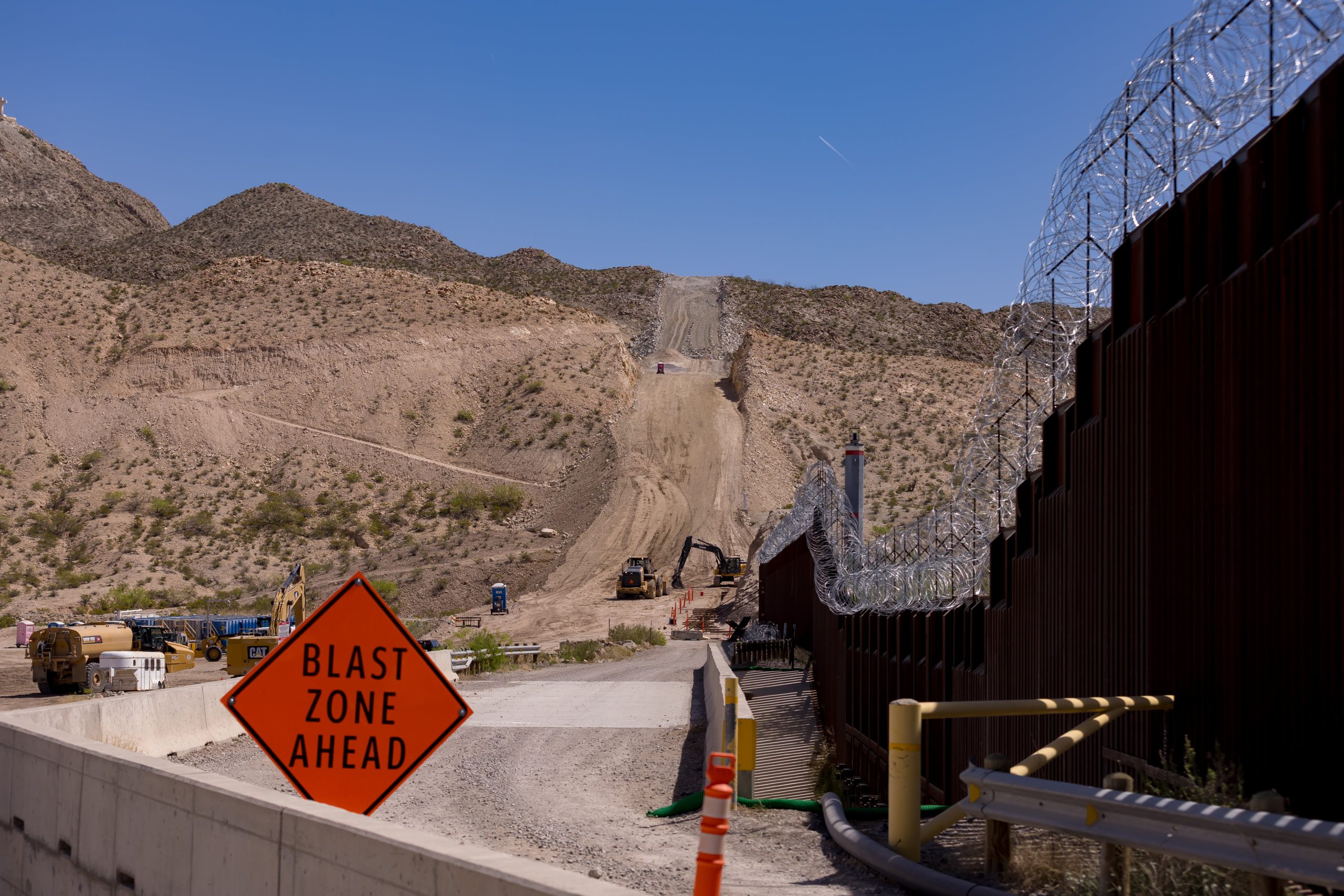
The federal government, in an eminent domain lawsuit, and in its effort to “wall off” the entire United States from Mexico, is now determined to seize about 14 acres of land at the foot of the mountain facing its southern neighbor. A hearing on the Trump administration’s motion to take “immediate possession” of the land, owned by the Catholic Diocese of Las Cruces, New Mexico, is scheduled for July 23rd in federal court.
Long a symbol of faith and unity along this stretch of rugged borderland, Mount Cristo Rey is now at the center of a bitter legal battle over religious freedom and border security. The diocese calls the land a “holy site.”
For generations countless thousands of pilgrims have hiked up to the 29-foot limestone figure of Jesus with outstretched arms, anchoring a site considered holy by the diocese, which owns the property.
They’ve trekked to pray, tidy up the area, or simply take in the stunning view of the United States southern border and Mexico’s northern frontier. The faithful aren’t happy.
“Stealing the land”
“I give thanks for all my blessings,” said Ramon Garcia, 73, who along with thousands makes the pilgrimage every Good Friday. He said there is no need for a wall, and admonished the Trump administration for “just stealing the land, land that belongs to us.”
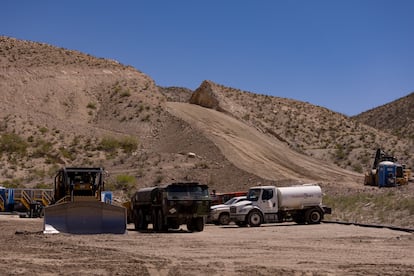
The fight over building barriers in sensitive locations is happening all along the border in areas that include wildlife corridors and national park land in Texas, habitat for endangered cross border species like Jaguars and ancient tribal sites in Arizona and now in New Mexico.
The diocese turned down the Trump administration’s effort to pay $183,071.00 to take property. In its suit filed in May, the diocese said the government is violating the First Amendment’s Free Exercise Clause and the Religious Freedom Restoration Act.
“The United States government’s effort to condemn diocesan land to build a border wall is an affront to religious liberty,” said attorney William Powell, seniorcounsel with the Institute for Constitutional Advocacy and Protection at Georgetown Law School in Washington, D.C. Powell described the government’s actions as “heavy-handed tactics.”
Illegal crossings decline
In response, a Department of Homeland Security spokesperson said, “Access to the shrine will not be affected, as all attendees enter from the U.S. side.”
According to the DHS statement, “The only individuals who could POSSIBLY be impacted by the border wall are illegal aliens attempting to illegally enter our country.” The agency maintains that the mountain is a well-worn smuggling route.
In the lawsuit, the federal government said it needs the property “to construct, install, operate, and maintain roads, fencing, vehicle barriers, security lighting, cameras, sensors, and related structures designed to help secure the United States/Mexico border within the state of New Mexico.”
These days, Mount Cristo Rey is heavily guarded by the U.S. Border Patrol agents on horseback, helicopters, and by drones overhead. Ground sensors and cameras permeate the desert landscape.
Illegal crossings are down by more than 90 percent since the peak in 2023, according to the U.S. Customs and Border Protection.
This stretch of borderland has long been a backdrop for high-profile border wall projects since Trump supporters erected a half-mile steel barrier on private property in Sunland Park in 2019.
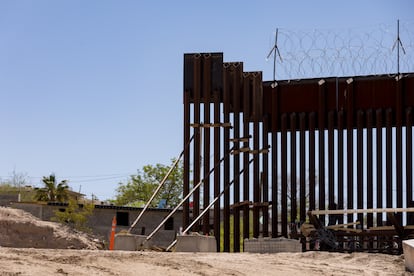
“We Build the Wall” organizers raised about $25 million in a crowdfunding campaign. The founder and two other organizers were later convicted or pleaded guilty to defrauding donors and pocketing hundreds of thousands of dollars after promising 100 percent of the money would go to build a wall on the border in New Mexico and Texas. Steve Bannon was also charged in connection with the scheme. Trump later pardoned him.
Doing it backwards
The iconic limestone statue, completed in 1940, was the idea of a local parish priest and the work of famed sculptor Urbici Soler. Each year, at least 40,000 faithful and tourists make the more than 2-mile, sinuous hike to the Christ sculpture. During the Good Friday pilgrimage, some people take it further, finishing the trail barefoot or on their knees. Others carry home-made wooden crosses.
“It’s a religious icon. It’s also a cultural icon. And it’s an artistic icon,” said Ruben Escandon with the Mount Cristo Rey Restoration Committee, a volunteer group that relies on donations to maintain the monument.
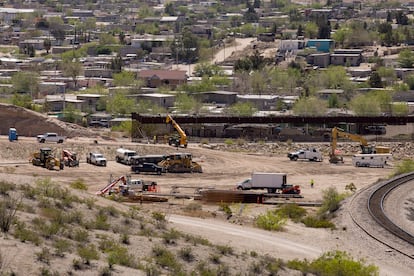
The hike is an Easter tradition for Lulu Alvarado’s family. Recently, as she approached the top of Mount Cristo Rey, she looked down disapprovingly at construction crews clearing land for the border wall with noisy heavy equipment.
“It really shows the divide between people,” she said.
April Fincher’s family moved to this area in 2023. She brings a different viewpoint. During her first hike up the mountain, walking with her 14-year-old daughter, she offered one quick observation: “Can you still get all the way up? OK, then build the wall.”
The court battle could take months, said legal experts familiar with the lawsuit. Construction started in January, signaled by controlled explosions to open land for the wall’s foundation, startling locals.
Escandon said he understands the need for border enforcement but questions the way the federal government is carrying out the project.
“I think they’re doing it backwards and starting the construction, and now they’re covering their behinds and saying now we need to take the property.”
Angela Kocherga is news director and reports for KTEP public media.
Sign up forour weekly newsletterto get more English-language news coverage from EL PAÍS USA Edition











Donald Trump
The Victory Of Candidates Backed By Mamdani Reopens The Battle Among Democrats Ahead Of Midterms

With less than five months until midterm elections that will shape the second half of Donald Trump’s term, the old dilemma tearing the Democratic Party apart has resurfaced. The victory on Tuesday of the three candidates backed by New York’s left-wing mayor Zohran Mamdani has raised alarm in the party’s centrist wing, which fears heading into November 3 with candidates seen as too radical and therefore easy targets for Republican attacks.
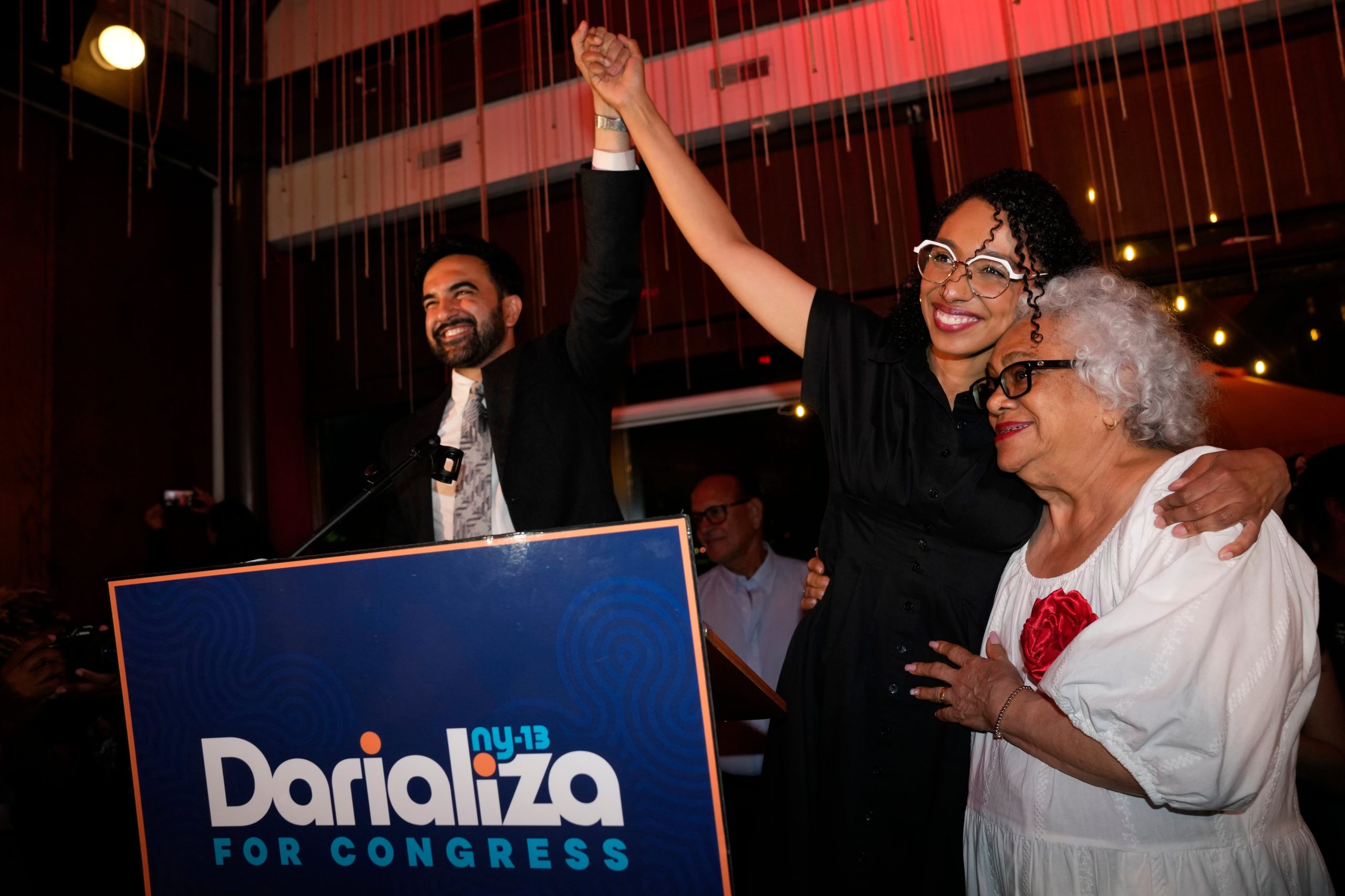
Mamdani took a considerable risk by explicitly backing Brad Lander, Claire Valdez and Darializa Avila Chevalier—through television ads and joint appearances—against the party’s wishes. All three surprisingly defeated establishment heavyweights on Tuesday. The success of his gamble gives the mayor a substantial injection of political capital he intends to exploit.
“The old politics that got us to this crisis is not the politics that is going to get us out of this crisis,” Mamdani declared on Tuesday to an enthusiastic base. “New Yorkers are hungry for a new kind of politics,” he repeated on Wednesday. The message is clear: old dogmas—whether on the U.S. relationship with Israel or on fighting inequality—are no longer valid.
“Rather than reopening the battle among Democrats, I think Mamdani’s victory, in a way, closes it. Progressives have won. The party is now theirs. It’s clear which way the wind is blowing,” says Lincoln Mitchell, a professor at Columbia University’s School of International and Public Affairs. The political scientist argues the takeaway is that Democrats must change their mindset and stop fielding mediocre candidates just because they have held office for a long time. He insists voters will no longer accept candidates who, for example, hesitate to raise taxes on billionaires.

After these primaries, it is almost a certainty that Lander, Valdez and Avila Chevalier will get seats in the House. Although the midterms are on November 3, all three ran in New York districts with strong Democratic majorities, so that winning the primary effectively amounts to winning the seat.
The significance goes beyond New York. The three politicians share much in common: they belong to the party’s furthest-left wing and hold very critical views of Israel and of unconditional U.S. support for Benjamin Netanyahu’s government.
The steady shift of Democratic sympathizers toward pro-Palestinian positions foreshadows a seismic movement in a party long assumed to be allied with Israel. “The party’s centrist wing has adopted a stance on Israel that, frankly, is disconnected from reality. If you are [California governor] Gavin Newsom, you should be mindful that your position on Israel could cost you the election,” Professor Mitchell adds.
Another sign from these primaries is the growing importance of the socialist movement—a word that was until recently taboo in the United States. Valdez and Avila Chevalier, like Mamdani himself, are members of the Democratic Socialists of America. Lander, who is Jewish, was a member of that organization until he left it in 2023 after Hamas’ attacks on Israel on October 7 of that year. The House that emerges from the midterm elections will have twice as many socialist members, rising from two to four. It is another indicator of the new times in Washington.
Republicans’ response
Meanwhile, Republican rivals are already taking note. Donald Trump was the first. The U.S. president spent Wednesday morning posting on his social network Truth, warning of the alleged danger posed by those he calls communists. For example: “America The Beautiful will NEVER be a communist country!!!”
He also reacted, with a hint of envy, to press coverage of Mamdani’s clear success: “Mayor Mamdani pulled through 3 solid Communists, and has received loud and universal applause from the Fake News Media. I went 16-0 last night, helping to elect wonderful American Patriots, and the Media doesn’t say a word.”
In the coming campaign, in addition to stoking many Americans’ fear of socialist policies, Republicans will be able to use past remarks by the Democrats. For example, Avila Chevalier recently deleted tweets in which she criticized then-Vice President and presidential candidate Kamala Harris. “Fuck Kamala Harris,” she wrote.
She also deleted messages in which she spoke of abolishing the police, prisons and borders, of nationalizing major industries, and in which she questioned Israel’s right to exist. Avila Chevalier has apologized for these comments, saying they do not reflect her current views. But that will not prevent Republicans from using them not only in her New York district but across the United States.
The arrival of these candidates in the Capitol could also spell trouble for current House Democratic leader Hakeem Jeffries, who hopes to become speaker if his party regains the majority in November. The party’s left wing has been highly critical of Jeffries’ opposition to the Trump administration, which could complicate his bid.
Sign up for our weekly newsletter to get more English-language news coverage from EL PAÍS USA Edition
california
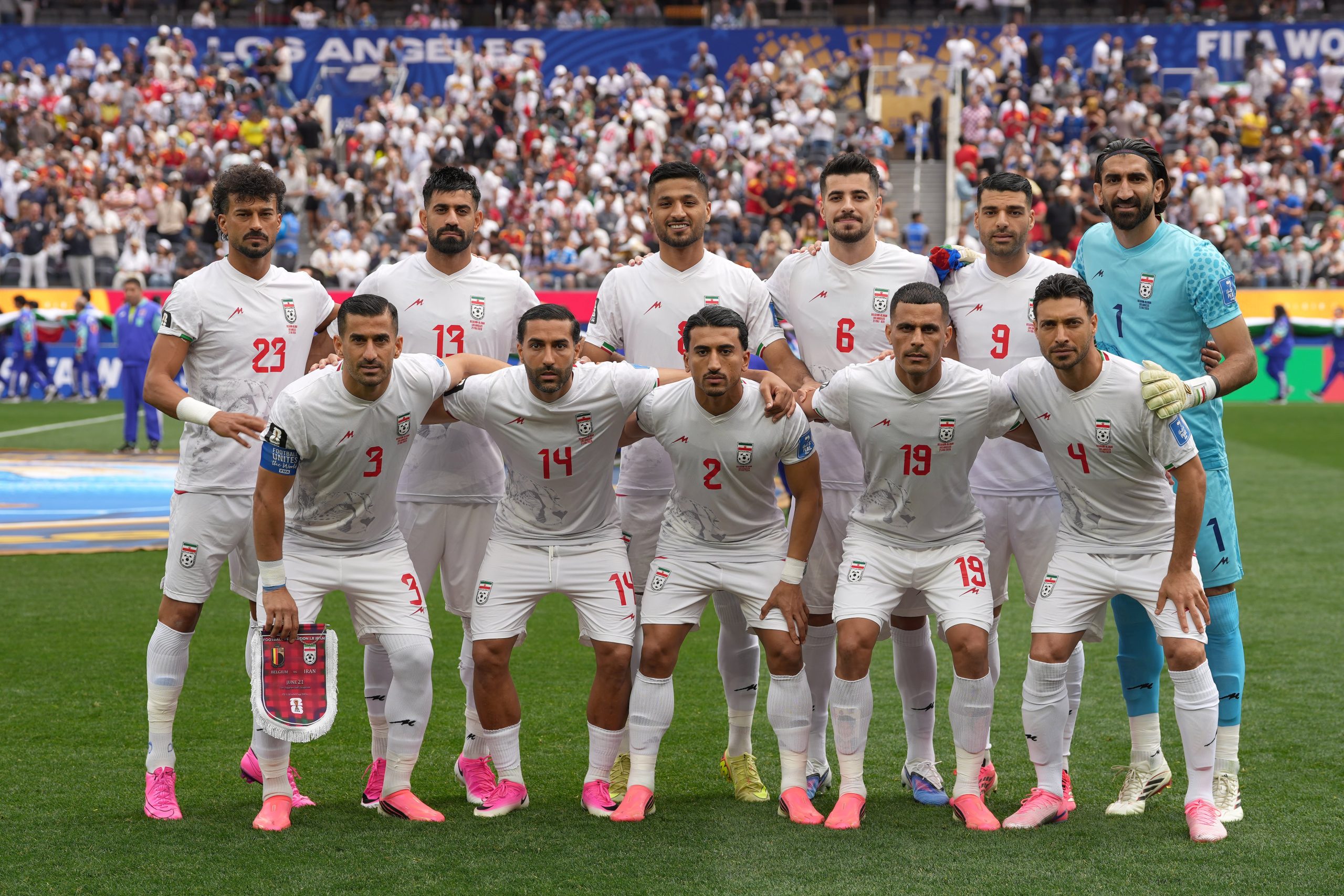
Irán Se Despide De Los Ángeles Con Un Mensaje De Reivindicación Tras Las Restricciones De Estados Unidos

Bank of America
Bank Of America’s Francisco Blanch: ‘Oil Supplies Will Return To Normal Because It’s In The Interests Of Both The US And Iran’

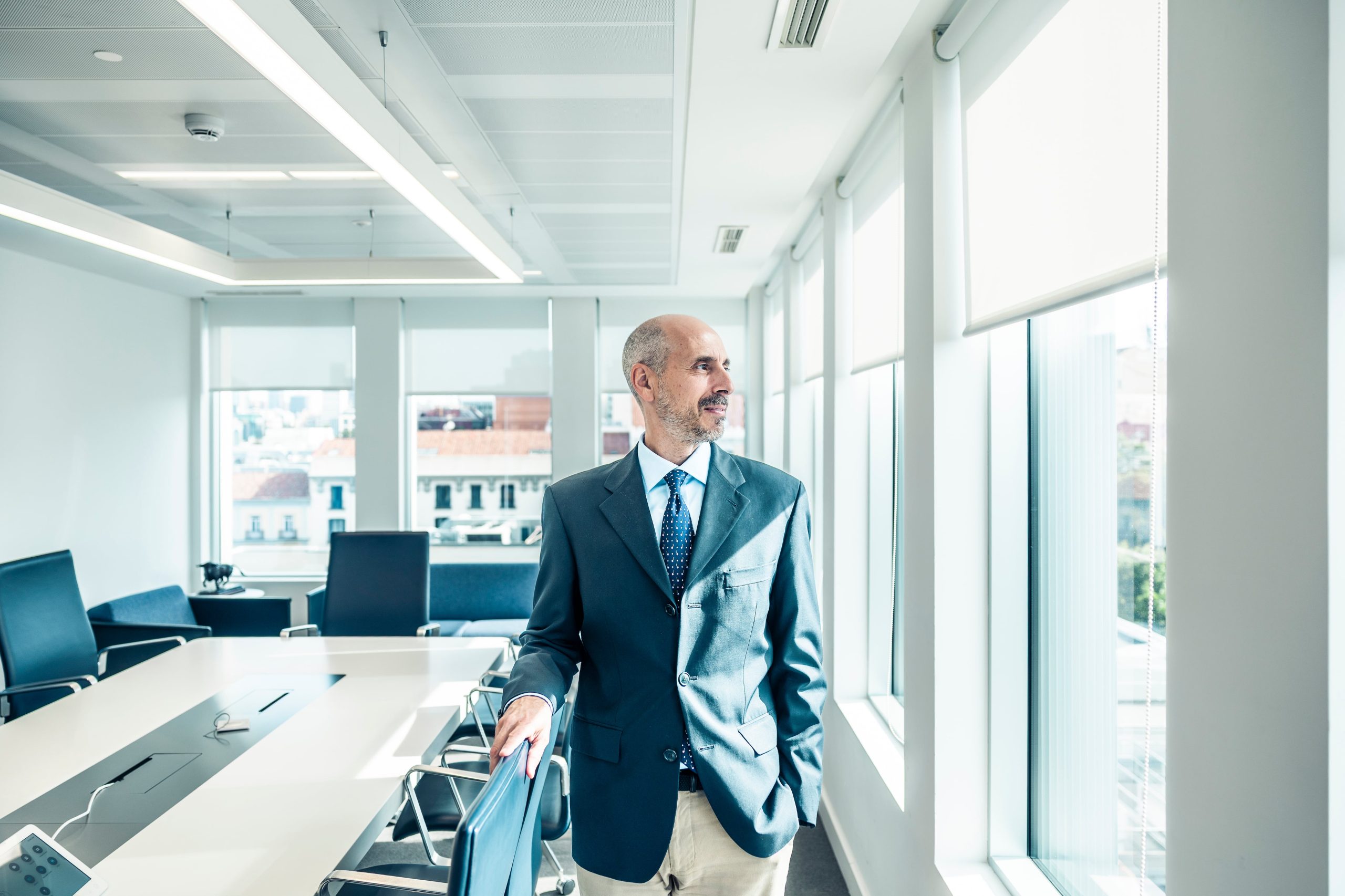
Francisco Blanch acknowledges that he has been on edge for nearly four months. The Madrid-born head of global commodities and derivatives at Bank of America has been on the front line of the energy shock triggered by the war in Iran and the closure of the Strait of Hormuz, and now that Washington and Tehran have begun negotiations toward a final peace deal, he is optimistic. He notes that the economy has weathered the blow well — “it’s in fairly good shape, despite everything that has happened” — and even believes oil demand will emerge stronger in the medium term, despite geopolitical risks, as reserve buffers and consumption adjustments have proven effective in preventing an energy collapse. Above all, he is confident that normality will return to Hormuz by the end of the year, given that both the United States and Iran need this to happen and that Trump had no appetite to take things further.
Question. What is your current forecast for oil prices this year?
Answer. We revised our forecasts at the start of the war, when we raised our estimate to an average of $92.5 per barrel of Brent crude this year. And we lowered it last week to an average of $82. Prices skyrocketed at first, but then the United States eased sanctions on Russia, and there was no attempt to cut off the flow of Iranian oil during the first weeks of the war, which eased tensions somewhat. The release of 400 million barrels from strategic reserves was also announced, and another 300 million barrels of sanctioned oil were available at sea. And of course, there has also been some reduction in demand — that’s how we’ve more or less managed to get by over the last four months.
Q. When will supply recover to the point where supply and demand are in balance?
A. Inventories are falling and will continue to fall very rapidly in the coming months, but we think we’ll likely see a balanced market by the fourth quarter. Not yet in the third quarter; supply is only just beginning to flow through the Strait. This Monday, three large Iranian tankers, each carrying two million barrels, were passing through the Strait of Hormuz bound for Asia, and demand is recovering. But it will still take some time to reach that balance, because over the summer we’ll face a massive bottleneck at various points along the Strait. All the sea mines must be cleared, and transit capacity is currently limited. We expect that 40% of traffic will likely be restored by the end of July, 75% by the end of September, and the remainder by the end of the year.
Q. Are you confident that the Strait of Hormuz will return to complete normalcy? What if the conflict resumes?
A. Our forecast is for an average of $82 this year, based on the assumption that the Strait of Hormuz will fully reopen and that in the second half of the year, prices will be closer to the $70–$80 range. There is a risk that the conflict could return, because we’re talking about 60 days of negotiations. By September, when that deadline would have expired, as many as 65 ships a day could already be passing through the Strait of Hormuz. Perhaps military tensions will continue, but we believe the most reasonable scenario is that there will be an increase in oil supply. Things will return to normal because it’s in the interest of both Iran and the United States. In the U.S., public opinion is not in favor of the conflict. I think Trump has reached his limit and stopped there. And in a way, it’s not that surprising: the scenario was never that this war would last six years, or even six months. The most reasonable assumption is that we’ll see more and more ships crossing the Strait, but probably without reaching 100% of normal levels even during a good season.

Q. Iran has shown the world that it can close the Strait of Hormuz. Will there be a risk premium on crude oil?
A. Compared to the situation at the beginning of the year, certainly. And oil inventories need to be replenished. The U.S. has its lowest strategic crude oil reserves in decades, and replenishing them won’t be a quick process; it will be an additional factor driving demand. China will also have to replenish its reserves; I don’t think this will be a factor that drives prices higher, though it will provide some support. The country was very well prepared and has managed the situation very well to avoid supply shortages: China’s inventory levels are still higher than they were before the war. It buys when oil is cheap and stops buying when it’s expensive.
Q. And when will we see a return to the pre-war oil production surplus? The International Energy Agency forecasts a significant surplus by 2027.
A. Yes, there will be a surplus in 2027; the question is how much. We think it will be close to one million barrels per day, depending on what OPEC does, on production in the United Arab Emirates, on how Iran behaves, on the extent of damage in the region, on whether we face any transit issues in the Strait of Hormuz again, and on whether China returns to the market… But in principle, there will be a surplus because we had one before the war, and a large portion of the volume that has been lost will be recovered.
Q. How do you expect OPEC and the UAE to contribute to that surplus? Will they be able to ramp up their oil production to quickly make up for what they’ve lost?
A. They will play an important role, but we also have to ask ourselves how cheap that oil supply will be. Four months ago, it was the cheapest energy in the world, but today the same cannot be said. We don’t know whether there will be a toll imposed by Iran or not; defense spending by the Gulf countries is going to increase considerably, and they will have to invest heavily in repairs and in alternative supply routes and storage facilities. The Gulf countries are going to have to focus more on their local economies.
Q. What long-term effects do you think this war might have on oil demand? Will the adoption of alternative energy sources to oil and gas accelerate?
A. It’s true that we need to reach a price level that makes oil an attractive fuel again. Global energy demand is very strong right now; the economic transformation driven by artificial intelligence requires chips and energy. Electric utilities are terrified by the demand for capacity driving investments by hyperscalers. AI and electric vehicles won’t lead to lower energy consumption — data usage is enormous. I believe that, comparatively speaking, the price of oil isn’t particularly high. Over the past four months, we’ve experienced the largest disruption in oil production in history, and absolutely nothing has happened. Some countries in Southeast Asia have had to adjust their demand, but overall there has been neither a global recession nor completely out-of-control energy prices. Quite the contrary — we’ve been able to manage the situation through reserves, adjustments, and flexibility in a truly surprising way, to the point where I believe this could be positive for demand for hydrocarbons in the medium term.
Q. Do you think the United States has emerged stronger from the war, at least as the world’s leading crude oil producer?
A. Yes, because in the end, you still need the missile defense shield in Qatar, but not off the coast of the Gulf of Mexico. The United States has not cut back on its export levels at any point over the past four months. We can’t live without U.S. oil; it produces nearly as much as used to pass through the Strait of Hormuz daily — about 21 million barrels a day, which is 20% of global production. And nearly a third of liquefied natural gas production. The U.S. needs a market with prices that allow it to produce that oil, and that’s something we have to take into account as well. If Brent crude falls back to $60 or $65 per barrel, we’ll see a repeat of what happened at the beginning of the year: U.S. production, which had been rising, will decline.
Sign up for our weekly newsletter to get more English-language news coverage from EL PAÍS USA Edition

How A British Single Mother Took On The Male-Dominated Expat Insurance Sector To Build An Empire On The Costa Del Sol

Spain Welcomes Cooler Temperatures After Historic Heat Wave That Sent June Records Tumbling Across The Country

Coin Open Air Summer Festival 2026


-
EU rules2 weeks ago
A major EU border system goes live today – What changes for travellers?
-

 %2 weeks ago
Barcelona Tests Olive Pit Asphalt That Could Transform How Cities Build Roads
-
european airport delays2 weeks ago
1,225 delays at major European airports raise summer warning for Spain travellers
-
Indian Embassy2 weeks ago
Indian Embassy International Yoga Day 2026, where you can celebrate across Spain
-
Antártida2 weeks ago
El ‘Hondius’ Zarpa De Nuevo: El Crucero Que Sufrió El Hantavirus Viaja Al Ártico Cargado Con Empleados
-
Costa Blanca North2 weeks ago
Free beach Zumba returns to Calpe for the summer 2026 season
-
Costa del Sol2 weeks ago
Torremolinos installs smart traffic lights on its beaches to warn about UV radiation levels
-
Alcohol limits Spain2 weeks ago
Drivers in Spain warned: This mistake could cost you €1,000 and six licence points this summer