
2026 wildfires
Fingers crossed for rain in Extremadura as Valverde del Fresno wildfire keeps Spain on high alert

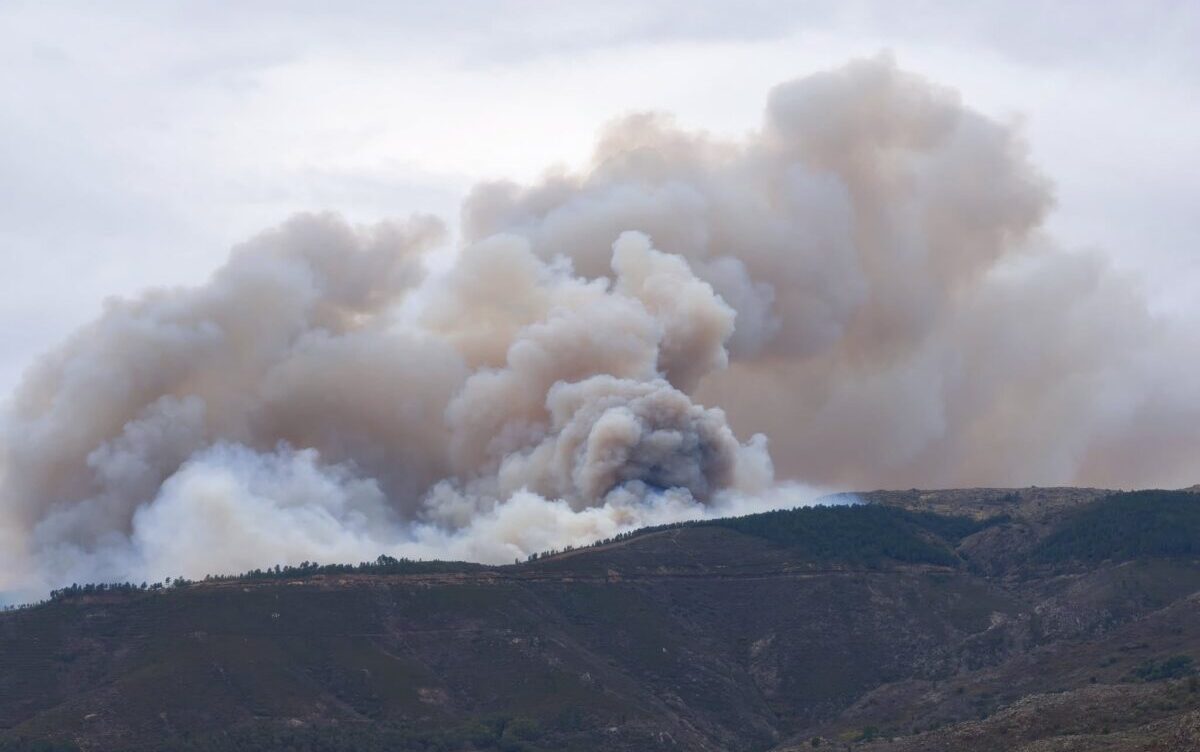
Many parts of Spain have eased bonfire and burning rules for the cooler months, yet the country is far from clear of danger. A forest fire declared this morning in Valverde del Fresno, in northern Caceres, has already forced a Level 1 alert and drawn in 134 firefighters, aircraft and machinery from Extremadura, national teams, Castilla y Leon and Portugal.
Blaze grows near the border
Smoke has been visible for hours over the village and surrounding hills in the Sierra de Gata. Officials from Extremadura’s INFOEX plan raised the danger level at 1.40pm because the flames could reach roads. Local authorities earlier described the fire as out of control and closed the road towards Navasfrias, leaving the neighbouring Salamanca town on watch in case wind pushed the fire across the provincial line.
#IFValverdedelFresno https://t.co/17M6Iy89jC
— extremadura_ (@ExtremaduraON) November 8, 2026
Ground crews, helicopters and planes continue working the perimeter. Resources include more than 20 terrestrial forest-firefighter units, helitransported teams, heavy machinery and several aircraft, according to local reports. No large-scale evacuations have been ordered so far, but access to some tracks and estates remains restricted.
Incendio forestal en Valdeobispo (Cáceres)
#IFValdeobispo https://t.co/CdEw29CX2e
— PacoCastañares (@PacoCastanares) November 8, 2026
Restrictions ease while risk stays high
Several regions have already lifted or relaxed the strict summer bans on agricultural burns and barbecues. Andalucia moved to lower-risk rules in mid-October, Galicia restarted permit processes from early November, and Madrid now allows controlled burns with a responsible declaration. Castilla y Leon, however, extended its medium-danger period until 9 November.
These changes do not mean the threat has disappeared, at all. Spain still faces high fire risk in the west and northwest, where recent rain has encouraged fresh growth of grass and scrub. Once that new vegetation dries, it adds to the fuel load rather than reducing it. Experts have warned for months that wetter springs and autumns followed by dry, windy spells create exactly the conditions that turn small starts into fast-moving blazes, as seen in earlier fires across Extremadura.
Atlantic front offers hope – and new concerns
People in the area are watching the sky for signs of Storm Bruna, and literally praying for rain. The system, named by Portugal’s meteorological service, is expected to reach the Portuguese coast within hours and then track east across Extremadura. AEMET has already issued orange warnings for parts of northern Caceres, with heavy and persistent rain possible overnight and into Monday.
Rain would help firefighters, yet the same front brings strong winds that can spread flames before the heaviest downpours arrive. Previous fires in this same corner of Extremadura, including the large 2026 Las Hurdes blaze that crossed into Salamanca, showed how quickly wind can change the picture.
Wildlife at risk in the hills
Sierra de Gata and the surrounding valleys are known for their wildlife. Red deer and wild boar are common, and free-ranging horses are also present in the wider northern Caceres mountains. Black vultures, golden eagles and other protected species use the same wooded slopes and ridges now under smoke. Any fire that runs through this habitat damages both the animals and the mosaic of pine, oak and scrub that supports them.
Fire crews expect to stay on the ground through the night. Whether the Atlantic rain arrives in time, and whether it arrives with manageable wind, will decide how much of the Sierra de Gata burns before the week is out.



Barcelona airport halts departures as baby’s medical emergency forces plane to land
Spain’s €17bn electricity grid overhaul aims to unblock housing, factories and major investment
Calpe welcomes acclaimed Italian pianist for special autumn music festival recital


-
DGT3 weeks ago
Viral video in Spain sparks fury over drivers who ‘have no idea how to drive’
-
Automated supermarket4 weeks ago
Spain’s 24-hour shop with no tills expands to Barcelona Airport
-
News4 weeks ago
Hundreds evacuated as huge fire erupts on Spain high-speed train route
-
Keeping cats and dogs outside3 weeks ago
Spain’s pet owners face fines of up to €200,000 for animal welfare offences
-
Council tax (IBI)3 weeks ago
Barcelona plans 150% property tax increase on tourist flats ahead of 2028 ban
-
Age Concern Marbella - San Pedro2 weeks ago
Halloween lunch sells out as 51 join Marbella get-together
-
airports3 weeks ago
Travelling between Spain and Italy? The extra border checks could soon end
-
Axarquia4 weeks ago
Torrox Oktoberfest gets a 1,500sqm beer tent for four-day festival