
autumn in spain
Forget gazpacho: These are the autumn dishes residents in Spain crave

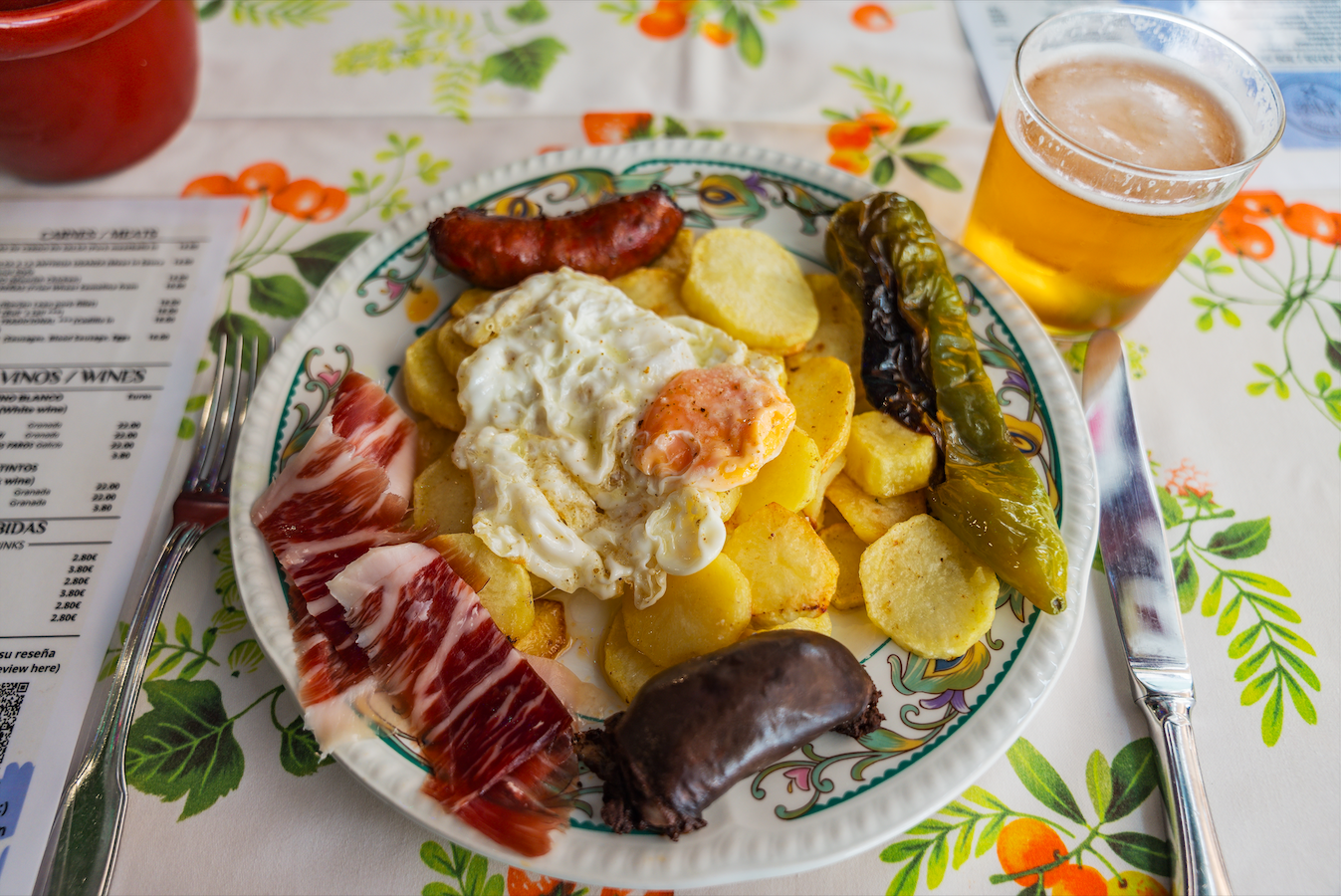
the arrival of autumn isn’t just about cooler evenings. Photo credit: Approved Photography/Shutterstock
For those of us who have lived in Spain for a while, it’s almost inevitable that we fall into the rhythm of the seasons. We start looking forward to different foods, pick up local traditions and find ourselves craving meals we might never have considered before moving here. Suddenly, the arrival of autumn isn’t just about cooler evenings and digging out a jumper; it’s about what goes on the dinner table, too.
From seasonal food traditions in Granada to comforting meals enjoyed in mountain villages and the countryside, residents across southern Spain have been sharing the dishes that make autumn feel like autumn. Some have fully embraced local specialities, while others have discovered unexpected favourites along the way.
When rain means ‘migas’ in Granada
Leslie, who has lived in Granada for over a decade tells us that where she lives, rainy weather means migas, a traditional Spanish dish made with flour or bread, depending on the region. Often served with a mixture of sweet and savoury accompaniments, it’s a simple, filling meal with plenty of regional variations.
‘It’s a custom here to have migas made with flour whenever it rains. I’ve grown so used to it that I actually miss it when visiting family in England. It can be had with chorizo, melon and boquerones (anchovies) or sardines. I adore the dish and I would definitely call it one of my favourite comfort foods.’
Steve, also from Granada, looks forward to wild boar stew, a seasonal favourite in the surrounding countryside. Slow cooking makes the meat tender and creates a rich sauce, perfect for mopping up with bread. ‘I love the jabalí (wild boar) in a stew. It’s a dish they do here in the Sierra, and it’s only around this time of year you can eat it. Served with some bread for mopping up the sauce and a warm log fire in a venta (traditional country inn), and I’m complete.’
A taste of autumn beyond gazpacho
Ingrid 67, lives in Mijas, Málaga, has found a seasonal favourite that offers a change from Spain’s famous chilled summer soups. Her choice is a warm tomato soup made with local ingredients. ‘I really enjoy the Spanish version they do here in Mijas of tomato soup. It’s the autumn version of gazpacho; it’s warm, comforting and made with local tomatoes, peppers, onions, bread, garlic and asparagus. It’s a dish that, for me, welcomes the cooler months’.
While gazpacho is served cold, warm soups become appealing as temperatures fall. Málaga has its own traditional options, including gazpachuelo, a warm soup traditionally made with fish broth and a mayonnaise-based sauce.
Lentils with a meaty twist
Mateus who is 36 and lives in Cádiz, welcomes autumn with lentejas con pringá (lentils with leftover meats). Lentils are a staple of Spanish home cooking, often simmered with vegetables, potatoes or meat. Adding leftover cooked meats, usually from stews made the day before, makes this version particularly filling.
‘I welcome autumn with lentejas con pringá. It’s like your regular Spanish lentil dish but with leftover meats from other meals, such as pork, tocino (fatback), chorizo and morcilla (black pudding) cooked into it. It gets the body prepared for winter!’
Chestnut stew and seafood by the sea
Kerry, has been living in Aguadulce, Almería, for the past 4 years and finds it difficult to settle on just one autumn favourite. One takes her into the mountains, while the other brings her back to the coast. ‘My favourite autumn meal, that makes me feel like autumn is really here, is potaje de castañas (sweet chestnut stew). We take a drive up to the Alpujarra for it. It’s healthy, heart-warming and comforting.’
Chestnuts are a seasonal favourite in parts of Spain, particularly in mountainous areas. Their natural sweetness makes them well suited to savoury stews, giving traditional potaje a distinctive flavour. For Kerry, the journey to the Almeria side of the Alpujarra is part of the experience. Her second choice takes her to Cabo de Gata, where the ingredients reflect Almería’s coastal setting.
‘I also like visiting Cabo de Gata for their traditional caldo quemao (burnt broth). It’s also a stew but this time with potato, sardines, garlic, tomato and peppers. That’s my autumn surf ‘n’ turf.’ With sardines, potatoes, tomatoes and peppers, caldo quemao brings together familiar ingredients in a warming coastal dish, offering a different kind of comfort from the stews found in the mountains.
The autumn dessert that surprised a sceptic
Mike and Susan, have lived in Torrox for more than seven years, have different favourites. Mike admits that trying unfamiliar food doesn’t come naturally to him, but one autumn discovery changed his mind. ‘I’m not one for trying new things. I’m kind of stuck in my ways, I guess you could say. But what surprised me, and what I actually enjoyed, was roasted sweet potato or boniato as they call it here. It really was a bit of an unexpected food, which they have here as a dessert in autumn.’
Roasting brings out the natural sweetness of sweet potatoes, making them a simple seasonal dessert as well as a versatile ingredient for savoury dishes. Susan prefers a more substantial option: puchero de garbanzos (chickpea stew), a traditional dish found in different forms across Andalusia. Chickpeas are often slowly cooked with vegetables and meat to create a filling broth. ‘It’s definitely got to be the puchero de garbanzos for me. Lovely dish, very filling and nice to enjoy whilst warming your feet by the heater under the table.’
Nothing beats a meal at a local venta
Johnathan, from Berja, Almería, tells us that autumn isn’t about one particular recipe. It’s about the welcoming atmosphere of a local venta, where the menu depends on what’s being cooked that day.
These country restaurants are known for comfort food, unfussy meals, with dishes ranging from rabbit, venison to steak and slow-cooked stews. ‘Oh, for me, it’s any venta food. There is nothing more homely and welcoming than eating at your local venta when the weather turns bad, a nice glass of wine and whatever they are cooking that day, rabbit, kid, steak… Nothing beats it.’
The flavours and traditions that make autumn special
Autumn in Spain brings its own flavours, whether it’s a dish you’ve grown up with, something you tried on a rainy afternoon or a meal that gives you an excuse to escape to the mountains. Sometimes, the best part isn’t what’s on the plate, but the memories and traditions that come with it.
What about you? Which dish makes you feel that autumn has finally arrived in Spain? Is it a traditional Spanish stew, roasted chestnuts on a chilly evening or something completely different that you’ve come to love since living here?









autumn in spain
Before you turn the heating on in Spain, there’s one cleaning job you shouldn’t skip
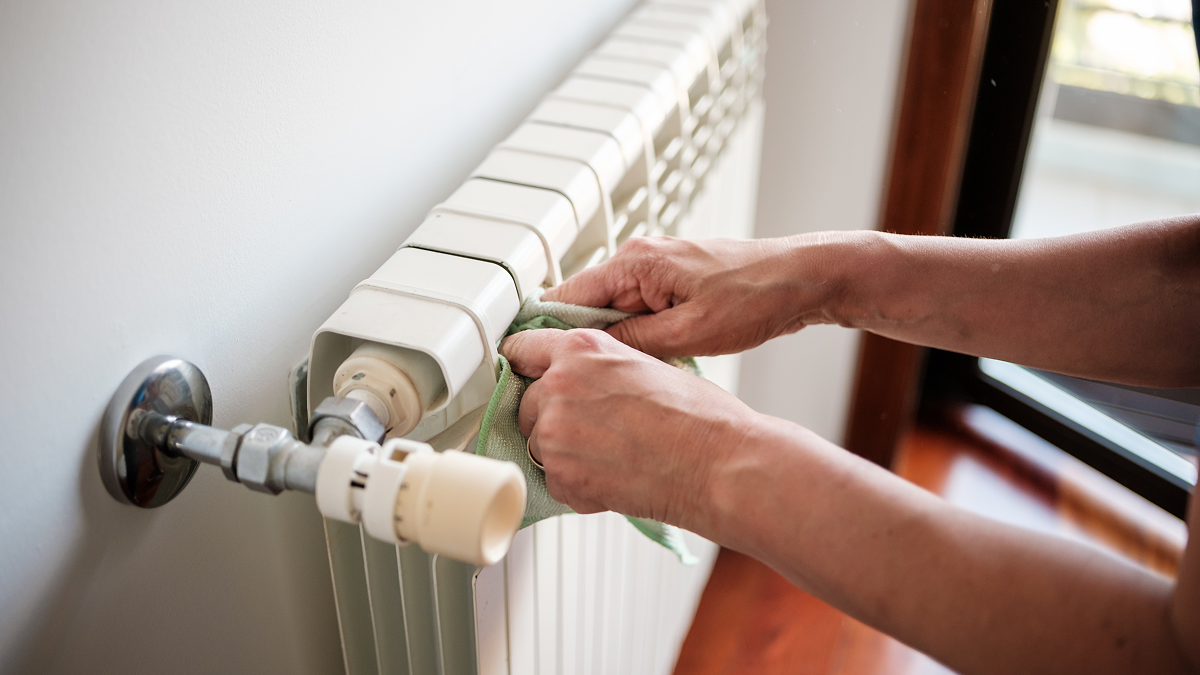
Switching your heating on in Spain? Clear the dust hiding in your radiators first. Credit: Digito_Pitoresco / Shutterstock
Households across Spain are about to switch on radiators that have sat unused since spring, and any dust that’s built up between the fins can get in the way of the heat. Clearing it can take as little as 10 minutes, though it’s a different job from bleeding the radiator.
Dust between the fins can hold the heat back
Dust that settles inside and behind a radiator over the warmer months doesn’t just sit there. On convector radiators (the type with thin metal fins between the panels), a layer of it can stop the heat escaping properly, according to heating supplier BestHeating. Checkatrade heating expert Aaron Willcox goes further and estimates that a very dusty radiator can lose 10 to 20 per cent of its efficiency. That’s one expert’s estimate rather than a measured result, but it’s still a good reason to give your radiators a quick clean.
It matters especially in Spain, where gas boilers feeding radiators heat more than 30 per cent of homes, according to figures by INE, the National Statistics Institute.
How to clear it with the radiator cold
Start with the heating off and the radiator completely cold, which is safer than tackling a hot one. Lay a towel on the floor underneath to catch whatever comes out. Then you’ve got a few easy options. A hairdryer pointed into the grooves along the top will blow the dust out, a vacuum with a thin crevice nozzle will pick it up, and a long-handled brush will reach what’s left behind. BestHeating even suggests wrapping a cloth around a ruler and sliding it between the panels.
Finish by wiping the outside with soapy water, then drying it straight away so it doesn’t rust. Willcox says doing every radiator in a home is only a 10-minute job.
Electric radiators need a lighter touch
Not every radiator in Spain is water-filled, though. If yours is electric, never take the panels off to clean them, as BestHeating advises, and stick to wiping the outside.
Bleeding is a separate job from cleaning
Dusting does nothing about the air trapped inside a water-filled radiator. That’s what bleeding is for, and Spanish consumer group OCU’s guidance is also to do it with the heating off and the system fully cold, which means waiting around two to four hours after switching it off, or right away if you’ve been enjoying the long summer temperatures across most of Spain and haven’t needed to turn on the heating until now.
Open the small valve at the top (a screwdriver may be needed) with a container underneath, let the air escape until only steady water flows, then check the boiler pressure sits between 1 and 1.5 bar. Radiators with automatic bleed valves do it themselves.
So before the first properly cold evening, switch the heating off, wait for the radiators to cool and give them a few minutes with a brush and a towel.
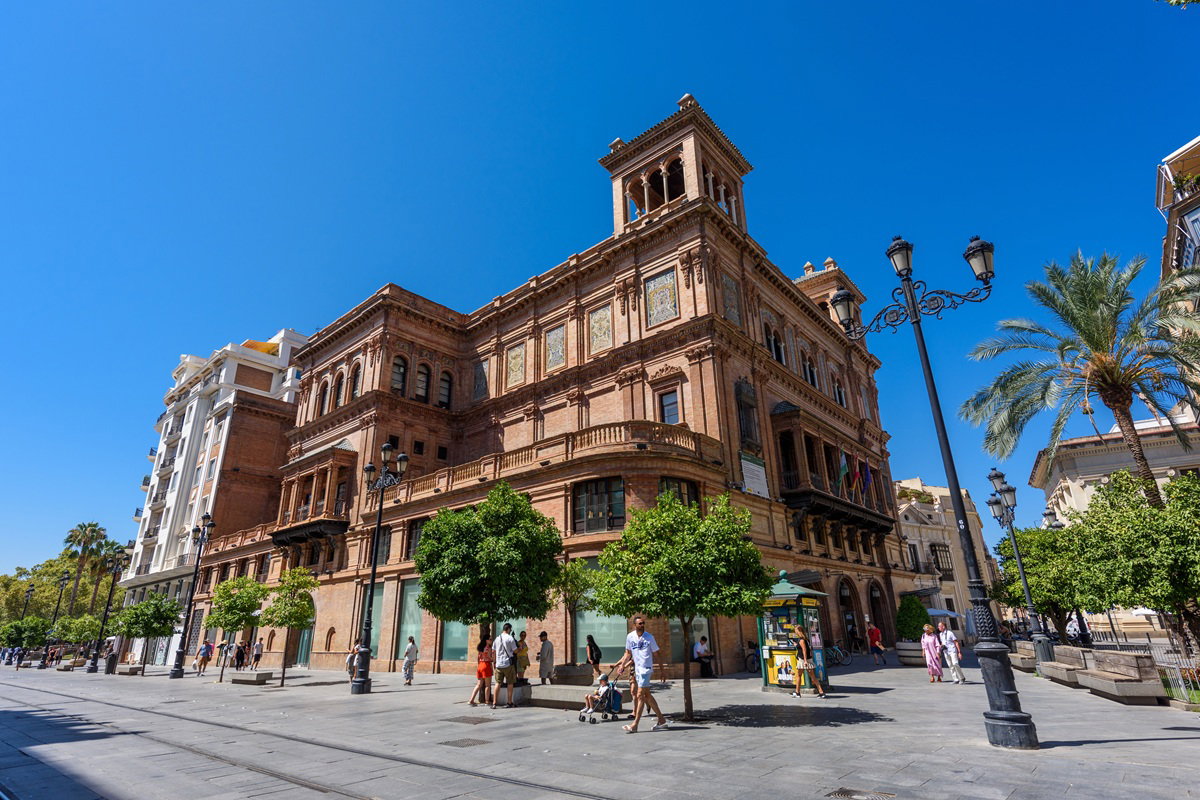
Seville leads Spain’s autumn getaway booking growth with an 86% increase.
Credit : Nenad Nedomacki, Shutterstock
The demand for short breaks in Spain this autumn is on the rise, with bookings up by 24 per cent over last year. While Tarragona and Madrid attract the largest shares of bookings, three southern provinces are recording particularly strong growth, with increases of up to 86 per cent.
The figures suggest that short breaks remain popular beyond the traditional summer holiday season, with travellers booking trips throughout October and November.
According to new figures released by the travel platform Atrápalo on October 14, bookings for getaways of up to four nights increased by 24 per cent in comparison with the same period of autumn in 2025.
It also shows a marked preference for domestic trips, as seventy-two per cent of those booked involve destinations in Spain. For residents looking to spend a long weekend without going abroad, several well-known Spanish destinations are gaining in importance.
Sevilla, Málaga and Cádiz lead Spain’s autumn getaway boom
Although the largest share of domestic autumn bookings is on Atrápalo with Tarragona and Madrid, the highest increase year-on-year is in Andalusia.
Sevilla recorded the largest increase of 86 per cent in bookings from the previous autumn. Malaga follows closely, with an increase in the bookings of 82 per cent. Cadiz was up 77 per cent.
The three provinces of Andalusia are the fastest-growing destinations in the platform’s autumn getaway data.
And in a city where there is the combination of historic architecture, traditional neighbourhoods and cultural attractions, Seville is particularly well suited to exploring on foot. During the fall, when the heat of the summer is changing to a more bearable autumnal heat, it is a particularly attractive place for walking through its historic centre.
Málaga, however, offers a different kind of holiday. Its beaches and marina can be combined with museums, restaurants and the city’s historic attractions; it is therefore a good choice for those who want a mixture of the urban and the coastal.
Cádiz is another option, with its Atlantic coast, old towns and its traditional Andalusian atmosphere, and its province contains favourite places like Jerez de la Frontera and El Puerto de Santa María.
But the most rapidly growing destinations are not necessarily the ones with the most bookings.
Tarragona leads Atrápalo’s domestic autumn rankings, Tarragona ranks first, with a total of 8.5 percent of the bookings, closely followed by Madrid, with 8.15 percent. Together, the two provinces represent approximately one in six bookings booked on the platform.
For tourists who make short visits, Tarragona offers an excellent combination of Roman monuments and the Mediterranean coast; and Madrid offers a year-round program of museums, shops, restaurants and entertainment.
Having confirmed that the desire for autumn holidays reaches beyond the traditional summer tourist resorts, the study also shows that both the major cities and the coastal provinces of Spain feature prominently.
Shorter holidays, advance planning and hotel prices shape autumn travel
Beyond the choice of destination, Atrápalo’s figures reveal how travellers are planning their autumn breaks. Atrápalo’s data gives us a good idea of the way in which this phenomenon is taking place.
During the autumn season the average length of a stay is 1.89 nights. The shortening of the average stay shows the preference for weekend trips or shorter midweek breaks as opposed to longer holidays.
These journeys, despite their short duration, are often arranged long in advance.
According to the booking system, at least half of all domestic reservations are made at least 55 days in advance.
Travellers booking Barcelona hotels plan particularly far ahead, booking an average of 110 days in advance. Seville follows with an average advance of 98 days, Tarragona and Almeria a few days less, on average 72 and 56 days.
Those who are thinking of arranging a last-minute autumn break Travellers considering a last-minute autumn break may find it worthwhile to book accommodation early where it is best to book early.
Hotel prices have also remained relatively stable within the platform’s data.
In Spain, the average price of a night in a hotel is €149, an increase of one per cent compared to the previous year.
Among the most popular tourist destinations analysed, the average price per night in Tarragona, at €192.84, is the highest, while Barcelona is the cheapest, at €137.93.
These are averages of the reservations made at Atrápalo, and not a guaranteed price, and it depends on the dates, the accommodations, and the availability.
Autumn is also a favourite time for travellers who visit the Spanish wine-growing regions.
The Marco de Jerez area in Andalusia has 57.5 per cent of the bookings of the wine regions analysed by Atrápalo, followed by La Rioja, 35.6%.
Those staying in the Jerez region average 2.6 nights. El Puerto de Santa María accounts for 58 per cent of bookings, ahead of Jerez de la Frontera and Sanlúcar de Barrameda.
And all the while, one can combine vineyard visits with visits to historic towns and beaches.
Roberto Ramos, Atrápalo’s director of Product and Operations, says that autumn is assuming greater importance in the holiday plans of the Spanish traveller, with the characteristics of short stays and advance booking.
This year, the October Pilar weekend has been excluded from the figures, so the increase does not include a disproportionate number of visitors on that occasion.
For British residents in Spain, the figures highlight the variety of destinations attracting travellers this autumn. Whether it is a weekend in Seville, a coastal break in Cádiz or a cultural trip to Madrid, the growing interest in shorter getaways offers another reason to explore the country outside the summer season.

Meet Rescued Horses In Coin

Minimum Wage Workers In Spain Could Get €65 A Month More From January

Casares World Cheese Awards Debut


-
DGT3 weeks ago
Viral video in Spain sparks fury over drivers who ‘have no idea how to drive’
-

 Arabia Saudí4 weeks ago
Un Ataque De Los Hutíes Contra El Aeropuerto De Riad Causa Al Menos 12 Muertos Y Más De 300 Heridos
-

 America4 weeks ago
Un Tirador Mata A Ocho Personas En Una Vivienda En Pensilvania
-
Automated supermarket3 weeks ago
Spain’s 24-hour shop with no tills expands to Barcelona Airport
-

 %4 weeks ago
Concrete Balcony Slabs Collapse Onto Marbella Street
-

 America4 weeks ago
Trump Llega A Un Acuerdo Con Putin Para Que Rusia Libere Miles De Barriles De Diésel En Los Mercados Mundiales
-
News from Spain4 weeks ago
Spain police warn parents over WhatsApp scam that uses their children’s real accounts
-

 Uncategorized4 weeks ago
Williams F1 driver caught up in four-car pit lane pileup