
Costa del Sol
Fuengirola fair week: open casetas, €10 concerts and a bus home at 4am

Fuengirola’s spectacular Rosario fair opens tomorrow night and runs until Monday, October 12. Stroll, laugh, dance and sing along. Residents who want more than a poster of names will find a procession, horses at the Real, Casetas that say they are open to everyone, and a Line 1 bus home until 4am.
Anyone who only knows the spring international fair should treat this as a different week. This one honours the Virgen del Rosario Coronada, the town’s patron. An earlier EWN preview had the dates. The official programme now confirms the times.
What you can walk into
Tuesday, October 6, starts at 9.30pm with the pregon (opening announcement) by local dancer Juani Guerrero at the Palacio de la Paz, at the fairground at Avenida de Nuestro Padre Jesus Cautivo. Entry is free, and there are chairs. Once she finishes, the council switches on the fair lights on the main facade, and the town band plays the national anthem.


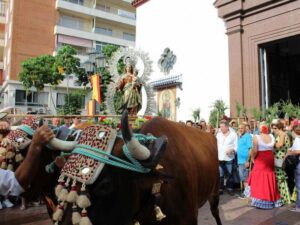
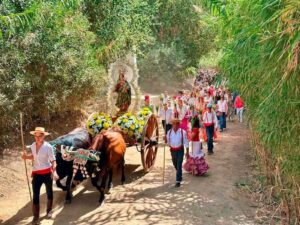
Wednesday, October 7 is the day to be in the centre, not only at the fairground. A flamenco mass starts at 10am in Plaza de la Constitucion, then the Virgin goes out with bands from Fuengirola and Almogia. The route runs Condes de San Isidro, Marconi, Palangreros, Calle Larga and Calle Espana, back to the church, with a hoped-for finish around 2.30pm. Riders join near Palangreros at about 12.45pm. Women are invited to wear a mantilla, a flamenco dress or local dress. That night, 10pm, is the 48th Jabegote Juan de la Loma flamenco festival, with Israel Fernandez, Paqui Corpas, Jose Garcia “Jose El Petro” and guitarist Diego del Morao.
Local peñas groups run the casetas and bars, and the new president of the federation, Manuel Espinosa Barroso, has asked every one of them to keep the doors open for everyone. Music, food, a drink and a toast are the point of a wander round the real and celebrate life in Fuengirola.
Horses and carriages, one of the highlights for many at the fair, have their own rules for the fairground this week. They were already out for Fuengirola a Caballo in September, so give them the road.
Afternoons have a quieter option in the Caseta de la Tercera Edad. Paco y Llina, “Duo Cenachero”, Araceli Gonzalez, dance schools and Orquesta Punto y Aparte fill slots from 5pm across the week, with a presentation of regional dance workshops on Sunday at 5pm.
Who is on after dark
Friday, October 9, is one of Spain’s biggest stars, David Bustamante at 10pm. Saturday, October 10, is Antonio Jose’s same time. Monday, October 12, Spain’s national day, has Sondesoto in Plaza de la Constitucion at 12.30pm, then the massively popular, Marta Sanchez, at the Palacio de la Paz at 10pm. Seats are €10, boxes €15. Sunday, October 11 is free: Los 40 Session, with DJ Nano and San Bernardino, at 10pm, until the hall is full.
Tickets can be got from entradas.fuengirola.es and the Miramar information desk, weekdays from 10am to 12.30pm and 3pm to 6pm. Leftovers, if any, are sold at the box office two hours before the show, card only.
Line 1 bus runs a special service from October 6 to 12 until 4am, linking Miramar, Carvajal and the fairground. Departures from Miramar include 11.30pm, 12.10am, 12.50am, 1.30am, 2.10am, 2.50am, 3.30am and 4.10am. Full times are on transportefuengirola.com (952 737 444). Ordinary buses are a separate story.
Thursday, October 8, is the family add-on if you are taking children. Cantajuegos is on at 6pm, at €5 for a seat and €10 for a box, and children’s rides are half price. Most of the week belongs to the casetas, the procession and the 10pm shows.





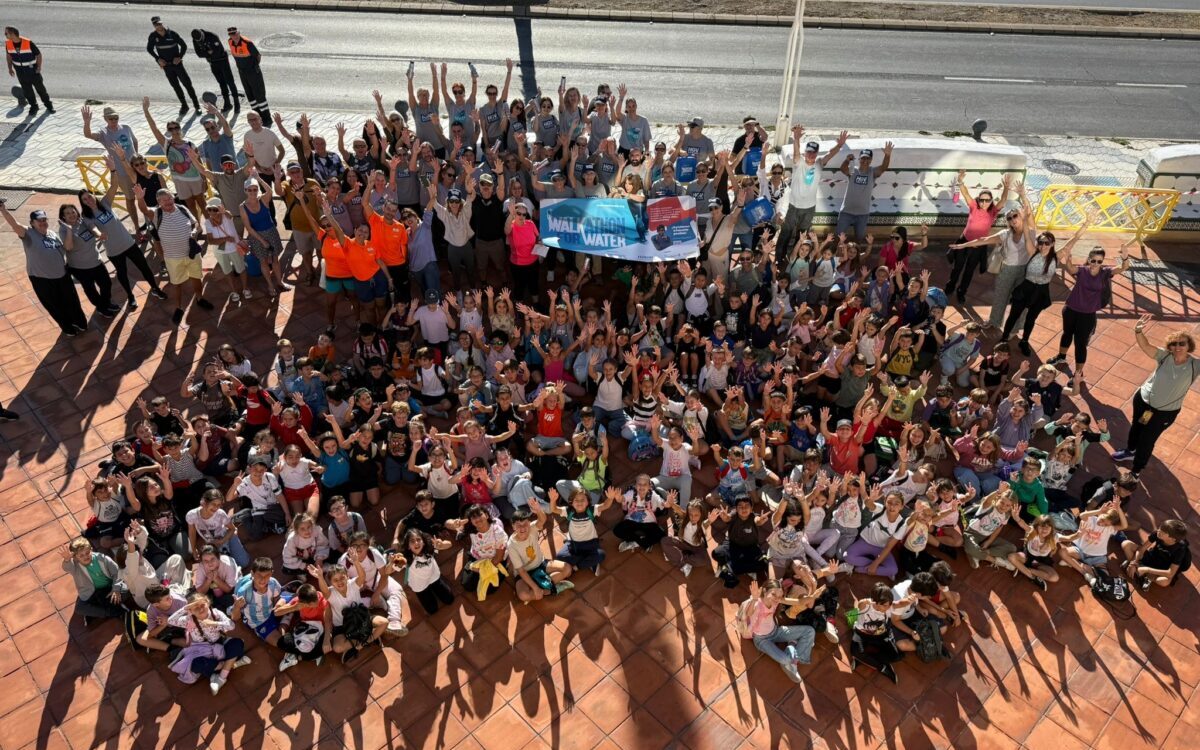
Walkathon for Water. Credit: AEHCOS
Costa del Sol residents are being invited to swap their usual morning routine for a five-kilometre charity walk in Benalmadena on Thursday, October 15, helping raise awareness of the daily struggle faced by millions without safe drinking water.
The fourth annual Walkathon for Water will start at 10am from Sahara Sunset on Avenida Rocío Jurado, with participants following the seafront towards Puerto Marina before returning to the resort.
Organised by the We Are Water Foundation with Royal Oasis Club at Pueblo Quinta and Sahara Sunset, both managed by Hilton Grand Vacations, the event uses the five-kilometre distance to represent the journey many children make every day to find water.
Walking the distance many children face
According to the We Are Water Foundation, more than two billion people worldwide do not have access to safe drinking water. Many children in Africa, Asia and Latin America walk several kilometres each day to collect water for their families.
Participants in Benalmadena will therefore be turning an everyday walk into a reminder of a very different reality for communities around the world.
Money raised during this year’s international Walkathon programme will support two water projects in India and Mexico, with the work expected to improve access to clean water for more than 5,000 people. The Benalmadena event is one of 20 Walkathons being held across eight countries during 2026.
How to join the Benalmadena walk
The five-kilometre route is expected to take between one hour and 90 minutes and is open to people who want to support the cause.
Registration can be completed online through the Walkathon for Water section of the We Are Water Foundation website, with a minimum donation of €5 per person. People can also register at the event itself.
The walk starts and finishes at Sahara Sunset, Avenida Rocío Jurado, Benalmadena Costa, at 10am.
Afterwards, participants can stay for paella, sangria and a raffle from 1pm.
For registration and full event details, visit the We Are Water Foundation website.

For many people, passing their driving test represents freedom, independence and the start of a new chapter. For long-time Costa del Sol expat Steve Marshall, it certainly did.“I was thinking over my morning cup of tea, how often do I use my car each week?” Steve says.
Looking back, he remembers exactly how important getting behind the wheel felt.“When I passed my driving test (second time I admit) it felt as if I’d been awarded a badge of honour. I was a driver! I was independent and I loved it.”Years later, however, Steve admits his attitude towards older motorists has changed considerably.“I looked at ‘older’ drivers and wondered in despair how they could still be on the road – such was the intolerance of youth,” he recalls. “With the years has come a little bit more wisdom.”
Age is not the only question
Steve believes there is no simple age at which someone should automatically stop driving. “Age alone should not be the only consideration,” he says. Instead, he believes older motorists need to take an honest look at several factors that can affect their ability behind the wheel.“Your sight, reactions, ability to park, medication, reduced mobility and general tiredness are all things that need your honest attention if you are to truly be a safe and considerate driver,” Steve explains. That honest assessment can be difficult, particularly when driving has been part of someone’s independence for decades. Steve also believes motorists should consider whether keeping a car still makes financial sense.
Is your car still worth the cost?
Insurance, tax, servicing and other running costs can add up quickly, particularly for someone living on a pension. “How often do you use your car and does the aforementioned cost warrant that drain on your pension?” Steve asks. His own experience provides a good example.
“My own car insurance was more than 300 euros for the year,” he says. Steve uses his car less than he once did, but there is an important reason he has not given it up.“With no bus route to fall back on it’s a lifeline,” he explains.
Do you still need such a big car?
Steve also questions whether older motorists sometimes continue driving vehicles that are larger than they actually need. “I have a ‘mature’ estate vehicle that never lets me down – but really a smaller vehicle would do the job just as well,” he admits. “In the past I needed a larger vehicle but that requirement no longer exists.”
He has noticed other older drivers continuing to use large, comfortable cars and believes this can sometimes create a misleading sense of security. “I see ‘older’ drivers in big, very comfortable cars that in truth cocoon them from the realities of the road,” he says. “That false sense of well being and security is a recipe for disaster.”
Giving up the car does not mean giving up
For Steve, perhaps the most important point is that deciding to stop driving should not be seen as surrendering independence. “If you feel the time is right to relinquish your car don’t think of it as giving up your independence because it isn’t,” he says. “There is a time in life for everything and alternatives are often just around the corner.”
For anyone facing that difficult decision, Steve’s message is ultimately a positive one.
“Whatever you decide, live your best life,” he says, “even if it no longer includes your ‘trusty metal friend’.”
Costa del Sol
Flu and Covid jabs on the Costa del Sol: who can get vaccinated now, and who joins later this month
The 2026/27 flu and Covid campaign is already under way across Andalucia, including the Costa del Sol from Sotogrande to Torremolinos and the inland towns behind the coast. It opened on Thursday, October 1, and further groups are being added over the next three weeks. The timetable is the same throughout the region, so residents in Estepona, Marbella, Fuengirola, Benalmadena and Torremolinos follow the same dates as people further inland, and the same schedule already published for Axarquia and Granada.
Who can get vaccinated and when
The first groups have been eligible since October 1. That includes children aged six months to almost five, children aged five to 17 with health conditions or other risk factors, pregnant women, and teachers of children under five. Children aged three and four are preferably being given the nasal flu vaccine at school.
Residents of care homes and disability centres have also been included from the first day, together with the staff who look after them.
From Wednesday, October 7, the programme expands to people aged 80 and over, people with high dependency who are cared for at home and their usual carers, plus healthcare and social-care professionals. People aged 70 and over can join from October 14, as can adults under 60 with specified health conditions or risk factors.
The last October expansion is on October 21, when the flu jab opens to everyone aged 60 and over. Police and other security forces, firefighters, prison staff and people whose jobs involve exposure to animals are included from the same date.
Covid vaccination is more tightly targeted than the flu jab. The Servicio Andaluz de Salud is concentrating the Covid dose on people aged 70 and over, care-home residents and people with qualifying health conditions, rather than offering it to the whole adult population. The timing matters: Covid has already moved Spain into an epidemic phase, while flu is still below the threshold.
What about non-EU residents?
British and other non-EU residents on the Costa del Sol follow the same Andalucia-wide timetable if they are covered by the public health system. A resident aged 80 or over can book from October 7. Someone aged 70 to 79 can do so from October 14, and those aged 60 to 69 join the flu programme from October 21. People who live with someone for whom the flu jab is recommended can also be vaccinated when that group enters the programme.
What is different this year
The high-dose flu vaccine, previously reserved for people aged 80 and over, is now being offered from 75. Care-home residents, and people aged 12 and over with certain forms of immunosuppression, are being given the protein-based Covid vaccine Bimervax. Later in the campaign, the Junta also plans to offer RSV vaccination to nursing-home residents and adults with severe immunosuppression. Details will come through the usual SAS channels.
Take-up is the other reason to book early. In the last completed campaign, Malaga was among Andalucia’s top-performing provinces, but coverage still fell well short of the groups the health service wants to reach.
Walk-in days later in the autumn
Appointments can be made through ClicSalud+, the Salud Andalucia and Salud Responde apps, Salud Responde on 955 54 50 60, or at the local health centre. Not every centre is a vaccination point, so it is worth checking the location and the hours before travelling.
For anyone who would rather not book, the SAS has set walk-in flu sessions every Wednesday from November 11 to December 16, plus two “super Saturdays” in shopping centres. Dates and venues for those Saturdays have not yet been confirmed.
Benalmadena charity walk asks Costa del Sol residents to step up for clean water
Spain health service told to pay €82,000 to ‘terminal’ patient who survived after going private
Costa del Sol expat Steve asks: When is it time to give up driving?


-

 Uncategorized2 weeks ago
F1 Qualifying Today: Azerbaijan Grand Prix schedule, times and TV channel
-

 %2 weeks ago
Is Your Supermarket Kefir Really Kefir? Spanish Study Raises A Surprising Question
-

 Uncategorized1 week ago
F1 Bahrain Grand Prix will be live and FREE on TV this weekend
-
Latest2 weeks ago
‘It’s The Law Of The Jungle’: Pensioner’s Eviction Exposes Spain’s Housing Crisis
-
Barter system2 weeks ago
British drug dealer swaps cocaine for Pokémon cards in bizarre barter deal
-
Balearic Islands2 weeks ago
Tourists driving to Menorca could soon need a permit and pay to bring their car
-

 Cody Gakpo2 weeks ago
Xavi Y Klopp Se Reparten Puntos En Su Debut Como Seleccionadores
-
Adamuz2 weeks ago
Deadly crash and landslide chaos wiped out 800,000 Málaga-Madrid journeys