
Border checks
Gibraltar treaty signed today as workers face the real border test tomorrow

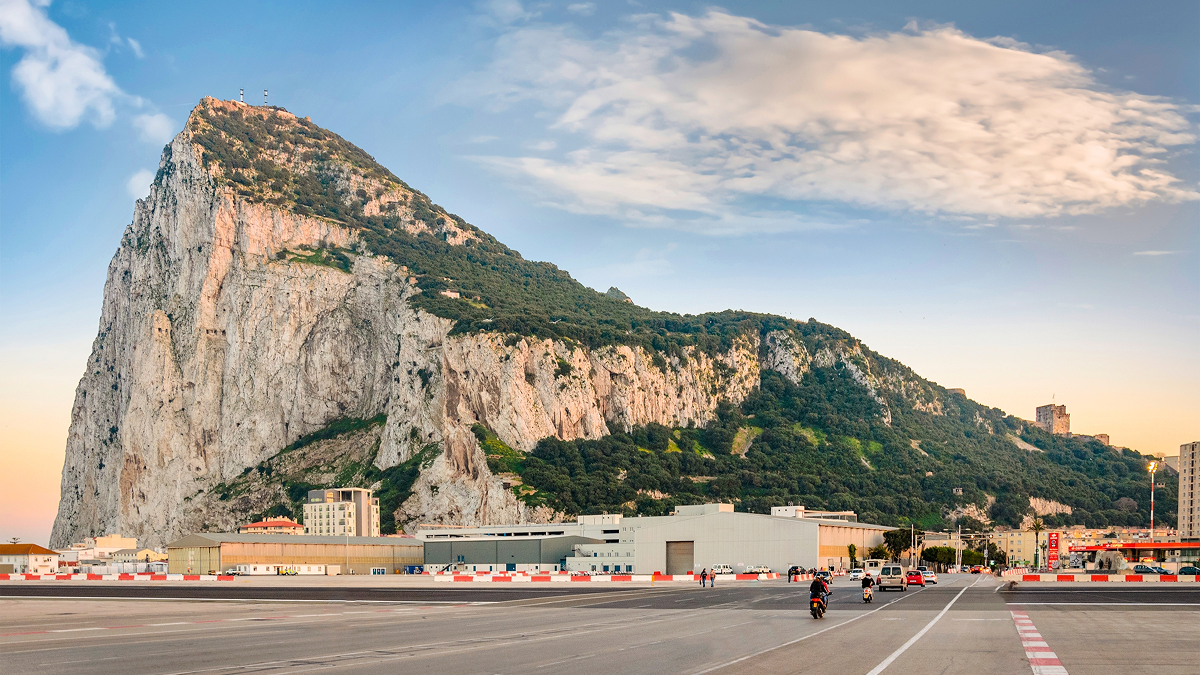
Faster crossings, but a new rulebook begins at midnight. Credit: Valerie2000 / Shutterstock
After years of negotiations, the UK and EU signed the Gibraltar treaty in Brussels on Tuesday, July 14, with provisional application beginning on Wednesday July 15. For thousands crossing from Spain and residents on the Rock, the treaty changes far more than the morning commute, bringing a new tax on goods, tobacco price controls, shopping allowances, delivery rules and a tougher residency system for those hoping to live in Gibraltar.
Morning commutes should become easier, but border-crossers remain sceptical
At midnight, the political promise made in Brussels on Tuesday, July 14 will reach the pavement between La Línea and Gibraltar. For Augusto Mena, a 30-year-old programmer who lives in Spain and works in Gibraltar four days a week, that pavement forms the second half of a 40-minute commute.
He drives for around 20 minutes to La Línea, searches for somewhere to leave his car and then walks another 20 minutes to his office. “It’s almost impossible to park inside Gibraltar, so it is often necessary to leave your car in La Línea,” he told Euro Weekly News. “It’s easier, but still a pain.”
From July 15, people crossing on foot or by car should no longer stop for routine immigration checks. Gibraltar’s Government also says businesses should face less disruption from employees being trapped in queues, although commercial goods will remain subject to separate customs procedures.
Augusto normally avoids the vehicle queues he sees between 7.30am and 8.30am by crossing on foot. However, he recalled one morning when an aircraft experiencing difficulties repeatedly used the runway, blocking the pedestrian crossing for between 30 and 45 minutes. “Everyone there was really late for work,” he said.
The treaty will not remove runway closures, however the Government is considering better public transport links between the frontier and central Gibraltar.
People can cross freely, but shopping bags still have limits
The removal of routine checks on people does not make the crossing an uncontrolled route for goods. During the first three years, people bringing personal shopping into Gibraltar from Spain or elsewhere in the European Union will have a general allowance equivalent to €300 when entering by land, or €430 when arriving by air or sea.
Separate limits include 200 cigarettes, 250 grams of tobacco and one litre of spirits above 22 per cent alcohol. Goods exceeding the thresholds may require a customs declaration and payment of Gibraltar’s new transaction tax.
The distinction between personal and commercial shopping also matters. A person carrying a small quantity of goods from Spain to resell online or through social media will be treated as a trader, regardless of the relatively low value involved.
Spanish retailers will not be able to drive through the open border and deliver commercial goods without customs formalities. Deliveries from the Campo de Gibraltar will be permitted under defined single transport operations, but companies providing installation, repairs or other services inside Gibraltar may also need Gibraltar tax and social security registration.
Gibraltar residents have learned to choose the ‘good hours’
For residents, the frontier can also create a sense of being cut off from the towns, shops, families and open space immediately across the border.
Elena Cordero, 29, has lived and worked in Gibraltar for two years. She said crossing is normally straightforward, but periods of tighter controls have left her feeling restricted. “There have been times when the border has been stricter and there have been problems crossing, causing a feeling of claustrophobia,” she said.
“People have become used to choosing the ‘good hours’ so they do not have to wait in queues for an hour,” she told Euro Weekly News.
She believes closer integration with the Schengen system will bring more benefits than problems and hopes residents will be able to enter Spain without planning their day around the border.
Shops on the Rock begin a 15 per cent transaction-tax era
For retailers, July 15 marks the end of Gibraltar’s traditional import-duty system and the beginning of a new transaction tax on goods. The standard rate starts at 15 per cent, is due to move to 16 per cent in the second year and then align with the lowest standard Value Added Tax rate in the EU, currently 17 per cent, from the third year unless the agreed formula produces a different result. Some essential goods, including food, medicines and books, receive a zero rate, while categories including children’s clothing and bicycles qualify for a reduced rate.
The transaction tax is applied to the declared import or manufacturing value of goods. It is not a 15 per cent sales tax added at the till, and Gibraltar’s Government has warned against presenting it as an automatic 15 per cent increase in retail prices. Nevertheless, importers and shops will have to reassess their costs, margins, stock and paperwork under the new system.
Augusto hopes the broader agreement eventually reduces bureaucracy for workers and businesses and allows for greater flexibility to work remotely. “Quicker border crossings, less bureaucracy for workers and businesses, and clearer rules that don’t keep changing” would make the agreement feel successful, he said.
Tobacco warehouses stocked up before prices move closer to Spain
Some Gibraltar tobacco businesses have prepared for July 15 by increasing stocks manufactured under the old rules. Europa Sur reported that importers, distributors and wholesalers had filled warehouses because cigarettes and rolling tobacco made before the treaty change may continue to be sold until July 15, 2027. Transitional arrangements for some other tobacco products extend until July 2028.
Newly manufactured products face EU-aligned packaging, tracing and taxation requirements. Gibraltar will also set prices so that equivalent cigarette packets are no more than approximately 80 cents, or 15 per cent, cheaper than in Spain, whichever limit is lower.
Prices will be reviewed quarterly to reflect changes in Spanish prices and the exchange rate. This means the familiar gap between tobacco prices on either side of the frontier is expected to narrow, although older stock could remain on shelves throughout the transitional period.
Midnight starts the test at crossings, tills and warehouses
A symbolic act of friendship involving Gibraltar Chief Minister Fabian Picardo and La Línea mayor Juan Franco is expected around the moment the old frontier arrangements end. For a region shaped by the border for generations, the ceremony carries obvious historical weight.
The more revealing evidence will come afterwards: whether border crossings are easier, if workers arrive sooner, whether delivery paperwork functions and how shops adjust their prices.
“No bureaucracy in this world is fast,” Augusto said.
For Elena, success would be more straightforward: “A better relationship between Gibraltar and Spain, and of course less waiting to cross the border.”







Airports in Europe
Airlines are calling to suspend new border checks just weeks before summer travel chaos
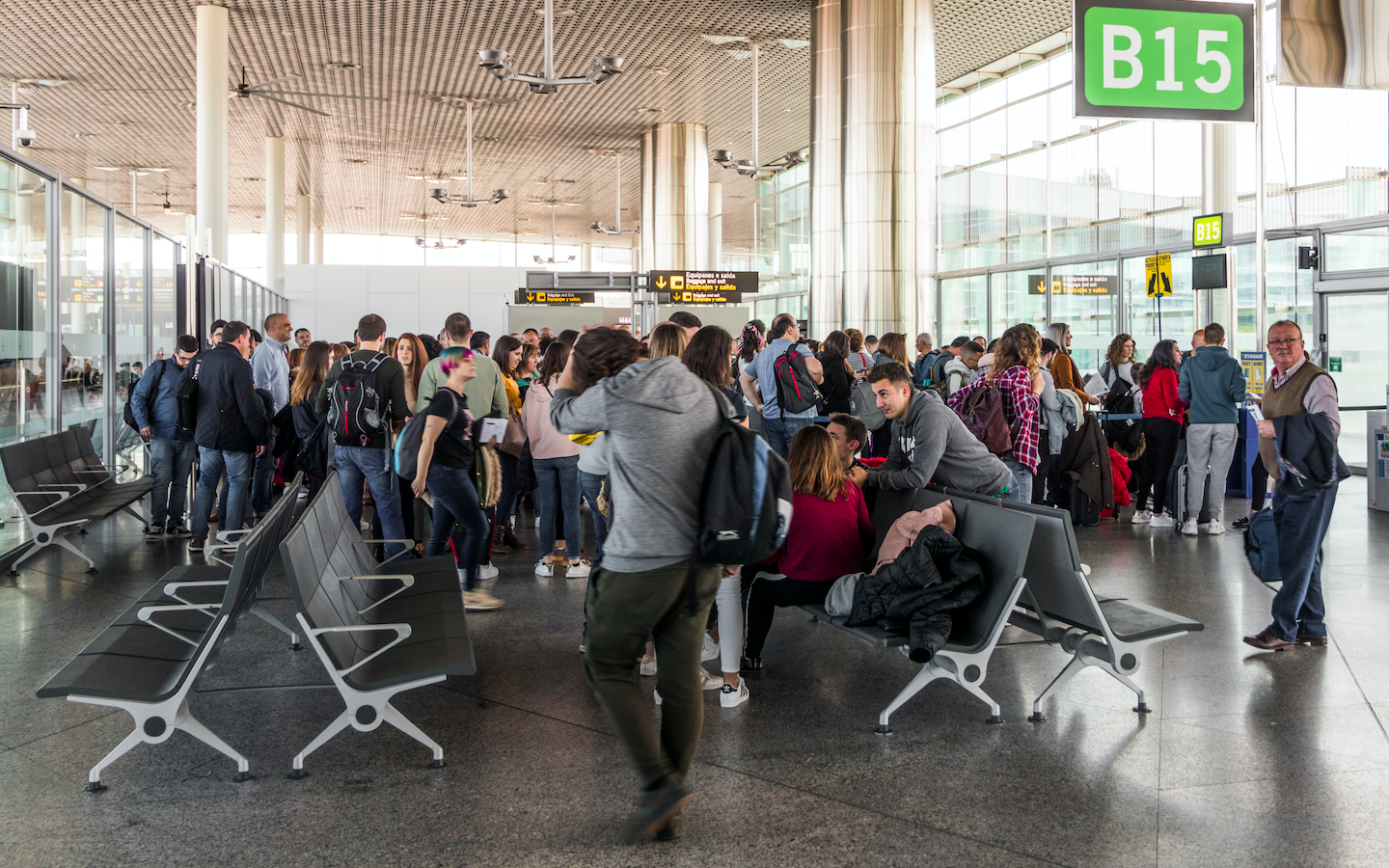
Airports are about to enter their busiest stretch of the year. Photo credit: Joaquin Ossorio Castillo/Shutterstock
If you’ve got a flight to Spain booked this summer, there’s something happening behind the scenes that could have an impact on your journey, and it’s probably not something you were expecting. As airports get ready for the busiest weeks of the year, airlines are raising concerns over one issue they believe could slow passengers down just when millions of people are heading off on holiday.
It’s become such a talking point that they’ve now made an unusual request before the summer rush really gets underway. So, what’s happened, why are airlines asking for a last-minute change, and could it affect your holiday?
Airlines say the biggest problems are still to come
With passenger numbers expected to soar over the coming weeks, airlines and airport operators across Europe are asking for the EU’s new Entry/Exit System (EES) to be temporarily suspended whenever airports become too busy to keep queues under control.
They say they’ve already seen the new system cause lengthy delays at some airports, with reports of passengers waiting for hours to clear border controls. In some cases, travellers have missed flights or onward connections because they simply couldn’t get through the queues quickly enough. Their biggest concern is that what has happened so far could be just the beginning.
July and August are by far the busiest months of the year for air travel, and Spain is one of Europe’s most popular summer destinations. Every day, thousands of flights arrive and depart from airports including Málaga, Alicante, Palma de Mallorca, Barcelona and Madrid. Airlines say that if airports are already struggling during quieter periods, the summer holiday rush could push the system beyond its limits.
So what are they actually asking for?
The industry says it supports the new system in the long term. What it’s asking for is a practical backup plan for the busiest days of the year. The proposal is straightforward. If queues start building to the point where passengers risk missing flights, border staff would temporarily return to manual passport stamping until things are under control.
Once the backlog has cleared, the digital checks would resume. Airlines believe that flexibility could make a huge difference during peak travel periods, helping airports keep passengers moving without creating hours-long bottlenecks.
What does this mean if you’re flying to Spain?
Right now, nothing changes for passengers. The request has been made, but travellers should still expect the current border checks to remain in place unless something changes before the busiest holiday period begins. That doesn’t mean every airport will be affected, and it certainly doesn’t mean every traveller will face long queues. Many people may pass through without any noticeable delays.
But if you’re travelling during the holidays, over a weekend or at one of Spain’s busiest airports, it’s worth allowing more time than you normally would. Nobody wants to start their holiday watching the departure board while stuck in a passport queue, and that’s exactly the situation airlines say they’re trying to avoid. If you’re travelling with children, have an early morning flight or are catching a connecting service, building in extra time could save a lot of unnecessary stress.
Spain’s airports are about to get a lot busier
The timing of the request isn’t a coincidence. Spain is expecting another huge summer for tourism, with millions of visitors set to arrive over the coming weeks. That means airports will be handling some of the highest passenger numbers of the entire year.
Even small delays at passport control can quickly snowball when thousands of people arrive within a short space of time. A process that takes just a little longer for each traveller can eventually leave hundreds of people waiting in line. That’s why airlines are pushing for temporary flexibility before the busiest period really gets underway, rather than waiting until airports are already overwhelmed.
For now, travellers should plan ahead
Whether the request is accepted or not, the advice for anyone flying this summer remains much the same. Check your airline’s recommended arrival time before travelling and don’t leave it until the last minute to get to the airport, particularly if you’re flying during peak holiday dates.
Most journeys are still expected to run smoothly, but airlines believe giving airports the option to temporarily step back from the new border checks during periods of exceptional congestion could help avoid unnecessary delays when millions of people are travelling at once. For now, holidaymakers can only wait and see whether that request is granted. Until then, if Spain is on your summer travel plans, arriving a little earlier than usual could be the simplest way to make sure your holiday gets off to the right start.
Could Spain scrap food expiry labels? The supermarket change that could save tonnes of food
Santíssima Sang closes after unforgettable Dénia celebrations
The court ruling that has plunged Pedro Sánchez into a new crisis
Alhaurin el Grande and Coin launch historic 1.5 million kilo season for premium tomato

Los Aficionados Al Ciclismo En Barcelona: “Que Venga El Tour De Francia Es Como Ir Al Mundial De Fútbol”

Spain Is Set To Be Swarming With Rock Legends This Weekend – Here’s What You Need To Know


-
Alhaurin El Grande2 weeks ago
Alhaurin el Grande and Coin launch historic 1.5 million kilo season for premium tomato
-
 Antoni Gaudi2 weeks ago
Los Aficionados Al Ciclismo En Barcelona: “Que Venga El Tour De Francia Es Como Ir Al Mundial De Fútbol”
-
 Barcelona2 weeks ago
Spain Is Set To Be Swarming With Rock Legends This Weekend – Here’s What You Need To Know
-
 Business & Finance2 weeks ago
Cheap Flights And Mass Tourism Are Adding €3,800 To The Cost Of The Average Spanish Home, New Report Warns
-
 Dutch demand1 week ago
Dutch Demand For Spanish Property Keeps Rising As Others Cool
-

 Ahmed al Shara2 weeks ago
Al Menos Seis Muertos En Un Atentado En Un Céntrico Café De Damasco
-
Latest2 weeks ago
Conservatives And Far Right To Govern Spain’s Andalusia Region
-

 New Developments2 weeks ago
🌅 Stunning Penthouse With Panoramic Sea & Mountain Views Benalmádena