
AER Lingus
Holiday chaos warning as Aer Lingus slashes summer 2026 flights

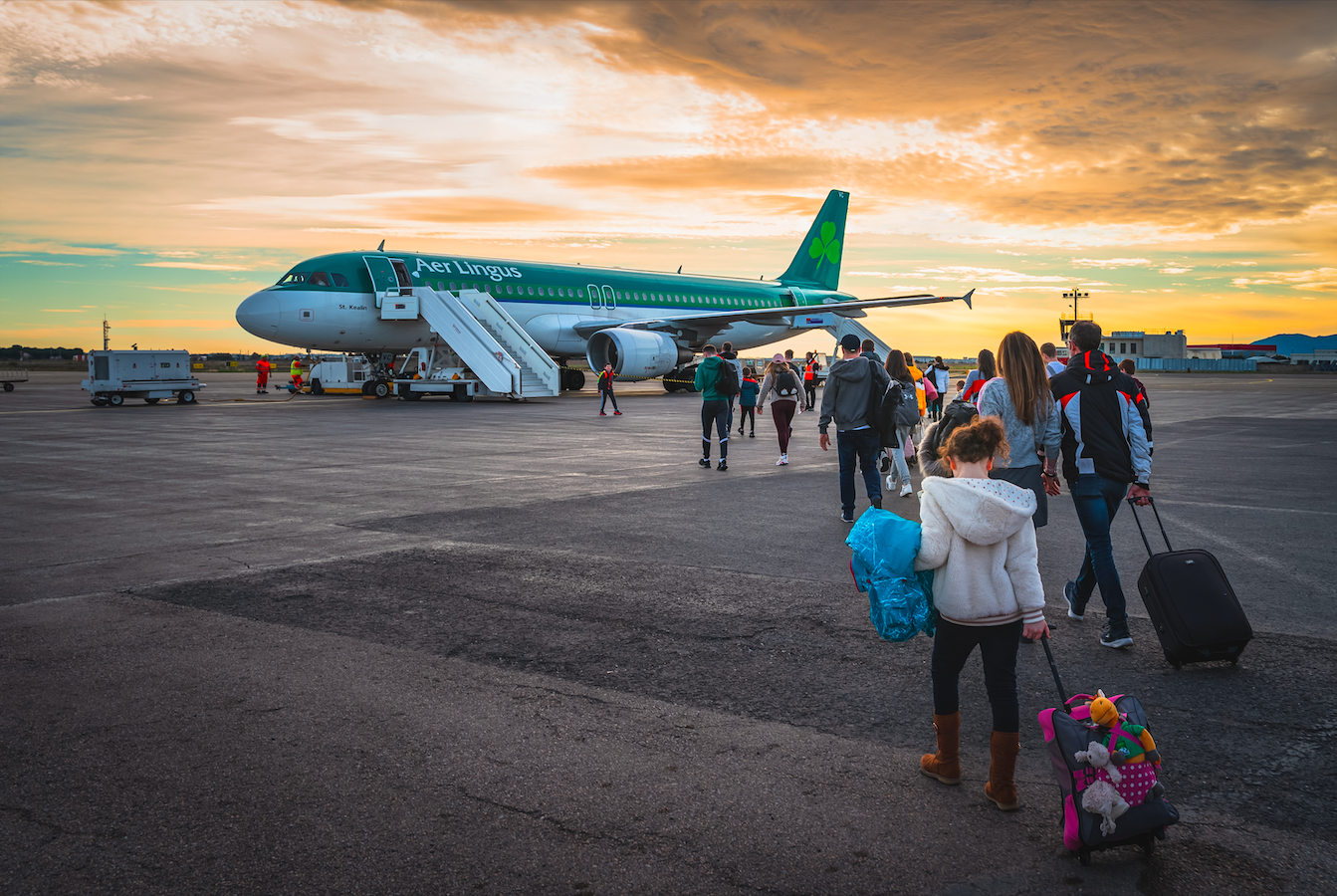
In some cases, flights have been retimed rather than cancelled entirely. Photo credit: Dawid K Photography/Shutterstock
Aer Lingus has announced cancellations and timetable changes as part of its summer 2026 flight programme, affecting services between Ireland and the United Kingdom. The adjustments involve the removal and rescheduling of a number of flights across the season rather than a single fixed date of disruption.
The airline has indicated that the changes form part of planned schedule management for the summer period. This includes operational adjustments linked to fleet planning, maintenance requirements and capacity allocation. Reports indicate that more than 500 flights are affected across the airline’s summer schedule, although the exact number varies depending on whether retimed services are counted alongside cancellations.
UK airports affected by the changes
The schedule reductions affect several major UK airports that form part of Aer Lingus’s short-haul network:
- London Heathrow Airport
- Manchester Airport
- Birmingham Airport
- Edinburgh Airport
- Newcastle Airport
These airports operate regular services to Dublin and Cork, which are among Aer Lingus’s most frequently served short-haul routes. Heathrow and Manchester handle the highest volume of flights, while Birmingham, Edinburgh and Newcastle operate fewer daily departures.
As a result, passengers are being affected differently depending on route frequency, with some services being retimed and others removed from the schedule entirely.
Timing and implementation of the cuts
The changes apply across the summer 2026 operating season and are being introduced on a rolling basis. This means affected flights are being removed, rescheduled or adjusted across different dates within the summer timetable rather than from a single start point.
Passengers may see changes appear gradually in booking systems as the airline updates its schedule. Some flights remain unaffected, while others on the same route may be adjusted depending on operational requirements.
Nature of the schedule adjustments
Aer Lingus has not attributed the changes to a single disruption. Instead, the airline appears to be managing its summer network through standard operational planning. This includes aircraft rotation, maintenance scheduling, crew allocation and balancing capacity with demand.
The airline operates both short-haul European routes and long-haul transatlantic services. UK routes, particularly London Heathrow to Dublin, operate multiple times daily and form a key part of its network.
Where cancellations occur, passengers are typically rebooked onto alternative services or offered refunds in line with passenger rights regulations. Aer Lingus has stated that it aims to minimise disruption by reallocating passengers within its network where possible.
Passenger impact across UK routes
At Heathrow and Manchester, higher-frequency services provide more rebooking options for affected passengers. However, at Birmingham, Edinburgh and Newcastle, fewer daily flights can result in longer delays or alternative routing.
In some cases, flights have been retimed rather than cancelled entirely, while others have been removed from the schedule altogether. This has affected both business and leisure travellers, particularly those relying on fixed short-haul connections.
Wider aviation context
European airlines continue to manage high demand alongside operational constraints such as fleet availability and maintenance cycles. Summer schedules are particularly sensitive to these pressures due to increased passenger volumes and tight aircraft rotation planning.
Industry analysts note that even relatively small changes in fleet or crew availability can lead to knock-on cancellations across multiple airports within a network, especially on high-frequency short-haul routes such as those between the UK and Ireland.
Current situation
Aer Lingus continues to operate the majority of its UK and Ireland services during the summer 2026 period. Core routes between London Heathrow, Manchester and Dublin remain in operation, along with regional services from Birmingham, Edinburgh and Newcastle.
Passengers affected by schedule changes are being advised to check their bookings directly with the airline, as further timetable updates may continue to appear throughout the summer season.
The disruption reflects planned summer network adjustments rather than a structural reduction in UK connectivity, although short-term impacts are being felt across several airports.









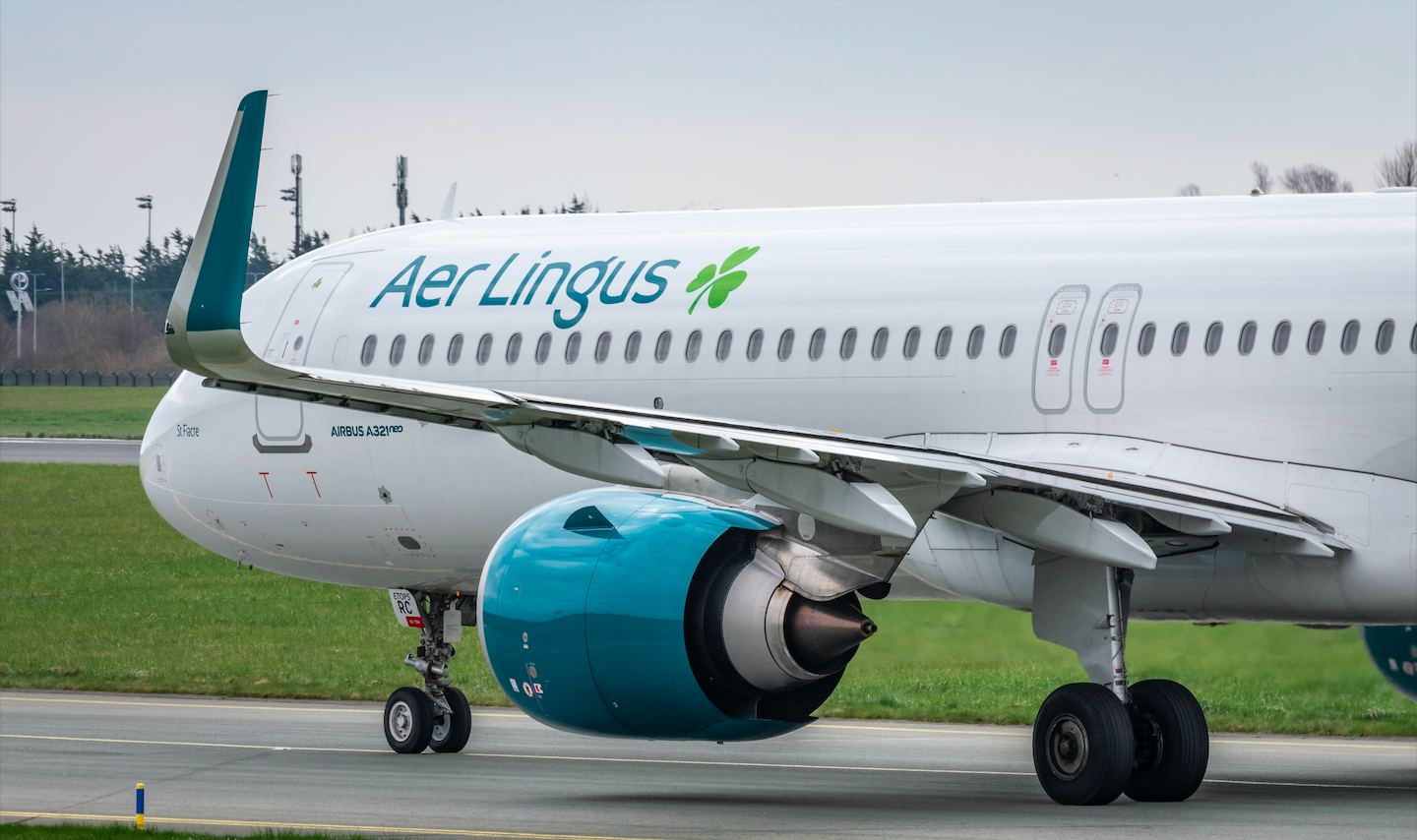
Passengers on Starlink-equipped aircraft can expect internet performance closer to ground-based broadband. Photo credit: Croatorum/Shutterstock
Aer Lingus has begun installing Starlink satellite internet on its aircraft, bringing a significant improvement in in‑flight connectivity for passengers. The service, developed by Elon Musk’s SpaceX, is intended to provide faster and more reliable internet during flights.
The launch follows a broader announcement in late 2025 by International Airlines Group (IAG), Aer Lingus’s parent company, that it would implement Starlink-enabled internet across more than 500 aircraft across its airline brands, including British Airways, Iberia, Vueling and LEVEL. The initiative is part of a long-term plan to enhance passenger experience on both short-haul and long-haul flights.
Strategic partnership to improve internet on board
Under the IAG initiative, Starlink’s satellite network, consisting of low-Earth-orbit satellites, will provide reliable broadband to aircraft across the group’s fleets. The partnership aims to operate more Starlink-enabled aircraft than any other airline group in Europe.
IAG’s chief executive, Luis Gallego, stated that connectivity has become increasingly important to passengers. He explained that providing Starlink internet would improve both the speed and consistency of in-flight connections for customers.
First aircraft enters service with Starlink
The rollout has begun in earnest. The first Aer Lingus aircraft equipped with Starlink returned to service on a transatlantic route between Dublin and New York. Passengers on this flight were among the first to experience satellite-based internet connectivity provided by Starlink on an Aer Lingus aircraft.
The introduction of Starlink internet on Aer Lingus flights is designed to give customers greater flexibility in how they use their devices during flight, whether browsing the web, streaming video, or working on cloud-based applications, tasks that have been challenging with previous in-flight systems.
Part of a wider industry trend
The adoption of Starlink Wi‑Fi by Aer Lingus and other IAG airlines reflects a broader trend in the aviation industry, with a growing number of carriers introducing satellite internet to improve passenger experience. Airlines worldwide, including major carriers in North America, the Middle East and Europe, are fitting Starlink connectivity to some or all of their fleets.
Starlink’s system of low-Earth-orbit satellites allows for lower latency and higher speeds than many existing satellite internet providers, and its use in aviation is changing expectations for onboard connectivity.
Technical and customer experience improvements
Passengers on Starlink-equipped aircraft can expect internet performance closer to ground-based broadband. The service allows faster downloads, smoother streaming, and better access to online tools than older in-flight Wi-Fi systems.
For business and leisure travellers alike, improved connectivity may make long journeys more productive and convenient. The system also aids airlines with communication between aircraft and ground operations, supporting both customer services and internal digital systems.
Future rollout and availability
While the first Aer Lingus aircraft with Starlink is in service, the complete rollout across the airline’s fleet will continue through 2027, especially on long-haul aircraft.
The phased installation is partly due to regulatory approvals and the logistical challenge of fitting the equipment across the fleet. Once complete, the service is expected to be available on most Aer Lingus flights.
Changing expectations for in-flight connectivity
Traditionally, in-flight internet has been slow, inconsistent, or available for an additional charge. Introducing a more reliable service as part of the standard offering represents a notable improvement for passengers.
This approach addresses growing demand for consistent connectivity during flights, which is increasingly seen as a standard expectation rather than a luxury. It also brings Aer Lingus closer to other international airlines that have implemented satellite-based internet.
Significance for Aer Lingus and passengers
For Aer Lingus, the rollout of Starlink internet is a milestone in modernising passenger services. The airline intends to provide the service free to most customers onboard.
The new connectivity system is expected to strengthen the airline’s appeal on transatlantic and European routes, offering a more seamless travel experience. As satellite-based internet becomes more widely used, it is likely to become a standard feature in commercial aviation, reshaping how passengers remain connected at altitude.


Brits brace for new Spain tourist tax – this time in stunning spot near ‘world’s best beach’
Spain’s Health Ministry issues warning on homeopathy as report finds no evidence of effectiveness
Guardia Civil €200 crackdown: Why your car boot is the only place for your bags


-

 New Developments3 weeks ago
Luxury Villas For Sale, Estepona – ProjectL1
-

 New Developments2 weeks ago
Stylish 3-Bedroom Apartment With Panoramic Sea Views – Benalmádena
-

 %3 weeks ago
Poland Disconnects Utilities At Russian Consulate That Moscow Refuses To Hand Over
-
eu response to spain migration policy2 weeks ago
Brussels warns Spain that migrants regularised under controversial scheme will be deported back to Spain if they try to move to other EU countries
-

 Uncategorized3 weeks ago
Lewis Hamilton goes from Karate Kid to Samurai Warrior with Kill Bill guru
-
AER Lingus3 weeks ago
High-speed internet at 35,000 feet: Aer Lingus launches Starlink Wi‑Fi
-

 Uncategorized4 weeks ago
F1 legend Martin Brundle reveals the thing he hates about living in London
-

 Uncategorized3 weeks ago
How Lewis Hamilton spent break with A-list star